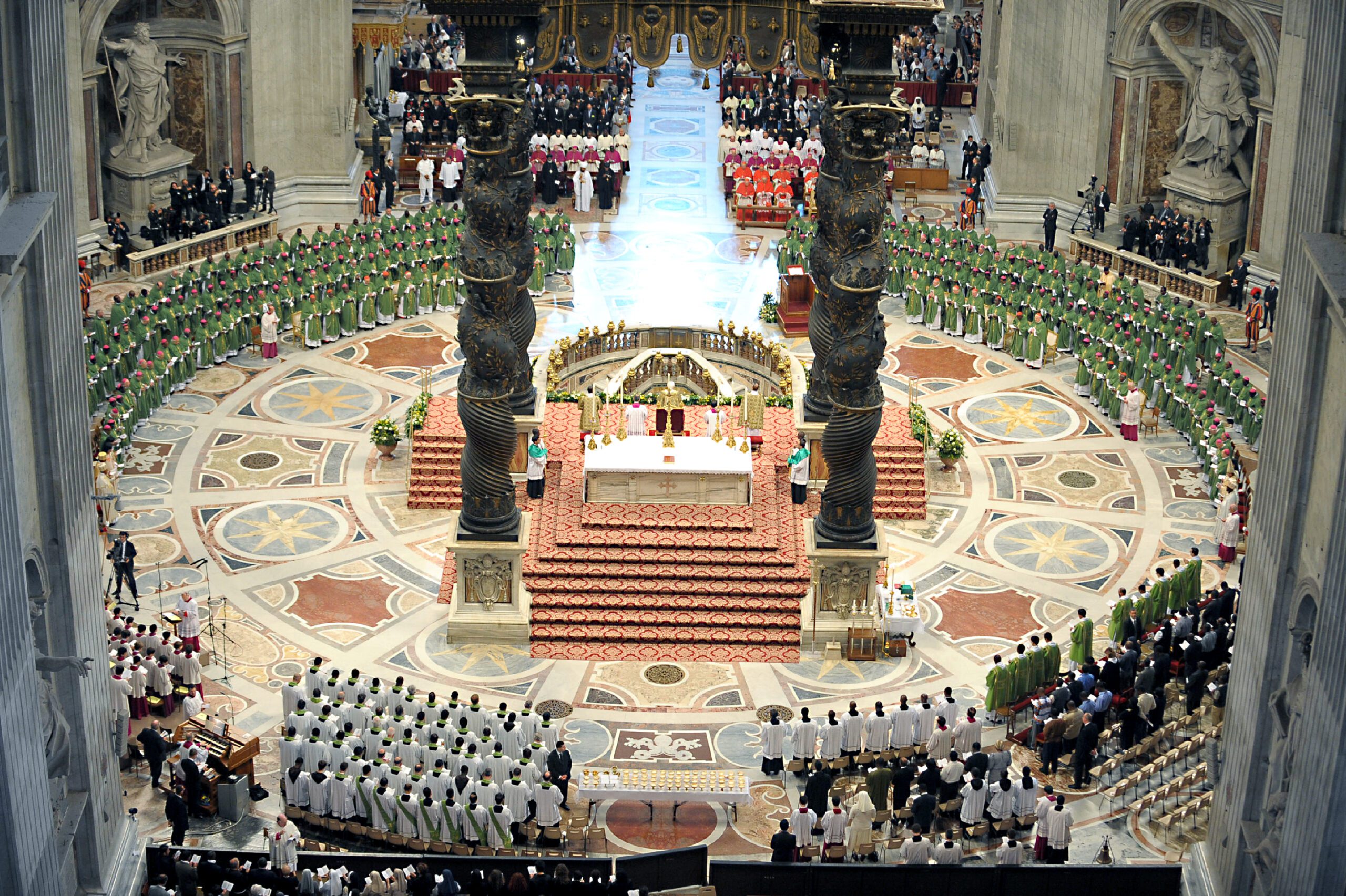
As it has been underlined by many commentators, the theme chosen by Pope Benedict XVI for the Second African Synod, “The Church in Africa in Service to Reconciliation, Justice and Peace,” is extremely relevant. It focuses on the main issues of the African public life today, issues on which the Catholic Church has the moral authority and the competence to speak and act, especially when considering the dramatic failure of the modern African states and governments, born out of the colonial time, to address them. Before the Synod started, I heard African Catholic friends express some concerns. First concern was the total lack of interest by the “international” media. This lack of interest has persisted during and after the Synod but, personally, I do not believe we should be worried by it. We know the agenda of this mass media; press people are not interested in the real independence of Africa, or in any serious religious event. They can write a long article on the possibility of an African being a pope, because it is a “curiosity item,” but they do not care about the myriad of African Christians who live their faith with humble conviction, and would never publish an article on the fact that the Church alone takes care of almost half of the African HIV/AIDS sufferers. On the other side, Church synods are not held to attract or please the media; they are, first and foremost, meetings to deepen communion and self-awareness, and also a service to Church governance. Second important concern, at least from some observers, was the fact that, in the Church, there appeared to be a number of “lobbies” who wanted, at all cost, to put forward their concerns. This is somehow normal, since in the African Church, as everywhere else, people have their own agenda and their own very legitimate and positive issues and, often, they spend their lives for them. They could be concerned with public health, HIV/AIDS, education, development, organic farming, environment conservation, mass media…, you name it. It is not surprising, therefore, that they see a synod as a chance to put a particular agenda in the limelight. It is an expression of the richness of Christian commitment. It could become a problem only if pushed too far and fragmentation and thus, confusion is created. The need of new structures If one reads all the interventions available and the final proposition presented to the Holy Father, it appears that the Synod fathers were able to avoid the trap of diluting their interest over many issues. The final propositions are well and strongly focused on the themes of reconciliation, justice and peace. In fact, the propositions are much more elaborated than the proposition presented at the end of the first African Synod to Pope John Paul II in 1994. The 2009 African Synod propositions present a serious analysis and a beginning of theological reflection on the main social and political situations of the continent. Moreover, they even go down to