Category: Filipino Focus

Filipino Focus

A Scarred Child-Turned-Angel

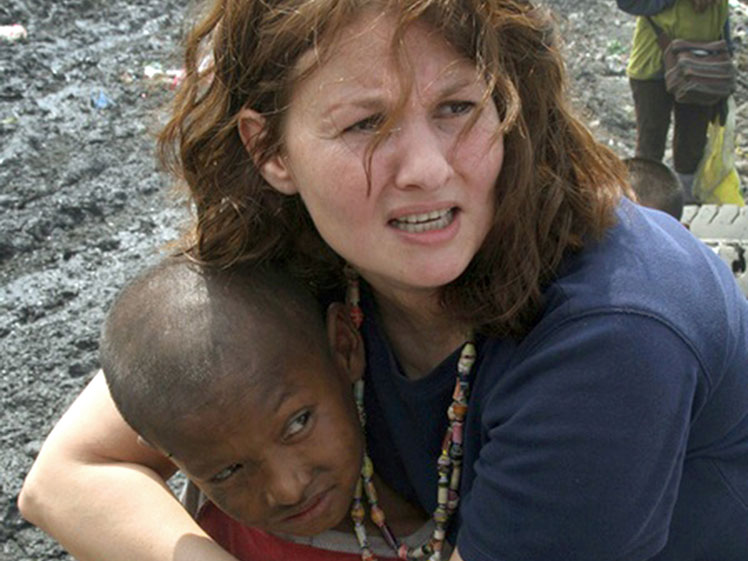
I remember reading a best–selling Filipino author who reflected that “your past may not be perfect, but it was perfect for your purpose.” A part of me agreed, considering my circumstances, but it was only after I met Jane Walker, the British founder of the Philippine Christian Foundation, that I completely agreed. Walker’s life was a testament of this irony. She was raised within
a dysfunctional family and had to endure a scarred childhood. She could have lived a life nursing regrets and grievances towards her family but, later on, she realized that the painful past was meant for her to suffer because as she said, “something good came from it.” In the Philippines
and around the world, she is known as “Angel of the Dump.” Her story is an inspiration: Just with the help of some hope and faith, one can change the lives of thousands of those who used to know only despair and neglect.

An Example Of Gratitude

Kindness is more than deeds,” wrote C. Neil Strait. “It is an attitude, an expression, a look, a touch. It is anything that lifts another person.” An unknown author explains kindness further through these words: “Kindness makes life and relationships more pleasant. Amidst difficulties and adversities, kindness is the cushion that smoothens the roughness of the journey. It is the oil that soothes pain. It is the water that helps souls grow luxuriantly into mature well-balanced individuals.” Without kindness, life is often a struggle, a defense, a competition or a fight. There is no warmth and no love. Kindness is the antidote to the epidemic of hate. It is an indicator of inner strength, for it is the people who are afraid who need to look tough. There are stories that make you laugh. And there are stories that make you ponder. But there are stories that touch your heart, your inner self, and your whole being. That’s what I experienced when I got an e-mail from a Filipino couple who now lives in the United States. The wife wrote me and shared the story of her husband, who was born to a poor family. “When he was in high school, he contracted a very serious disease,” she wrote. “The disease was in a serious stage that caused my husband to be paralyzed from waist down. His parents, being so poor, could not afford to send him to a doctor or hospital.” It so happened that there was this young doctor from a nearby town who traveled by car to his clinic in the same town where the poor family lived. One morning, the father patiently waited for the doctor’s car to pass by their house as it was situated on the town’s main road. The father stopped the car and the doctor came out and learned about the son’s illness. The doctor suggested that the boy be brought to the hospital immediately for treatment. When the father told him that they cannot afford hospital expenses, the doctor volunteered to stop by their house each day before he proceeded to his clinic.    Forty-five years later Everyday, the doctor gave the boy injections and the medicines to take. “The doctor did this everyday for several months until my husband was cured,” the wife wrote in her e-mail. “He did not charge a single centavo for the medications, injections and all of his services.” Forty-five years later, the husband kept telling his wife how much he was indebted to this doctor who saved his life. “After recovering from his illness, my husband finished high school, went to an engineering school, and graduated as a mechanical engineer,” she recalls. “We met and got married and in 1974, we immigrated to the United States.” For 30 years, the couple has not gone back to the Philippines (although they are planning of going home soon). Her story continues: “Then one day, he wondered if this doctor is still alive and still practicing medicine. He

There Is Always Time For Courtesy

If virtues can speak, can you guess who might this be? “I am a little thing with a big meaning. I help everyone. I unlock doors, open hearts, and banish prejudices. I create friendship and goodwill. I inspire respect and admiration. I violate no law. I cost nothing. Many have praised me; none have condemned me. I am pleasing to those of high and low degree. I am useful every moment.” Yes, you’re right! It’s courtesy. “Courtesy is a science of the highest importance,” says Michel de Montaigne. “It is opening a door that we may derive instruction from the example of others and, at the same time, enabling us to benefit them by our example, if there be anything in our character worthy of imitation.” Erastus Wiman notes, “Nothing is ever lost by courtesy. It is the cheapest of the pleasures, costs nothing and conveys much. It pleases him who gives and him who receives, and thus, like mercy, it is twice blessed.” “If a man be gracious and courteous to strangers, it shows he is a citizen of the world,” wrote English lawyer and philosopher Francis Bacon. “Life is not so short that there is no time for courtesy,” said American poet Ralph Waldo Emerson. Practice courtesy in all your endeavors. Never speak loudly to one another unless the house is on fire. And don’t be selective in giving courtesy – whether rich and poor, treat them equally. As Benjamin Franklin puts it, “To be humble to superiors is duty; to equals, courtesy; to inferiors, nobleness.”   Wind in the tire One time, at a dinner given in honor of Marshall Foch, one of the guests remarked that there was nothing but wind in French politeness. Marshall Foch retorted, “Neither is there anything but wind in a tire, yet it certainly eases the jolts in a highway, as politeness eases living along life’s highway.” Being polite is being courteous nonetheless. “True politeness consists in being easy to one’s self, and in making everyone about one as easy as one can,” reminded essayist Alexander Pope. Courtesy, like charity, begins at home. It was supper time and the family was sitting around the table. “Give me the rice,” the youngest member said. Her mother did not react. “I said I want some rice,” half shouted the little girl. And what did the mother do? She told her an anecdote that went like this: “There was once a magic garden. It was full of springing fountains and beautiful flowers. But no one could get inside because of the big garden gate. People tried to climb over the walls, but when they reached the top, the walls would grow higher. So then the people took a big crowbar and tried to break down the garden gate. But the crowbar broke.” The mother went on: “So the people tried to set fire to the gate and the garden wall. But they would not burn. Then along came a little child, walked up the

The Highest Level Of Living

In one of his bestselling books, John C. Maxwell recalled the story of Dominique Lapierre. When he first traveled to India to do a research for a new book, the popular French author went in style – in a Rolls-Royce Silver Shadow he had just purchased with a book advance. “While he was there,” Maxwell wrote, “he got what he needed for his book, The City of Joy. But he also received something else: a passion to help the poor and miserable people he discovered there. That discovery has changed his life forever. Now he divides his time between writing, fund-raising, and donating time and money to help the poor.” That is what generosity is all about. “Giving,” Maxwell believes, “is the highest level of living.” Duane Hulse puts it in another perspective: “We make a living by what we get; we make a life by what we give.” Alice R. Pratt observes: “An ungiving person does not live; he breathes, he eats, he sleeps, he gratifies his needs, but only exists until he has discovered the cleverly interwoven secret of life: giving of oneself. True giving is done without the slightest trace of expecting to receive. It is only in giving that we ever receive. Perhaps in giving of oneself, there is enough taken away to have room to receive.” “I’ve given him the shirt off my back and now look what he has done to me,” a friend may say. “I’ve given him the best years of my life and look what I get in return,” a wife complains. If you bestow a gift or a favor to someone and expect a return for it, it is no gift at all but a barter.   Live for others In 1889, millionaire industrialist Andrew Carnegie wrote an essay called Gospel of Wealth. In it, he said that the life of a wealthy person should have two periods: a time for acquiring wealth and a time for redistributing it. The only way to maintain an attitude of generosity is to make it your habit to give – your time, money, and resources.  “Just the very act of letting go of money, or some treasure, does something within us,” Richard Foster once pointed out. “It destroys the demon greed.” Barbara Ward reminded, “Every single ancient wisdom and religion will tell you the same thing: Don’t live entirely for yourself; live for other people.” More often than not, people equate giving with wealth. But such is not the case all the time. Darlington Mayor John Morel was passing through the town and met a fellow citizen who had just been released from prison, where he had served three years for embezzlement. “Hello,” said the mayor in his own cheery tone. “I’m glad to see you! How are you?” Little else was said, for the man seemed ill at ease. Years later, Morel met the man, John Henry Jowett, again in another town and immediately Jowett said: “I want to thank you for

The Looming Water Crisis

By means of water,” says the Koran, “we give life to everything.” But the life-giving fresh water is soon to vanish. “Water, water everywhere,” wrote Samuel Taylor Coleridge in The Rime of the Ancient Mariner, “but not a drop to drink.” Today, the world is at a critical crossroads over water. Water supplies and water-dependent resources are declining as the world’s population increases. Demands for water in many areas exceed supplies. “There is no more water on earth now than there was 2,000 years ago,” notes the US National Wildlife Federation, which has been working for years to protect water resources not only in the United States but throughout the world as well. “This limited supply of freshwater must meet the needs of a human population that has tripled in the last century and continues to grow at almost 80 million people per year.” The Philippines is a case in point. Demographers claim that with an annual population rate of 2% to 2.3%, the country would be facing a water shortage by 2025. In 2007, the country was home to 87.9 million Filipinos. By 2015, the population is seen to reach around 101 million, according to a World Bank report. The water demands – and shortages – of many cities throughout the country are expanding. In a study done by the Japan International Cooperation Agency, nine major cities are listed as “water-critical areas.” These include Metro Manila, Metro Cebu, Davao, Baguio, Angeles, Bacolod, Iloilo, Cagayan de Oro and Zamboanga.  “The rapid urbanization of the Philippines, with more than 2 million being added to the urban population annually, is having a major impact on water resources,” notes Asian Development Bank in its Asian Water Development Outlook 2007. In Metro Manila, for instance, residents often complain of lack of water during the summer months. In some parts of the metropolis, the water supply situation reaches such a vulnerable state that the little amount of water some residents get is not enough even for vital purposes like cooking and drinking.   The most precious asset Sandra Postel, director of the Massachusetts-based Global Water Policy Project, believes the water crisis will be, right along with climate change, a future threat. More so because higher global temperatures will worsen the current water problems. “Although the two are related, water has no substitutes. We can transition away from coal and oil to solar, wind and other renewable energy sources. But there is no transitioning away from water to something else,” said the head of the group that seeks to save fresh water. Only 2.5% of the water that covers over 70% of the earth’s surface is considered fresh water. “Water is everywhere,” said an official of the United Nations Educational, Scientific and Cultural Organization. “In our bodies, in the air we breathe, in the food we eat and in the countryside around us. It’s part of our history and our religions.” “Water is the most precious asset on Earth,” asserts Postel in The Last Oasis. “It

Who Will Take The Son?

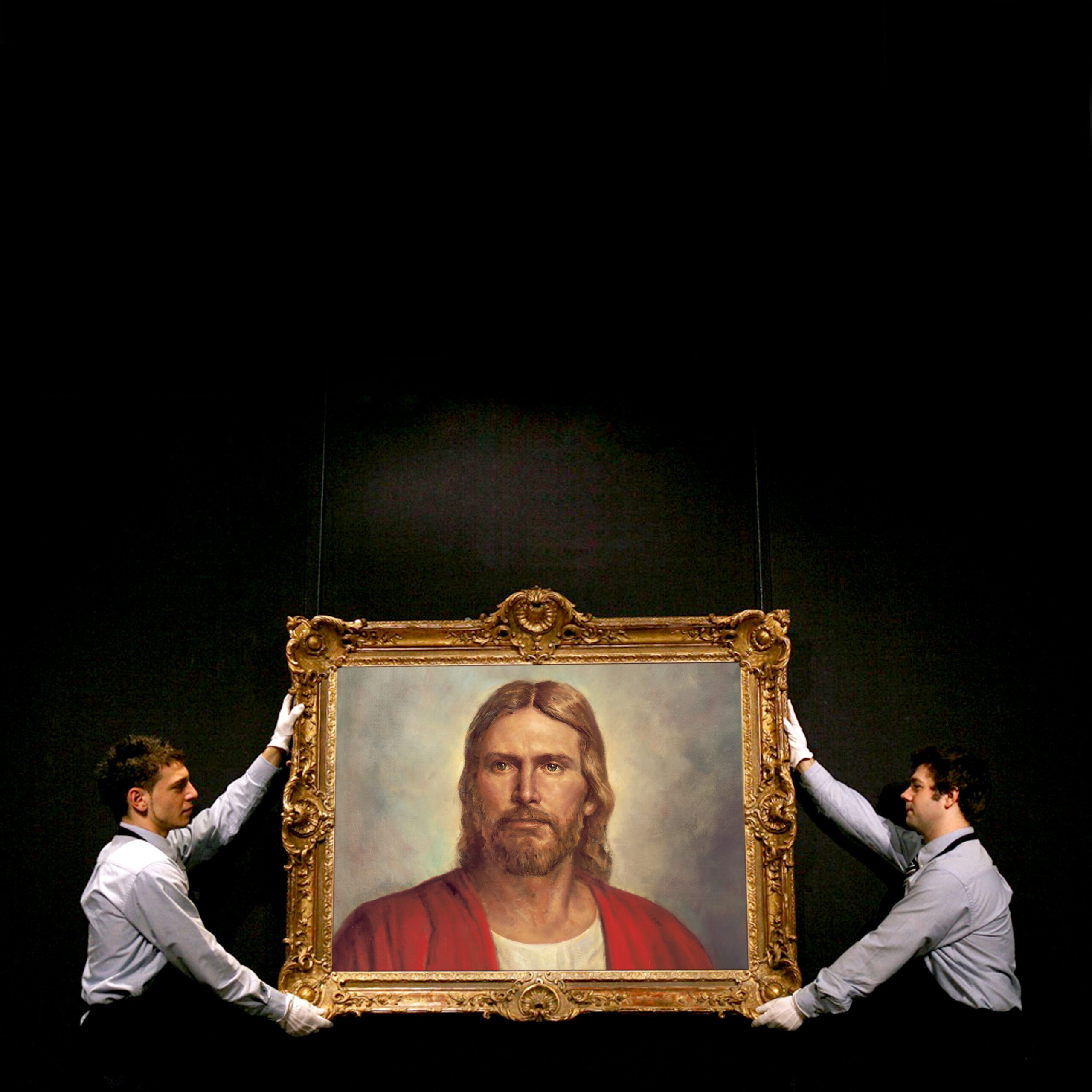
The days are shorter and the temperature is getting colder each day. The signs are all over: Christmas season is soon to come. In fact, when you go to the department stores or malls, you will hear Christmas songs being played. “A man will live forever more because of Christmas Day,” so goes a line of a song. As financial crisis hits the world, people are now worried that they may not be able to celebrate Christmas lavishly. No more Christmas trees, Santa Claus, lanterns. Not even Christmas lights. To think of, Filipinos celebrate the longest Christmas in the world – starting from the first day of the month whose last three letters are “ber” as in September, October, November and December. It ends with the Feast of Epiphany (the first Sunday of January). Without too much fanfare and festivity, I think Filipinos could now celebrate Christmas as it should be. Christmas is celebrated because of Jesus Christ and not because of food, gifts, and drinking. That should be what Christians should think about this season.  “I have now disposed of all my property to my family,” Sir Patrick Henry once said. “There is one thing more I wish I could give them, and that is the Christian religion.” Francis Bacon acclaimed: “There never was found in any age of the world, either philosopher or sect, or law, or discipline which did so highly exalt the public good as the Christian faith.” Why is this so? “The radiant Christian is more concerned with carrying his cross than with complaining about his callouses. He remembers the harvests, not the hardships. He thinks about his friends, not his failures. He talks more about his blessings than his backaches, more about his opportunities than his operations,” William A. Ward answers. Christmas – the Advent – is the first step of Calvary’s journey. “The coming of Christ to man was a journey no one had ever taken before – or since. But all can travel the road from man to God,” C. Neil Strait assures.   The precious portrait As the happiest season of the year is coming, let’s pause for a moment and ponder some thoughts. We have to remember the reason for this Season. You may have heard the story that I am going to share, but allow me to tell it again:  A wealthy man and his son loved to collect rare works of art. They had everything in their collection, from Picasso to Raphael. They would often sit together and admire the great works of art. When the Vietnam conflict broke out, the son went to war. He was very courageous and died in battle while rescuing another soldier. The father was notified and grieved deeply for his only son. About a month later, just before Christmas, there was a knock at the door. A young man stood there with a large package in his hands. “Sir, you don’t know me, but I am the soldier for whom your son

The Importance Of Being Honest

Be honest. Even if others are not, even if others will not, even if others cannot.” That seems to be the credo of the Brotherhood of Christian Businessmen and Professionals. As its current president, Bobby Laviña, urges, “We must all live good and honest lives. Be the change we wish to happen. Be honest at all times and in all circumstances.” There are several ways of defining honesty. The dictionary itself has several meaning for the word: refraining from lying, cheating, or stealing; being truthful, trustworthy, or upright; showing fairness and sincerity; or free from deceit. If you describe someone having an honest living, it means that he gained or earned by fair methods his income, not by cheating, lying, or stealing. Is honesty among Filipinos already a dying virtue these days? If you answer affirmatively, I will beg to disagree. Remember that airport employee who was commended for returning a lost shoulder bag containing cash and valuables left behind in a baggage conveyor at the arrival area of the Ninoy Aquino International Airport? In Taguig City, the mayor extolled two city hall employees for turning over the P40,000 cash which a businessman accidentally dropped. In Manila, a 41-year-old city hall timekeeper suffering from polio returned P60,000 worth of cash and checks and vital documents to a company messenger. In San Pablo City, driver-owner Faustino Cardoza earned praises from people for returning the P10-million cash left in his van by a German national. In Zamboanga City, a policeman got a one-rank promotion after he found and returned a bag, containing almost half a million pesos, to a retired Philippine Army soldier at the airport. Even in other parts of the world, some Filipinos still have the decency of being honest. If you can recall, the Senate honored cab driver Nestor Sulpico for exemplifying honesty and uplifting the image of Filipinos abroad by returning US$70,000 worth of jewelry to its owner after it was left in his cab in New York City.   Nothing but the truth In the Book of Wisdom, according to American President Thomas Jefferson, “honesty is the first chapter.” But being honest is not just returning money and lost valuables. It’s more than that. It also means not cheating.  Dr. Madison Sarratt taught mathematics at Vanderbilt University for many years. Before giving a test, he would admonish his class something like this: ‘Today, I am giving two examinations – one in trigonometry and the other in honesty. I hope you will pass them both. If you must fail, fail trigonometry. There are many people in the world who can’t pass trigonometry, but there is no one who can’t pass the examination in honesty.” Honesty also means telling the truth, and nothing but the truth. And that person who tells the truth is ready to face the consequence. “To be willing to march into hell for a heavenly cause,” so goes a line of a popular song. Or as Louisa May Alcott puts it: “Let my name stand

Shopping Cart