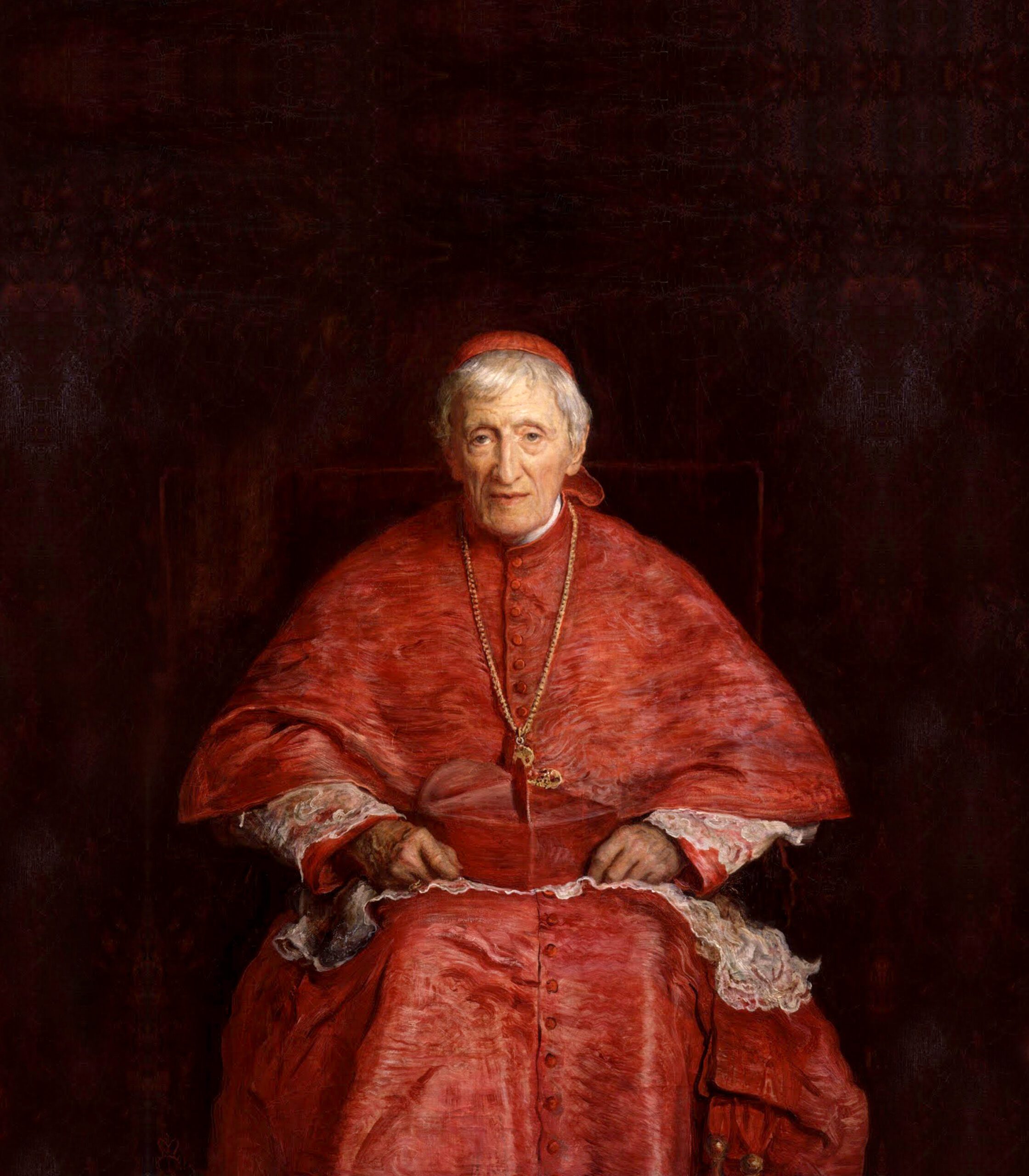
At the consistory of May 15, 1879, John Henry Newman was created a cardinal of the Holy Roman Church. Leo XIII, who had recently been elected pope, personally desired to confer the dignity of cardinal on the well-known English convert whom he affectionately called “my Cardinal.” On receiving the biglietto informing him of his elevation to the cardinalate, three days before the above-mentioned consistory, Newman addressed those present at Cardinal Howard’s residence in Rome. His biglietto speech was to become famous. On that occasion, he renewed his protest against religious liberalism. He gave a precise description of this, a description whose prophetic character is obvious in our time. “Liberalism in religion is the doctrine that there is no positive truth in religion, but that one creed is as good as another, and this is the teaching which is gaining substance and force daily. It is inconsistent with any recognition of any religion as true. It teaches that all are to be tolerated, for all are matters of opinion. Revealed religion is not a truth, but a sentiment and a taste; not an objective fact, not miraculous; and it is the right of each individual to say just what strikes his fancy. Devotion is not necessarily founded on faith. If a person puts on a new religion every morning, what is that to you? It is as impertinent to think about a man’s religion as about his sources of income or his management of his family. Religion is, in no sense, the bond of society.” Today, we are witnesses of a mentality which sustains precisely these ideas, denounced by Newman, with very grave consequences for the cause of the Truth, for ecumenical and interreligious dialogue, for the liturgy and spirituality and for the social and cultural dimension of the faith. Blessed Cardinal Newman can remind everyone, pastors and lay people alike, that the Truth is a very precious treasure to be accepted with faith, proclaimed with honesty and defended with force. “Commonly the Church” as Cardinal Newman ends his discourse, “has nothing more to do but to go on in her own proper duties, in confidence and peace: to stand still and see the salvation of God.” Searching for the truth Cardinal Newman was born in London on February 21, 1801. The eldest of six children, three boys and three girls, Newman was the son of an English banker and his wife. His boyhood was just a normal boyhood, and he loved the things of children. He loved to fly his kite, loved walking and boating, but he did not enter into contact sports like rugby and soccer. He loved music and he loved to play his violin. He had an analytic mind and he delved deeper into things than most boys of his own age did. From his grandmother, Newman gained an eager love of Scripture. At the age of twelve, Newman showed a religiosity that seemed to be extreme. His father, in his wisdom, advised the young scholar