
Category: World Touch

Girls Are Going Back To School

The valley was cleared of the Taliban by a military operation in 2009, but it’s taken awhile for girls to fill the schools again. Girls struggle to simply get to school in the remote mountainous region and the persistent issue of poverty remains key. The Taliban is considered a greater threat in areas that border the valley, but activists here say there’s a need to make sure girls, as well as boys, are educated in order to avoid a repeat of the past. “There is a feeling [in Swat] that, if we are not educated, these things will happen again,” says Hazer Gul, a local activist. “The Mullahs misinformed us. They [the community] have understood that education is the key to avoiding militants.” Enter the Malala Fund: The fund named for Malala Yousafzai, the young girl who was shot point blank by a Taliban gunman for her vocal support of school for girls in the region, aims to improve access to primary school education for children around the world. Her survival of the Taliban attack on her school bus one year ago in October, shined a spotlight on Pakistani girls’ education – and made her a global spokesperson for the millions of Pakistani girls who are denied education by the movement.  

Springtime In The Church

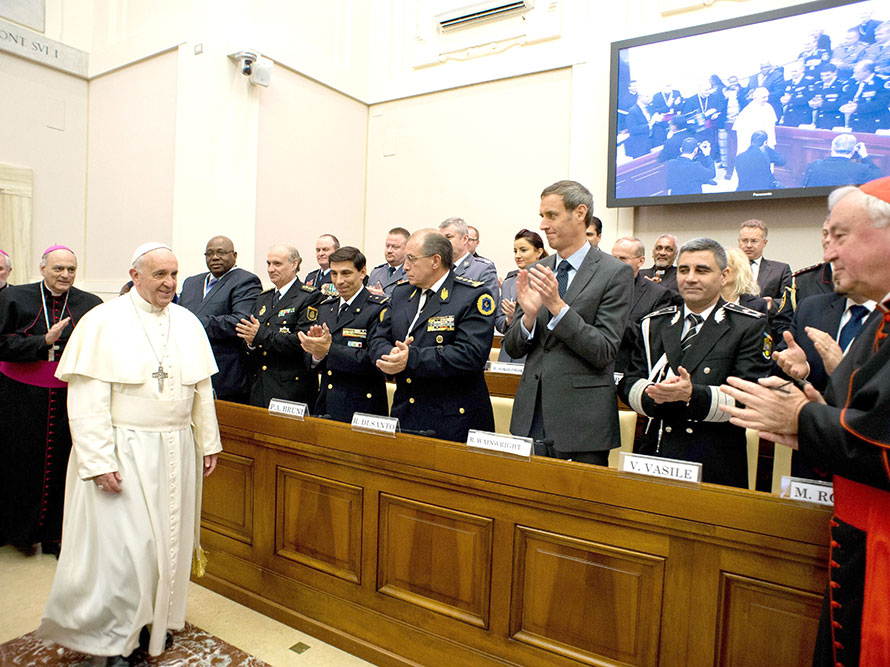
The cardinal didn’t spare his words: “It’s a big blessing for the Church. It seems like springtime for the Church. He has sparked an atmosphere of joy, enthusiasm and excitement. There’s life, vitality and enthusiasm for the Church now. People say this is the Church that I like to belong to. People have gone to confession and Mass because of the inspiration that Pope Francis has given.” He thinks something similar is happening in the rest of Asia: “I don’t have a lot of feedback as yet, but I’ve met some bishops from other countries, from Pakistan, Sri Lanka and Cardinal Tagle from the Philippines; all have spoken very, very favorably of the Holy Father’s impact on their countries.” Cardinal Gracias, who was appointed by the Pope to represent the continent in the group of eight cardinals who are to be his top advisors, confesses that he was astonished by the news: “I was very, very surprised when I received the call from the Secretary of State that the Holy Father wanted me on this group of eight people to advise him. I said why me? I must say I almost felt certainly unworthy and humbled, but I also realized it is a tremendous responsibility and I felt like running away and saying get somebody else to advise you. But I realize it is something crucial, vital and very responsible.”  He also notes the role that the group, which includes representatives of all continents, can play: “I think the group will make a difference if he wants it to make a difference. I’ve heard him so often refer to this group in recent times that my impression is that he is expecting a lot from us. It appears to me that we are a little like the group of consulters that a Jesuit provincial has; and which he appoints. These consulters are there to help him in his different decisions, and he calls on them when there’s a need. I think it’s something of that sort; it’s the Ignatian method. It has proved very successful for the Jesuit provincials, and I cannot see why it can’t also prove successful for the Pope.” 

A Snapshot Of The Chinese Elderly

The survey covered about 18 thousand people in 28 provinces. The data points out that 65% of the elderly population is likely to live in poverty for the rest of their lives, given that the pension system cannot cover costs if it isn’t receiving taxes from workers which, in any case, are far fewer than the elderly.  Analysts who have studied the results of the research have reported alarming figures. More than 38% of the elderly “has serious difficulty” in meeting their daily needs; 24% have to integrate their pension with an odd job to make ends meet, 25% live on less than 2,433 Yuan (about 300 Euros) a year, the minimum set by the government to define a pauper. The healthcare situation is also disastrous. About 33% of respondents suffer from a chronic disease: 54% of these have high blood pressure, while 40% are not even able to have their illness diagnosed. There are very high rates of psychological symptoms: 48% of women and 32% of men show signs of depression. Added to this is the fact that the availability of access to the medical system is greatly reduced for the elderly who live in big cities. Beijing can only provide 1,100 beds per 10 thousand requests for admission. Professor John Strauss of the University of California points out that another factor also must be taken into consideration. “At the moment, those over 65 had 3 or 4 children. The next wave will be to those who have suffered the one-child law and, therefore, a lot less hope. ”  

Killings Remain A ‘Major Concern’

WAN-Ifra’s recorded incident in the Philippines was the murder of commentator Julius Cauzo of radio station DWJJ in Cabanatuan City in Nueva Ecija province. Cauzo was shot dead on Nov. 8 last year. Cauzo, WAN-Ifra noted, was critical of local politicians and had received death threats. The group emphasized that “impunity remains a bitter issue in the Philippines.” It said that investigations were “still ongoing into the Nov. 23, 2009, ‘Ampatuan massacre,’ which saw 32 journalists tragically killed.” The New York-based Committee to Protect Journalists listed the Philippines as the third most dangerous place for journalists – with the unsolved killings of media men even after President Aquino vowed to end the murders. WAN-Ifra said that of the media deaths, 15 were killed while covering the civil war in Syria while 10 died in Somalia. “Whether at the hand of extremists, organized criminal gangs or official security forces, journalists increasingly find themselves in the firing line,” WAN-Ifra said. “Where the media is targeted, impunity for the killers of journalists continues to prolong the agony for the victims’ families and cast a chilling shadow over the profession,” it added. WAN-Ifra said its 47-page report noted that, in many parts of the world, attempts to muzzle press freedom had gone in the form of criminal liabilities, soft censorship and “policing the digital debate,” where states had targeted social media users active in political debates. Online freedom of expression has been targeted by authorities in China and Vietnam where bloggers have been under surveillance or sentenced to jail terms. In Afghanistan and Pakistan, media are under attack from “violent extremists,” WAN-Ifra said.   

United Effort Against Trafficking

The collaborative campaign was formalized during a three-day meeting of representatives of a dozen congregations active in anti-trafficking programs in local communities and the Leadership Conference of Women Religious in Washington. The meeting coincided with the release of a report by the Presidential Advisory Council on Faith-Based and Neighborhood Partnerships offering 10 recommendations to President Barack Obama’s administration aimed at eradicating human trafficking. For years, individual congregations, such as the Sisters of the Humility of Mary of Villa Maria, Pa., have run human trafficking awareness programs regionally. Sr. Margaret Nacke, a member of the Sisters of St. Joseph of Concordia, Kan., who helped convene the gathering, said it is time for the congregations to come together to better make use of the anti-trafficking resources and programs they had developed. Congregations from California, Indiana, Kansas, Louisiana, Nebraska, New Jersey, New York, Ohio and Pennsylvania were represented. “In our dialogue with government, non-government organizations and church officials, we, Sisters, got a better sense of their focus and their thrust in regard to modern-day slavery. And they got a better idea of what we, Sisters, are doing,” Nacke said. The call for greater collaboration stems from Nacke’s research into the trafficking work of religious congregations. Her findings led to the development of the Bakhita Initiative, an Internet-based listing of anti-trafficking programs and resources available from congregations nationwide. The initiative is named after St. Josephine Bakhita, a Sudanese slave who became a nun after her release. Born in 1869, she was kidnapped at age 7 and sold into slavery. Her kidnappers gave her the name Bakhita which, translated, means “fortunate one.” She eventually was freed and was inspired to join religious life. Pope John Paul II canonized her in 2000. Nacke envisions the online initiative as being a storehouse of human trafficking resources for religious congregations as well as the general public. Eleven congregations of women religious in the Toledo diocese formed Stop Trafficking of Persons (STOP) in 2006. Toledo, a major crossroads between Cleveland, Chicago, Detroit and points south, ranks fourth in the country in the number of arrests, investigations and rescues of children involved in sex trafficking, a 2010 report from the Ohio Trafficking in Persons Study Commission found. An estimated 100,000 to 300,000 minors are victims of sex trafficking at any given time, according to the Justice Department. Worldwide, about 21 million people are trafficked in an industry that nets traffickers $32 billion annually, the State Department’s 2012 Trafficking in Persons report said. “This is a crucial point to come together [nationally] because we really want to go about this in terms of best practices,” Nowak explained. “We want to use both heart and head. It’s important to collaborate and network.”   

America’s First Refugees

In the dream, Warner climbs on to the roof of her small house. As the waters rise, she swims for higher ground: the village school which sits on 20-foot pilings. Even that isn’t high enough. By the time Warner wakes, she is clinging to the roof of the school, desperate to be saved. Warner’s vision is not far removed from a reality written by climate change. The people of Newtok, on the west coast of Alaska and about 400 miles south of the Bering Strait that separates the state from Russia, are living a slow-motion disaster that will end, very possibly within the next five years, with the entire village being washed away. The Ninglick River coils around Newtok on three sides before emptying into the Bering Sea. It has steadily been eating away at the land, carrying off 100ft or more some years, in a process moving at unusual speed because of climate change. Eventually, all of the villagers will have to leave, becoming America’s first climate change refugees. It is not a label or a future embraced by people living in Newtok. Yup’ik Eskimo have been fishing and hunting by the shores of the Bering Sea for centuries and the villagers reject the notion they will now be forced to run in chaos from ancestral lands. But exile is undeniable. A report by the US Army Corps of Engineers predicted that the highest point in the village – the school of Warner’s nightmare – could be underwater by 2017. If Newtok cannot move its people to a new site in time, the village will disappear. A community of 350 people, nearly all related to some degree and all intimately connected to the land, will cease to exist, its inhabitants scattered to the villages and towns of western Alaska, Anchorage and beyond. It’s a choice confronting more than 180 native communities in Alaska, which are flooding and losing land because of the ice melt that is part of the changing climate. While some dispute the overwhelming scientific view that climate change is caused primarily by human activities, there is little argument in Alaska about its effects.   

No More Broken Promises

 The United Nations Food and Agriculture Organization conference, that took place in Rome, brought together national representatives committed to fighting hunger in the world. This is a subject that is especially close to the Argentinean Pope’s heart. On World Environment Day, recently, the Pope warned: “The food we throw away is as if stolen from the table of the poor, the hungry!” In his address, Francis did not limit himself to platitudes but invited the international community to take its responsibilities seriously: “This, I believe, is the significance of our meeting today: to share the idea that something more can and must be done in order to provide a new stimulus to international activity on behalf of the poor, inspired by something more than mere goodwill or, worse, promises which all too often have not been kept. Nor can the current global crisis continue to be used as an alibi. The crisis will not be completely over until situations and living conditions are examined in terms of the human person and human dignity,” the Pope said. In the speech he gave in Spanish, the Pope denounced the “scandalous” situation today, in which current levels of production are sufficient… to enable everyone to benefit from the fruits of the earth, and not simply to close the gap between the affluent and those who must be satisfied with the crumbs falling from the table but, above all, to satisfy the demands of justice, fairness and respect for every human being,” Francis recalled.  The Pope also stressed his condemnation of “financial speculation,” as a factor which causes food prices to shoot through the roof “treating it like any other merchandise and overlooking its primary function.” This is an issue Benedict XVI had also addressed often during his pontificate. “What is demanded of FAO, its Member States, and every institution of the international community, is openness of heart. There is a need to move beyond indifference or a tendency to look the other way, and urgently attend to the immediate needs, confident that the fruits of today’s work will mature in the future,” the Pope added.  The Vatican’s Permanent Observer to FAO, stressed the importance of the organization’s programs, especially at the difficult economic situation the world is currently facing. Member States have the duty to continue providing FAO with the resources it needs, showing solidarity that is proportionate to the abilities and needs of each country.  

Mindanao Group Wins Top Peace Award

“The dedicated efforts of the members of the Movement have not only advanced the process towards lasting peace in their communities, but have also inspired many people around the world with an example of true dialogue based on spirituality,” the award-giving body said in a statement. D’Ambra said the Award is a “recognition” of the organization’s concerted efforts to help end the patchwork of conflicts in the southern Philippine island of Mindanao involving Islamic and Communist rebels over the past 30 years. Started with a group of Muslim and Christian friends, D’Ambra has seen the Movement’s peace-building and dialogue activities grow steadily. It is also involved in sustainable agriculture, environmental advocacy and holistic healthcare. Silsilah, an Arabic word which means ‘chain’ or ‘link,’ implies “spritual linkage of humanity as created by the same God,” said D’Ambra. The organization will receive the Award at a ceremony to be held during this year’s Goi Peace Foundation Forum in Tokyo in November.   

The Light Of Faith: The Two Popes’ Encyclical

 Thumbing through the pages, however, it is evident in the text – a relatively short text, 91 pages composed of 58 paragraphs – that the dominant hand is that of the German pontiff. And not just because the encyclical on faith concludes the triptych on the theological virtues starting with Deus Caritas Est on charity and followed by Spe Salvi on hope. The layout of the text, the frequent references to philosophers and live debates in the German culture of the ’60s, the insistence on some issues, and even the comparison between faith and Gothic cathedrals, where “the light comes from the sky through the windows where it represents the sacred history,” all testify that Pope Francis has decided to respect and accept the work of his predecessor.  Francis explicitly expresses in paragraph 7 of the Encyclical: “These considerations on faith – in continuity with all that the Church’s magisterium has pronounced on this theological virtue – are meant to supplement what Benedict XVI had written in his encyclical letters on charity and hope. He himself had almost completed the first draft of an encyclical on faith. For this, I am deeply grateful to him and, as his brother in Christ, I have taken up his fine work and added a few contributions of my own.”  The title of the Encyclical, Lumen Fidei (The Light of Faith) summarizes the fundamental dynamic which moves in line with the text: the tradition of the Church has always associated faith being the light that dispels the darkness and illuminates the path. “In modernity, that light might have been considered sufficient for societies of old, but was felt to be of no use for new times, for a humanity that has come of age, proud of its rationality and anxious to explore the future in novel ways. Faith thus appeared to some as an illusory light, preventing mankind from boldly setting out in quest of knowledge.”  The text cites Nietzsche, one of the constant reference points – even if negative – of Ratzinger’s thought, for which “belief would be incompatible with seeking. But in recent decades,” he adds, “it was discovered that the light of autonomous reason is not enough to illumine the future. As a result, humanity renounced the search for a great light, Truth itself, in order to be content with smaller lights which illumine the fleeting moment. For this, in today’s world, “there is an urgent need, then, to see once again that faith is a light,” discovering that only the light that comes from believing in God is “capable of illuminating every aspect of human existence.”  The road to the discovery of this bright character of faith happens naturally with the encounter with Christ and by His love. “Transformed by this love, we gain fresh vision, new eyes to see; we realize that it contains a great promise of fulfillment and that a vision of the future opens up before us.”  After the introduction, the Encyclical, in four chapters, traces

Pope Benedict Resigns

After the first reactions of disbelief, there was no possible doubt about it. Pope Benedict had announced his resignation as the Bishop of Rome and, therefore, as Pope. He did so in strict adherence to what is clearly established by Church Law (CIC 332) which explicitly makes provision for the eventual resignation: to be valid, it must be done personally, in complete freedom, and it must be made manifest. There is no need for anybody to formally accept it. Pope Benedict also included in his declaration the day – 28 February, and the hour – 20:00, Rome time, when his mandate as Pope would cease. He also declared that he reached such decision after much reflection and prayer, and following his own conscience. He was sure that the step he was taking was ‘according to God’s will’ and that it was ‘for the good of the Church.’ After 28 February, he would continue to serve the Church dedicating his life to prayer, since his age and his health no longer allowed him to continue to serve in the government of ‘the boat of Peter.’ He himself had mentioned that possibility a couple of years ago. It was in the ‘interview book,’ Light of the World (Vatican 2010), which he did with journalist Peter Seewald. I quote freely: ‘If a Pope sees that he is no longer capable, physically, psychologically or spiritually of continuing to carry on with the duties of his service, then he has the right, and in certain circumstances, even the duty to resign.’ Of course, we all thought it was merely a theoretical hypothesis. Clearly it wasn’t so! In 2009, he had made an interesting pilgrimage to the tomb of a saintly pope of the thirteenth century: Celestine V, in the Italian city of L’Acquila. On the tomb of Saint Celestine V, Benedict placed a Pallium, just like the one which he himself always wears as bishop of Rome. It may have been just a coincidence, but Pope Celestine V was the one who resigned from the papacy just a few months after his election. He did so, on 13 December 1294, in front of the assembled cardinals.  Resignation by a Pope is an extremely rare event. Apart from some instances, which are discussed by historians, the other pope who is known to have resigned peacefully was Pope Pontian, who resigned in the year 235 when he was condemned to forced labor in the mines of the island of Sardinia, together with the priest Hippolytus. Pope Anterus was then elected as his successor. Benedict XVI leaves the helm of the boat of Peter but he will certainly continue to sustain the new pope and the whole Church with his prayer and with the tremendous witness of humility, faith and courage, in a blend that our Church had not seen for many centuries.  

Shopping Cart