Category: World Touch

Sea Burials

Officials across China are selling hard the option of a watery grave by offering hefty financial incentives and planting stories in state media – with only marginal success. Many local governments, however, have saved their strongest pitches for the Qingming Festival, when families nationwide take a day off to sweep their ancestors’ graves. In the southern metropolis of Guangzhou, officials recently announced a $160 bonus for families that scatter ashes at sea. In Shanghai, officials upped their offer in the past year from $65 to a more persuasive $320. Topping them all, however, are the coastal cities of Shaoxing and Wenzhou, which are offering $800 and $1,290, respectively, for sea burials. To sweeten the deal, the government often provides transportation, including all–expense–paid boat trips. The official eagerness is fueled by bureaucratic fears of chaos and anger once the country runs out of graves – a certainty in coming years, according to recent studies. To cut down on space, cremation already is required by law in cities, but land shortages have increasingly sparked risky investments for even the small graves in which those ashes are usually interred. The cheapest spots in some of Beijing’s more desirable cemeteries sell for more than $16,000, and Chinese media reports have cited luxury tombs sold for as much as $129,000. With virtually unlimited demand, many come with hefty maintenance fees after an initial 20–year lease and guarantee eviction if they go unpaid. And the problem will only get worse as China’s elderly population increases. In 2011, 9.6 million people died in China. A government report, issued last week, predicts the number will reach 20 million annually by 2025. Most provinces will run out of burial room in the next 10 years, according to the study by the Ministry of Civil Affairs. A few provinces – such as Shanxi, Shandong and Guangdong – have fewer than five years.  

They Fear Home Churches

The names of the people arrested have not been published. According to the chief of police, their activity involves “promoting superstitions and corrupt beliefs during their evening meetings. Mohabat reports that the aim of the news is not only to provoke but also to create alarm, start a sort of witch–hunt in response to a phenomenon which is clearly causing concern among leaders. Awhile back, Ati News which, according to Iranian dissidents is linked to government security agencies, published a report which stated that home churches had been identified in “Islamic” cities such as Qom and Mashhad. Mashhad is a pilgrimage destination for Shiite faithful and is the birthplace of Iran’s supreme leader, Seyyed Ali Khamenei. This detail is naturally aimed at triggering the reader’s indignation. [The report affirms that “these places are rented by church leaders, concerned with young people.”] It goes on to say that “Since everyone knows Christians have religious buildings where they can go and worship, this comes across as a scheme to corrupt and cause division among religions.” According to Iranian Christian sources, the number of arrests of people who convert from Islam to Christianity has gone up in recent years. This has meant that many converts do not have free access to Iran’s official religious buildings which are carefully watched by security services, in order to verify new arrivals. Consequently, Christian converts prefer to meet at home, in small groups, to pray, celebrate, study the Bible and follow catechesis and theology courses. The Internet has definitely played a part in sparking great interest and curiosity among young people for spiritual experiences that are different to those offered by the Ayatollah regime. The rise of home churches is one of the practical effects of this feeling. Over the past years, the regime has been constantly preoccupied by a “wild” Christianity that is out of control.  

Shape Of Things To Come

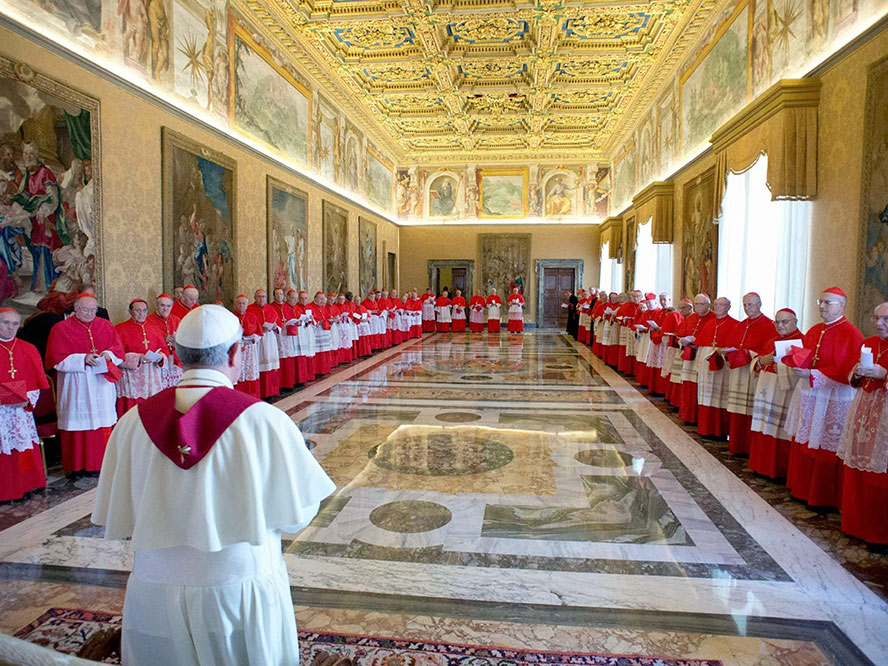
The Pope’s intention appears to be to translate into action the Second Vatican Council’s desire for a realignment of forces within the Church that has remained largely theoretical over the last half–century. So far, most of Pope Francis’ actions have been symbolic of his much less grandiose interpretation of the personal role of the papacy than all recent popes have followed, and he has now given that style of approach some embryonic structural shape.  The new team of eight will not meet as such until the autumn, though it is said the Pope began consulting them individually immediately. What is more significant is that they have been carefully chosen so that, virtually, every part of the world is represented and, in most cases, by men who have themselves been selected for leadership positions by their episcopal colleagues. Thus, the European representative is the German Cardinal Reinhard Marx, who is president of the Commission of the Bishops’ Conferences of the European Community and hence can speak for the Catholic hierarchies of Europe. Similar qualifications – and a similar democratic mandate – apply to most of the others.  This shifts the balance of power in the Church in favor of national or regional conferences of bishops. They have hitherto suffered from lack of status as a result of the ruling by the then Cardinal Joseph Ratzinger, as head of the Congregation for the Doctrine of the Faith, that episcopal conferences “had no theological significance.” They were mere collections of bishops, and their theological weight was merely the sum of their parts. If they have now been recognized as key components in the Church’s new architecture, that may go a long way to incorporating the idea of episcopal collegiality at the heart of the Church. The Vatican II decree Lumen Gentium declared that the primary responsibility for the government of the Church lay with the college of bishops, with the Pope as its head. Hence, the Curia’s role should be as a civil service answering to the college of bishops headed by the Pope, not to govern the bishops on behalf of the Pope – which has been the pattern so far. This is where putting together a team of eight to advise him, and reforming the Curia, are two parts of the same project. If the team is really the beginning of Cabinet government under a “constitutional papacy,” particularly if the principle of subsidiarity is also to be followed, then the Curia will have to be reshaped and scaled back to provide appropriate structures. Clearly a period of upheaval has begun in Rome, with implications worldwide.  

Rural Health Services Ill–Equipped

Health Minister Mohamed Mustafa Hamed said that 20% of hospitals in the rural south have no doctors, and that only 40% of necessary medicines are available in government hospitals and clinics. Pharmacy students from Mansura University recently treated 400 patients during a trip to Samanoud, in the Governorate of Gharbia, 126km north of Cairo, the capital. “We discovered that the few clinics that existed in this area were only about the walls and the doors – no medicines and no service at all,” said Aly Kishk, one of the pharmacy students.  Kawthar Mahmud, head of the health ministry’s nursing administration, said her ministry was dealing with a shortage of 40,000 nurses in the nation’s hospitals and clinics. The Medical Association says that as many as 230,000 doctors are registered with them, but around 30,000 have left to work in other countries. “There is mass migration of doctors from Egypt because of lack of money and tough work conditions in this country’s hospitals,” said Mohamed Hassan Khalil, head of the Right to Medicine Centre, a local NGO that defends the rights of doctors and patients to better work conditions and services.   

Brain Drain Is The Other Face Of The Crisis

Late last year, the World Health Organization said all of the country’s nine psychiatrists and more than half the doctors in Homs had left the country. Clinics run by the Syrian Arab Red Crescent are short of surgeons and other medical experts. As the Syrian conflict entered its third year, the number of refugees surpassed one million. Observers worry the “brain drain” will affect Syria’s long–term future. “These skills are much needed for rebuilding Syria tomorrow,” Nouicer said.  While Syria has been affected by the departure of educated people for decades due to lack of economic opportunities and political freedom, the conflict has increased the shortages of doctors, engineers, teachers and lawyers to unprecedented levels. “One of the most alarming features of the conflict has been the use of medical care as a tactic of war,” the Independent International Commission of Inquiry on Syria wrote in a recent report. “Medical personnel and hospitals have been deliberately targeted and are treated by parties to the conflict as military objectives.”  Many professionals have had difficulty getting visas to Europe and the Gulf states, and have instead ended up in refugee camps in neighboring countries, where aid agencies are trying to make use of their skills through community mobilization and cash–for–work programs in the camps’ schools and health centers. Others have decided to stay to try to address the needs in their country.   

1,600 Foreign Priests

To church officials, this is not necessarily a bad thing. ”They bring freshness, youth, and another way to consider the pastoral,” says Fr Pierre–Yves Pecqueux, who heads the international recruitment at the Conference des eveques de France, the church’s bishops’ committee. ”They have their own way to speak about faith, and a joy to believe in God,” he says. Most foreign priests are sent to France for three, six or nine years according to an agreement between bishops. They settle here on the basis of the Fidei Donum (Gift of Faith), the 1957 encyclical that encouraged bishops to open themselves ”to the universal needs of the Church.” Some also serve as part-time priests, having gone there primarily to study theology in French universities. The church organises sessions to welcome foreign priests and train them for the religious realities of France. The newcomers are given information about the history of Catholicism in France, the specifics of state secularism and the use of social media. For many priests, the fundamental problem is the Church’s struggle to define itself for a new generation in a secular country and amid a de–Christianizing trend in western Europe.  

Towards The Dignity Of The Human Family

Two years ago, in Tunisia, the symbolic beginning of the Arab Uprising made its mark on the global stage. The world witnessed the power of the masses on the streets denouncing corruption in government, austerity cuts in the face of the ever deepening unemployment and the clamor for justice. Even though, the so-called “Arab Spring” easily spread to other countries and became the forum to express the deep discontentment of the people towards the massive corruption practiced by their leaders. Presently, the Tunisian people continue to inspire, through their revolutionary process, as the country hosted the 2013 World Social Forum (WSF). The mass of participants, gathered from many countries around the world, assembled at Av. Bourghiba, the heart of Tunisia for the grand parade of peoples and the display of different causes and advocacies that drove them to be present at the WSF. The Tunisian youth did not lose the opportunity to make their plea for change, using, as flag for justice, the face of Shukri Belaid, the opposition leader, well–loved by the people but assassinated last February 16. Clearly, the choice of Tunisia to be the venue for the WSF, despite the uncertainty that reigns and the heavy display of police security, was providential to rekindle the hope for a change against all fundamentalisms. The parade became a colorful display of a true Spring journey filled with colors, songs and slogans, uniting people in a common dream for change. The campus of the University of Tunis, welcomed the many forums informing and sensitizing the participants to different causes, all under the common slogan: “A different world is possible.” Human dignity was the central theme of the WSF. This was the third in Africa. The first was in Nairobi in 2007 and the second in Dakar in 2011.  At the end of the WSF and of the Comboni Forum, the Comboni participants stated: “We felt we were in the right place: in dialogue with many people who were searching, together with other religious Sisters and religious Brothers who are journeying in the same direction, and missionary animators surrounded and challenged by the pluralism of ideas and organizations. By being the voice of our peoples, by giving the reasons for our hope, consistent of those who live next to the people, we were among the few direct witnesses, at the Forum, of the dramas of the various countries in conflict in the sub–Saharan Africa and in the Arab world.” We felt the Church’s wealth of commitments in many areas of Justice, Peace and Integrity of Creation (JPIC) that we, too, support. We felt strengthened by the joy of discovering that other religious people follow the Comboni methodology of “Saving Africa through the Africans.” We have built together, Sisters and Religious men, a Comboni Forum alongside the events of the World Social Forum. This step enriched us and made us feel in tune with the aspirations of the people. It was a unique opportunity for ongoing formation and made us believe that

Agencies Launch $18m Education Scheme

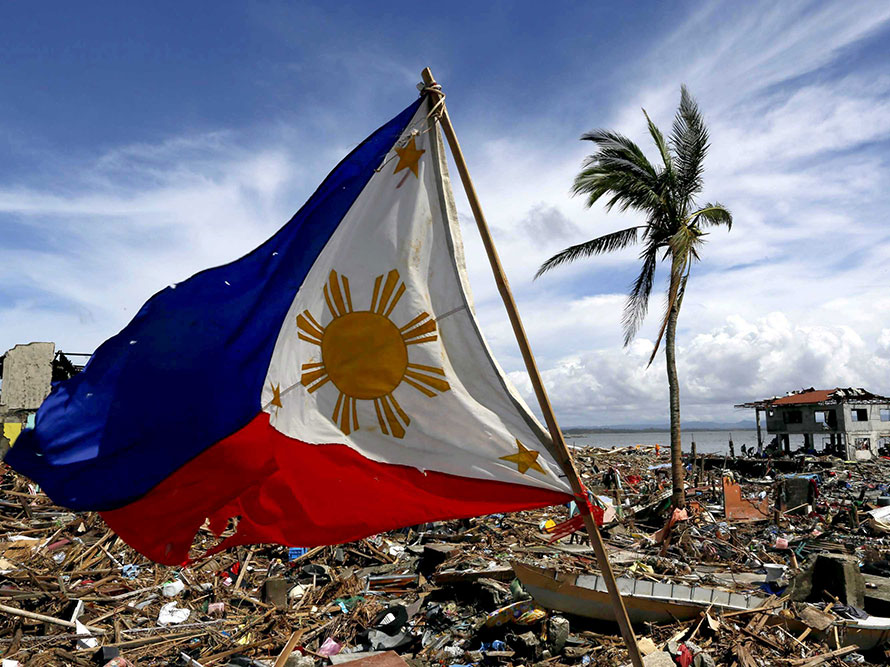
Tomoo Hozumi, UNICEF country representative, said he expects the return on the investment in childhood learning to be “extremely high.” He cited a recent study which shows that every dollar spent on early childhood care and development (ECCD) returns as much as $12 on the value of human development. Hozumi also said that investing in the most disadvantaged children is “justifiable, first and foremost, from the viewpoint of human rights.”  Teresita Inciong, ECCD Council head, said early childhood education will improve the country’s high dropout rate. “Ages from zero to four years old are crucial for brain development and it’s irreversible if we fail to catch up,” she said at the launch of the project in Quezon City. The project will be implemented by UNICEF with the Departments of Social Welfare, Education and ECCD. Social Welfare Secretary Corazon Soliman said that the project will focus on children who are in the most disadvantaged condition, especially those trapped in the conflicts in Mindanao. The project will also help the government establish more day care centers on isolated islands as well as relocation sites for displaced children, she added. The country has only 45,000 day care centers, most of them managed by day care staff who earn a meager allowance of about $12 a month.  

Prison Population’s “Unprecedented Increase”

“This is one of the major human rights problems within the United States, as many of the people caught up in the criminal justice system are low income, racial and ethnic minorities, often forgotten by society,” Maria McFarland, deputy director for the U.S. program at Human Rights Watch, said. In recent years, as a consequence of the imposition of very harsh sentencing policies, McFarland’s office has seen new patterns emerging of juveniles and very elderly people being put in prison. “Last year, some 95,000 juveniles under 18 years of age were put in prison, and that doesn’t count those in juvenile facilities,” she noted. “And between 2007 and 2011, the population of those over 64 grew by 94 times the rate of the regular population. Prisons clearly aren’t equipped to take care of these aging people, and you have to question what threat they pose to society.” According to the new CRS report, a growing number of these prisoners are being put away for charges related to immigration violations and possession of weapons. But the largest number is for relatively paltry drug offenses – an approach that report author Nathan James, a CRS analyst in crime policy, warns may not be useful in bringing down crime statistics. “Research suggests that, while incarceration did contribute to lower violent crime rates in the 1990s, there are declining marginal returns associated with ever increasing levels of incarceration,” James notes. He suggests that one potential explanation for this could be that people have been increasingly incarcerated for crimes in which there is a “high level of replacement.” Of course, the U.S. prison population’s blooming needs to be traced back to changes within the federal criminal justice system. Recent decades have seen an expanding “get tough” approach on crime here, under which even nonviolent offenders are facing stiff prison sentences. Arguably, the single most important element in explaining the record incarceration numbers, both at the federal and state levels, could be “mandatory minimum” sentencing requirements, under which federal and state law over the past two decades has automatically required certain prison sentences for certain crimes, particularly for drug offenses. “Particular attention should be given to reforming mandatory minimums and parole release mechanisms as policies that can work to reduce state prison populations.”  

Persecution Of Christians Getting Worse

Sadly, it is now customary for the so–called “house” churches, which are less easy to control, to be targeted by the Chinese government. But there is another factor that has made the situation even more difficult and that is the government and the Communist Party have a specific aim. Taking into account the past 7 years, it is clear that persecution continues to worsen, on the basis of an annual 24.5 % growth rate. According to ChinaAid’s analysts, persecution in 2012 was not just a continuation of the practice, developed in 2008 and 2009, of “targeting “house” church leaders and churches in urban areas,” or the 2010 strategy of “attacking Christian human rights lawyers groups and using abuse, torture and mafia tactics.” Neither was it a continuation of the 2011 strategy of increasing the intensity of the attacks against Christians and “house” churches that have an impact on society. There was a change of strategy and the reason for this can be found in a document issued by the Ministries of Public Security and Civil Affairs. This document, which was written by the State Administration for Religious Affairs, roughly outlines three phases of the operation. The first, from January to June 2012, foresaw intense and secret inquiries into “house” churches across the country and the creation of a set of archives on these. The second phase should last between 2 to 3 years and be based on the gradual elimination of registered “house” churches with the aim of closing all of these down definitively, over a ten–year period. Indeed, various carrot and stick methods were used to achieve this; churches were closed down and church leaders were sent to labor camps in an attempt to convince them to enter the State and Communist Party-controlled church system. The report, however, does end on a slightly optimistic note. “The church … is still standing firm, flourishing like the cedars of Lebanon and fruit trees planted by the streams, bearing much fruit at the appointed time.” 

Shopping Cart