Category: World Touch

Fighting Fundamentalism

Imams and Muslim preachers from Mali, Niger, Burkina Faso, Mauritania and Algeria took part in the meeting; together, they signed a declaration in which Salafist fundamentalism is described as “a destructive thought that has spread through the Sahel over the past years, sullying the image of Islam and the Muslims.” This opposition, therefore, has a religious motive: the rejection of tolerance or support in contrast with the teachings of the Koran. Hence, imams in the Sahel urge all Muslims to “speak out against violence, extremism and fanaticism” and to spread “a culture of peace and peaceful coexistence with other communities.”It is in order to fulfill these aims that participants at the meeting chose to create a proper league, electing Abdou Daoud Bourima, a Nigerien imam, as president and Algerian General Youcef Mechria as secretary general. Of course, the bodies they are targeting are groups such as Al Qaeda in the Islamic Maghreb and the Movement for Unity and Jihad in West Africa which strike against Christians and foreigners, in the name of “the fight against the Western invaders.”  “Only religion,” Imam Bourima said, is capable of unmasking these fanatics.”  

The Last Frontier

In the U.S., President Barack Obama wants to give legal status to eleven million immigrants by granting them citizenship. Meanwhile, in Tijuana, approximately ten thousand people are sleeping in the streets or in burrows along the river that marks the border, waiting to get past it either legally or illegally. “Many of the people living here have been forced to leave the U.S. and will not give up on the idea of returning.” Fr. Ernesto Hernandez Ruiz, a Salesian, runs the “Padre Chava” refectory that prepares meals for Tijuana’s destitute, most of whom are migrants. He serves a thousand meals six days a week. The Salesians are present in many of the cities located along the border that separates Mexico from the U.S.: Mexicali, Nogales, Ciudad Juarez, Ciudad Acuna, Piedras Negra and Nuevo Laredo, which are mainly used as transit routes for merchandise (and drugs). But, for the Salesians, Tijuana is more important because this is where most human movement takes place. Ever since the prohibition era, California’s residents see Tijuana as a city that has gone off the rails. Once you’ve crossed the border, it’s all about alcohol and no limits, at low prices. Mexico, on the other hand, sees it as the city of hope, of dreams and of a better future. But, for many, that dream ends up crashing against the big wall. “We guarantee the destitute a meal because those who go hungry are capable of anything,” Fr. Ernesto said. He is well aware of the fact that human traffickers are very active in Tijuana. Crossing the border costs about $1,000 and those who cannot pay it all in one go incurs a debt which then has to be paid back once they reach the U.S. and find a job. If people do not pay up, their families back in Mexico pay the price. “We try to persuade migrants not to stay here, Fr. Ernesto explained, but to go back to their country of origin. We have even signed agreements with transport companies so that they can travel back at discounted prices. But it is not easy because they will not accept defeat after spending their whole lives dreaming of a better life in the United States.”  It is eight o’clock in the morning and food is being handed out. Fr. Ernesto has to go. There are hundreds of people waiting in line. The queue which stretches for about one kilometer seems never–ending, as always. It tails off in the center of Tijuana, between Avenues Melchor Ocampo and Internacional. The wall is just a few meters from there. The elderly, women, children and men (there were mostly men) who turned up today got something to eat. Tomorrow, who knows? 

The Wall Of Discord

Abuna Mario has been celebrating Eucharistic liturgies and praying the Stations of the Cross, as well as rosaries, among the olive groves in Cremisan Valley since October, 2011. This time, the Mass has an important objective: the Court of Appeal in Tel Aviv is expected to rule on the appeal presented against building work commencing on the land in question. The appeal was presented by the owners of this land, including the local Salesian House. In his appeal, Fr. Cornioli wrote: “Join us in prayer and may God enlighten Israeli judges. According to the priest, only an “insane mind could have planned the trail for this shameful wall of division” which has “nothing whatsoever to do with keeping the area safe but, it is simply aimed at robbing our families of our land and stifling the life of our communities.” The wall would ruin “one of the Holy Land’s most magnificent areas of natural beauty” and dispossess over 50 Christian families of their land.  

Sea Gypsies Battle For Survival

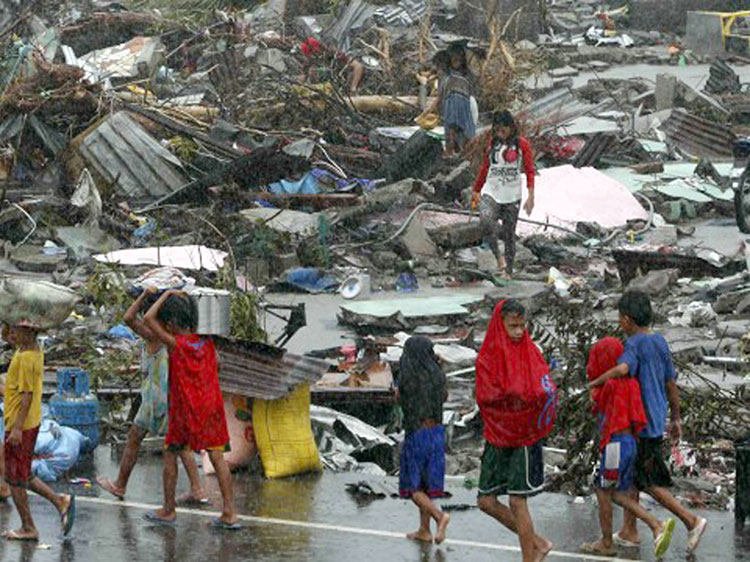
Maramakami and his wife have since moved to Tacloban, a developing city in Leyte province, in a bid to find a more stable source of income. “There is no more money in the sea, no more fish to hunt, and diving in deep waters for a few coins was getting tiring. It was no longer attractive – my wife also didn’t like it.” Theirs is a vicious cycle which is common among sea gypsies, an ethnic minority here. Mainly based in Mindanao, an island to the south, many of the country’s estimated half a million sea gypsies are leaving their homes as their way of life – based around fishing – is slowly disappearing. The Internal Displacement Monitoring Center of Norway has reported that more than a quarter of million people were displaced in Mindanao between January and October last year alone, almost all due to conflict and natural disasters.  The degrading Philippine coastline also plays a part in this migration. The Bureau of Fisheries and Aquatic Resources (BFAR) has reported that 10 out of 13 fishing grounds in the country are heavily exploited due to illegal and unregulated fishing off this archipelago. Home to the second largest reef system in Asia, only 4% of this marine habitat in the Philippines remains in excellent condition, BFAR says. “About 1.2 million jobs in the fishing, tourism and food sectors would be directly affected by poor ocean management,” says Vince Cinches of Greenpeace Southeast Asia. Maramakami says Cebu became overrun with other sea gypsies diving for coins near the port. Earnings inevitably shrank. That’s why he again moved on to Tacloban where he goes door–to–door selling trinkets – necklaces, bracelets and earrings made of seashells and other materials mostly taken from the sea, the only source of livelihood he has known. “We’ll continue roaming until we have a permanent place where our future is secured,” he says. He earns between 150 and 200 pesos (US$3.75 and $5) per day. But there are many sea gypsies living in Tacloban who beg for a living, he adds. “They don’t have much in the way of an education to get a job.” Still in his mid–20’s, Marakami and his wife are among the lucky few sea gypsies to have received a small plot of land from the government just outside of Tacloban in the town of Isabel. “I haven’t thought of my future children yet,” he says. “For now, the important thing is that the two of us survive each day.”  

Pope Benedict Resigns

Giovanna Chirri, the journalist who first sent out the news, through the ANSA agency, said that she just couldn’t believe her ears when she heard the first words of the declaration the Pope was making that Monday morning, 11 February, in front of a consistory of cardinals who were meeting to decide on the canonization of a new group of saints. Benedict XVI was reading it in Latin but she made it out immediately, got confirmation and sent it out. “I gave out the news and then just sat down and began to weep,” she told a fellow journalist.

Agencies Launch $18m Education Scheme

The Australian Agency for International Development (AusAID) and UNICEF, the United Nations Children’s Fund, have launched a joint US$18 million project to help about four million poor children in six Philippine cities. Entitled “Early Learning for Life,” the project will operate in targeted areas of high need across the country.

Prison Population’s “Unprecedented Increase”

The research wing of the U.S. Congress is warning that three decades of “historically unprecedented” build–up in the number of prisoners incarcerated in the United States have led to a level of overcrowding that is now “taking a toll on the infrastructure” of the federal prison system. Over the past 30 years, according to a new report by the Congressional Research Service (CRS), the federal prison population – not counting with the states’ system – has jumped from 25,000 to 219,000 inmates, an increase of nearly 790%. Swollen by such figures for years, the United States has incarcerated far more people than any other country today, imprisoning some 716 people out of every 100,000.

The Last Frontier

The waves of the Pacific Ocean crash against the wall. The poles and the barbed wire fence seem to dip into the blueness of the sea and disappear but, in reality, they do not budge an inch, they remain firmly anchored to the ocean floor. And this is not where the three–meter high wall ends. This is just where it starts. It stretches right across the Mexico–U.S. border, covering a distance of two thousand kilometers. The hundreds of crosses along the wall give it a white tint, almost as if they were meant as decorations to liven up a miserable looking monument dedicated to the thousands of migrants who have lost their lives trying to cross the border. Some die of cold or hunger, others from snake bites or police gunfire. People have tried to climb over it, cross the mountains and make a dream come true: the American dream. Tijuana, Mexico is one of the most heavily trafficked borders in the world.

Sea Gypsies Battle For Survival

Kevin Maramakami met his wife Marikita when they both scratched out a living in Cebu. They would make ends meet by diving to the bottom of the bay in search of coins thrown over the side by arriving and departing passengers of ships. Known as Badjao, or sea gypsies, this couple came together after leaving their home in Mindanao.

Kenya

Agroforestry And Commercial Tree Farming

In 2010 and 2009, Kenya lost a whopping 5.8 billion Kenya shillings (US$68 million) and 6.6 billion shillings ($77 million), respectively, to deforestation, a new report released by the government and the United Nations Environment Program (UNEP) reveals. This is despite the fact that forestry–related commercial activities brought just 1.3 billion shillings into the national economy in the same period.

Shopping Cart