Category: World Touch

Pakistan

Girls Enrolled In Catholic School Hit By Taliban

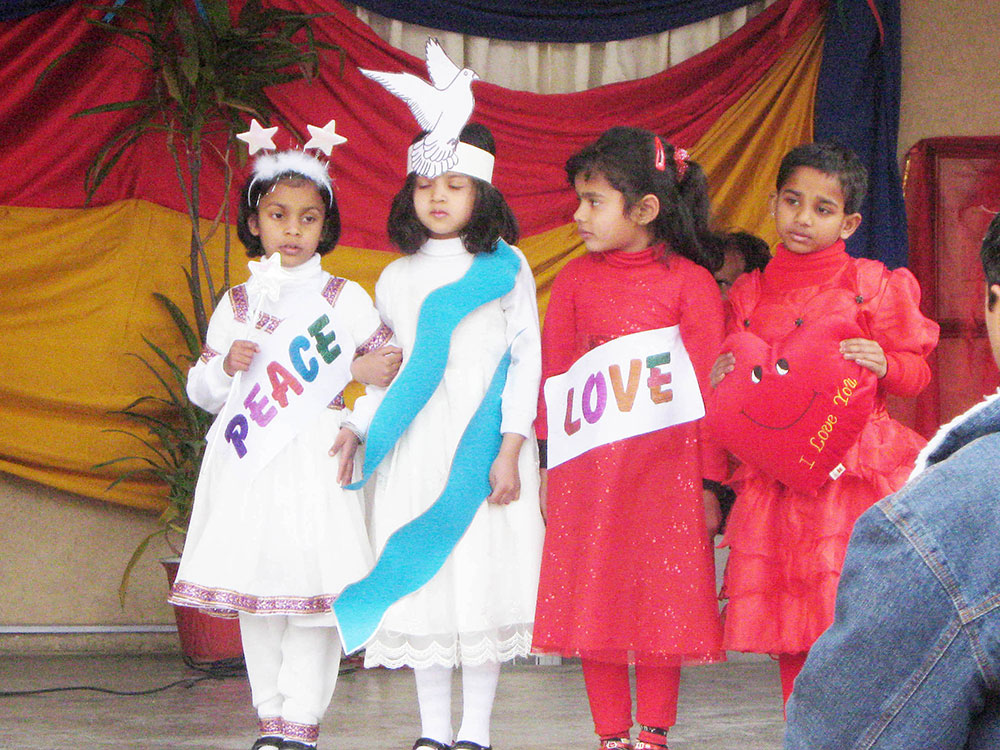
The Catholic girls’ school of the Sisters of the Presentation in Sangota, in the heart of the Swat valley (province of Khyber–Pakhtunkhwa), “reopened a few months ago. It has more than 200 enrollees and is in the process of complete reconstruction” said Sister Riffat Sadiq, part of the team of educators, formerly headmistress of the same school. The institute, founded in 1962, was forced to close in 2007 and, in 2009, was destroyed by the Taliban, who then ruled the valley. In the campaign against female education, Taliban groups forced the closure of more than 400 schools and 150 were destroyed or affected by the bombings. In the Spring of 2012, the school of the Sisters of the Presentation – whose specific charisma is to work for education – has reopened. In a few months, enrollment has risen up to 200 “but as soon as more classrooms are completed, there will be a lot more,” notes Sister Riffat, remembering that before the forced closure, the school had over 1,000 girl students.

Church

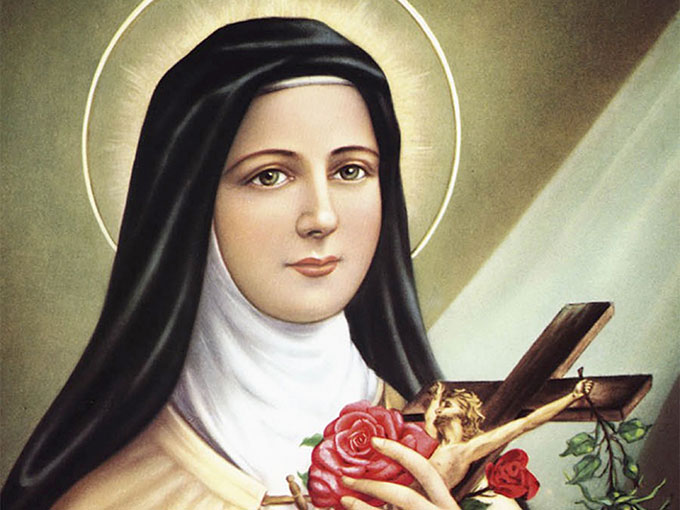
The Real Thérèse Of Lisieux

It is a story of true holiness and manipulated documents, told by Gianni Gennari in his new book “Teresa di Lisieux, il fascino della santità. I segreti di una “dottrina” ritrovata” (Thérèse of Lisieux, The appeal of Sainthood. The secrets of a rediscovered “doctrine” – Lindau publishers). And one recounted in meticulous detail and inspired by documents that remained unpublished until now. The volume reconstructs the life of an extraordinary woman. Saint Thérèse of the Child Jesus is remembered by the faithful as the “little saint” and is identified with the “spiritual infancy” described in Matthew’s Gospel: “If you do not change and become like little children, you will never enter the kingdom of heaven.” And, yet, Thérèse Françoise Marie Martin, who died in the Carmel of Lisieux at the tender age of 24 in September 1897 and was canonized by Pius XI in 1925, never used the expression “spiritual infancy” in her original writings.

China/India

Frontiers Row

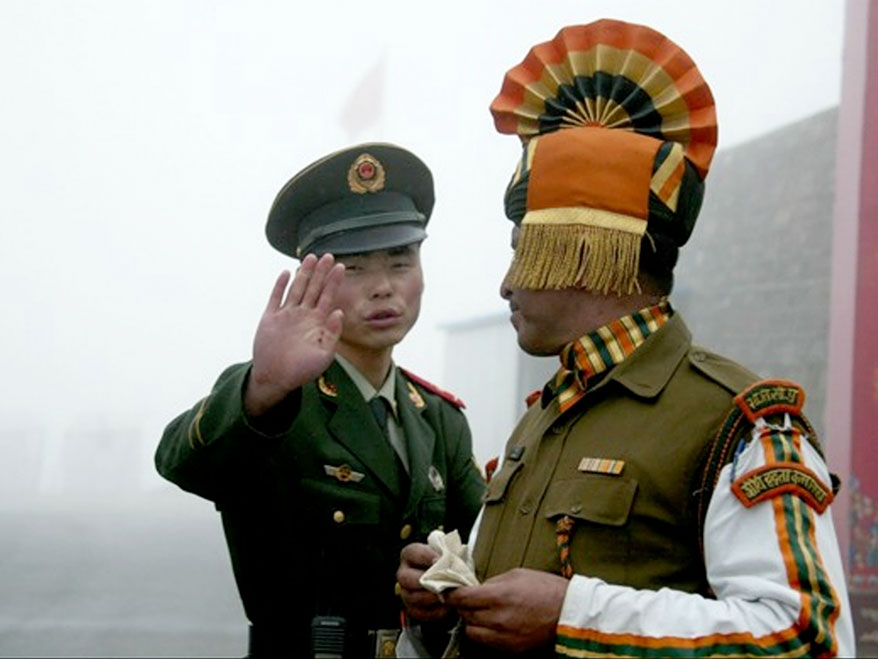
The Indian Embassy in Beijing has begun stamping Chinese visas with a map showing disputed border territory between the two countries as belonging to India. The move comes in apparent retaliation to China’s newly–revised passports, which shows Arunachal Pradesh State and the Himalayan region of Aksai Chin as Chinese territories. India’s External Affairs Minister Salman Khurshid has described the Chinese passport map as “unacceptable.” China is a longtime weapons supplier to Pakistan and, as such, is viewed in New Delhi with deep suspicion. While for Beijing, the presence on Indian soil of the Tibetan spiritual leader, the Dalai Lama, and 120,000 other exiles from Tibet, is a source of resentment.

Israel

World’s Most Militarized Nation

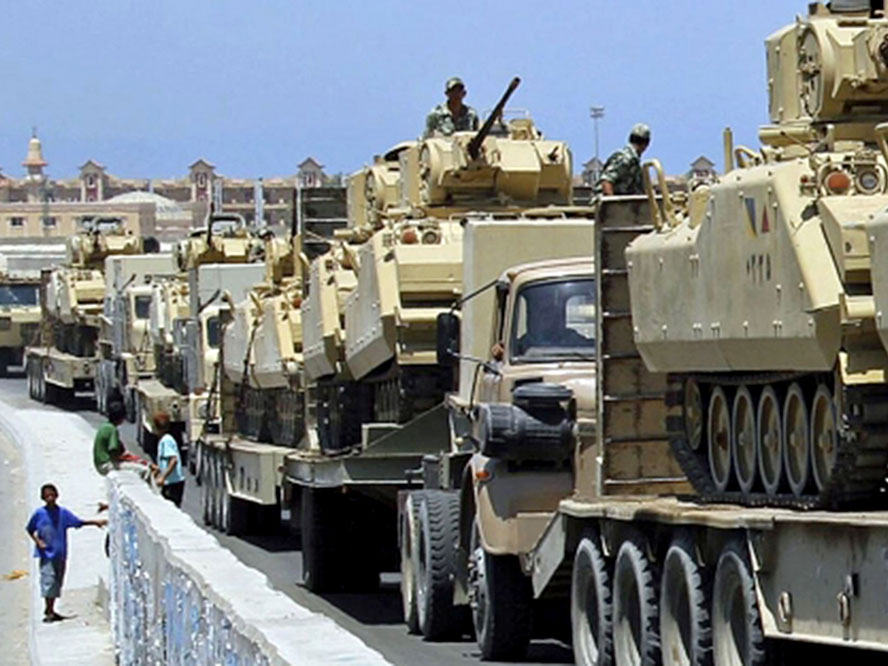
Israel tops the list of the world’s most militarized nations, according to the latest Global Militarization Index released by the Bonn International Centre for Conversion (BICC). At number 34, Israel’s main regional rival, Iran, is far behind. Indeed, every other Near Eastern country, with the exceptions of Yemen (37) and Qatar (43), is more heavily militarized than the Islamic Republic, according to the Index, whose research is funded by the German Federal Ministry for Economic Cooperation and Development.

Fighting The Exodus And Spiritual Extinction

The Synod of the Catholic Church for the Middle East concerns Arab and non-Arab countries that spread over a vast geographical area from Egypt to Turkey, from Iran to Israel and right through to the Gulf, Iraq, Lebanon, Syria, Jordan, Palestine and Cyprus. It includes, directly or indirectly, 14 million Christians in a population of 330 million inhabitants, among whom we find Arabs, Turks, Iranians, Greeks and Jews. This synod will focus on this very complex and diverse situation. It’s true that, in these last years, we have seen a Synod for Lebanon and another for the Holy Land. One might feel entitled then to pose the following question: “Instead of so ambitious a synod for the entire Middle East, why not organize a special synod for each of those countries that has not yet had one? Why should Lebanon and the Holy Land redo the same work?” The answer lies in the fact that the number and complexity of problems and challenges facing the Middle East are too large to be handled by the various single dioceses and churches separately. In addition, our globalized world makes a synod dealing comprehensively with all our common problems under the authority of the Sovereign Pontiff necessary, “cum Petro et sub Petro.”   The Synod sets forth two main goals: – Confirm and strengthen Christians in their identity through the Word of God and the Sacraments. – Give new life to the ecclesial communion between the sui iuris Churches so that they might provide an authentic witness of joyful and attractive Christian life. One peculiarity of the Middle East is the large number of sui iuris Eastern Churches that have taken root here: the Melkites, Syrians, Maronites, Copts, Armenians and Chaldeans. These Churches need to live their liturgical and linguistic particularity, on the one hand, and a greater communion among themselves, on the other. Currently, this communion leaves something to be desired. They also need pastoral and liturgical renewal. The Latin Church went through this change at the Second Vatican Council, which revolutionized its liturgy and ecclesiology and gave it a new openness to the world. The Eastern Churches are in need of a similar revolution so that they might be able to adapt and modernize and thus better meet the needs of their congregations today.   The geopolitical situation Turkey. This country has 72 million inhabitants (source: wikipedia), with a Muslim majority. Christians number 100,000, slightly more than 1 per thousand. Turkey is a secular country, separating state and religion (Islam). It is seeking to give a good impression to gain entry into the European Community. To Turkey’s credit, you could cite the secularization introduced by Ataturk in 1924; on the negative side, we must cite the Armenian genocide, for which Turkey refuses to take responsibility and the partition of the island of Cyprus between Turks and Greeks, which is also its responsibility.   Iran. In this country, Shia Islam is dominant in all sectors of society. Seventy-two million are Muslim, while

Tourism Must Respect Biodiversity

“Biodiversity,” notes a statement released by the Pontifical Council for the Pastoral Care of Migrants and Itinerant People on the occasion of World Tourism Day (20th of September), “refers to the great wealth of beings that live on Earth, as well as the delicate equilibrium of interdependence and interaction that exists between them and the physical environment that hosts and conditions them. This biodiversity is translated into different ecosystems, of which examples can be found in forests, wetlands, savannah, jungles, deserts, coral reefs, mountains, seas and polar zones.” The message warns: “There are three imminent and grave dangers to them that require an urgent solution: climate change, desertification and the loss of biodiversity. The latter has been developing in recent years at an unprecedented rate. Recent studies indicate that, on a worldwide level, 22% of mammals, 31% of amphibians, 13.6% of bird life and 27% of reefs are threatened or in danger of extinction.” “There are numerous areas of human activity that largely contribute to these changes, and one of them is, without a doubt, tourism, which is among those activities that have experienced great and rapid growth,” the statement adds. And comments: “Tourists must be conscious that their presence in a place is not always positive. With this end, they must be informed of the real benefits that the conservation of biodiversity brings with it, and be educated in methods of sustainable tourism. Likewise, tourist should demand tourist business proposals that truly contribute to the development of the place. In no case, neither the land nor the historical-cultural heritage of the destination should be damaged in favor of the tourist, adapting itself to their tastes and desires. A major effort, in a special way the pastoral care of tourism, that must be realized is the education in contemplation to help tourists have the ability to discover the sign of God in the great wealth of biodiversity.” The international community has been seriously concerned with this problem. On several occasions, governments and leaders have made statements on the matter. The Church joins theirs, in accordance with her role, starting from the conviction that she has a responsibility towards creation and she must assert this responsibility in the public sphere. In so doing, she must defend not only earth, water and air as gifts of creation that belong to everyone. She must, above all, protect mankind from self-destruction. Without entering into the question of concrete technical solutions that would go beyond her competency, the Church concerns herself with drawing attention to the relationship between the Creator, the human being and creation. Church teaching reiterates insistently the responsibility of the human being in the preservation of an integral and healthy environment for all, from the conviction that the “care for the environment represents a challenge for all of humanity. It is a matter of a common and universal duty, that of respecting a common good.” Conversely, the tourist sector must “conceive, develop and conduct their businesses minimizing negative effects on, and positively


Bukas Palad Award For Fr. Sebastiano D’ambra

The Bukas Palad Award was originally named after Fr. Manuel Peypoch, a Jesuit who taught at the Ateneo de Manila and distinguished himself in serving the Jesuit Order, the Church and society in the areas of education and culture, in social and human development concerns. The Award was first given, in 1963, to Msgr. José Jovellanos. It was renamed BUKAS PALAD AWARD to “capture the Ignatian spirit of “generosity” and to give recognition to the unconditional, dedicated service of the Religious in Christ’s Kingdom. Motivated by Gospel values, [the awardee’s] “notable and invaluable contribution is an unmistakable evidence beyond the ordinary of an understanding of the prophetic role of the Church in today’s world and giving tangible proofs of this in the service given to his/her fellowmen, especially the poor, the oppressed, the marginalized, the sick, the suffering – in faith, justice and love.”  The award to Fr. Sebastiano is in recognition of his founding of the Silsilah Dialogue Movement “which helped plant the seeds of interreligious dialogue in the Philippines, particularly, in Mindanao, and nurturing and spreading them through leadership roles in the interreligious dialogue thrusts of Pontifical Institute for Foreign Mission (PIME) and the Catholic Bishops Conference of the Philippines (CBCP).” In his acceptance speech, Fr. Sebastiano expressed his deep gratitude to the Ateneo for the award and he said: “It is not just an honor but a responsibility to fulfill.” He added he shares the award with every Christian and Muslim in Mindanao who are committed to the mission of dialogue and peace. Further, he said: “Many are not ready for peace… peace must be sincere. In the deeper part of the conscience of each person, there is goodness. In dialogue, we have to reach that level. It is like a soil; you allow putting some elements just for the seed to grow. This is a movement, not an NGO in the usual sense; it is a movement and we want to stress this point. Thanks be to God that there are people entering in this spirit.” Fr. Sebastiano is a native of Sicily, Italy. He was assigned to the Philippines in 1977. He founded the Silsilah Dialogue Movement in 1984. The Movement marked its 25th anniversary in May, 2009. Over the 26 years of its existence, Silsilah has focused its efforts and resources on the promotion of dialogue, to bring people to a greater awareness of and faithfulness to what is taught in their respective religions. Because Christians and Muslims are the two dominant groups in this part of the country, Silsilah focuses on the promotion of dialogue between these two groups – in the hope that the understanding born of dialogue will bring out the fruit of peace in the region. 

Christian Radio As An Interreligious Bridge

He visited Rome and told Vatican Radio workers: “We need the voice of Christians in the Holy Land. […] We need to give a voice to the Holy Land Christians.” And added: “There are many radio and television stations in the region, but we do not have any one of them.”  Father Raed Sahlieh hopes that the Christian radio station in the Holy Land, which will be launched in collaboration with Vatican Radio, will be up and running by Christmas Eve.  “It will be a Christian voice, but it certainly will be a different kind of voice: a voice for peace and hope, dialogue and reconciliation,” the priest affirmed. He continued: “We will be open to everyone and to all the churches in the Holy Land. We will give space and time for news and celebrations of various churches and we will be open also to other religions: Judaism, Islam.”  Fr. Sahlieh says: “We will try to be a bridge, because a Christian who is not a bridge, is not a real Christian.”  

Blasphemy Law Is An Evil Of Muslim Society

With regard to the case of the Emmanuel brothers, Aslam Khaki said: “We publicly condemn violence. No one may take the law in his own hands: this is the founding pillar of the rule of law. What is more, the two Christians were found to be innocent and had been acquitted by the Court. These events are wounds to legality and to respect for human rights, wounds which Pakistan must heal.” These wounds are caused by the controversial “blasphemy law, which creates disharmony in society and poses problems, particularly, for religious minorities. Our country does not need this law. The law is wrongly used for personal arguments and revenge. Many innocent citizens spend two or even three years in prison before being acquitted and released. While they are unjustly detained in prison, the families are often subjected to threats and violence.” The lawyer says he thinks the law should be abolished but this, he added, “depends on Parliament and I think there is little chance of it happening. Members of Parliament” – he adds – “are pressured by radical Islamic groups that threaten street protests and revolts. They fear the loss of consensus also because the law has been in force for twenty years and the people think it serves to defend the name of the Prophet.” According to Aslam Khaki, an intermediate step might be useful: “In the meantime, procedure could be modified: as jurists, we ask that a report for blasphemy may only be registered with the consent of an ad hoc commission which examines the case preventively, evaluates the evidence and decides whether or not to proceed with formal charging and arrest of the accused persons. This would be a means of guarantee and it would prevent the arrest of persons on false or invented charges.” The law in question “was born of an extremist mentality and approach.” Today, radical Islamic leaders “continue to instigate the crowds, especially the youth: the murderers of the two Christians were, without a doubt, persons manipulated by Islamic preachers who do great harm to society and to the nation,” the lawyer concluded.  

Who Will Help Children Victims Of Warfare?

The rebels of the Lord’s Resistance Army (LRA) have terrorized the people of northern Uganda since the early 1990s reaching as far as Sudan, Democratic Republic of the Congo and the Central African Republic. At least 15,000 people are displaced and more than 5,000 Congolese refugees live in camps in the Central African Republic, while in the Democratic Republic of the Congo, abduction of children continues. In the past six months in the eastern province, at least 102 civilians were killed every month by the rebels. In rebel attacks on villages in the area between December and March, at least 302 people, including 125 children, were captured and many civilians were mutilated, according to the UN Office for the Coordination of Humanitarian Affairs OCHA. The Lord’s Resistance Army is notorious for its brutality and for forcefully enlisting children as soldiers or sex slaves or porters. And this violence continues to feed a growing humanitarian crisis. 

Shopping Cart