Category: Frontiers

Frontiers

My Brief Experience As A Homeless Man

Homelessness can only be experienced by those who truly have nothing. But the experience of being homeless and poor can also enrich us, allowing us to appreciate what God has given us and to help those who have nothing to call home.

Frontiers

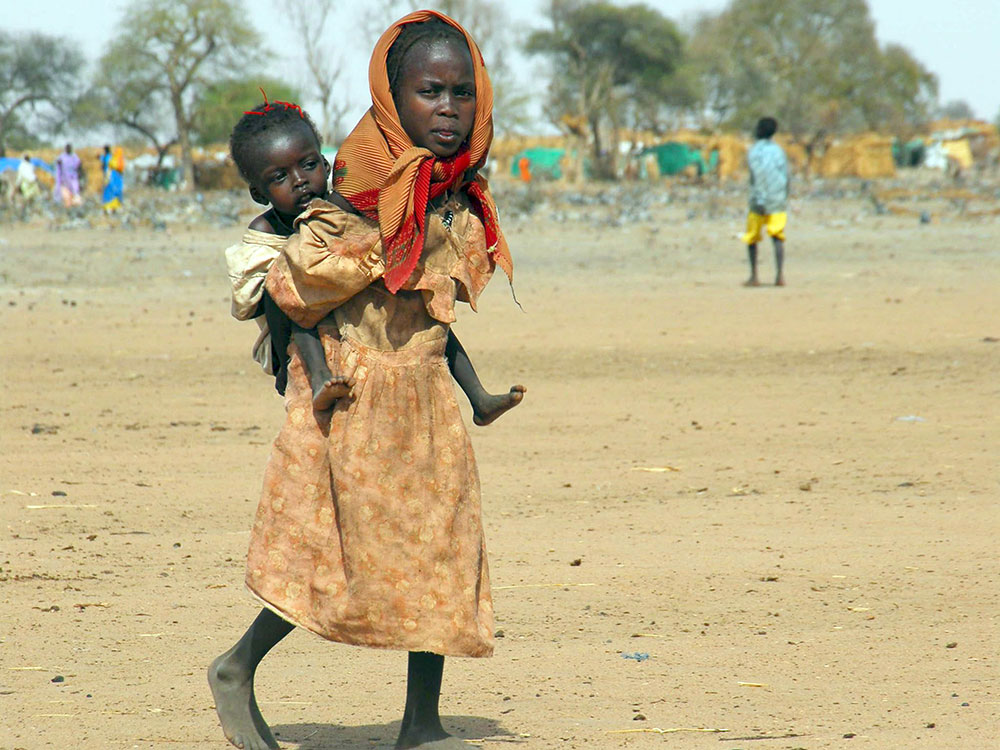
Millions Of Refugees With No Place To Call Home

Emergency: Syria! Emergency: South Sudan! Emergency: Democratic Republic of the Congo! These are the alarming messages being displayed on the homepage of the U.N. High Commissioner for Refugees (www.unhcr.org).

Frontiers

Announcing The Resurrection

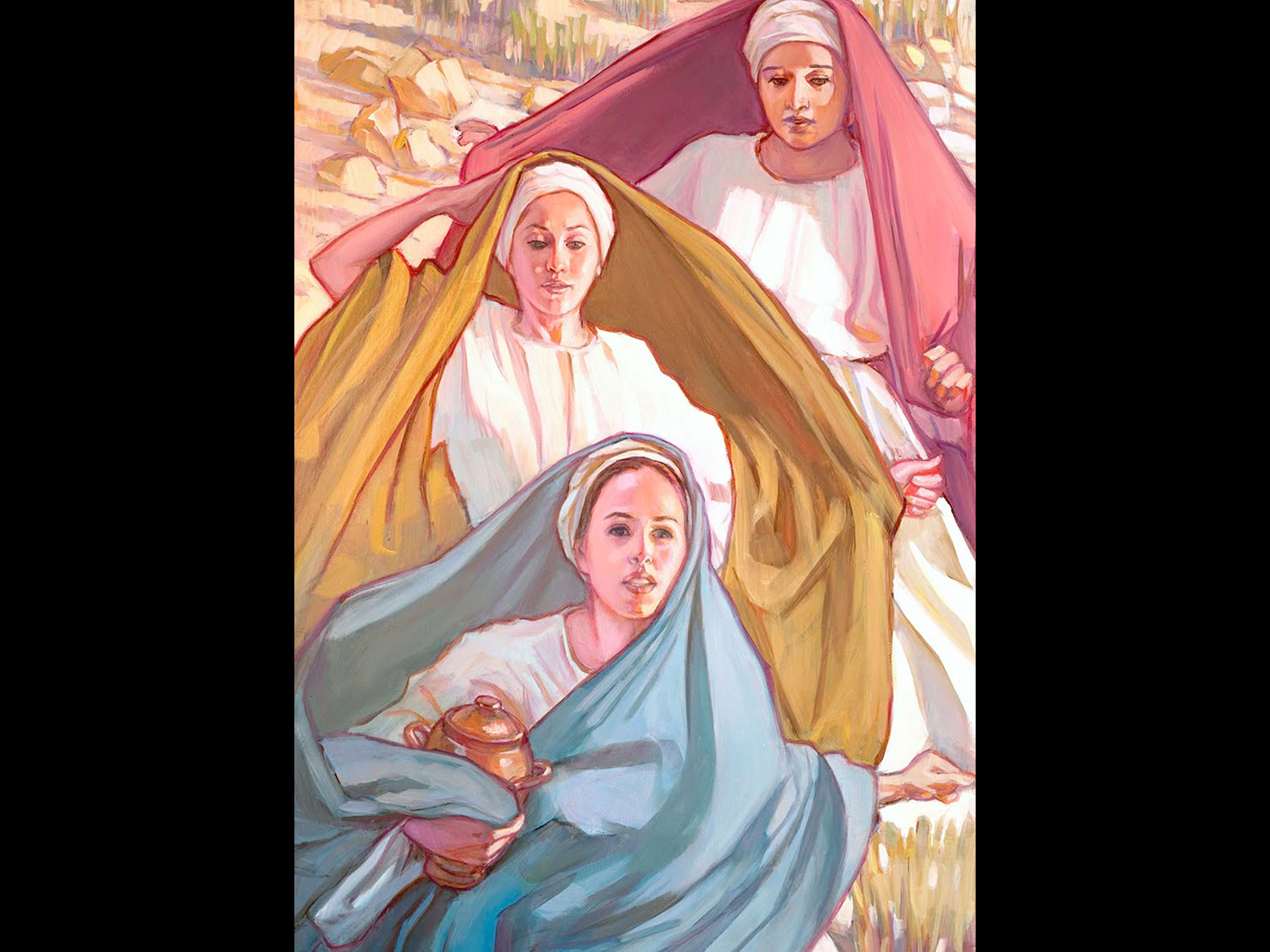
They approached, embraced His feet, and did Him homage. Then Jesus said to them, “Do not be afraid.” (Mt 28:19)

Frontiers

The Human Face Of Philippine Povert

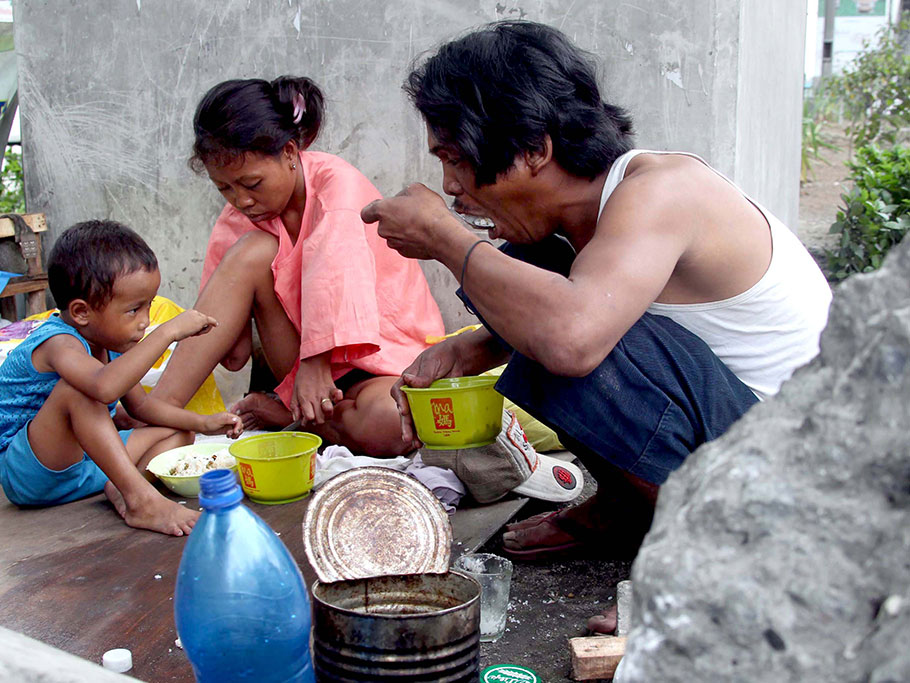
Reggie is the human face of poverty in the Philippines. He and his family lived on the edge of total poverty until typhoon Haiyan pushed him and his family into absolute poverty this November, 2013.

Frontiers

The Danger of Gmo Foods

The pictures of the hungry children holding up placards with the single word “Food” and another that cried out “Help,” these, among many others, were heart-wrenching cries of hundreds of thousands of poor people whose lives, homes, and families were wrecked by the devastating, all powerful storm to hit the Philippines last 7 November.

Frontiers

Skin Whiteners are “Racist”

Imagine the scene in a charity clinic where a teenager was brought threatening suicide. Barbara, 17 years old, was crying out in her anguish, beating her clenched fists on the table and screaming, “I can’t live with a face like this, I am better off dead, dead!” She wailed and wept and the nurses could see the cause of her anger and frustration: uneven dark and white blotches had disfigured her face, the result of dangerous toxic skin whitening creams. She wanted to look like a movie star but it all went wrong.

Frontiers

The Youth Can Change the World

Young people are filled with a desire to reach out to those who are suffering and in need, especially, the disabled, mentally challenged, infirmed, aging and the youth and children hurt and harmed by the injustice of the adult world. They love to protect the environment and work for the restoration of degraded nature.

A Bridge Between Faiths And Cultures

Claire Ly, a philosophy teacher who grew up as a Buddhist, met the God of the West in Cambodian dictator Pol Pot’s “re-education” camps. She found Him after the Khmer Rouge regime killed her husband and brother during the madness that led to 2 million deaths between 1975 and 1979, in a country with a population of 8 million. The Cambodian exile was at the Vicenza Bible Festival in Italy, to talk about faith in dialogue and to be a bridge between cultures. Her presentation, titled “Fede in dialogo: io, ponte tra le culture” took place at the Vicenza’s Palazzo delle Opere Sociali building.

Typhoon Haiyan: The Rich World Is Still Ignoring Climate Change

“Each destructive typhoon season costs us 2% of our GDP, and the reconstruction costs, a further 2%, which means we lose nearly 5% of our economy every year to storms. We have not seen any money from the rich countries to help us to adapt … We cannot go on like this. It cannot be a way of life that we end up running always from storms,” he said. He later told the assembly: “Climate change negotiations cannot be based on the way we currently measure progress. It is a clear sign of planetary and economic and environmental dysfunction … The whole world, especially developing countries struggling to address poverty and achieve social and human development, confronts these same realities.” Saño could not be reached because phone lines to Manila were down, but he was thought to be on his way to Warsaw for the U.N. talks, which resume on Monday. This time, his country has been battered by the even stronger super-typhoon Haiyan, one of the most powerful ever recorded anywhere – 25 miles (40km) wide and reaching astonishing speeds of possibly 200mph (322km/h). We don’t yet know the exact death toll or damage done, but we do know that the strength of tropical storms, such as Haiyan or Bopha, is linked to sea temperature. As the oceans warm with climate change, there is extra energy in the system. Storms may not be increasing in frequency but Pacific Ocean waters are warming faster than expected, and there is a broad scientific consensus that typhoons are now increasing in strength. Typhoon Haiyan, like Bopha, will be seen widely in developing countries as a taste of what is to come, along with rising sea levels and water shortages. But, what alarms the governments of vulnerable countries the most is that they believe rich countries have lost the political will to address climate change at the speed needed to avoid catastrophic change in years to come. From being on top of the global political agenda just four years ago, climate change is now barely mentioned by the political elites in London or Washington, Tokyo or Paris. Australia is not even sending a junior minister to Warsaw. The host, Poland, will be using the meeting to celebrate its coal industry. The pitifully small pledges of money made by rich countries to help developing countries, such as the Philippines or Bangladesh, to adapt to climate change have barely materialized. Meanwhile, fossil fuel subsidies are running at more than $500bn (£311bn) a year and vested commercial interests are increasingly influencing the talks. As the magnitude of the adverse impacts of human-induced climate change becomes apparent, the most vulnerable countries say they have no option but to go on alone. The good news is that places such as Bangladesh, Nepal, the small island states of the Pacific and Caribbean, and many African nations, are all starting to adapt their farming, fishing and cities, to the situation. But, coping with major storms, as well as sea level


A Bridge Between Faiths And Cultures

Claire Ly, a philosophy teacher who grew up as a Buddhist, met the God of the West in Cambodian dictator Pol Pot’s “re-education” camps. She found Him after the Khmer Rouge regime killed her husband and brother during the madness that led to 2 million deaths between 1975 and 1979, in a country with a population of 8 million. The Cambodian exile was at the Vicenza Bible Festival in Italy, to talk about faith in dialogue and to be a bridge between cultures. Her presentation, titled “Fede in dialogo: io, ponte tra le culture” took place at the Vicenza’s Palazzo delle Opere Sociali building.    Ly’s painful past made her a bridge between cultures in the sense that, when she found Jesus, she didn’t snub her Buddhist roots but began an ongoing dialogue between the faiths. She discovered Christianity in France, where she has been living since 1980. At the Vicenza Bible Festival, Ly presented her latest book in French, “La Mangrove – À la croisée des cultures et des religions,”  a story about the imaginary journey of two Cambodian women, Ravi and Somaya, who live in exile in France and return to their country after many years.  Ravi stayed a Buddhist and Somaya embraced Catholicism. The two women began a dialogue and let their shared tragic experience ask the questions. Here, the link with Claire Ly’s personal experience is obvious. The mangrove, a tree which grows in the border area between freshwater and saltwater, acts as a perfect metaphor in the book.  The author sums up her experience like this: “In the midst of absolute evil, the God of the West has become present for me. Closed in suffering, I could not make room for others. Until He made me aware that I was still a part of humanity.” “For two years I would spend my time insulting the God of the West because I connected Him to the Marxism that devastated my country: He was an ideology that was born in the West not in the Buddhist world. Then, when the Khmer Rouge regime’s “re-education” program ended, they decided I had finally changed from a middle class woman to a working class comrade and I said to the God of the West: “I am standing here in silence, waiting for You to applaud.” But it was right at that moment that I started to realize that silence was, in fact, inhabited by Someone.”  It was this discovery that led to her baptism in 1983. But Ly never let go of her Buddhist roots, an experience she does not see as merely accidental. “In my Christian life in France, I have come across many words and a lot of noise,” she says. “So my Buddhist soul told me: Go back to silence, because Jesus Christ is beyond our words.” About the image of the mangrove, she says: “I think it’s an image that also speaks to us of the meeting and the intersection of cultures in terms of hope. Like

Shopping Cart