Category: Frontiers

No Easy Way To Save The Children

It is no easy task to rescue child victims of trafficking for commercial sexual exploitation in the Philippines. The authorities deny it even it exists. “The problem has been solved,” they say, “it does not exist now.” Journalists and human rights workers are not welcome in the office of mayors that host sex industries in their communities in case they find the evidence of child trafficking that they try so hard to hide. My experience and the evidence gathered on video and sound proves beyond doubt that children as young as 14 can be purchased by private arrangement. Sex clubs proudly advertise their Mayor’s permit and license to operate. The girls are guaranteed to be clean of sexually-transmitted diseases. The club operator, a woman, proudly told me that government-paid health workers come to the clubs to do the tests to be sure the girls do not infect the customers. There seem to be no concern that the youngsters are being exploited and abused and their young lives are being wasted and destroyed. It’s an outrage that the government could stop it with an executive order or a strong city ordinance but it lacks the political will or moral courage to close the clubs. The tolerance of the authorities has sent a wrong and immoral message to the would-be child abusers: that it is not a serious crime, and so the sexual abuse of children in the home has risen dramatically. More and more abused children are being brought to shelters for therapy and treatment but there are hardly any convictions. In one horrific case, a four-year-old, suffering from a sexually-transmitted disease, was brought for help; the suspect, the child’s father, must have picked up the infection in a sex bar. The prosecutor has delayed many months and made no decision to prosecute or not despite the strong evidence and the shocking nature of the case and the urgency to bring the abuser to justice. He still walks free to abuse more little children. This and many other cases have been sent to the Department of Justice and, finally, there has been a response and prosecutors are starting to file the cases in court, some after two years of inaction. The great difficulty we have is the slowness of the justice system. The abusers are their own fathers, live-in partners or grandfathers, relatives and family friends, all who have easy access to the child. The increased number of commercially sexually exploited children being rescued show that the abuse goes on with impunity. The damage done to children by sexual abuse in the home drives them to be run-aways and they are easy to be picked up by vulture pimps that abduct them and sell them to the bars and clubs or hold them in a secret house and sell them for sex through the phone. When rescued, they are extremely difficult to help return to a normal childhood. As many people know, these children have been psychologically damaged in the sex

Hope For The Philippines

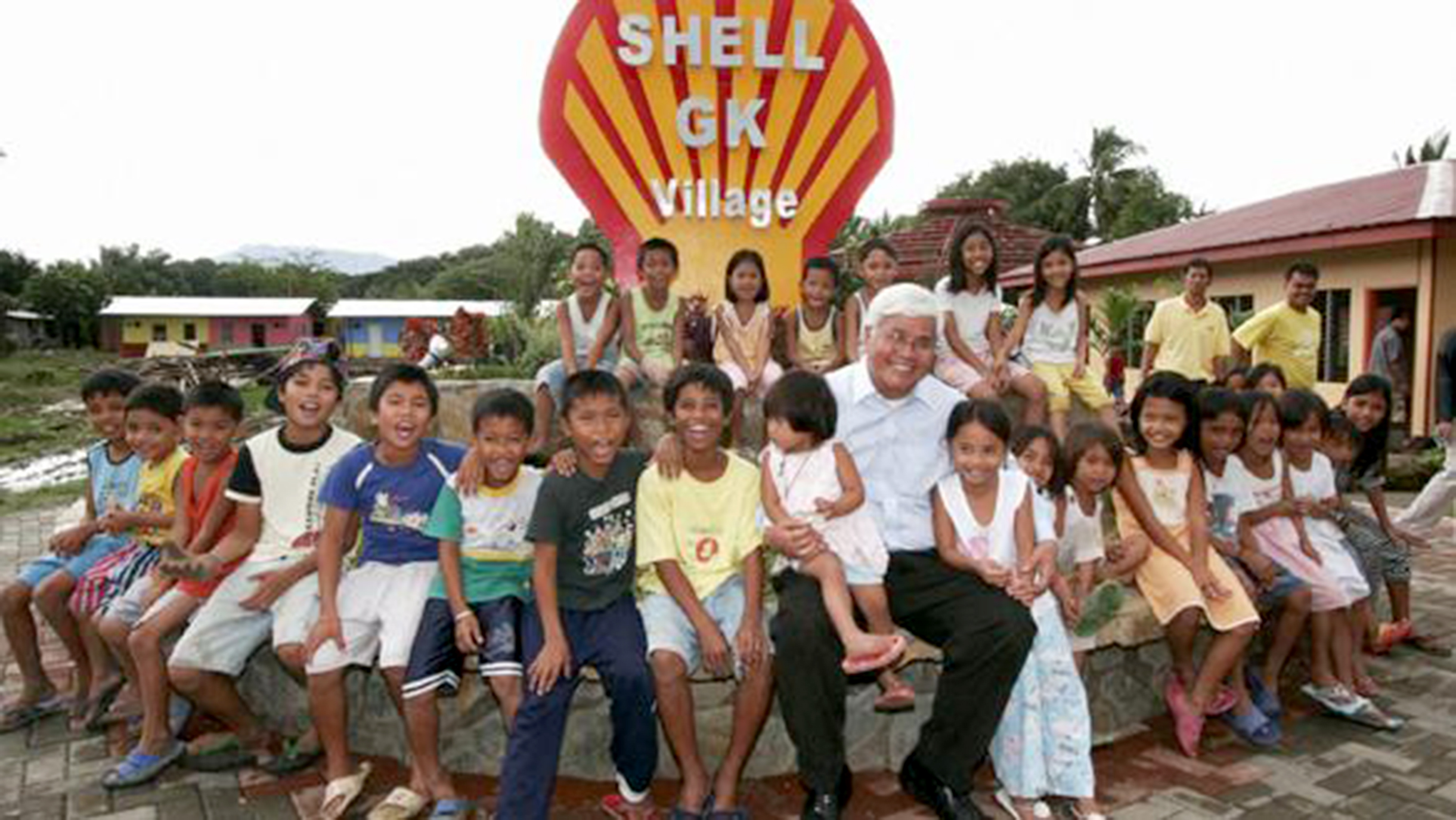
Last week, I had a meeting with a remarkable man, Tony Meloto, the founder of the Catholic social action movement Gawad Kalinga (Caring for Others) that is utilizing all of its resources to mobilize the church, politicians, community leaders and every willing Filipino to do good to help their neighbor and bring an end to the crippling and disastrous poverty in the Philippines. His goal is to achieve this by 2024. Gawad Kalinga is an organization that mobilizes all sectors of society to provide community organization, low-cost housing, educational and medical assistance to the poorest of the poor among slum dwellers. It has a remarkable history of achievement with thousands of houses for the poor built all over the country, combining the help of the slum dwellers themselves and volunteers, and support and land from corporations, church leaders and even politicians. The poor find their dignity and are empowered to help themselves. Loving God with one’s whole heart, mind and spirit is the first and greatest commandment as taught by Jesus Christ but equal to it is to love your neighbor as yourself. Looking at the inequality, poverty, violence and moral decay in the Philippines today, one can be forgiven for believing the ruling elite and the well-off have considerably more love for themselves than for God or neighbor. Sixty years ago, China was a devastated and helplessly disunited nation of over a billion impoverished people caught in the grip of civil war and then ruled by the iron fist of Mao’s repressive godless atheistic communism. The Philippines was emerging from the rubble of war, was newly independent and a growing economic success story as the only Catholic and democratic country in Asia. Then it fell victim to the rising greed and criminal ambition of a ruling elite that emerged from the Spanish land-owning dynasties and American corporations. The new post-war generation wanted true freedom and prosperity but never saw it; their cries were stifled by the despotic martial law rule of Ferdinand Marcos, his wife Imelda and their cronies. Unbridled corruption has ruled supreme since but for the short rule of President Corazon Aquino. So, today, the situation of China and the Philippines is totally reversed. In a recent survey, more Filipinos reported experiencing hunger more times now than ever before. In communist China, more people experience prosperity as never before. Likewise Korea, Malaysia, Singapore and Vietnam have thrived while the Philippines has sunk. What can we do now? Where did the Philippines go wrong? Did Christianity, democracy and the rule of law fail to bring about a society with basic social services, decent employment and significant reduction of poverty? Has Catholicism failed because it focused mainly on the rites and rituals of religion and forgot the social teaching of Jesus and the Church itself? Did its leaders turn to a flawed belief in miracles and forget the gospel message that “faith without action is useless” as St. James wrote? No one can be sure but, simplistic as this

The Philippines And The International Criminal Court

The landslide victory of the new president, Benigno “Noynoy” Aquino III, was obtained on a wave of hope and nostalgia that began with an emotional tsunami during the long 8-hour funeral procession of his mother, Corazon “Cory” Aquino, last August 2009. She was much loved, not only as the first democratically-elected woman president of the Philippines but also in Asia, and also because of her integrity. She is revered and respected by Filipinos because she helped topple the dictatorship of President Ferdinand Marcos and restore democracy in the Philippines. She ignited respect for human rights and non-violence and high hopes for an end to corruption, assassinations and forced disappearances. However, they were not widely realized in her presidency. It is these same desires and longings that the Filipino people want to be actualized through her son. They see her integrity embodied in him. These are certainly challenging times for the new president and his administration. Against them, there is an arrayed culture of political violence and powerful elite determined to get what they want and to bring them down so as not to succeed. Perhaps the first executive order could be “to ban all assassination teams from the armed forces, police, the militias and the death squads of local governors and mayors with special presidential enforcement units to implement it.” The culture of impunity is the attitude of entitlement that officials adopt putting themselves above the law and make their own laws with torture, summary execution, and illegal liquidations as the one punishment that fits all. The death squads have terrorized hundreds of thousands with a reign of fear and terror and tortured and murdered hundreds of innocent people, mostly political activists, community organizers and human rights workers. According to information in Wikipedia “Counsels for the Defense of Liberties(CODAL), Philippines, a lawyers’ organization stated that since 2001, 26 lawyers and 10 judges were killed due to their professions; 755 civilians had been killed extrajudicially, while 359 survived attacks, but 184 persons were still missing. Archbishop Deogracias Yñiguez stated that, on the CBCP/Catholic Church’s count, the number of victims of extrajudicial killings is 778, while survivors of “political assassinations” reached 370; 203 were “massacre” victims, 186 missing or involuntarily disappeared, 502 tortured, or illegally arrested. It is a long history of impunity and murder perpetuated by political and military figures that have never been brought to justice. The justice system has failed to address these crimes in the past. Last December 1, 2003, the Human Rights Committee of the United Nations concluded its investigation into the human rights situation in the Philippines and came to the following conclusion: “The Committee is concerned about the lack of appropriate measures to investigate crimes allegedly committed by State security forces and agents, in particular those committed against human rights defenders, journalists and leaders of indigenous peoples, and the lack of measures taken to prosecute and punish the perpetrators.” Such recommendations have been ignored and the killings have continued unabated. Perhaps the most cruel and

Death Squads And Democracy

Why would Philippine judges hamper a human rights investigation into a killing field where many human remains are found in Davao, victims allegedly of the infamous death squad? Why would the members of the Commission on Human Rights be charged themselves? Human Rights Watch says local authorities are obstructing the course of justice and investigation into almost a thousand assassinations in the past decade. How can this be in an Asian democracy? Most people in northern democracies presume that there is a democratically elected government in the Philippines and that human rights will be generally respected and upheld. It also presumes that the rule of law prevails most of the time and that the democratically-elected government will respect the provision of treaties, conventions and protocols it has signed. In the Philippines that is not so.  Corruption is widespread and election fraud, cheating, vote-buying and intimidation are common, so democracy is far from real. The same powerful wealthy family dynasties continue to dominate the so-called election process and it’s not so much rule by the people or for the people, but the rule of the elite for their own interests. In the Philippines, traditionally, an oligarchy of a few very powerful families rules the country and control the economy. They place their family members into government positions to advance their own economic interests. They thus control the Congress and other branches of government. Many are incompetent to govern and they form a military and police force that is built around their own relatives, friends and beneficiaries. Therefore, the forces are loyal to the patriarch or family head, not to the people. They are selected not on the basis of their professional merit and competence but on their loyalty to the head of the dynasty. Promotion in the ranks, military or police, depends on the power of their patron. Thus, history of street protest shows police and military shooting dozens of protesters that challenge the ruling elite. The military will stand against the farmers and protect the interests of the powerful land owner. Human rights are cast aside in favor of protecting the politicians and the ruling families. The “Democratic” Philippines is a myth and the enduring “death squad” and cover up is proof of that. The death squad existing in many cities is to create a culture of fear and control and suppress the people’s protest of injustice and unendurable poverty.  Davao City and the surrounding province is rife with inequality and land exploitation, injustice and widespread poverty and a few vastly wealthy families control the land and the banana industry. The military and police protect their interests against impoverished peasants or militant social and human rights activists demanding land reform, just wages and health care.  Davao is the most prominent example of murdering death squads that kill even street children, although the situation is similar in other Philippine provinces. It arose, they say, in the Seventies and Eighties when a swell of protests, by organized impoverished farmers and their supporters,

A Toothless Accord

The Accord states that this can only be achieved through major cuts in emissions from rich countries. There are no dates, or timelines, or sanctions for non-compliance. Efforts to stop global warming must not derail economic progress in emerging economies. The Accord provides money for adaptation initiatives in economically-poor countries which are likely to suffer heavily from climate change. Between now and 2012, the fund should provide $30 billion for such projects. This is to be scaled up to $100 billion by 2020. The Accord also makes money available to economically-poor nations to enable them to protect their forests from loggers. Finally, the Accord was ‘noted’ rather than ‘adopted’ by the assembly.  The fait accompli was presented to poor nations with the implied threat that, if they did not sign up to the deal, they might lose the Adaptation Fund which is an essential element in their ability to adapt to climate change. Naturally, people such as Yvo de Boer, the executive secretary of the United Nations Framework Convention on Climate Change, attempted to portray the failure to reach a FAB agreement as a temporary glitch which will be put right at COP 16 in Mexico in December 2010.  While politicians dithered about how to deal with this global challenge, the warnings from the scientific community become even more apocalyptic on two fronts. First of all, things are happening at a much faster pace than previously thought. On the evening of December 14, 2009, scientists from the Hadley Centre’s climate change division made a presentation at the Bella Centre. They said that, even if emissions peak in 2015, and decrease rapidly after that at about 3% per annum, there may only be a 50:50 chance of keeping global temperature rise below 2 degrees Celsius. More ominously, in terms of the inaction in Copenhagen at significantly reducing greenhouse gases, the Hadley document makes the point that every delay of 10 years in the peak emissions would add about a further 0.5 degree Celsius. In the light of this science, the commitment to preventing a temperature rise above 2 degrees Celsius, without putting any credible mechanisms in place to achieve it, is merely play acting.  In my mind, there were two positive outcomes from the Copenhagen Conference on Climate Change. The first was that so many heads of state came to Copenhagen. This is a clear recognition that almost every government around the world now accepts that climate change is happening, that it will have enormous impact on our planet, but especially on the poor. Implicitly, these leaders accept the scientists’ prognosis that climate change needs to be addressed urgently if the target of below-two-degree Celsius rise is to be achieved. Secondly, the Conference captured a huge amount of interest right across the globe. Millions more are now aware of the impact of climate change. It is to be hoped that they might bring the necessary pressure on politicians in powerful countries to reach an accord that will fend-off runaway climate change.

What Is A Happy Christmas?

It’s a real challenge for true Christians and people of faith to reclaim the meaning of Christmas and to make it a real event as Jesus would want it. It’s a time to rededicate ourselves to the ideals He exemplified and brought into the world. We need to find again that path to spiritual renewal and the courage for unselfish living. “I came to serve and not to be served;” “They who lose their lives will save it;” “What you do to the poorest of My family, you do to Me;” “I came to give My life as an offering for many,” He taught us. Christmas is all about living a simple, non-luxurious life in the friendship of Jesus Christ putting the well-being of suffering and deprived humanity at the forefront of our concerns. The Christmas story is a challenge for all to leave behind a self-centered existence for a life of unselfish self-giving and sharing in solidarity with the poor, the abused, exploited and downtrodden. We will receive many ‘Happy Christmas” greetings this year, by e-mail, by text messages and millions of greeting cards will travel in the postal system. What do they really say, what happiness do they wish upon us, is to have a good dinner party, a bottle of wine? What is a Happy Christmas? My happy Christmas wish for you is that you may feel, all the more, compassion for the needy, the hungry, the refugees, the victims and the imprisoned children. That you will be strengthened in your commitment to the ideals of love and justice and dedication to saving people and the planet from injustice and harm. I wish that, together, we will be inspired, all the more, by the ideals that Jesus placed before us, may we all be motivated to act for justice and to change the world. It is these ideals that we ought to celebrate and promote at Christmas and to show to all that they really are important and that working to make them a reality is the way to true happiness and life fulfillment. If we read the Christmas story and look behind the traditional images of an idealized cute cooing Baby Jesus, Mary and Joseph in a movie-like setting, we will see that it was not the birth among the rich and powerful, but a hard, bitter and impoverished birth among the poor and the creatures of the planet. Despite the changes in 2,000 years, the world of Jesus is so much like the world today. King Herod, a cruel dictator, a lackey of the foreign powers that dominated Palestine, a malevolent tyrant ruling Palestine and planning and ordering a genocide, a massacre of innocent children, to prevent a rival from emerging from the ‘House of David” to challenge his rule. Today, we see worst tyrants and even more genocidal rulers in the Sudan, Darfur, Eastern Congo, and bloody suffering and conflicts in Iraq, Afghanistan, Somalia and even Palestine and many more. Women and children are


A Nation Crying Out For Justice

There is a new Philippine president. Noynoy Aquino has stepped into the challenging role as “hope of the nation” and has selected his Cabinet that promises a corruption-free Philippines. It is particularly outstanding because of the presence of designated Department of Justice Secretary Leila de Lima, the former Human Rights Commissioner who bravely sought to uncover the bloody hands behind countless assassinations and murders of social activists, human rights workers and leaders of civil society. She had the courage to challenge the police and military that was blocking the Commission’s investigators who were finally stymied by the judge who would not issue a search warrant for the Commission’s investigators to search a killing field in Davao where body parts were uncovered, some of them of women and children.  With this promising start in the new administration of President Aquino, there is optimism that the protection of the most vulnerable in society will take priority and there will be an end to death squads, assassinations, and the rampant violation of human rights by those supposed to protect the citizens from such evils and injustices but are frequently the perpetrators themselves. Considering the impunity enjoyed by assassins and death squads around the country under the Arroyo administration, the government of President Noynoy Aquino has to question the training methods and strategies taught to Philippine troops and police by the US International Military Education & Training (IMET). Hundreds of police and military personnel are trained annually here and abroad and that training appears to inculcate excessive aggression, brutality and combative killing methods deployed with “extreme prejudice” against social activists, even priests and dissidents arbitrarily branded as “enemies of state.” The role of the police and military as protectors and enforcers of the rule of law for victims and law-abiding citizens seems to be lost. Respect for human rights apparently is not on the training agenda and this is what needs to be changed.  Secretary Leila de Lima has the most challenging of tasks. She has made her priorities clear by her past words backed by action and resolve. First of all, is the desire to promote those just and honest, intelligent prosecutors that love the rule of law and are people of integrity. These are the prosecutors that are dedicated to the protection of abused women and children, victims of human rights violations and heinous crimes and have compassion for the children in conflict with the law. Secretary of Justice de Lima will clean out the corrupt and incompetent prosecutors, the protectors of child rapists and who take the stuffed envelops and dismisses the complaints despite the most overwhelming of evidence. It is only with her planned overhaul of the Department that she will be able to dispel the cynicism and lack of trust of the people in the Department of Justice lost during the past decade. There are good people in the DOJ that must be given a chance to do good and not be overruled by the corrupt officials on the

We Are Made Of One Soul Only. Only One

A very good friend, of my young ages from the time of the Lycée Français, had an operation last week. When I visited her, I could not avoid the tears for the deep feelings of love and compassion for her in her suffering. I had come from the Jamat Khana; it was Friday and I really felt like praying. Among those remembered, Teresinha’s health was part of the humble request to God’s infinite mercy and generosity. I normally take the tasbih (the rosary for remembering the most beautiful names of God). She is Catholic, however, after all the years of shared experiences – some happier than others. I asked her to hold on to my tasbih. She tightened it in her cold hand. While I was leaving the room, I asked God one more time, that her suffering was lessened. Yes, because life is pain, and pain is part of living; the only thing we can ask for from Allah is that it is lessened, minimized.  She rang the next day. I had meetings and was late. She anxiously wanted me to see how well she looked and most importantly that the “thing” I had put in her hand made her feel at peace and more at ease with the experience. I gave it to her and said that she could use it to remember God’s most beautiful names. After all, Muslims have only 99 and, according to scholars, there are 999 names, spread across the Holy Scriptures; the last one is only known to God Himself. Thence, she had plenty to choose from. However, she wanted to learn what I say and how I say. Once more, we shared the unity of love and friendship which are above differences of religion, but close to our humanness, as women, as mothers, as spouses, as individuals who have similar kinds of fears, joys, and anxieties. Last night, my 6-year-old son expressed his before-sleep-concern: his best schoolmate wished he was Catholic, rather than Muslim; that way they could be more similar, closer in friendship. Because, he said: “Jesus is God; not Allah.” He did not know what to do; they love each other so dearly. I could only remember a couple of Quranic verses: “Had God wished, He would have made us one community; instead, he wanted us to exceed ourselves and among each other, according to our interpretations of the faith, in good deeds towards our societies and the world” (the word is taqwa, which by the way, comes some 200 times in the Holy Qur’an). Then, God also says in the Qur’an: “I have made You out of ONE SOUL ONLY, and from there, a multitude of peoples and societies, so that, in your differences, you could know each other.” A little later, my son was already profoundly asleep in the couch, next to us. I do not know what his dreams were; inshallah, they had something to do with the beauty of our common humanity, and especially because we

Frontiers

We are Made of One Soul Only. Only One

A very good friend, of my young ages from the time of the Lycée Français, had an operation last week. When I visited her, I could not avoid the tears for the deep feelings of love and compassion for her in her suffering. I had come from the Jamat Khana; it was Friday and I really felt like praying. Among those remembered, Teresinha’s health was part of the humble request to God’s infinite mercy and generosity. I normally take the tasbih (the rosary for remembering the most beautiful names of God). She is Catholic, however, after all the years of shared experiences – some happier than others. I asked her to hold on to my tasbih. She tightened it in her cold hand. While I was leaving the room, I asked God one more time, that her suffering was lessened. Yes, because life is pain, and pain is part of living; the only thing we can ask for from Allah is that it is lessened, minimized.

Frontiers

No Easy Way to Save the Children

It is no easy task to rescue child victims of trafficking for commercial sexual exploitation in the Philippines. The authorities deny it even it exists. “The problem has been solved,” they say, “it does not exist now.” Journalists and human rights workers are not welcome in the office of mayors that host sex industries in their communities in case they find the evidence of child trafficking that they try so hard to hide. My experience and the evidence gathered on video and sound proves beyond doubt that children as young as 14 can be purchased by private arrangement. Sex clubs proudly advertise their Mayor’s permit and license to operate. The girls are guaranteed to be clean of sexually-transmitted diseases. The club operator, a woman, proudly told me that government-paid health workers come to the clubs to do the tests to be sure the girls do not infect the customers.

Shopping Cart