Category: WM Special

WM Special

Shifting grounds

With globalization, the image of the world has changed. Information technology has brought people closer and started dynamics which have made the world of economy run wild. Globalization is an economic tsunami that is sweeping the planet. It can’t be stopped but, certainly, there must be many steps people can take to slow it down and make it more equitable to wealth distribution, living salaries, social security. Unfortunately, those steps are not yet clear. There seems to be no authority capable of harnessing globalization and putting it at the service of people, and not only capital profit.


WM Special

The seven pillars

The Social Doctrine of the Church doesn’t mean giving technical solutions that rightly belong to the legitimate autonomy of the economic, social and political sciences. It is an application of the principles of the Gospel to social problems. It has something essential to say about the concept of the human being, family, work, solidarity, destination of goods, development and peace.

WM Special

The Gospel in the marketplace

The 19th-century Industrial Revolution caused the social question which is the exploitation of the urban masses. Karl Marx and the Communist movement were the first to acknowledge the impact of the social question. The Church was awakened to that harsh reality and responded with an original interpretation of the Gospel message, applied to the marketplace. The Church’s Social Doctrine grew slowly and developed from the experience of the people in the field and the teaching of the popes. When the Christian Democrat political parties took the power in Western Europe after World War II, they implemented the Christian vision, giving origin to the welfare state. Never in history have the state and the private bodies cooperated with such a success to produce an affluent and egalitarian society. Fifty years later, globalization has completely changed the scenario and has jeopardized the conquests of the Social Doctrine of the Church. The future is again confused, threatening and challenging.

WM Special

South Africa on the cusp of crisis

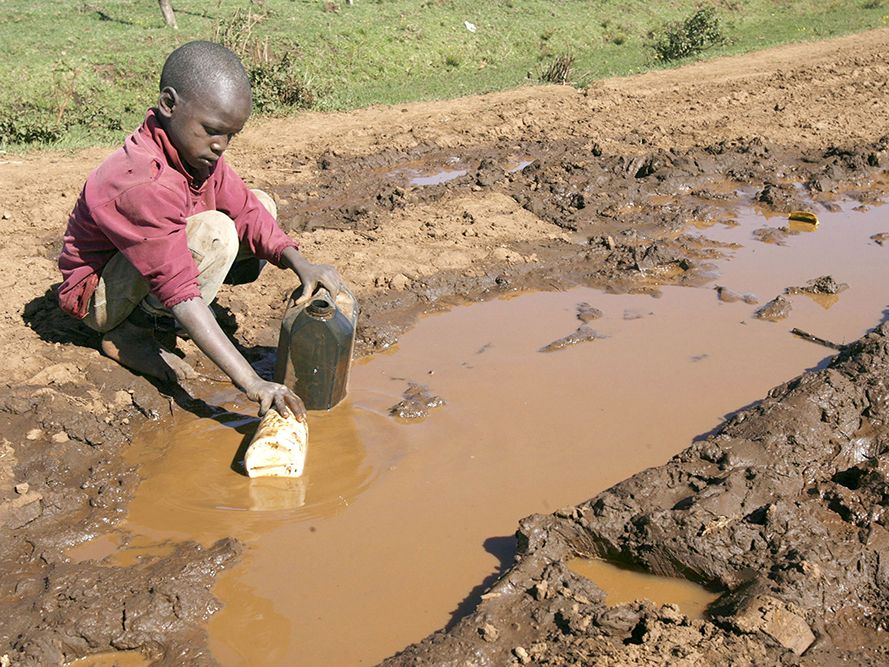
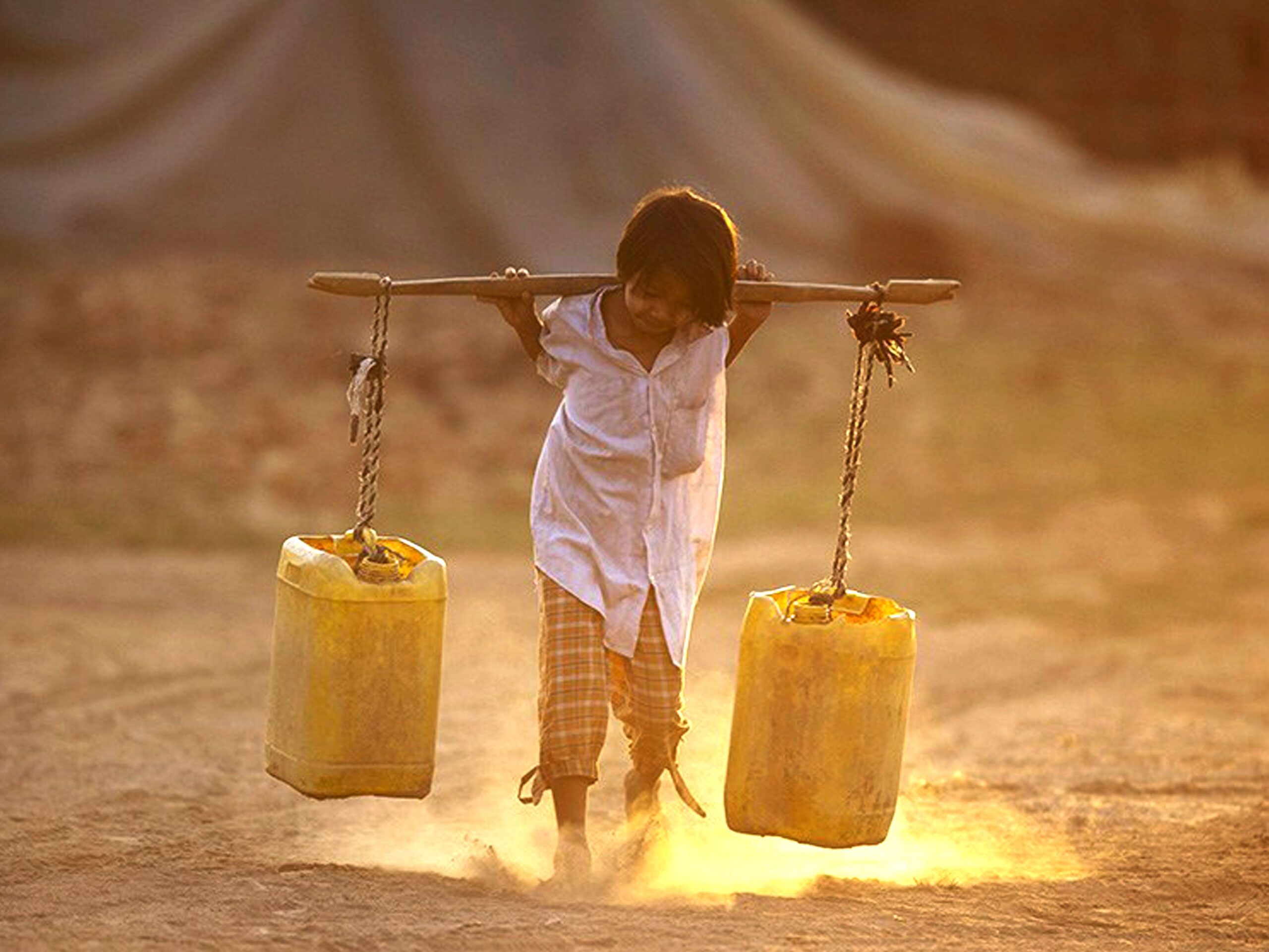
South Africa is on the brink of a water crisis. Climate change, the stealing of water, contamination resulting from poor sanitary practices and mining, and the emphasis of water-for-profit, among other reasons, are to blame for this impending catastrophe. Contingency measures are now being put in place by both the national and local governments to avert the situation. However, such plans will be inadequate if leaders do not have the will to implement these measures and the remaining water resources are not managed well.

WM Special

U.N. aims to resolve world’s water crisis by 2030

As part of its post-2015 development agenda, the United Nations is spearheading a global campaign to help resolve the world’s growing water crisis, possibly over the next 15 years, targeting the period 2030. But over 880 million people still do not have access to safe drinking water today, according to the latest figures. The growing demand for water is projected to increase by over 40 percent by 2050. And an estimated 1.8 billion people, out of a total world population of over 7 billion, will live in countries or regions with water scarcity, according to the U.N..

WM Special

The shape of a mission-driven liturgy

God’s mission runs through the Church’s liturgy and defines it outwardly by breaking open the ritual onto life.

WM Special

The image and practice of a worship-shaped mission

The recovery of continuity between worship and mission has its impact on how mission is imaged and practiced. The Church’s mission turns into an encounter with the mystery of God and with the Unknown Christ present and active in the world, and her missionary proclamation takes the form of a doxology, of a proclamation of praise.

WM Special

‘Missional’ worship and ‘worshipful’ mission

Understanding the connection between worship/liturgy and mission helps one to understand them individually, particularly the meaning of worship in an age of mission.

WM Special

Attitudes matter

Violence against women and girls is one of the most pervasive human rights violations in the world, rooted in gender inequality, discrimination and harmful cultural and social norms. Violence against women and girls has been described by the World Health Organization as a global public health pandemic, with 1 in 3 women around the world experiencing physical or sexual violence in their lifetime. While efforts are being exerted to eliminate violence against women in all its forms across all sectors, a change in attitude by men towards women is the key to ending the cycle of violence once and for all.

WM Special

Start local, go global

Human trafficking is a global menace that international policy-making and cause-oriented organizations have long been trying to address. While some progress is being made at the international level, through the formation of commissions and watchdogs, efforts to curb trafficking at the local level are still wanting. Impediments are often tied to local regulations (or the lack of them) and, sometimes, to culturally-driven fear. It is, therefore, at the grassroots level that efforts should be focused to stop trafficking. Even among ourselves, through our own little way, we can stop this menace from spreading.

Shopping Cart