
WM Special
‘Missional’ worship and ‘worshipful’ mission
Understanding the connection between worship/liturgy and mission helps one to understand them individually, particularly the meaning of worship in an age of mission.


Understanding the connection between worship/liturgy and mission helps one to understand them individually, particularly the meaning of worship in an age of mission.

Violence against women and girls is one of the most pervasive human rights violations in the world, rooted in gender inequality, discrimination and harmful cultural and social norms. Violence against women and girls has been described by the World Health Organization as a global public health pandemic, with 1 in 3 women around the world experiencing physical or sexual violence in their lifetime. While efforts are being exerted to eliminate violence against women in all its forms across all sectors, a change in attitude by men towards women is the key to ending the cycle of violence once and for all.

Human trafficking is a global menace that international policy-making and cause-oriented organizations have long been trying to address. While some progress is being made at the international level, through the formation of commissions and watchdogs, efforts to curb trafficking at the local level are still wanting. Impediments are often tied to local regulations (or the lack of them) and, sometimes, to culturally-driven fear. It is, therefore, at the grassroots level that efforts should be focused to stop trafficking. Even among ourselves, through our own little way, we can stop this menace from spreading.

Pushing for women’s rights in a highly chauvinistic society seems like a lost cause. But for someone who has experienced attempted rape by her peers and violence under the very hands of her husband, fighting violence against women comes a natural instinct as it literally hits closer to home.

Drawing society together itself is a great mission today in a fragmented world, when people feel pulled apart in all directions by forces beyond their control: ethnic hatred, political anger, collective greed. In the Eucharist, with the announcement of the Word and the gift of Himself, Jesus summons every tribe and tongue and people and nation unto Himself. For God’s plan for the human family is that they be one. The Eucharist reminds man of his relationship with the rest of the world, sending him forth on a mission to share the message of Christ to the rest of humanity, not in a forceful or imposing manner, but in the spirit of authentic dialogue.
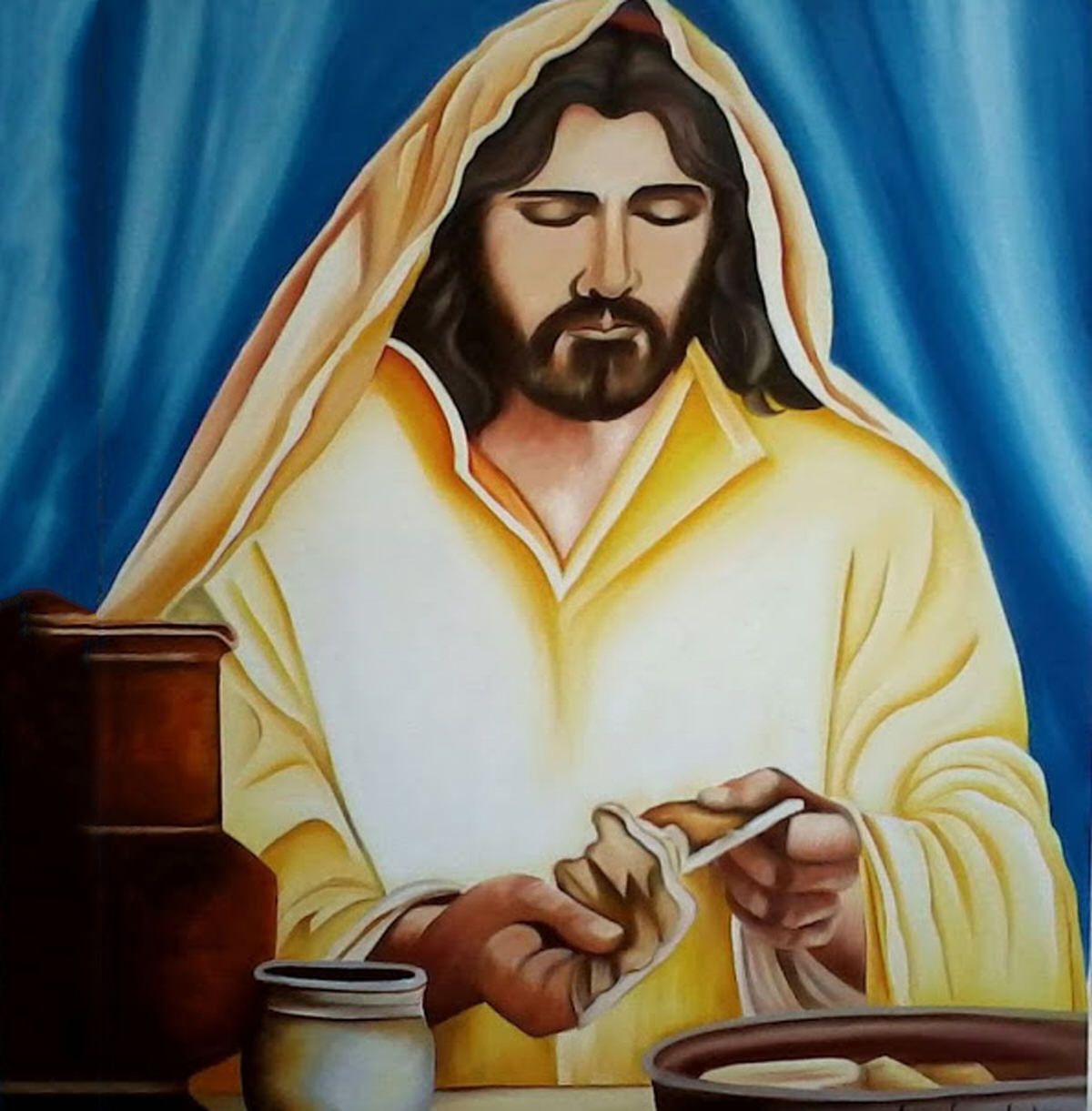
The Eucharist is Christ’s greatest gift to the Church. It is His self-gift to His disciples. It is a call to oneness in the fellowship of the Triune God. It brings into existence a ‘communion of believers.’ This communion, however, does not stop around the Eucharistic Table or within the confines of the physical church. United with Christ, believers are exhorted not only to go out and make Him known to the world but to spring into action, to seek out the suffering and the poor.
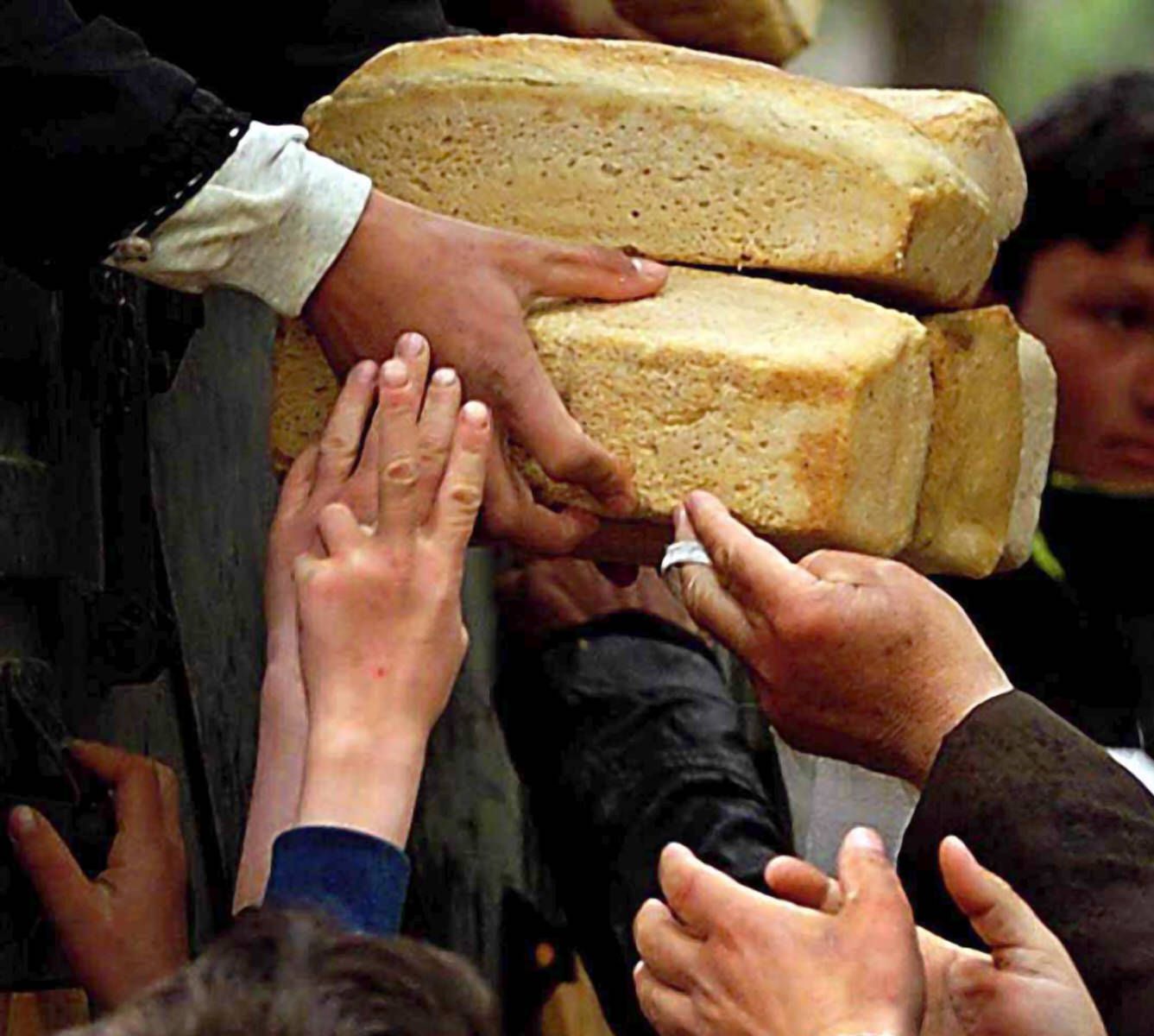
The breaking of bread in the Eucharist is perceived by some as a mere ritual or symbol to emphasize the humanity of Jesus – His brokenness – as witnessed during His Passion and Death. But this simple act, seen with the eyes of faith, opens up a myriad of meanings that all point back to the life, ministry and teachings of Jesus, with whom we seek communion at the Eucharistic table.
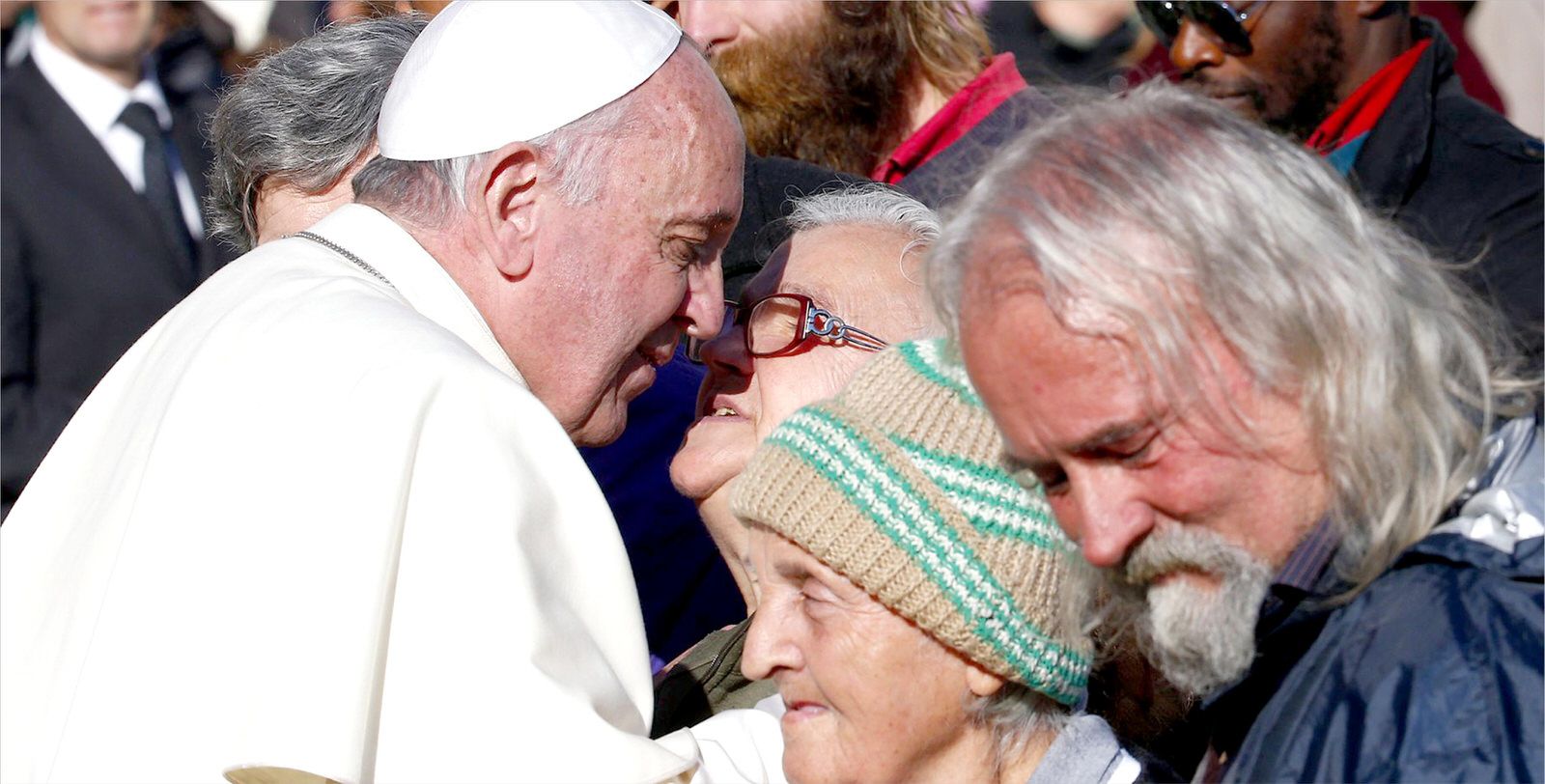
A tangible expression of the Pope of Mercy is his concern for the homeless. Through it, he not only sets an example of how Christians should act but also reminds us of our obligation toward the poor, on whom God’s special favor rests but for whom the oppressive economic structures do not operate.
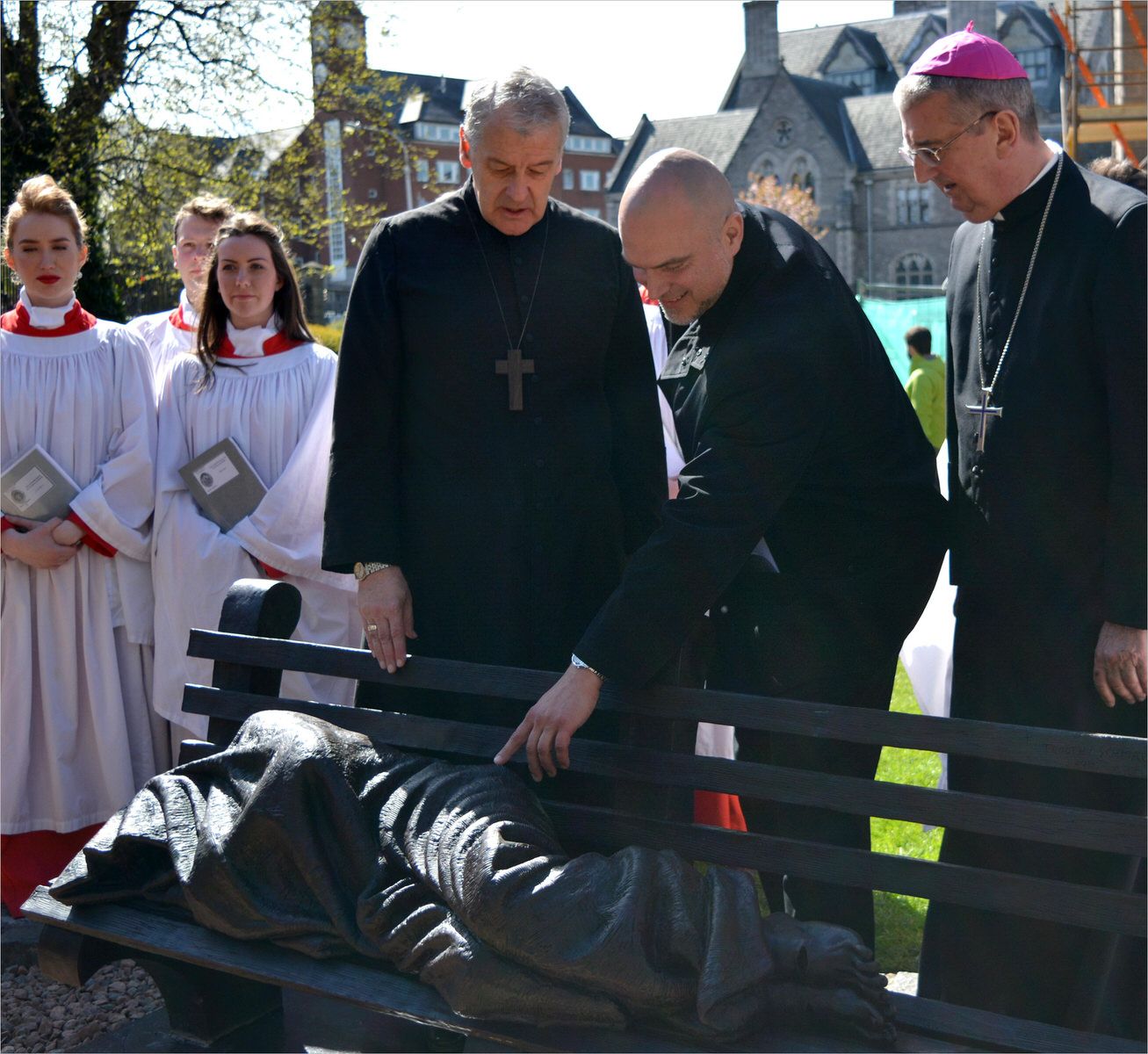
Visual reminders are necessary as they can stir people into action when statistics fail to find a listening ear. This is the effect Canadian artist Timothy Schmalz, who has become renowned for his “Homeless Jesus” sculptures, hopes art should impart to its perceivers. Commenting on the same statue which was installed in Dublin in May, Archbishop Diarmuid Martin said: “For the Christian, the homeless are not just statistics; our belief recalls that the plight of the homeless is our plight. This image of the “Homeless Jesus” reminds us of the demands of belief in Jesus Christ. It challenges us, before we feel we can enter the cathedral, if we have the right credentials to enter.”

Homelessness is most often associated with rough sleeping – the most obvious form of homelessness. But the term ‘homeless’ also applies to people living in temporary shelters or institutions because they are houseless. A homeless person is an individual without permanent housing who may live on the streets; stay in a shelter, mission, single room occupancy facilities, abandoned building or vehicle; or in any other unstable or non-permanent situation. With homelessness now comes hopelessness. The hopelessness stems from the fact that the exits out of homelessness are blocked. Today, homeless people need the warmth of acceptance by others, more than the physical shelter that they can be offered.
