Category: WM Special

Bringing The Gospel To Life’s Contexts

God works wonders even through casual human encounters. It is for the evangelizer to bring a faith-filled quality to them. He/she may come across a serious religious ‘searcher’ on his travels or in casual correspondence. We can never know how far just one word or a simple statement can take him/her. The word of God has power to change hearts. We see that happen. “Man does not live on bread alone” (Mt 4:4), so wrote a hostel student years ago to his companion studying in a Hindu Mission School in Kolkata. The writer had been requested by his friend to lend him a little money when he was hard up. The writer was ready to help, but was himself short of money those days. The occasion made him pass on a good thought to his friend. “Man does not live on bread alone,” he wrote. If the sender of the message meant well, its receiver accepted the message equally well. The latter began to wonder what was the source of so profound an idea. “How true,” he mused. “Indeed, man does not live on bread alone. This is a deep thought and very powerful. Where does it come from?” When he heard that the quotation was from the Bible, he was even more interested. He had never heard about the Bible. “What is the Bible?” he inquired. He was from Arunachal Pradesh and had never been exposed to Christianity. Now he came to know, for the first time, that the Bible was the holy book of the Christians. Who are these Christians, he began to wonder. His curiosity led him further. He went to a Christian group at Jorhat, made further inquiries about Christian teachings, became interested, studied more seriously, and ultimately became a Christian. So did the original sender of the message. This latter person became the first Catholic of his own part of Arunachal Pradesh, and one of the first Catholics of the diocese of Miao and of the entire State. His name was Wanglat Lowangcha. The Catholic community in Eastern Arunachal Pradesh began with him.    Jesus wept! We do not know when, where and how the Lord is going to touch us with His powerful Word. He overtakes us by surprise. The following story may be apocryphal. But I remember reading, years ago, about a daughter of Stalin who, brought up in atheism, was deeply impressed by these words from the Scriptures, “The Lord is my light and my salvation, whom shall I fear?” (Ps 27:1). She had been taught atheism, and it was a surprise to come across a word like the ‘Lord,’ who could be light and salvation, knowing whom one would have no reason to fear any more. She was eager to know more about this ‘Lord.’ When she went further in this search, she did find Him and her entire life was changed. We are told that she became a believer. A Muslim friend once told me that what impressed him most

Veneration Of The Deceased

There is no uniform system of beliefs and practices in the cult of ancestors in black Africa. In fact, one finds differences in details even in the same ethnic group. Moreover, the ancestral veneration which will be described here is not found in each African traditional community. Nevertheless, the cult belongs to the majority of the peoples. Besides, notwithstanding the differences, there are many elements shared in common by many ethnic societies. This fact justifies the assertion that there are common conceptions on ancestors and their cult. It is on such common views that the exposition which follows will be mainly centered.  That ancestral veneration in Africa is intimately linked with the traditional worldview. In this worldview, life – understood as sacred power (vital force) – is a central element. The ideal of African culture is the coexistence and strengthening of vital force in the human community and the world at large. This ideal is one of the basic motivations of ancestral cult. That is why, in many African societies, ancestral status is closely linked with procreative fecundity. In some (but by no means all) communities, a person without offspring cannot become an ancestor.  There are even cases where it is believed that the naming of the descendant after the name of his ancestor makes it possible for the ancestor to continue to live in his descendant. The belief is widespread that the ancestor will continue to survive as ancestor only on condition that he is not forgotten, i.e. if his descendants will communicate regularly with him through prayer and ritual offering. Hence, the African desires to have many children who will remember him and ritually communicate with him. An ancestor, on his part, is believed to procure benefits for his living kin such as health, long life and the begetting of children.    Super-human status African ancestral relationship includes the idea of kinship as an indispensable factor. No one can be an ancestor of an individual who is not kinly related to him. It is for this reason that rituals for the dead without any particular reference to kinship are generally considered not belonging to ancestral cult. And although there are cases where ancestral relationship is not founded on family ties (e.g. when such relationship is grounded on common membership in a religious or secret society), yet such relationship rarely – if ever – goes beyond tribal limits.  Thanks to his death, an ancestor is believed to enjoy a sacred super-human status with special magical religious powers that can be beneficial or even harmful to his earthly kin. Such superhuman condition is expressed in various ways. Thus, for instance, both bodily and spiritual qualities are ascribed to the ancestors: invisibility or visibility in human but in unusual form, capacity to enter into and possess human individuals or brute animals, capacity to consume food or drinks, special nearness to the Supreme Being, capacity to exist anywhere – although the ancestors are believed to have localities of preference (e.g. shrines, particular

Friendship And Collaboration

Among us, Christians, it is not always self-evident that we live the same faith in many different ways. In fact, many of us tend to think that ours is really the only good way of living as disciples of Christ. Our generosity in following, as closely as we possibly can, the way indicated in the Gospels sometimes leads us to presume that the best way (best for us!) is, in reality, the only one – to the exclusion of all others. Or if we happen to be rather open-minded and tolerant, we will, at best, think that ours is the highest path while efforts different from our own are considered less successful.  This year, I was the animator of a group of 16 young deacons who were completing their studies of specialization in various fields of theology while preparing for their ordination as priests in the coming months. Plurality is something that we experience everyday: there are sixteen of us in the group, and we come from eleven different countries! In one of the sessions of evaluation of our life and journey together, I was struck by the sharing of our two Chinese brothers. One of them confessed candidly that, in all his years as an active Christian and then as a seminarian, he had never realized that there was an ‘underground side’ of the Catholic Church in China. In fact, he said, he simply was born and began his journey of faith in the particular context of the ‘official church’ and simply presumed that that was the Catholic Church, and the way of living as disciples of Jesus. He was quite surprised when, coming to Rome to continue his studies and his preparation for priesthood, he encountered other seminarians from his own country who considered themselves an ‘underground’ Catholic community.  The other deacon (now already ordained a priest) shared that he was very much aware of the two sides of the Church in China. When he arrived in our community in Rome, he was very much surprised to encounter seminarians from ‘the other side of the Church’ who were very much like him, sharing most everything that has to do with the essentials of Christian faith and life. Both of them shared with joy the fact that in the three years spent here together in the same community, they have actually become very good friends. Returning to their communities in China in a month or two, they firmly intend to share their experience of ‘friendship across the border’ with their fellow priests and work for the effective reconciliation among their two communities. Central in their experience was the fact of participating daily in the same celebration of the Eucharist. They learned to focus on what is fundamental in the common faith. Instead of remaining tied up with the problems, contrasts, mutual suspicions of the past; they were able to enjoy living and praying together in the present while looking at the common goal of a reconciled Church for the

Honoring The Forefathers

The beginning of the new year for us in South Korea – in 2010, the Year of the Tiger, according to the Chinese lunar calendar fell on February 14 – was celebrated, early in the morning, by every family, with a “ritual for the ancestors.” It is an observance which every first-born son must do – with care, respect and devotion – for deceased parents. Of what does it consist? To explain it in a few words is not easy because it is a complex and important reality; to reduce it to a few lines would be to risk not understanding the deeper meaning. Maybe that explains why, in 1500, Fr. Matteo Ricci, the great Jesuit missionary in China, an astrologer, mathematician and a man of great culture, when he spoke of these traditions before the Roman Curia, was misunderstood and from that time on, Catholics were forbidden to celebrate these rituals because they were considered pagan. The question became totally complicated because from that time on, China has always seen the Catholic religion as an enemy of its own traditions and has blocked any rapport with the Church of Rome. Only in recent decades have they understood that the worship of ancestors is not a form of idolatry but rendering homage to family members who have preceded us in heaven and, for that reason, it is permitted that Catholics, too, may celebrate it. That’s why, on the first day of the Year of the Tiger, I got ready at 7 in the morning to celebrate this important ritual of the Oriental culture, together with the boys of our family home. I had seen it done many times before but never done it myself. But that day, my expert worker took a day off so I had to do it myself. That is not easy, given the complexity of the action which requires much attention to gestures and form. A table with two candlesticks must be prepared, along with a small tablet, on which the names of the deceased persons are written, and a bowl for incense. Then, in a set order, one puts on the table a large quantity of cooked food to offer to the ancestors: steak, chicken, fish, apples, pears, persimmons, candies, chestnuts, wine, rice, took-cook (a special soup that is served only on this occasion), meat patties and pancakes. When everything is ready, one bows before this altar-table with great devotion, then in a kneeling position, twice touching the ground with the forehead; then there is a third bow but less profound. One prays in silence for a few moments, entrusting to these departed souls all of one’s desires and hopes for the new year that is about to begin. Together with the boys, I too bowed, remembering my loved ones in paradise and praying for them. Then the boys bowed profoundly again before the oldest one there – in this case, me – as a sign of respect. Next, after some words of best wishes

Weaknesses And Strengths Of Catholic Teaching

In the past two decades, both the late Pope John Paul II and Pope Benedict XVI have addressed the ecological issue on a number of occasions. The most notable documents are: Peace with God the Creator: Peace with All Creation (January 1, 1990), Chapter 10 of the Compendium of the Social Doctrine of the Church (2004), Caritas in Veritate (July 2009), If You Want to Cultivate Peace, Protect Creation (January 1, 2010) and The Address of His Holiness Pope Benedict XVI to the Members of the Diplomatic Corps (January 11, 2010). I find the claim, that these are very competent and insightful documents from an ecological perspective, difficult to support, for a number of reasons.  Firstly, none of the above documents gives any overall sense of the magnitude of the current ecological crises facing the planet, humankind and every other creature. The only document that has any sense of the overwhelming nature of the problem was an address by Pope John Paul on January 17, 2001, in which he called for an “ecological conversion” for everyone. In that address, he used the word catastrophe, and that humanity needed to stop before the abyss. This document is not found in the Compendium of the Social Doctrine of the Church, nor have I seen it quoted in official documents since. It seems to me that, if an individual or institution does not have an accurate appraisal of the true magnitude of the ecological challenges facing the earth, one cannot claim that that individual or institution understands the current ecological crisis. Furthermore, unless one understands the magnitude of a problem, one cannot design an appropriate response. So, despite an increased sprinkling of ecological language and concerns in addresses and documents from the Holy See, these still lack an accurate analysis of the problem. One can make all kinds of excuses, for example, that the immediate problems facing the human community are so immediate and pressing that there is little energy left to look beyond to what is happening to the wider earth community, even though this will have dire consequences for every creature, including humankind.  Take the two most serious ecological issues facing the planet – climate change and the destruction of global biodiversity, or, in theological language, the irreversible destruction of God’s creation – both of these concerns only merit one paragraph each in the Compendium of the Social Doctrine of the Church. Given the enormous pain, death and destruction that each of these human-created global phenomena are, and the devastation they will continue to wreak on the planet, every living creature and humankind, a single paragraph from the leadership of Catholic Church is, in my opinion, incompetent and not very responsible.    Urgency of dealing with the crisis The second element which ought to inform any ecological analysis is clarity about the urgency of tackling the issue. Is it something that must be addressed on a massive scale immediately, or is it something that can be postponed until other issues, such

The Feast For The Dead

Unlike Western societies which fear enormously death and the dead, we, the descendants of the inhabitants of Mesoamerica/Middle America – we consider ourselves “sons and daughters of the Corn” – look at relatives, who were physically taken away from us, as being spiritually still among us. And we do it with great reverence because they are the most remote part of our extended family and we are the seed that perpetuates their lives. Therefore, on All Souls’ Day, we wait eagerly on “nuestros muertitos” (our beloved departed): we prepare some delicacies for them, we sing to them and feast for them because they are our root and the guarantee of our heritage as peoples with a specific history and identity. It can be said that we joyfully share our life with our dead people, or rather, they live in us because they gave their lives for us. The daily experience of the peoples of Mesoamerica is that life exists because there is death. Being sown on the fields, the corn dies like all the other seeds to give birth to a new generation of plants. In our myths, the present day human beings are made from the bones of our forefathers and, in turn, we will sow our lives for the future generations. Time exists because the sun, God’s major symbol, sets every evening so that a new sun may rise on the next day, and in this way, we have the weeks, months, years, centuries and millennia. Thus, death is a part of the human existence and of the cosmos; and we must not be afraid of it. It will come at the fixed moment to crown our life’s journey. Our indigenous forefathers of Mesoamerica were very conscious of the vulnerability of our human existence, because they knew very well how brief the earthly life bestowed on us was. We are like flowers which embellish the fields a few days and then wither the next. The important thing, however, is that they have fulfilled the reason of their existence. The same happens to us. Rather than the number of years we live, it is how we live our years that matters – being able to transcend time to fully join the great Giver of Life, Ipalnemohuani. That’s why ancient people believed that “we were born only to wait for the moment of our death,” because by dying, we complete the cycle of our existence and we enter life in its plenitude. That is the sense of the term “petatearse” which, at present, only means to die but earlier it referred to the ritual of wrapping the dead person in a mat and then cremating him/her so that he/she could depart with the Sun, the perennial fire of life. The current devotion to the souls in purgatory, with the images of souls in flames, reminds the simple people more of that ritual of the petatearse than the purification needed to enter heaven. It can be said that as the descendants

The Prophetic Dream Of A Rainbow World

Since Africa is the continent of my ministry, I cannot but open this theological reflection by mentioning the prophetic dream of the Afro-American Martin Luther King in the sixties of the last century. The United States was still marred by racial segregation and apartheid with high tension and violence. Though the background was bleak, yet his eyes and heart envisaged, on the hills of Alabama, in the profound South of the country highly hostile to harmonious integration of races, a paradisiacal vision: black and white children playing together in a not far distant future. Desmond Tutu, in 1976, in one of the darkest period of Apartheid in South Africa, the days of the Soweto massacre, didn’t yield to desperation and revenge but reinterpreted and shared the dream of a rainbow society with the thousands and thousands of South Africans assembled for the funeral of the victims. Rainbow is the symbol of the Kingdom of God whose fascination and beauty might warm up our minds and hearts in our theological reflection on diversity and unity.  Dashing experience of otherness: Independence (diversity) and Interdependence (unity). The order of the words should not be overlooked. First, diversity and then unity; not the other way round. Moreover, unity could be better replaced by the biblical koinonia and the more poetic harmony. In the world, in the cosmos, in creation what actually exists is an innumerable diversity of numberless ever-changing beings and creatures. An astounding pluralism which sets a never-ending challenge to unity/koinonia/harmony, in other words, to positive and welcomed interrelationship, to be endlessly and creatively regenerated and reinvented.  Since the Second World War, over the last sixty years or so, our human experience has been awakened to the astonishing diversity on the planet Earth and in an ever-expanding and almost boundless universe. Pope John XXIII in the epoch-making social encyclical letter, Pacem in Terris, in 1963, enriched the theological jargon with the expression sign of the times. That is a social and cultural event loaded with the values of the Kingdom of God, a sign whereby God provides a rather confused humanity and searching Church (it was the times of Vatican II) with signposts to mark the road towards a positive and life-abundant future.  The first of these signs, marked by John XXIII, was the end of colonialism with the independence and rise of many states in the South of the World especially Asia and Africa. It was not only a social event by the foundation of new states, but the recognition of the validity of their unique identity, promising subjectivity and potentials on the world stage. Independence and subjectivity were signs of the times loaded with important message for the Church and the mission. No wonder, therefore, if against this background, the Church rediscovered and regenerated the theology of adaptation, of accommodation, of contextualization, of indigenization, in other words, of inculturation of the faith. The possibility of pluralism within the One Church of Christ is the visible expression of the even greater diversity

My Challenges As A Missionary

There’s nothing more depressing for a missionary who lives and works at the extreme periphery of the Church than reading articles and books on the Church’s mission. Experts and theologians tell us how we should be, and what actions we should take to address the new and major challenges of missionary life. Then, in fact, missionaries remain basically isolated.  Over time, every missionary learns to discern the things he can do, those in which he has some talent, and then, with God’s help, he tries to do something at the service of the Gospel. The failures are inevitably more numerous than the successes. Then, of course, you are told you have acted in isolation. You start doubting whether you have done everything wrong, or whether you have betrayed your vocation and the charism of your institution. Or whether you are only a missionary because of the label that has been sewn onto you.  Some years ago, I enrolled to attend a spiritual retreat led by a great theologian and writer on missionary themes. I had read his texts and found them inspiring. The topic under discussion, “Challenges for the Mission Today,” was of great interest to me. The course was to be held in Malawi, an African country normally considered a tourist paradise. But it was not held because the famous theologian cancelled it at the last minute, apparently because he was told that, in Malawi, he would be at risk of contracting malaria.  I decided to use that week to make another trip to the Nuba Mountains, region of Sudan, where there were Christians for whom it was a luxury to celebrate the Eucharist and the Sacrament of Reconciliation. It was something they could only afford to celebrate once every two or three years. The experience immuned me to fine words, spoken or written. I learned to believe more in the wisdom of simple people – and to the stimuli and calls we receive from them – rather than in the wisdom of the learned intellectuals.   The future is passing by Of course, I did not stop thinking about what I did and still do. I continued reading all the materials that are written on the topic of mission life, at least in the texts that I can find. The duty to keep alive, alert and vigilant, as Jesus tells us in the Gospel, is valid not just for the sake of waiting the return of the Lord, but also because it is an integral part of the life of the missionaries – in order to deepen their knowledge of the society and culture of the people among whom they live. After this long introduction, one written by a missionary of the streets – or as they say in Nairobi, a “jua kali” missionary (Swahili for “one who operates under the hot sun”) – it is clear that the following list is the result of a highly personal vision. I do not want to use words like “pneumatology,”

Filipinos And The Departed

A theological dissertation was defended at Manila’s De la Salle University in April 2010. It is entitled “Understanding Ancestor Reverence in the Benguet Kankanaey Indigenous Tradition: Towards a Dialogue with the Christian Tradition.” The author, Leonila L. Taray, also a member of the Kankanaeys of the Cordilleras, writes that the centuries-old indigenous peoples’ (IPs) traditional practices are still quite alive today. Although the findings of the study refer to Kankanaey society, we may also apply them to other IPs and to lowland Christian Filipinos. Taray writes that, even after death, the departed “remain as members of the family and the clan,” that “they have the power to grant blessings, shower prosperity, long life, and healthy life for their descendants on earth. It is also within their power to cause illness and misfortunes to the living.” Their mode of action is rooted in clan lineage, consanguinity and affinity.  The Kankanaeys also believe that the spirits of those who recently died are perceived to linger on earth for some time. That is why the living invite the departed to join in the rituals, to partake in eating and drinking in ordinary gatherings. This belief is shown when the living put in a few drops of liquor before drinking. In Metro Manila, where the men informally gather in side alleys over drinks and finger food, a common practice in the gathering is to empty a few drops in the glass and pour the contents into the ground. We have heard of an incident where some professionals with PhDs, during a tennis break, poured out a drink to the spirits.    The seen and the unseen The Kankanaeys behave and act in the conviction that daily life is linked with the social economic, and the religious. Because the departed and the living are integrated as one, religion permeates all aspects of life. Taray writes: “Those who lived in the past continue to relate with and affect the lives of those in the present; those in the sky world continue to join and bless those on earth during the performance of rituals or ceremonies and those in the underworld are enjoined likewise. Thus, the Benguet Kankanaeys perceive the world as an integrated world of the living and the dead. Humanity does not stand apart from nature.” While Greek-inspired Western theology speaks of the natural and the supernatural, the Kankanaeys and Filipino popular religiosity prefer to speak of the seen and the unseen. This way of thinking is also in the Creed: “We believe in one God, the Father, the Almighty, maker of heaven and earth, of all that is seen and unseen.” That is why Filipino popular religiosity has the practice of pasing-tabi. For instance, before throwing water outside the window even when nobody is seen to be around, the typical Filipino will say, “Tabi, po!” (please step aside). The practice reflects the belief that the unseen spirits can get wet and perhaps take revenge for the act.   Concept of the departed Taray continues:

Women As Agents Of Peace

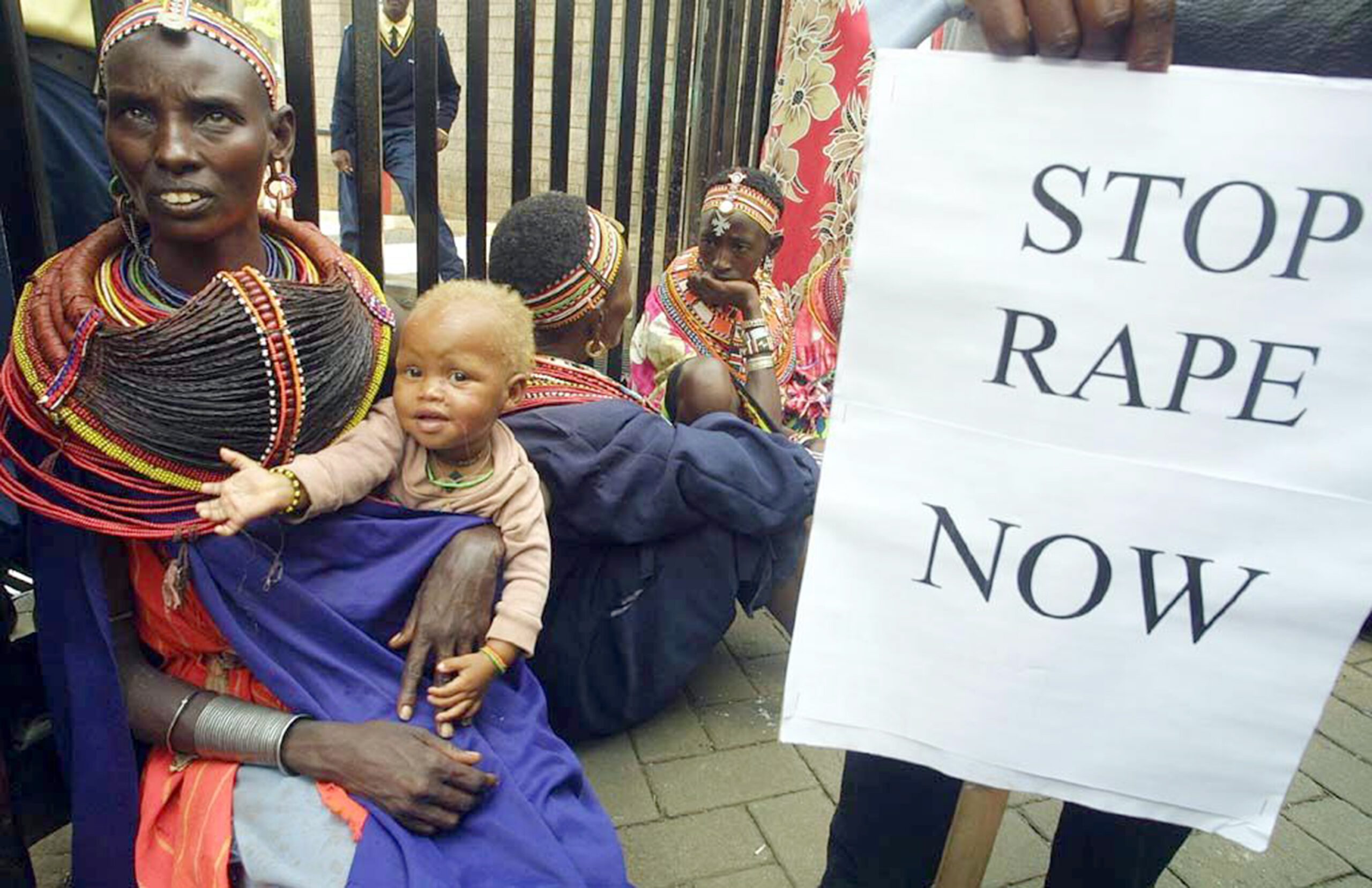
“Women, who know only too well the price of conflict, are also better equipped than men to prevent or resolve it. For generations, women have been educators for peace, both in their families and in their society. They have proven indispensable in terms of building bridges rather than walls,” said Kofi Annan, former Secretary General of the United Nations.  For instance, in Rwanda, the parliamentary election in September 2008 gave women 45 from the 80 seats at stake, resulting in the world’s first national legislative chamber with a female majority in a modern nation. The previous election, in 2003, had already given women 48.75% of the seats in Parliament.  Women oversee also institutions of justice that are critical to the country’s peace and stability. Since 2003, Ms. Aloysia Cyanzaire is the first female justice of the country, after heading previously the traditional courts established to try the less serious crimes in the 1994 genocide.  Aloisea Inyumba is, nowadays, a senator in the Rwandan Parliament. But, before that, she was a member of the Unity and Reconciliation Commission and minister of Family, Gender and Social Affairs in the immediate aftermath of the genocide. All the time, she encouraged Tutsi and Hutu women to start talking to each other in order to bridge the gap of ethnical barriers.  In Nepal, for instance, women victims of violence demanded to take part at the peace negotiations between the government and Maoist rebels and, at the 2008 legislative elections, political parties had to include 50% of women in their lists.  In Colombia, women’s convoys with thousands of participants travel to some of the most dangerous areas of the country to speak up against the war and its consequences, namely, poverty, and occasionally negotiate with guerrillas. In the posters they carry, they wrote slogans like “Women’s bodies are not spoils of war.”  

Shopping Cart