
Category: World Touch

Warsaw

End of U.N. Climate Talks

For Philippine diplomat Yeb Saño, the close of U.N. climate talks in Warsaw, last November 23, came with an unusual prize: he can eat again.

Springtime In The Church

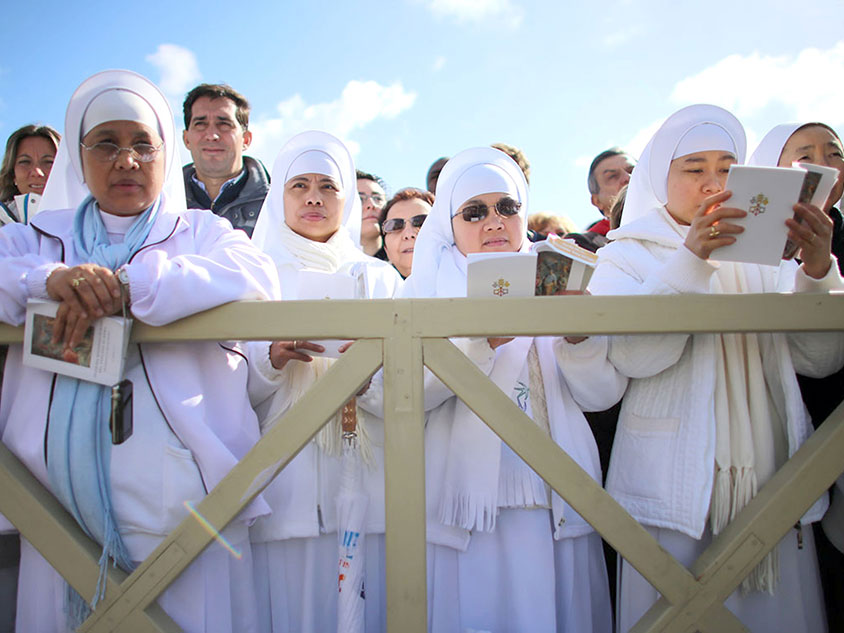
Cardinal Oswald Gracias underlined the positive impact of Pope Francis in India and Asia during an interview, in Rome, with Gerard O’Conell from the Vatican Insider/La Stampa. When asked about the 100 first days of the pontificate, he was rather enthusiastic about its effect on India: “Very, very positive! Very positive, in the sense that here’s a country with a lot of poverty also while there’s been great progress, and he’s struck a cord immediately with his consistent concern for the poor, the marginalized, and also telling the Church to be for the poor. India’s Catholics have been very impressed as well as the general populace who are not Catholic. He’s getting lots of publicity, everything he says is covered by the secular press, and his pictures appear very often in our papers.”

Priest Wins Human Rights Prize For Migrant Work

Solalinde received his award as Mexico comes to a crossroad. Pena took office amid protests just 10 days earlier, but public opinion polls show a sense of optimism among Mexicans – something expressed every six years with the transition of power: that the new president can keep his promises to calm violence in the country, combat poverty and corruption and pull Mexico out of an economic malaise. But Pena’s party, which ruled for most of the last century and retook power after 12 years in opposition, has a checkered reputation for human rights and sour relations with the Catholic Church. Pena, who called Solalinde “a good Samaritan,” said the priest’s call for a more just Mexico and leaders closer to the people “are aligned with this government’s project for the country.” That Solalinde would win such an award – a medal and recognition – surprised a few. He surged into the public spotlight over the past five years for his defiance of corrupt local officials in Oaxaca State – who, he says, belonged to Pena’s own party – and unwillingness to be cowed by organized crimes, which threatened his Brothers of the Road’s shelter for migrants. He left the shelter and Mexico during the spring of 2012 because of threats against him. The National Human Rights Commission, which sponsored the prize, reported more than 11,300 migrant kidnappings – often at the hands of organized criminal groups and abetted by crooked police and public officials – over a six-month period in 2010. Solalinde said, last November, that the Peña administration has reached out to those – including Catholic priests and religious – protecting undocumented migrants, but expressed reservations at the time. Political observers say publicly awarding the prize to Solalinde sets a new tone for the incoming presidential administration, which already has signed a comprehensive cooperation pact with the country’s three main parties to achieve structural reforms in the areas of education, economy and energy. “It’s a gesture of political communication,” said Aldo Munoz Armenta, political science professor at the Autonomous University of Mexico State. “The message is trying to convince those who are incredulous, in political terms, that the situation toward those seeking social justice has changed.” 

Rethinking Urban Poverty

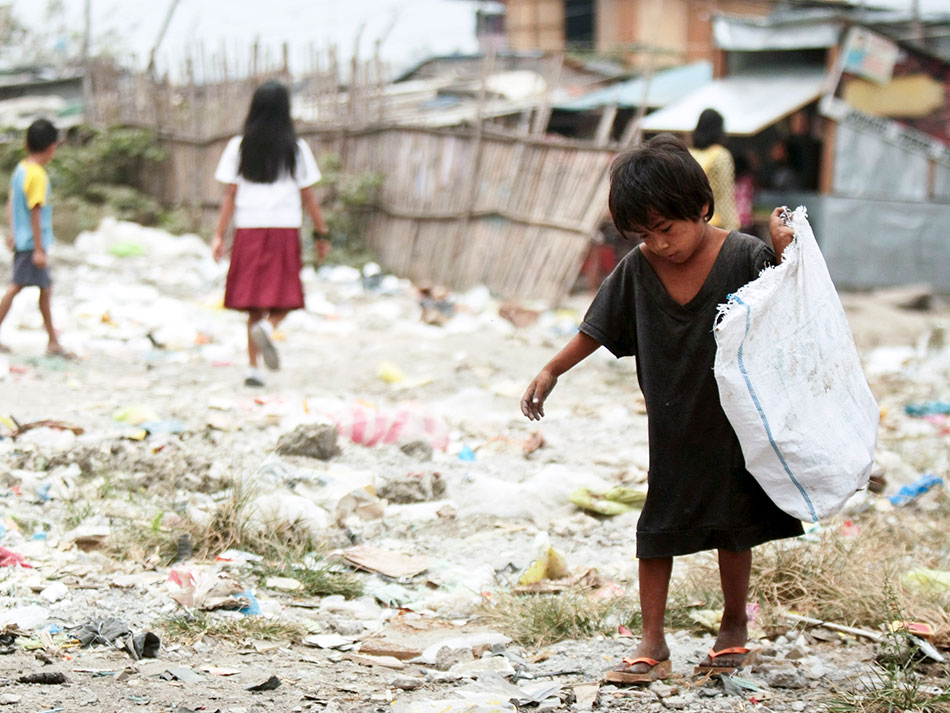
One of every seven people on earth lives in urban poverty; many of them reside in overcrowded informal settlements with inadequate water, sanitation, health care and social amenities. But simplistic income–based and nutrition–based poverty lines – including the widely used US$1 per day poverty line – yield a poor understanding of this issue, according to authors Diana Mitlin and David Satterthwaite. “If we are to use a monetary measure for defining and measuring whose income or consumption is insufficient… this measure has to reflect the cost of food and of non–food needs,” Mitlin affirmed.  The authors also criticize the emphasis on ‘income poverty.’ “Focusing only on income poverty can mean that a low–income household  – with a secure home with good quality provision for water, sanitation and drainage, access to health care and with their children at school – is considered just as poor as a low–income household with none of these,” they write in a book summary. “Almost all official measurements of urban poverty are also made with no dialogue with those who live in poverty and who struggle to live with inadequate incomes,” the summary states. “It is always the experts’ judgment that identifies those who are ‘poor’ who may then ‘targeted’ by some programs; at best, they become ‘objects’ of government policy, which may bring some improvement in conditions, but they are rarely seen as citizens with rights and legitimate demands who also have resources and capabilities that can contribute much to more effective poverty reduction programs.”  

Haiyan: Desperate Survivors In Flattened City

The coastal city of 222,000 inhabitants bore the brunt of the 195mph winds of the strongest storm ever recorded, tearing off roofs and destroying evacuation centers. The storm that surged six meters (20ft) in height turned roads into rivers of sewage and seawater, landing whole ships on top of houses, and obliterating bridges and roads. At least 10,000 people are thought to have died so far in Leyte province alone, with the toll expected to rise.  Without clean water, food or medicine, Tacloban survivors have begun raiding houses, shops and malls to find supplies. One shop owner was photographed defending his premises with a pistol, while reports emerged of aid convoys being hijacked and cash point machines being looted. Local officials warned Philippine President, Benigno Aquino III – who visited Tacloban on Sunday – that residents from nearby towns were entering the city to steal supplies and pleaded with him to declare martial law. Even Tacloban’s airport was reduced to a mere shell. But, now, survivors, authorities and media all crowd into the building through ragged gaps in its walls. The airport is both a makeshift command center – from which the army finally began, on Sunday, to deliver much-needed supplies – and the only way out for many survivors who are queuing hundreds-deep in an effort to leave the chaos behind. More grimly, the airport has been turned into a makeshift morgue for the growing number of bodies found stacked in churches, snagged on tree branches or underneath rubbles. Mass graves have been dug to accommodate the corpses; with Police Chief Elmer Soria reckoning that most victims either drowned or were crushed to death by crumbling buildings. “It was like a tsunami,” said Philippine Interior Secretary Mar Roxas, who visited Tacloban on Sunday by helicopter. “I don’t know how to describe what I saw. It’s horrific.” With communications still inoperative across vast swaths of the hardest-hit areas, it is impossible to judge the scale of the destruction. Aid agencies warn that they cannot reach all those affected, with airports and harbors across the Philippines either entirely closed or badly disrupted. Emergency teams have been forced to try to reach survivors by foot; in many cases walking for hours over debris to access remote and ravaged areas. Luiza Carvalho, the U.N.’s resident and humanitarian coordinator for the Philippines, said it was vital that aid agencies reach those who are stranded in isolated areas. “They are at risk of further threats such as malnutrition, exposure to bad weather and unsafe drinking water,” she said. More than 350,000 people are awaiting supplies in 1,220 evacuation centers, with 4.3M people across the country affected by Haiyan, said Orla Fagan of the U.N. Office for the Co-ordination of Humanitarian Affairs (OCHA). Rescue teams, deployed in Bogo City and San Remigio, on the island of Cebu, said some buildings have been flattened to the ground, with significant damage to both homes and sugar plantations, which have served as many residents’ primary source of income in

‘Rights Do Not Exist In N. Korea

Kim told the inquiry he was sent back to North Korea three times by Chinese authorities. He was then taken to a detention center where he witnessed severe beatings and was forced to search prisoners’ excrement for money. “The North Korean prison guards were telling us that, once you get to this prison, you’re not human, you’re just like animals,” he told the inquiry. In February 2007, he finally got away and he now has permanent residence in the United Kingdom. Another escapee, Park Jih-yun, described how she had to leave her dying father at home with only a bowl of rice as she fled across the Chinese border in 1998. In China, she was forced into marriage by “people who buy and sell other people,” she said. The U.N. commission of inquiry also heard from three former North Korean soldiers who spoke of rights abuses, and from the Christian Solidarity Worldwide (CSW) which has documented violations inside the country. “We hope that the commission of inquiry will expose the extent of the North Korean government’s human rights violations and provide the first steps towards justice for the North Korean people who have suffered terribly under one of the world’s most brutal, and closed, regimes,” said CSW’s Special Ambassador Stuart Windsor.   

30 Million ‘Modern Slaves’ Exploited Worldwide

Mauritania, a West African nation with deeply entrenched hereditary slavery, is ranked number one. It is estimated that there are between 140,000 and 160,000 people enslaved in Mauritania, a country with a population of just 3.8 million. Haiti, a Caribbean nation with deeply entrenched practices of child slavery (known locally as the restavek system) is ranked second on the index. An estimated 200,000 to 220,000 people are in modern slavery in Haiti, a country with a population of just 10.2 million. Pakistan, with its porous borders to Afghanistan, large populations of displaced persons and a weak rule of law, is third on the index with as many as 2,200,000 people in various forms of modern slavery. The country with the largest number of people in modern slavery is India, with between 13,300,000 and 14,700,000 people enslaved. Slavery in India includes some foreign nationals but, by far, the largest proportion of this problem occurs through the exploitation of Indian citizens, particularly through debt bondage and bonded labor. China had the second highest number, with an estimated 2.8 million to 3.1 million. In China, the forced labor of men, women and children can be located in many sectors of the economy, including domestic servitude and forced begging, sexual exploitation of women and children and forced marriage.  The country with the third highest absolute number in modern slavery is Pakistan, with an estimated 2 million to 2.2 million people. The United States ranked 134 with an estimated 59,644 enslaved. “Whether it is called human trafficking, forced labor, slavery or slavery-like practices (debt bondage, forced or servile marriage, sale or exploitation of children including in armed conflict), victims of modern slavery have their freedom denied and are used and controlled and exploited by another person for profit, sex or the thrill of domination,” the index authors conclude. A “staggering and harsh reality,” is that some people are still being “born into hereditary slavery,” according to the report, particularly in parts of West Africa and South Asia. “Other victims are captured or kidnapped before being sold or kept for exploitation, whether through ‘marriage’, unpaid labor on fishing boats or as domestic workers. Others are tricked and lured into situations they cannot escape, with false promises of a good job or an education.” Modern slavery can involve using children in the military, whether as combatants, porters, cooks or for other jobs. The chains of modern slavery are not always physical. Sometimes, escalating debts, intimidation, deception, isolation, fear or even a “marriage” that is forced on a young woman or girl can be used to hold a person against her will without the need for locks or chains.  

Canadian Arctic Temperatures At Their Highest In 44,000 Years

“The key piece here is just how unprecedented the warming of Arctic Canada is,” Professor Gifford Miller said. A fellow at CU-Boulder’s Institute of Arctic and Alpine Research who led the study, Miller says that “this study really says the warming we are seeing is outside any kind of known natural variability, and it has to be due to increased greenhouse gases in the atmosphere.” With his colleagues, Miller used dead moss clumps emerging from melting ice caps from the island as tiny calendars. Boasting of four different ice caps, radiocarbon dates show the Along mosses had not been exposed to the elements since at least 44,000 to 51,000 years ago. Radiocarbon dating is only accurate to about 50,000 years. Since Earth’s geological record shows it was in a glaciation stage prior to that time, the indications are that Canadian Arctic temperatures today have not been matched or exceeded for roughly 120,000 years. Compiling the age distribution of 145 radiocarbon-dated plants in the highlands of Baffin Island that were exposed by ice recession during the year they were collected proved daunting to researchers. All samples collected were within one meter of the ice caps, which are generally receding by two to three meters a year.  Reconstructing the past climate of Baffin Island beyond the limit of radiocarbon dating, the team used data from ice cores previously retrieved by international teams from the nearby Greenland Ice Sheet. Summer temperatures cooled in the Canadian Arctic by about five degrees Fahrenheit from roughly 5,000 years ago to about 100 years ago.  

Dates Set For St. Francis Xavier’s Exposition

Francis Xavier, a Basque, was born in Spain, April 7, 1506, and arrived in Goa on May 6, 1542. His missionary work took him across Asia over the next 10 years. He died on Dec. 3, 1552, on Sancian island, just short of his ultimate goal: China. His body was first laid to rest in Portuguese Malacca (presently northern Malaysia). Two years later, the body was moved to the Portuguese colony at Goa, today a popular tourist enclave, and installed in the Basilica of Bom Jesus. The basilica and the mausoleum there that hold the relics of Francis Xavier are a popular pilgrimage site year round. Every 10 years, the relics are moved in solemn procession to the nearby Se Cathedral where they are available for public veneration for 44 days. The saint’s body is intact, except for his right arm, which was removed so that it could be displayed as a relic at the Church of the Gesù in Rome. He is said to have baptized more than 300,000 people across Asia, using his right hand to pour the baptismal water.  

Philippines Has The Greatest Inequality Gap In Asia

The Aquino administration’s decisive crackdown on high-level corruption, which earlier saw the impeachment of top magistrates implicated in the abuse of power, restored some measure of confidence in state institutions and the economy. No longer a regional lacklustre, the Philippines has emerged as one of the few bright spots in Asia, growing by 7.8% in the first quarter of 2013. Nevertheless, the majority of the population continues to suffer from poverty, with growing income inequality sustaining well-entrenched networks of political patronage that fuel corruption across the country. Many continue to see widespread poverty and inequality as the key underlying factors for systemic corruption. Latest data suggests that the 40 richest families control up to 76% of the economy, the highest rate of “wealth concentration” in Asia. Such staggering levels of income inequality have had a direct impact on the political landscape, where about 178 political dynasties have continuously dominated 73 out of a total of 80 provinces in the Philippines. Recent months, especially, have raised concerns as to the Aquino administration’s ability to rein the age-old challenge of systemic corruption. Beginning in July, a number of whistleblowers have come forward, shedding light on a 220-million-dollar corruption scandal, dubbed by the media as the “mother of all scams.” According to the ongoing investigations, dozens of legislators have allegedly partnered with bogus non-governmental organizations (NGOs) to build ghost projects – those that only exist on paper – in order to re-channel their discretionary Priority Development Assistance Fund (PDAF) to their own pockets. In principle, the legislators are supposed to use their PDAF for local development projects, but systemic corruption has compromised programs for rural development and empowerment of indigent communities, with some politicians, in the process, amassing staggering amounts of wealth to sustain their elaborate systems of political patronage and ensure a strong hold on power.  Outraged by the breadth and veracity of the corruption charges, reportedly up to 75,000 Filipinos took to the streets of Manila on Aug. 26, National Heroes Day, to demand immediate prosecution of alleged plunderers as well as the elimination of legislator’s discretionary funds, the PDAF. “The dominant emotion is anger and outrage,” said Ito Rapadas, the major figure behind the nationwide anti-corruption rally. Across the Philippines and beyond, concurrent rallies were held in solidarity, reflecting the growing societal anger against the perceived impunity of corrupt officials. It marked the biggest protests under the current Aquino administration. The protesters were largely unified in their conviction that the PDAF has served not only as an avenue for self-enrichment by corrupt officials, but also a means for sustaining a vicious cycle of political patronage, especially during election periods.  Despite Aquino’s historic-high approval ratings, he has understood the significance of recent rallies, and that his popularity does not equate to civic passivity. The government has vowed to prosecute corrupt officials. Aquino has assembled the Inter-Agency Anti-Graft Coordinating Council to gather evidence and file charges against the alleged plunderers, while the Philippine Senate is overseeing a Blue Ribbon Commission to gather

Shopping Cart