Category: World Touch

‘Rights Do Not Exist In N. Korea

Kim told the inquiry he was sent back to North Korea three times by Chinese authorities. He was then taken to a detention center where he witnessed severe beatings and was forced to search prisoners’ excrement for money. “The North Korean prison guards were telling us that, once you get to this prison, you’re not human, you’re just like animals,” he told the inquiry. In February 2007, he finally got away and he now has permanent residence in the United Kingdom. Another escapee, Park Jih-yun, described how she had to leave her dying father at home with only a bowl of rice as she fled across the Chinese border in 1998. In China, she was forced into marriage by “people who buy and sell other people,” she said. The U.N. commission of inquiry also heard from three former North Korean soldiers who spoke of rights abuses, and from the Christian Solidarity Worldwide (CSW) which has documented violations inside the country. “We hope that the commission of inquiry will expose the extent of the North Korean government’s human rights violations and provide the first steps towards justice for the North Korean people who have suffered terribly under one of the world’s most brutal, and closed, regimes,” said CSW’s Special Ambassador Stuart Windsor.   

30 Million ‘Modern Slaves’ Exploited Worldwide

Mauritania, a West African nation with deeply entrenched hereditary slavery, is ranked number one. It is estimated that there are between 140,000 and 160,000 people enslaved in Mauritania, a country with a population of just 3.8 million. Haiti, a Caribbean nation with deeply entrenched practices of child slavery (known locally as the restavek system) is ranked second on the index. An estimated 200,000 to 220,000 people are in modern slavery in Haiti, a country with a population of just 10.2 million. Pakistan, with its porous borders to Afghanistan, large populations of displaced persons and a weak rule of law, is third on the index with as many as 2,200,000 people in various forms of modern slavery. The country with the largest number of people in modern slavery is India, with between 13,300,000 and 14,700,000 people enslaved. Slavery in India includes some foreign nationals but, by far, the largest proportion of this problem occurs through the exploitation of Indian citizens, particularly through debt bondage and bonded labor. China had the second highest number, with an estimated 2.8 million to 3.1 million. In China, the forced labor of men, women and children can be located in many sectors of the economy, including domestic servitude and forced begging, sexual exploitation of women and children and forced marriage.  The country with the third highest absolute number in modern slavery is Pakistan, with an estimated 2 million to 2.2 million people. The United States ranked 134 with an estimated 59,644 enslaved. “Whether it is called human trafficking, forced labor, slavery or slavery-like practices (debt bondage, forced or servile marriage, sale or exploitation of children including in armed conflict), victims of modern slavery have their freedom denied and are used and controlled and exploited by another person for profit, sex or the thrill of domination,” the index authors conclude. A “staggering and harsh reality,” is that some people are still being “born into hereditary slavery,” according to the report, particularly in parts of West Africa and South Asia. “Other victims are captured or kidnapped before being sold or kept for exploitation, whether through ‘marriage’, unpaid labor on fishing boats or as domestic workers. Others are tricked and lured into situations they cannot escape, with false promises of a good job or an education.” Modern slavery can involve using children in the military, whether as combatants, porters, cooks or for other jobs. The chains of modern slavery are not always physical. Sometimes, escalating debts, intimidation, deception, isolation, fear or even a “marriage” that is forced on a young woman or girl can be used to hold a person against her will without the need for locks or chains.  

Canadian Arctic Temperatures At Their Highest In 44,000 Years

“The key piece here is just how unprecedented the warming of Arctic Canada is,” Professor Gifford Miller said. A fellow at CU-Boulder’s Institute of Arctic and Alpine Research who led the study, Miller says that “this study really says the warming we are seeing is outside any kind of known natural variability, and it has to be due to increased greenhouse gases in the atmosphere.” With his colleagues, Miller used dead moss clumps emerging from melting ice caps from the island as tiny calendars. Boasting of four different ice caps, radiocarbon dates show the Along mosses had not been exposed to the elements since at least 44,000 to 51,000 years ago. Radiocarbon dating is only accurate to about 50,000 years. Since Earth’s geological record shows it was in a glaciation stage prior to that time, the indications are that Canadian Arctic temperatures today have not been matched or exceeded for roughly 120,000 years. Compiling the age distribution of 145 radiocarbon-dated plants in the highlands of Baffin Island that were exposed by ice recession during the year they were collected proved daunting to researchers. All samples collected were within one meter of the ice caps, which are generally receding by two to three meters a year.  Reconstructing the past climate of Baffin Island beyond the limit of radiocarbon dating, the team used data from ice cores previously retrieved by international teams from the nearby Greenland Ice Sheet. Summer temperatures cooled in the Canadian Arctic by about five degrees Fahrenheit from roughly 5,000 years ago to about 100 years ago.  

Dates Set For St. Francis Xavier’s Exposition

Francis Xavier, a Basque, was born in Spain, April 7, 1506, and arrived in Goa on May 6, 1542. His missionary work took him across Asia over the next 10 years. He died on Dec. 3, 1552, on Sancian island, just short of his ultimate goal: China. His body was first laid to rest in Portuguese Malacca (presently northern Malaysia). Two years later, the body was moved to the Portuguese colony at Goa, today a popular tourist enclave, and installed in the Basilica of Bom Jesus. The basilica and the mausoleum there that hold the relics of Francis Xavier are a popular pilgrimage site year round. Every 10 years, the relics are moved in solemn procession to the nearby Se Cathedral where they are available for public veneration for 44 days. The saint’s body is intact, except for his right arm, which was removed so that it could be displayed as a relic at the Church of the Gesù in Rome. He is said to have baptized more than 300,000 people across Asia, using his right hand to pour the baptismal water.  

Philippines Has The Greatest Inequality Gap In Asia

The Aquino administration’s decisive crackdown on high-level corruption, which earlier saw the impeachment of top magistrates implicated in the abuse of power, restored some measure of confidence in state institutions and the economy. No longer a regional lacklustre, the Philippines has emerged as one of the few bright spots in Asia, growing by 7.8% in the first quarter of 2013. Nevertheless, the majority of the population continues to suffer from poverty, with growing income inequality sustaining well-entrenched networks of political patronage that fuel corruption across the country. Many continue to see widespread poverty and inequality as the key underlying factors for systemic corruption. Latest data suggests that the 40 richest families control up to 76% of the economy, the highest rate of “wealth concentration” in Asia. Such staggering levels of income inequality have had a direct impact on the political landscape, where about 178 political dynasties have continuously dominated 73 out of a total of 80 provinces in the Philippines. Recent months, especially, have raised concerns as to the Aquino administration’s ability to rein the age-old challenge of systemic corruption. Beginning in July, a number of whistleblowers have come forward, shedding light on a 220-million-dollar corruption scandal, dubbed by the media as the “mother of all scams.” According to the ongoing investigations, dozens of legislators have allegedly partnered with bogus non-governmental organizations (NGOs) to build ghost projects – those that only exist on paper – in order to re-channel their discretionary Priority Development Assistance Fund (PDAF) to their own pockets. In principle, the legislators are supposed to use their PDAF for local development projects, but systemic corruption has compromised programs for rural development and empowerment of indigent communities, with some politicians, in the process, amassing staggering amounts of wealth to sustain their elaborate systems of political patronage and ensure a strong hold on power.  Outraged by the breadth and veracity of the corruption charges, reportedly up to 75,000 Filipinos took to the streets of Manila on Aug. 26, National Heroes Day, to demand immediate prosecution of alleged plunderers as well as the elimination of legislator’s discretionary funds, the PDAF. “The dominant emotion is anger and outrage,” said Ito Rapadas, the major figure behind the nationwide anti-corruption rally. Across the Philippines and beyond, concurrent rallies were held in solidarity, reflecting the growing societal anger against the perceived impunity of corrupt officials. It marked the biggest protests under the current Aquino administration. The protesters were largely unified in their conviction that the PDAF has served not only as an avenue for self-enrichment by corrupt officials, but also a means for sustaining a vicious cycle of political patronage, especially during election periods.  Despite Aquino’s historic-high approval ratings, he has understood the significance of recent rallies, and that his popularity does not equate to civic passivity. The government has vowed to prosecute corrupt officials. Aquino has assembled the Inter-Agency Anti-Graft Coordinating Council to gather evidence and file charges against the alleged plunderers, while the Philippine Senate is overseeing a Blue Ribbon Commission to gather

Girls Are Going Back To School

The valley was cleared of the Taliban by a military operation in 2009, but it’s taken awhile for girls to fill the schools again. Girls struggle to simply get to school in the remote mountainous region and the persistent issue of poverty remains key. The Taliban is considered a greater threat in areas that border the valley, but activists here say there’s a need to make sure girls, as well as boys, are educated in order to avoid a repeat of the past. “There is a feeling [in Swat] that, if we are not educated, these things will happen again,” says Hazer Gul, a local activist. “The Mullahs misinformed us. They [the community] have understood that education is the key to avoiding militants.” Enter the Malala Fund: The fund named for Malala Yousafzai, the young girl who was shot point blank by a Taliban gunman for her vocal support of school for girls in the region, aims to improve access to primary school education for children around the world. Her survival of the Taliban attack on her school bus one year ago in October, shined a spotlight on Pakistani girls’ education – and made her a global spokesperson for the millions of Pakistani girls who are denied education by the movement.  

Springtime In The Church

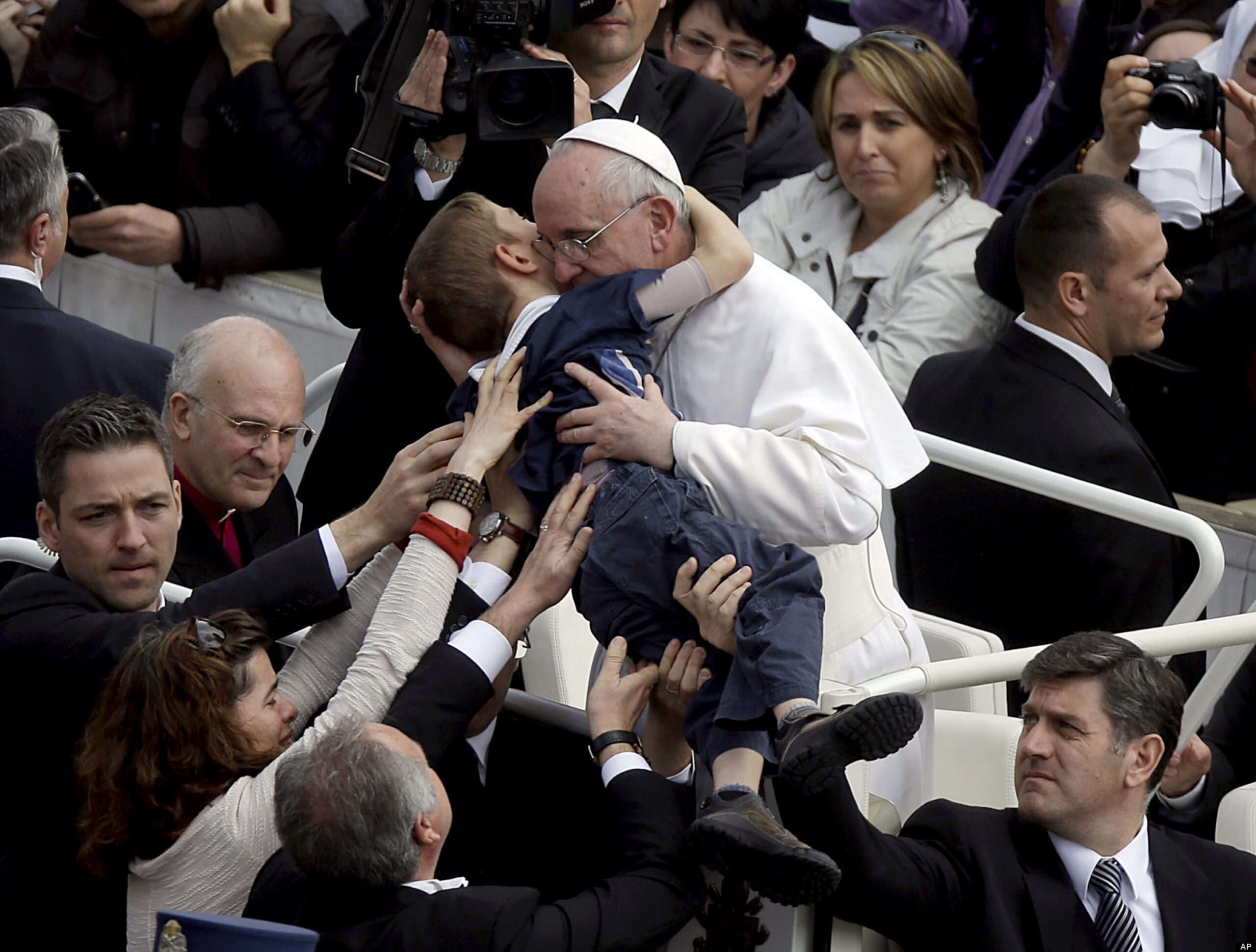
The cardinal didn’t spare his words: “It’s a big blessing for the Church. It seems like springtime for the Church. He has sparked an atmosphere of joy, enthusiasm and excitement. There’s life, vitality and enthusiasm for the Church now. People say this is the Church that I like to belong to. People have gone to confession and Mass because of the inspiration that Pope Francis has given.” He thinks something similar is happening in the rest of Asia: “I don’t have a lot of feedback as yet, but I’ve met some bishops from other countries, from Pakistan, Sri Lanka and Cardinal Tagle from the Philippines; all have spoken very, very favorably of the Holy Father’s impact on their countries.” Cardinal Gracias, who was appointed by the Pope to represent the continent in the group of eight cardinals who are to be his top advisors, confesses that he was astonished by the news: “I was very, very surprised when I received the call from the Secretary of State that the Holy Father wanted me on this group of eight people to advise him. I said why me? I must say I almost felt certainly unworthy and humbled, but I also realized it is a tremendous responsibility and I felt like running away and saying get somebody else to advise you. But I realize it is something crucial, vital and very responsible.”  He also notes the role that the group, which includes representatives of all continents, can play: “I think the group will make a difference if he wants it to make a difference. I’ve heard him so often refer to this group in recent times that my impression is that he is expecting a lot from us. It appears to me that we are a little like the group of consulters that a Jesuit provincial has; and which he appoints. These consulters are there to help him in his different decisions, and he calls on them when there’s a need. I think it’s something of that sort; it’s the Ignatian method. It has proved very successful for the Jesuit provincials, and I cannot see why it can’t also prove successful for the Pope.” 

A Snapshot Of The Chinese Elderly

The survey covered about 18 thousand people in 28 provinces. The data points out that 65% of the elderly population is likely to live in poverty for the rest of their lives, given that the pension system cannot cover costs if it isn’t receiving taxes from workers which, in any case, are far fewer than the elderly.  Analysts who have studied the results of the research have reported alarming figures. More than 38% of the elderly “has serious difficulty” in meeting their daily needs; 24% have to integrate their pension with an odd job to make ends meet, 25% live on less than 2,433 Yuan (about 300 Euros) a year, the minimum set by the government to define a pauper. The healthcare situation is also disastrous. About 33% of respondents suffer from a chronic disease: 54% of these have high blood pressure, while 40% are not even able to have their illness diagnosed. There are very high rates of psychological symptoms: 48% of women and 32% of men show signs of depression. Added to this is the fact that the availability of access to the medical system is greatly reduced for the elderly who live in big cities. Beijing can only provide 1,100 beds per 10 thousand requests for admission. Professor John Strauss of the University of California points out that another factor also must be taken into consideration. “At the moment, those over 65 had 3 or 4 children. The next wave will be to those who have suffered the one-child law and, therefore, a lot less hope. ”  

Killings Remain A ‘Major Concern’

WAN-Ifra’s recorded incident in the Philippines was the murder of commentator Julius Cauzo of radio station DWJJ in Cabanatuan City in Nueva Ecija province. Cauzo was shot dead on Nov. 8 last year. Cauzo, WAN-Ifra noted, was critical of local politicians and had received death threats. The group emphasized that “impunity remains a bitter issue in the Philippines.” It said that investigations were “still ongoing into the Nov. 23, 2009, ‘Ampatuan massacre,’ which saw 32 journalists tragically killed.” The New York-based Committee to Protect Journalists listed the Philippines as the third most dangerous place for journalists – with the unsolved killings of media men even after President Aquino vowed to end the murders. WAN-Ifra said that of the media deaths, 15 were killed while covering the civil war in Syria while 10 died in Somalia. “Whether at the hand of extremists, organized criminal gangs or official security forces, journalists increasingly find themselves in the firing line,” WAN-Ifra said. “Where the media is targeted, impunity for the killers of journalists continues to prolong the agony for the victims’ families and cast a chilling shadow over the profession,” it added. WAN-Ifra said its 47-page report noted that, in many parts of the world, attempts to muzzle press freedom had gone in the form of criminal liabilities, soft censorship and “policing the digital debate,” where states had targeted social media users active in political debates. Online freedom of expression has been targeted by authorities in China and Vietnam where bloggers have been under surveillance or sentenced to jail terms. In Afghanistan and Pakistan, media are under attack from “violent extremists,” WAN-Ifra said.   

United Effort Against Trafficking

The collaborative campaign was formalized during a three-day meeting of representatives of a dozen congregations active in anti-trafficking programs in local communities and the Leadership Conference of Women Religious in Washington. The meeting coincided with the release of a report by the Presidential Advisory Council on Faith-Based and Neighborhood Partnerships offering 10 recommendations to President Barack Obama’s administration aimed at eradicating human trafficking. For years, individual congregations, such as the Sisters of the Humility of Mary of Villa Maria, Pa., have run human trafficking awareness programs regionally. Sr. Margaret Nacke, a member of the Sisters of St. Joseph of Concordia, Kan., who helped convene the gathering, said it is time for the congregations to come together to better make use of the anti-trafficking resources and programs they had developed. Congregations from California, Indiana, Kansas, Louisiana, Nebraska, New Jersey, New York, Ohio and Pennsylvania were represented. “In our dialogue with government, non-government organizations and church officials, we, Sisters, got a better sense of their focus and their thrust in regard to modern-day slavery. And they got a better idea of what we, Sisters, are doing,” Nacke said. The call for greater collaboration stems from Nacke’s research into the trafficking work of religious congregations. Her findings led to the development of the Bakhita Initiative, an Internet-based listing of anti-trafficking programs and resources available from congregations nationwide. The initiative is named after St. Josephine Bakhita, a Sudanese slave who became a nun after her release. Born in 1869, she was kidnapped at age 7 and sold into slavery. Her kidnappers gave her the name Bakhita which, translated, means “fortunate one.” She eventually was freed and was inspired to join religious life. Pope John Paul II canonized her in 2000. Nacke envisions the online initiative as being a storehouse of human trafficking resources for religious congregations as well as the general public. Eleven congregations of women religious in the Toledo diocese formed Stop Trafficking of Persons (STOP) in 2006. Toledo, a major crossroads between Cleveland, Chicago, Detroit and points south, ranks fourth in the country in the number of arrests, investigations and rescues of children involved in sex trafficking, a 2010 report from the Ohio Trafficking in Persons Study Commission found. An estimated 100,000 to 300,000 minors are victims of sex trafficking at any given time, according to the Justice Department. Worldwide, about 21 million people are trafficked in an industry that nets traffickers $32 billion annually, the State Department’s 2012 Trafficking in Persons report said. “This is a crucial point to come together [nationally] because we really want to go about this in terms of best practices,” Nowak explained. “We want to use both heart and head. It’s important to collaborate and network.”   

Shopping Cart