Category: Vatican

Ricci Brought The Gospel To China

After noting that Ricci is still held in high esteem in China today, the Pontiff said that the missionary’s work “must not be separated” from his commitment to “Chinese inculturation of the Gospel message and his introduction of Western culture and science to China.” Indeed, many events celebrating the fourth centenary of his death risked presenting Matteo Ricci as a mere cultural mediator. “Fr. Ricci” – said the Pope – “went to China not to bring science and Western culture, but to bring the Gospel to make God known.” He added: “And as he proclaimed the Gospel, Fr. Ricci found, in his interlocutors, the desire for a wider confrontation, so that an encounter motivated by faith became a dialogue between cultures, a disinterested dialogue free from the ambitions of economic or political power, lived in friendship, which made the work of Fr. Ricci and his disciples one of the highest and happiest points in the relationship between China and the West.”  Benedict XVI also recalled “the role and influence” that his Chinese friends had in the work of Ricci (Xu Guangqi; Zhizao Li, Yang Tingyun, Li Yingshi): “His choices did not depend on an abstract strategy of inculturation of the faith, but from all the events, encounters and experiences that he made so all that he achieved was also, thanks to his encounter with the Chinese, an encounter he lived in many ways, but which was deepened through his relationship with some friends and disciples, especially the four famous converts, ‘pillars of the nascent Chinese Church.’”  The memory of Ricci and his friends, continued Benedict XVI, should be an occasion for prayer for “the Church in China and the entire Chinese people, as we do every year, on May 24, turning to Mary, venerated in famous Shrine of Sheshan in Shanghai, and may they also be an incentive and encouragement to live the Christian faith intensely, in dialogue with different cultures, and in the certainty that, in Christ, true humanism is realized, open to God, full of moral and spiritual values and able to respond to the deepest longings of the human soul.” The Pope concluded expressing his appreciation and greeting to China and the desire for a deeper relationship between it and Christianity: “Like Father Matteo Ricci, today I express my profound respect to the noble Chinese people and its ancient culture, convinced that their renewed encounter with Christianity will bring abundant good fruits, and that, like then, it will favor peaceful coexistence among peoples.”  

Slavery: Hidden Crime Of The 21st Century

Migrants represent 3% of the global population. Put another way, 200 million people live in a different country from the one in which they were born. If put together, this population would be the world’s 10th largest country. Nearly half of all migrants are women – a new phenomenon as more women move independently of their families or male partners. This “feminization of migration” has resulted in other problems, known as the “care drain” where families are left without their womenfolk. The United Nations High Commission for Refugees has 33 million people under its mandate – refugees, asylum seekers, exiles, internally displaced persons and stateless persons. At least 15% of all migrants are estimated to be involved in illegal immigration which is often fed by a parallel market of human trafficking and smuggling, and frequently run by organized criminals. These are some of the stark facts and figures presented in Rome at the Sixth World Congress on the Pastoral Care of Migrants and Refugees. The challenge is put before the Church – how does a body that represents Jesus and continues His mission respond to such an overwhelming need? The response offered at the Congress could be summarized as twofold: to assume a theology of abundance and to engender a culture of solidarity. A theology of abundance says there is more than enough on earth for everyone to live with dignity. We just have to share what God has given us, recognizing that God has given creation for the use of all. A culture of solidarity says that we all belong together as members of the human family, interdependent, each with a place and a part to play. There is no need to feel threatened by newcomers to our patch as there is enough for everyone and we all belong together. So don’t turn migrants and refugees into the bad guys. They have a place and have something to offer just as the rest of us do. Rather, see them as an opportunity for society to be enriched and grow. As they come our way, they are not simply taking from what we have but are potential assets for our societies as they develop. There would be fewer cases like Ms. A’s if we approach the whole question in a different way, as the Church’s Congress hammered home in Rome. The Eternal City itself holds a message. It is a magnet attracting people from around the world to its glories, its treasures, its culture, its history and as a center of faith. There, is a place where everyone can feel that they belong. We don’t have to be exceptional, just human and in touch with our humanity.  

Treasures Of Secret Archives Revealed

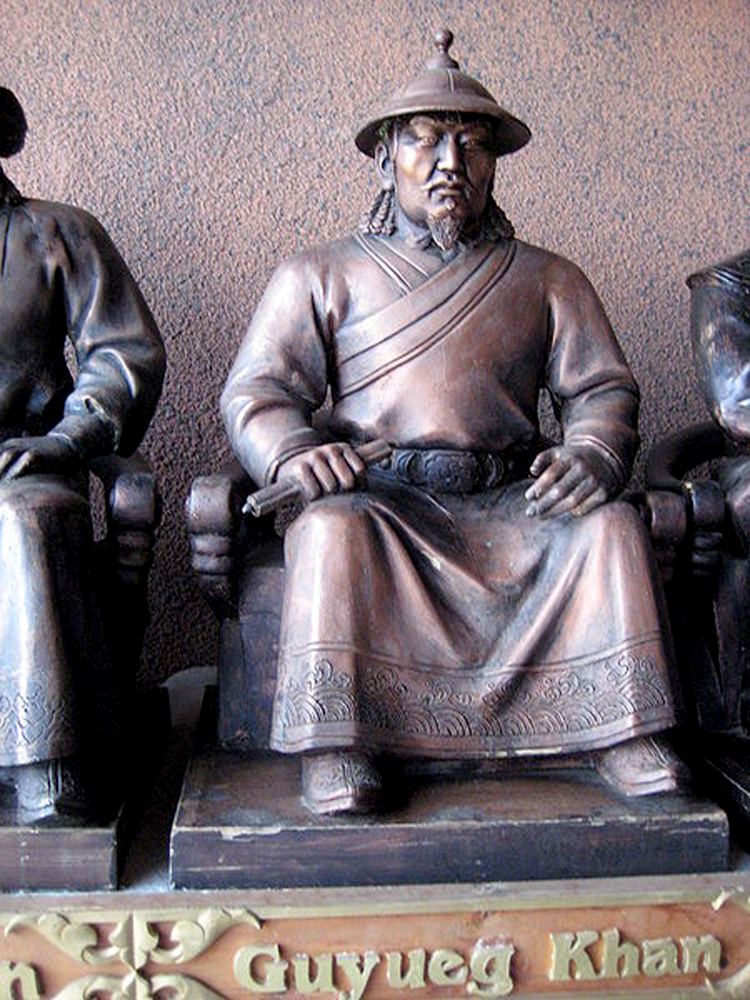
High-quality reproductions of 105 documents, 19 of which have never been seen before in public, have been published in a book. The Vatican Secret Archives features a papal letter to Hitler, an entreaty to Rome written on birch bark by a tribe of North American Indians, and a plea from Mary Queen of Scots.  The book documents the Catholic Church’s often hostile dealings with the world of science and of arts, including documents from the heresy trial against Galileo and correspondence exchanged with Erasmus, Voltaire and Mozart.  In a letter dated 1246 from Grand Khan Güyük to Pope Innocent IV, Genghis Khan’s grandson demands that the pontiff travel to central Asia in person – with all of his “kings” in tow – to “pay service and homage to us” as an act of “submission,” threatening that otherwise “you shall be our enemy.” The book also includes letters written to Hitler by Pope Pius XI in 1934 and one received by his controversial successor, Pius XII, from Japan’s Emperor Hirohito.  “An aura of mystery has always surrounded this important cultural institution of the Holy See due to the allusions to inaccessible secrets,” Cardinal Raffaele Farina, a Vatican archivist, writes in the preface to the book, which was produced by a Belgian publisher. Although scholars have had access to the archives since 1881, they remain closed to the public.   

Vatican

210,000 New Cases of Leprosy Every Year

Leprosy is still a plague, with 210,000 new cases of infection per year (not counting those long-infected, only recently diagnosed). But the world is indifferent and oblivious, even though the disease can be easily eradicated. In a message for the 57th World Day of Leprosy, Msgr. Zygmunt Zimowski, President of the Pontifical Council for Pastoral Health Care Workers, demands that the international community strengthen its efforts for the treatment and prevention of this scourge.

Vatican

Treasures of Secret Archives Revealed

A 13th-century letter from Genghis Khan’s grandson demanding homage from Pope Innocent IV, and another from 20th century Japanese Emperor Hirohito are among a collection of documents from the Vatican’s secret archives that have been published for the first time. The Holy See’s archives contain scrolls, parchments and leather-bound volumes with correspondence dating back more than a thousand years.

Vatican

Slavery: Hidden Crime of the 21st Century

In 2003, Ms. A paid a job broker to smuggle her from Myanmar into Thailand where she was promised work as a maid in Bangkok. She did not know that the broker had sold her to her Thai employer for five years during which she would be paid no salary, and be effectively a slave in a strange country where she did not speak the language. It would be comfortable to think that Ms. A’s was an isolated case but it is not. Every year, an estimated 2.4 million people are sold into slavery, although today we call the crime trafficking.

Shopping Cart