The mystical dimension of religions helps us to appreciate how people can reach a deeper unity with God even if they are guided by different beliefs or religious backgrounds. God works in a “mysterious” way in those who search Him with sincere heart. We focus here our attention on Islam as one of the monotheistic religions, along with Christianity and Judaism. The mystical experience is not understood by all and in some places “mystics” have also been persecuted.
This has also been the experience of Sufism in Islam. The movement of the Sufis, from the tenth to the fourteenth centuries, became a real popular movement. “Sufiyun” (singular sufi, plural sufiyun, sufiyah-sufism) are considered the mystics in Islam. The real meaning of the word “mystic” comes from the Greek word “myein,” meaning to close the mouth or the eyes. There is a relation between “mystics” and “mysteries,” therefore “secret,” “secret teaching,” “secret cult.”
As it happened in Judaism and Christianity, mystics in Islam are guided by the same basic attitudes:
A tendency toward internalization and deepening
An inner freedom
An experience of unity with God
HISTORICAL BACKGROUND
The Arabic word for “mysticism,” often also used for “spirituality,” is “tasawwuf” (literally means “clothing oneself in wool”). So the word “sufi” for many connotes the word “suf” (wool). For some, this word is also an allusion to the word “sophos” (wise man). No matter what the original meaning of the word is, Sufism is a manifestation of Islamic asceticism.
Sufism accepts asceticism (zuhd), but also transcends it because asceticism is considered one of the “stations” or “ways” toward spirituality. The classical Sufism has moved from asceticism toward an internalization of the spiritual experience of unity with God. The Sufis strive to be “friends of God”: awliya (singular wali) Allah.
This experience has been so deeply internalized by some Sufis to the point that the famous Sufi, Al-Hallaj, was not understood. They thought he considered himself equal to Allah. He was accused to have said: “I am (ana) the true one (Al-hagg)”, an expression used frequently for God, and he was killed in 922 in Baghdad. His last words that have been handed down are: “It is enough for the lover that he should make the one single (i.e., that his existence) should be cleared away from the path of love.” The controversy over Al-Hallaj challenged the Sufis of the following centuries, especially with the great influence of Muhammad Al-Gazali (1058-1111) a great scholar who became a Sufi. He contributed a lot to give guiding principles and demarcations to the Sufi movement. When he became a Sufi, he left part of his scholarly activity to have more time to get a “taste of God.”
Among the moves that have made Sufism a more stable movement are the following:
To supply books with the basic teaching on the classical mystics and correct behavior.
To present the chains of Sufi authorities (Salasil, singular Silsilah) who, as with the hadith, legitimized their own teaching and practices by going back to predecessors up to Prophet Muhammad. These chains provided the “spiritual genealogy” of “Sufi succession,” of “representative” (Khulafa, singular Khalifa).
To establish Sufi boarding schools which provide better instruction.
The Sufi movement, in the 12th and 13th centuries, often took the structure of Christian religious orders and we can identify common orientation, specially the ideals of love of God, discipleship, service to follow human beings, subordination to superiors. Also to have a distinctive rule, a distinctive dress, a special type of prayer and other points of distinctive characteristics.
We also know that women did not attain equal right in Sufism, but the great example of the eighth century mystic, Rabi’ah, was an encouragement for many women to follow the way of mystical life.
There are also some shadowy sides of Sufism that are not accepted in the orthodox Islam, like the veneration of saints and other forms of occult experiences.
A COMMON SPIRITUAL PILGRIMAGE
The basic points of the Islamic spirituality are similar to the Christian spirituality. To use a metaphor, we can imagine Christian and Muslim “pilgrims” working together toward a common goal. Both can be considered “pilgrims” who follow the same path of a common spiritual journey.
Spirituality as a way of love. Christian saints and Muslim mystics have called God: Guide, Protector, Creator, Friend, Beloved. To allow God to transform our heart and mind is a way to love.
Teresa of Avila, a Christian from Spain, and Rabi’a Al-Adawiyya, a Muslim living in the area of what is now Iraq, did not have training in psychology but by intuition experienced what contemporary psychologists refer to as a profound understanding of the self. The two mystics journeyed into the reality of healing love within their own hearts. Rabi’a says: “The friend who lives in my house is the lover of my heart.”
For Rabi`a, God is not only a Friend who heals the heart, but Someone who “allows” to freely express love and friendship. This relationship is also described in John’s gospel where Jesus calls us friends, not servants: “A new commandment I give to you, that you love one another, even as I have loved you, that you also love one another” (Jn 13, 34-35). Thus, the means and the end are the same. If the goal of life is union with God and loving one’s neighbor is a journey towards God, our spiritual journey through the love we show our neighbor, thus leads us to achieve union with God.
Spirituality as a journey of purification. Purification in Islamic and Christian spiritualities is the enhancing process to search God’s love and see reality with new eyes. Al-Ghazzali, the famous Muslim scholar and Sufi mentioned earlier, says: “If we would like to clean the well of the psyche of the polluted rubbish which constantly flows into it by way of the social currents, we must first stop the flow of such polluted matters and then find a good cleaning detergent and clean the well. Then we must let the clean water flow in.”
Psychologists today give much importance to the spiritual journey of persons. They understand the relation between the psyche and the spiritual life. We may say that psychology opens us up and prepares us for cleansing; spirituality leads us to freedom. As part of the purification process, Sufis talk about a “deconditioning process” – removing all that blocks the radiance and glory of God. Jelalludin Rumi, one of the most famous poets and spiritual guides of Islam, talks about illusions in life, no matter how initially attractive, and “whatever the light is.” His ideas coincide with the famous verses of John of the Cross:
To come to the pleasure you have not / you must go by a way in which you enjoy not. / To come to the knowledge you have not / you must go by a way in which you know not. / To come to the possession you have not / you must go by a way in which you possess not. / To come to be what you are not / you must go by a way in which you are not.
In this process, the Christian and Muslim mystics reach the concept of “nada” (nothing), a process which brings one to the stage of “emptiness.” For Rumi, being “pure,” being clean, is not enough. Muslim and Christian mystics say that the physical control of the appetites is not enough; all that would interfere with our acceptance of divine love and enlightenment must be burned off. Saint Paul expresses this concept by saying that Christ Jesus “emptied Himself” (Ph 2:5.7).
Spirituality as a process of transformation. This transformation happens through the death of the ego. Saint Paul says: “You must give up your old nature… and be renewed in the spirit of your minds, and put on the new nature created after the likeness of God in true righteousness and holiness” (Eph 4:22-24). Therefore, the transformation that takes place in a purified heart is actually a “return” to the original state of oneness with God.
Transformation cannot happen if we allow ourselves to be overcome by fear. Muslim and Christian mystics say that the great obstacle to spirituality is fear. To “lose” oneself in God is a cause of fear. Jesus says: “Fear not, it is I” (Mark 6:50). Here we have the secret of Christian and Islamic spirituality. There is a Sufi story that describes well this concept of the desire to move and the obstacles that come from the ego:
“I want to learn to swim.”
“Do you want to bargain about it?”
“No, I only have to take my ton of cabbage.”
“What cabbage?”
“The food which I will need on the other island.”
“There is better food there. I don’t know what you mean.”
“I cannot be sure, I must take my cabbage.”
“You cannot swim for one thing, with a ton of cabbage”
“Then I cannot go.”6
SOURCES OF ISLAMIC SPIRITUALITY
From the brief presentation of Islamic spirituality as a way of love, a journey of purification, and a process of transformation, we discover how close are Islamic and Christian mysticisms. What I have presented can be considered only an entry point to Islamic spirituality, a mere taste so to speak, to encourage us to deepen our interest in this discovery.
Now we move to the basic sources of this spirituality – the Holy Qur’an and the Hadith – without going into a proper presentation of these two basic sources and other sources like Ijma7 and Quyas.8 I touch on only two major quotations, one from the Holy Qur’an and one from the Hadith, as examples to approach Islamic spirituality using its major sources as the Sufis did.
The Holy Qur’an. One of the most powerful quotations of the Holy Qur’an that introduces us to Islamic spirituality is:
“… and the servants of Allah, the most gracious, / are those who walk on the earth in humility, / and when the ignorant address them, they say ‘Peace!’” (Sura 25, 63)
The quotation expresses, in a few words, important aspects of Islamic spirituality. It starts with the “servants of Allah” and reminds us that a Muslim is a person who “surrenders to Allah,” thus, is a servant of Allah. The expression the “most gracious” helps Muslims to recall that almost all the 114 Sura of the Holy Qur’an start with the expression: “In the name of Allah, the most gracious, the most compassionate.” If Allah is gracious/merciful and compassionate, the servants have to follow this example. We find in the quotation an important attitude of compassion, which is humility. “The servants of Allah … are those who walk on the earth in humility.”
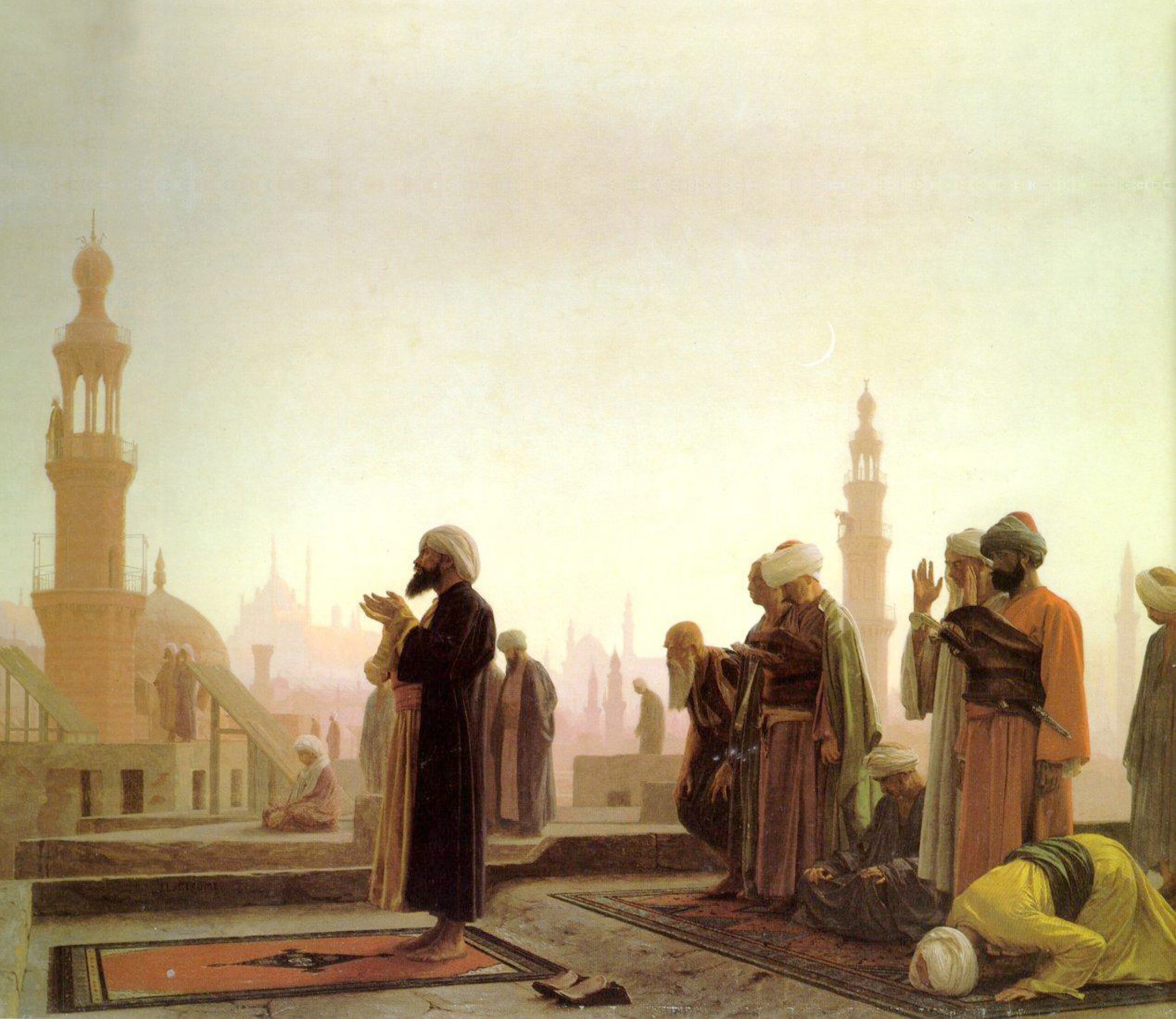
To work with humility is part of Islamic spirituality. We can find other expressions of humility in Islam, like the Rakah (bodily movements with accompanying words of prayer) during the salat (prayer); the uniform white clothes that Muslims wear during the hajj (pilgrimage) to Mecca are also signs of purity and humility – rich and poor use the same white clothes. Muslims are reminded to remain humble in many other ways – during the month of Ramadhan, Muslims are invited to ask forgiveness for their sins, experience the suffering of those who suffer and those who are hungry. It is a form of humility in the spirit of solidarity, and forgiveness.
The Qur’anic quotation also says, “and when the ignorant address them, they say: Peace.” Peace is the key word of Islamic spirituality. Islam means “peace” and Muslims always emphasize this aspect of the faith.
The Hadith. The hadith contains the words and deeds of Prophet Muhammad. I would like to focus here attention on the concept of the “great Jihad” (jihad means struggle) and its relation to Islamic spirituality as it is recorded in one hadith. It was in the early days of Islam when Muhammad and his companions were engaged in a struggle against their enemies. One day, the hadith mentions, the Prophet and his companions were moving back to their place after a victory against their enemies. On the way back, the companions asked the Prophet: “What next?” He answered: “We are moving from a small Jihad towards a greater Jihad.” The companions did not understand the meaning and the message so he said: “The great Jihad is the struggle of the
purification of the heart; it is an internal spiritual struggle.”
This is one special Hadith that is a guide to Islamic spirituality. It has been part of the reflection, experience and teaching of those, especially the Sufis, who take the spiritual journey in Islam as the priority of their life.
A HOPE FOR INTERRELIGIOUS DIALOGUE
There is a great hope that Sufism will become more relevant in the future in spite of the fact that it continues to find little space in the official teachings of Islam today. The spread of materialism and a secularism that does not give space to God in society is a common concern of all religions, especially of Christianity and Islam that, together, can help to influence the world, considering that more than half of humanity now belongs to the two religions.
Today there is still a tension between “radicalism” in Islam, in Christianity and other religious which advocates violence and terrorism. In this context, we see the efforts of different religious leaders searching for solutions. The recent open letter (Oct. 13, 2007) of respected Muslim scholars and leaders of the world addressed to Pope Benedict XVI and other Christian leaders of the world entitled “A Common World” is one great effort toward dialogue and peace. It emphasizes the need for Muslim-Christian dialogue based on the love of God and love of neighbor. This new event is an indication that the spirit of Sufism, often rejected by the so-called orthodox Islam, is helping to rediscovering the concept of “love of God and neighbor.”
Christians welcome this new effort of Muslim scholars because it can be an important entry point for better interreligious dialogue, a sign of the times that Vatican Council II encourages. This is a special time in history where the desire to rediscover the love of God and love of neighbors is emerging from the ashes of violence and terrorism and we hope the Sufi movement in Islam will emerge as a real expression of Islam that answers the message of the Qur’an that says: “… and the servants of Allah, the most gracious, are those who walk on the earth in humility, and when the ignorant address them, they say Peace!” (Sura 25,63).