
Memory can be so burdensome to many people that moving on and not looking back has become a value in itself. The argument is that responding to life’s present challenges is demanding enough. We should not compound it by dredging up the past. This attitude typically rides on the religious notion of forgiveness as forgetting and freeing oneself of a grudge. I believe that, while a sense of forgiveness may lead us to disregard a wrong, forgiving does not mean forgetting.
There are two reasons why a community must remember. The first is quite obvious: many current problems are often practically the same ones we encountered in the past. They recur because we have not taken them seriously enough – meaning we failed to use them as occasions to affirm our basic values, norms, and standards. We are, for instance, content to catch and prosecute the small fry hired by the real culprits. Because of their power, the big ones are seldom called to account for themselves. Much less are they punished. We also normally do not take the trouble to determine the nature of our persistent problems, if only to prevent their recurrence.
The second reason for remembering is closely connected to the first. A community that fails to remember soon loses its capacity to judge and to allocate social esteem. When a wrongdoing is blotted out from memory, and the wrongdoer continues to participate in society without any stigma, cynicism displaces idealism. The unpunished wrongdoer (or his kin group) often becomes bold enough to stage a comeback and claim social esteem. In its forgetfulness, the community is usually left wondering why it denied him honor in the first place.
THE NEED OF ATONEMENT
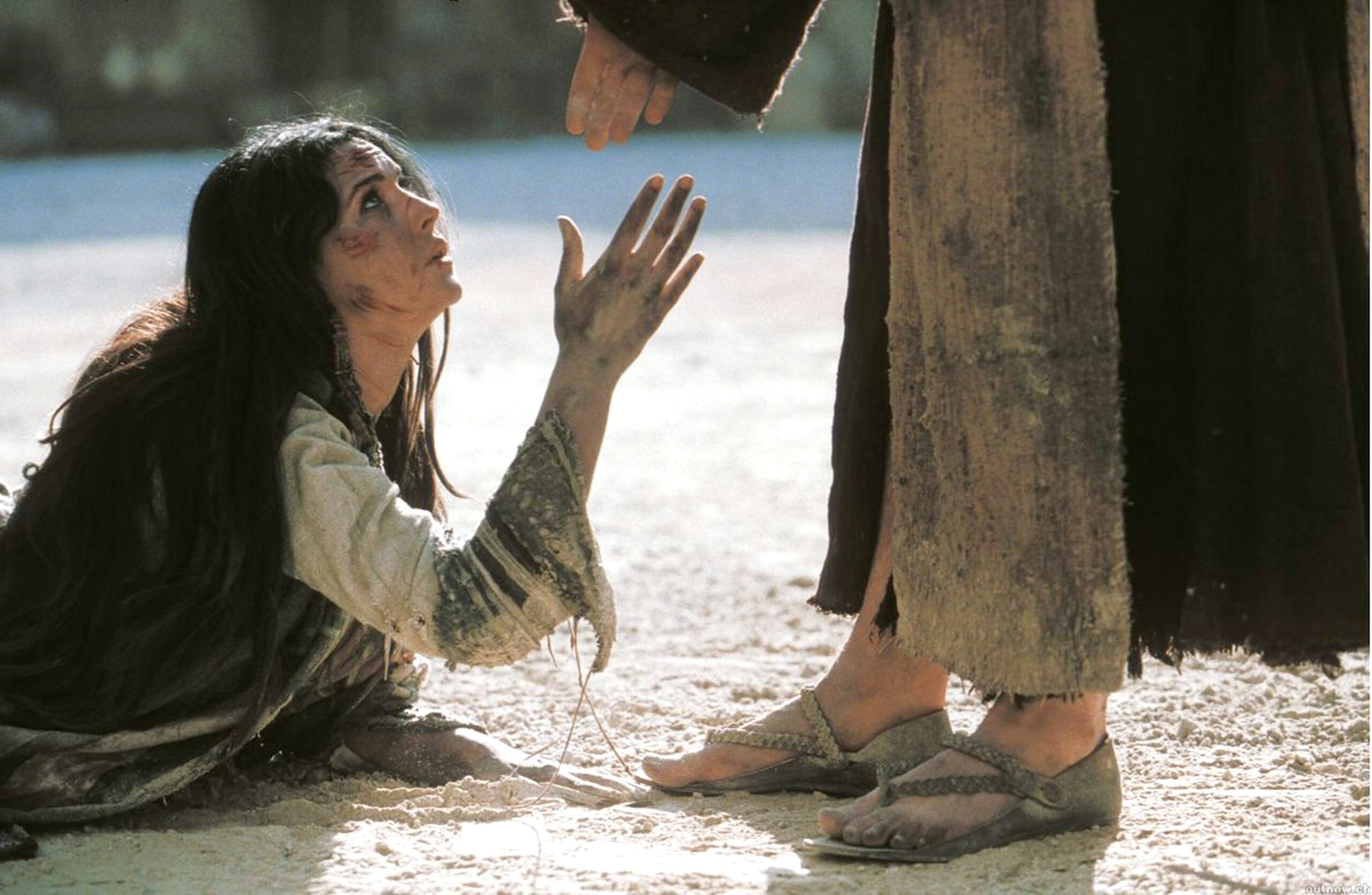
Where there is no recognition of wrongdoing, or where there is no remorse and atonement, there is no duty to forgive. The offense will likely be repeated, if not by the same person, by others who are emboldened by the community’s lack of will to enforce its laws. But, more to the point, even where remorse compels forgiveness, the wrongdoing is not erased but merely re-described.
Forgiveness frees the offender, not in the sense that the deed is airbrushed from the past, but only in the sense that his persona is no longer entirely fastened to the offense he committed.
In his book “The Ethics of Memory,” the philosopher Avishai Margalit wrote of forgiveness in these terms: “The central metaphor is not erasure but, rather, returning. The sinner who has become distanced from God because of his sin now returns to Him. The first step in correcting the wrongdoing is not God’s forgiveness but the sinner’s act of returning to God.”
This is accomplished, Margalit writes, first of all, by the offender showing remorse. Why is remorse crucial to the return of the offender to the fold, and to the reconciliation between the wrongdoer and the community that forgives?
Margalit’s insight is instructive: “Remorse offers us a non-magical way of undoing the past. Although it is impossible to undo what has been done, since the past cannot be changed, it is possible to change our interpretation of the past. By expressing remorse, the offender presents himself in a new light, a light that can be projected into the past. His ability to feel remorse attests that he is not basically evil, even if the act that he performed was abominable. The sinner does not deny the badness of his deed, as then he would not be expressing remorse, but his very assumption of responsibility for the deed is supposed to create a rift between the act and the doer. Thus, an offender can be forgiven even if the offense cannot be forgotten.”
The ethics of forgiveness regards sincere atonement and repentance as a gift that has to be acknowledged. But, two things are worth bearing in mind in this regard. First, Margalit says, forgiving does not entail going beyond the call of duty. “Whoever forgives is praiseworthy, but whoever does not is not blameworthy.” An allowance is made for the one who withholds forgiveness because he is not ready, and for the other who forgives yet cannot feel kindness for the forgiven.
THE WILL TO FORGIVE AND REMEMBER
Second, forgiveness does not require the forgiver to forget. Indeed, says Margalit, in the Old Testament, “God’s forgiveness of Cain does not involve erasing his sin. On the contrary, the way in which God protects Cain is to ‘put a mark on him, in order that anyone meeting him should not kill him.’” (Genesis 4:15). Moreover, while the act of forgiving can be willed in the sense that it can be the object of a decision, that of forgetting cannot. It is difficult, says Margalit, to follow an instruction to forget, for the very instruction itself raises the thing up to memory. But it makes enormous sense to issue an instruction or a plea to disregard (not to take into account) an act that cannot be banished from memory.
In view of this, we may now also see how forgiving, in the light of remembering, can be more meaningful than forgiveness that is assisted by forgetfulness. Put another way, it is better to forgive even as we remember, than to forgive mainly because time has healed the wounds and we have forgotten. A will to forgive and a will to remember, though separate, can complement one another.
But it was the philosopher, Friedrich Nietzsche, who perhaps had the most arresting things to say about remembering. Nietzsche did not deal with the ethics or morality of memory, as Margalit does. Instead, he was concerned with the “uses and disadvantages of history for life” – or what one might call the pragmatics of remembering. (The relevant essay is found in Nietzsche’s book, “Untimely Meditations,” also sometimes titled “Thoughts Out of Season”)
Nietzsche treated memory as a faculty that one can command. There is a reason to remember, he said, as well as a reason to forget. Both remembering and forgetting are essential to life. “What you cannot subdue,” he wrote, “you must learn to forget.” The things, events, experiences, the failures and defeats that wound and demoralize us, and diminish our taste for life, cannot be good for us. We must learn to forget them – or, more accurately, in Margalit’s sense, we must try to disregard them. We must not allow them to discourage us from striving to attain our higher selves.
By the same token, there are forms of remembering that we must constantly practice in our daily lives because they strengthen our will to greatness. Nietzsche names three of these and labels them types of history. First, there is “monumental history” – a form of remembering that highlights a community’s proud achievements and heroic figures by enshrining these in monuments. What is captured in such monuments “is the knowledge that the great which once existed was at least possible once and may well again be possible sometime.”
The second is what Nietzsche called “antiquarian history,” a form of remembering that instills reverence for the things that recall a person’s or a nation’s roots, origins, or beginnings. “By tending with loving hands what has long survived, he intends to preserve the conditions in which he grew up for those who will come after him – and so he serves life.”
A SENSE OF CRITICAL HISTORY
And the last is “critical history” – perhaps the most difficult and the least familiar to many. This is the type of remembering that is primed to repudiate those things from the past that shackle us and prevent us from achieving our better selves – including institutions, practices, habits and traditions that have been handed down across generations. Instead of blindly perpetuating this legacy, critical history, Nietzsche said, subjects it to scrutiny, questions and judges it, and finally condemns it.
These three types of history, representing three ways of looking at the past, Nietzsche warns, have a good side and a bad side. Monumental history, for example, can produce dangerous personality cults. Antiquarian history can easily degenerate into “mummification” or a nostalgic celebration of decay – where the past is preserved and venerated for no other reason than because it is old. A sense of “critical history” is precisely needed to counter these dangerous tendencies. Just as not everything from the past is worth preserving, so also not everything is worth remembering. Forgetting is as essential to life as remembering is.
As one might expect, Nietzsche had very little to say about forgiveness, except to assert, tongue in cheek, that “It is much more agreeable to offend and later ask forgiveness than to be offended and grant forgiveness. The one who does the former demonstrates his power and then his goodness. The other, if he does not want to be thought inhuman, must forgive; because of this coercion, pleasure in the other’s humiliation is slight.” (“Human all too human,” #348) One senses in this passage a tacit recognition, as in Margalit’s philosophy, of an ethics of forgiveness. Not surprisingly, Nietzsche chose to mock it, instead of deconstructing it and looking into its foundation, the way Margalit has done to good effect.
*Randolf S. David is Professor Emeritus of Sociology at the University of the Philippines. This essay elaborates on some themes discussed in a previous column written by the author for The Philippine Daily Inquirer.