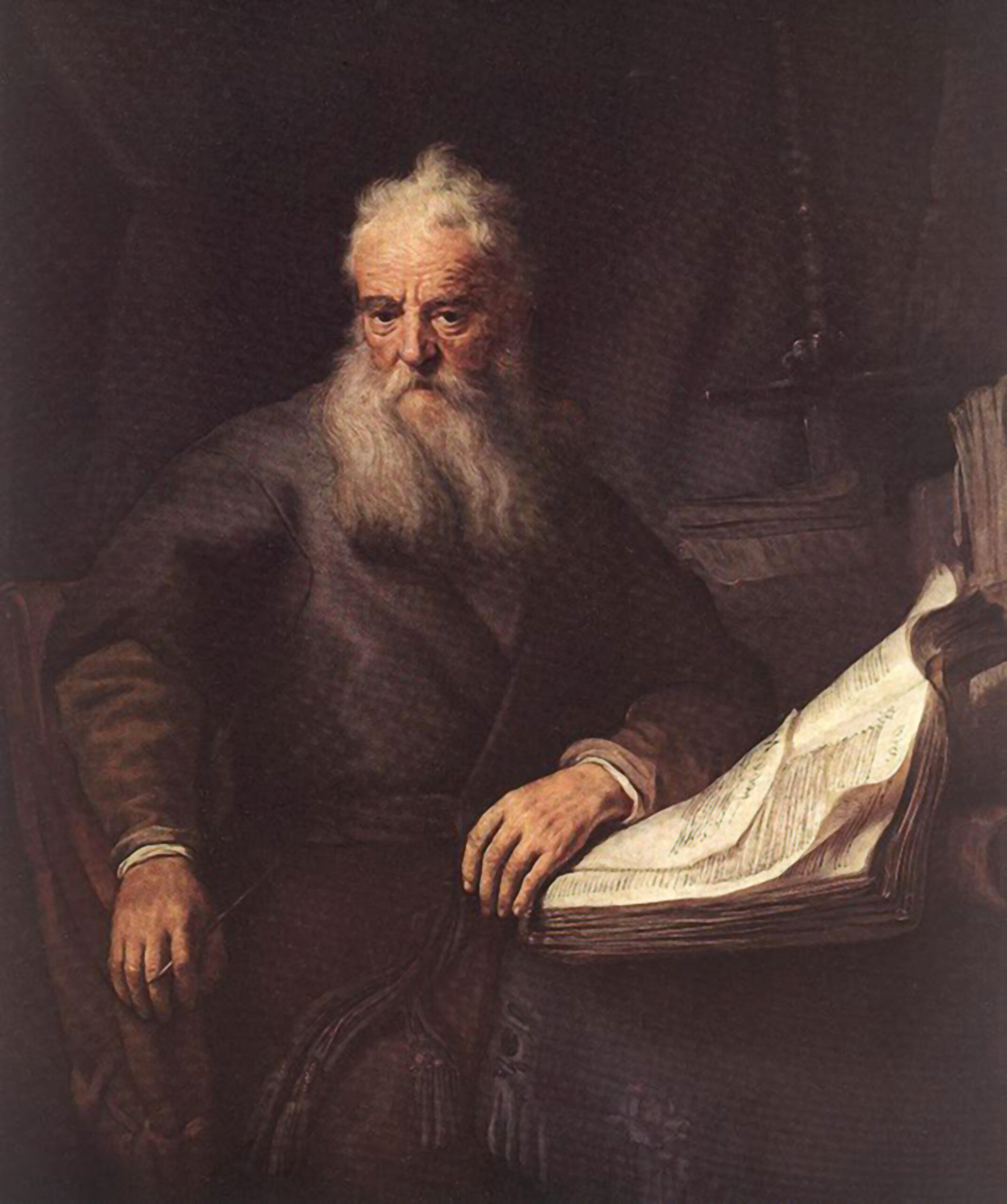
A brief synopsis of Paul’s life includes the following approximate chronology: 5-10 (birth at Tarsus), 15-20 (studies in Jerusalem), 36 (conversion), 36-39 (Damascus, Arabia, Jerusalem), 39-43 (Tarsus), 43-44 (Antioch), 44-48 (first missionary journey), 49-50 (Council of Jerusalem; Antioch confrontation with Peter), 49-53 (second missionary journey), 53-58 (third missionary journey), 58-60 (prisoner in Caesarea), 60-63 (voyage to Rome; prisoner in Rome), 64-66 (Spain? Rome? elsewhere?), 66-67 (prisoner in Rome), 67/68 (death in Rome). This brief chronology provides the context from which Paul’s dynamic mission principles emerge; they are the result of both mission praxis and deep theological reflection. Paul’s letters as well as the Acts of the Apostles provide much insight into Paul’s missionary thinking and methods.
Over the centuries, many authors have tried to digest Paul’s mission thought and praxis, emphasizing the “central ideas” of this apostle. This effort may be admirable, but can result in a certain selectivity. Thus, this author is wary of claiming to capture the “essence” of Paul’s insights. One cannot compose a “cliff’s notes” or abbreviated version of Paul’s thought; his letters were written over a span of ten years; they were based on a lengthy ministry of preaching the gospel message in an extraordinary variety of circumstances and to diverse groups of people.
Readers, consider this piece the personal reflections of a long-term ad gentes missionary based on a meditative reading of Saint Paul. Through a dynamic interaction of this writer’s personal experience and the profound thought of Paul, ten “mission principles” are formulated. These insights, emerging from Paul’s life and refracted through the experience of a contemporary missioner, remain eminently valid for the Church’s missionary activity today – twenty centuries after Paul’s birth.
DEPTH AWARENESS OF VOCATION
In Paul’s mind, there was no iota of doubt about his calling, his vocation; for Paul and all missioners, mission originates in the call of God. Several passages in the book of Acts portray Paul’s conversion and call to mission: “The Lord said to him (Ananias), ‘Go, because this man [Paul] is my chosen instrument to bring my name before Gentiles’…” (Acts 9:15). “The God of our ancestors has chosen you … because you are to be his witness before all humanity, testifying to what you have seen and heard” (Acts 22:14-15). “I have appeared to you for this reason: to appoint you as my servant and as witness of this vision in which you have seen me…” (Acts 26:15).
In addition, the majority of Paul’s letters begin with a firm assertion of his identity as a chosen instrument of God. “From Paul … an apostle who does not owe his authority to men or his appointment to any human being, but who has been appointed by Jesus Christ and by God the Father who raised Jesus from the dead” (Gal 1:1-2). “From Paul, a servant of Christ Jesus who has been called to be an apostle, and specially chosen to preach the Good News…” (Rom 1:1). Several other letters begin with almost the identical words: “From Paul, appointed by God to be an apostle of Christ Jesus…” (2 Cor 1:1); see also: 1Cor 1:1; Eph 1:1; Col 1:1; Phil 1:1 and others. Writing to the Corinthians about Christ’s resurrection, Paul categorically states: “I am the least of the apostles; in fact, since I persecuted the Church of God, I hardly deserve the name apostle; but by God’s grace, that is what I am and the grace that He gave me has not been fruitless” (1Cor 15:9-10).
RADICAL COMMITMENT TO CHRIST
Paul’s experience on the Damascus road was, in fact, only the starting point of a life-long relationship; mission envisions a totally Christ-centered life. Paul expresses his life in Christ in various ways: “Life to me, of course, is Christ…” (Phil 1:21). “None of us lives to ourselves, and none of us dies to ourselves. If we live, we live to the Lord, if we die, we die to the Lord; so then, whether we live or whether we die, we are the Lord’s…” (Rom 14:7-8). “I have been crucified with Christ, and I live now not with my own life, but with the life of Christ who lives in me” (Gal 2:19-20).
All of Paul’s writings speak of his love for Christ, his identification with Christ. So intimate was his relationship that he could even advise the Corinthians: “Imitate me as I imitate Christ” (1Cor 11:1). Paul tells the Thessalonians that they can follow his example: “You observed the sort of life we lived when we were with you, which was for your instruction; you were led to become imitators of us and of the Lord…” (1Thes 1:5-6). Paul, writing to the Philippians, makes a moving comparison of his previous life to his new-found existence in Christ: “I believe nothing can happen that will outweigh the supreme advantage of knowing Christ Jesus my Lord. For Him, I have accepted the loss of everything, and I look on everything as so much rubbish if only I can have Christ and be given a place in Him” (Phil 3:8).
VOLUNTARY ACCEPTANCE OF SUFFERING
Not relying on words alone, the Apostle Paul preached the Gospel by his life and example. In a particular way, vulnerability and acceptance of the cross authenticate mission. In imitation of Christ who gave Himself up to death – even for sinners (Rom 5:8), Paul considers his suffering for the sake of the Gospel as a participation in the sufferings of Christ (2Cor 1:5-7). Paul saw himself sharing in Christ’s kenosis (Phil 2:6-11) as he endured suffering. Writing to Timothy, he says: “… join with me in suffering for the gospel, relying on the power of God, who saved us and called us with a holy calling” (2Tim 1:8-9).
Paul recounts his numerous trials in the service of the Gospel; he mentions his imprisonments, beatings, shipwrecks, travels, robberies, hard labor, sleeplessness, hunger, thirst, and nakedness (cf. 2Cor 11:23-27). Paul also mentions that he had to bear “a thorn in the flesh” (2Cor 12:7). Yet, he notes, “I am quite content with my weaknesses, and with insults, hardships, persecutions, and the agonies I go through for Christ’s sake. For it is when I am weak that I am strong” (2Cor 12:10). Of course, this vulnerability is intimately linked with the paradox of the cross; “continually we carry in our bodies the dying of Jesus, so that in our bodies the life of Jesus may also be revealed” (2Cor 4:10). All missionaries like Paul need to say: “May I never boast of anything but the cross of our Lord Jesus Christ” (Gal 6:14).
INSIGHTFUL MISSION METHODS
It is valid to affirm that all Paul’s energies were mission-focused, yet one can also point out that he employed distinct methods to achieve his purposes. Mission demands creative, inculturated, ever-renewed approaches to evangelization. Paul sought various occasions which would facilitate his proclamation; he attempted to connect his preaching with people’s context and worldview. Paul’s approach at Ephesus (Acts 19) is exemplary; he would preach in the synagogue or a nearby house and attempt to bridge the Jewish faith with Christian revelation (cf. Acts 13:5, 14; 14:1, 17:1, etc.).
Acts 17:22-31 narrates Paul’s famous speech in the Areopagus, the central assembly place in Athens, the cultural capital of the Greek islands. Paul mentions their altar to an unknown god (v. 23); he refers to the philosopher-poet Epimenides (v. 28). Although many mocked Paul, his intelligent method won some followers for Christ. Paul, the “practical” missioner, moved from the familiar to the unfamiliar, from the unknown to the known. Pope John Paul II has exhorted missionaries to move into new mission frontiers, “the modern equivalents of the Areopagus” (Redemptoris Missio 37).
Paul’s missionary sensitivities are manifested in his convictions that adaptation (inculturation in today’s parlance) is essential when mission meets a new situation (Acts 15). He vigorously opposed the imposition of Jewish legal traditions, cultural observations, or external religious practices on Gentile Christians; these could hinder the spread of the gospel into the Gentile world. Paul even withstood James in Jerusalem (Acts 15) and Peter in Antioch (Gal 2:11-14).
Paul articulates his “inculturated” method of becoming “all things to everyone” (1Cor 9:19-23). He adapts himself to the Jews, to those outside the law, and to the weak. His vision is crystal clear: “I have made myself the slave of everyone so as to win as many as I could…. I made myself all things to everyone in order to save some at any cost; and I still do this, for the sake of the gospel, to have a share in its blessings.”
URGENT GOSPEL PROCLAMATION
Paul did not understand “preaching” as giving a spiritual reflection in a liturgical assembly. Integral proclamation means heralding an urgent message from God that profoundly affects the destiny of all humankind. Mission has lost none of its urgency in the contemporary world. Paul’s words possess a genuine, authentic ring – even in our ears today: “For if I preach the gospel, that gives me no ground for boasting. For necessity is laid upon me. Woe to me if I do not preach the gospel”! (1Cor 9:16). For all Christians, evangelization must be a “daily preoccupation” (2Cor 11:28). As Pope Paul VI has noted, “the presentation of the gospel message is not an optional contribution for the Church. It is a duty incumbent on her by the command of the Lord Jesus” (Evangelii Nuntiandi 5).
This Pauline “mission principle” is actually a call for an examination of conscience on the part of the Church. Have many local Churches placed too much emphasis on administrative efficiency, pastoral management, economic accountability, liturgical practice, canonical and catechetical orthodoxy – all to the detriment of dynamic programs of renewed evangelization? Have inward (ad intra) concerns vitiated the Church’s outward (ad extra) mission commitments? Paul’s words contain a challenge to all Churches and religious communities: “All the way along, from Jerusalem to Illyricum, I have preached Christ’s Good News to the utmost of my capacity” (Rom 15:19). Paul wrote these encouraging words to Timothy: “Make the preaching of the Good News your life’s work, in thoroughgoing service” (2Tim 4:5).
DEEP LOVE FOR THE CHURCH
In examining Paul’s apostolic methods, it is enlightening to probe his view of the Church. Paul primarily understands the Church as a local community of baptized followers of Jesus Christ; he was not opposed to the idea of a universal Church, but in his day the local congregation was central to his experience. Mission and love of the people who constitute the Church go hand-in-hand. This principle echoes the thought of an elderly Maryknoll missioner who never tired of repeating: Mission is People.
Paul had great love and concern for the ecclesial communities he founded with painstaking effort. His writings frequently and spontaneously express his affection. “It is only natural that I should feel like this towards you all, since you have shared the privileges which have been mine: both my chains and my work defending and establishing the gospel. You have a permanent place in my heart, and God knows how much I miss you all, loving you as Christ Jesus loves you” (Phil 1:7-8).
When the Churches Paul established with patient, apostolic ministry were in trouble, Paul shared their pain; he speaks of his “daily preoccupation” for them (2Cor 11:28). He wonders aloud: “I am afraid that my work for you may have been wasted” (Gal 4:11). “My children, I must go through the pain of giving birth to you all over again, until Christ is formed in you” (Gal 4:19). Although the Corinthian community had many internal problems (e.g. divisions, immorality, idolatry, etc.; see: 1Cor 1:10-13, 5:1-5, 10:14-22), Paul, the affectionate missionary, loved them dearly: “You yourselves are our letter, written on our hearts, to be known and read by all” (2Cor 3:2).
“Keep a place for us in your hearts…. As I have already told you, you are in our hearts – together we live or together we die. I have the very greatest confidence in you, and I am so proud of you that in all our trouble I am filled with consolation and my joy is overflowing” (2Cor 7:2-4).
CLOSE COLLABORATION WITH CO-WORKERS
The apostle Paul, though a strong individual, was a team-worker in the task of evangelization. Paul understood that all apostolic ministry is enhanced through collaborative efforts. Some few examples show that Paul saw great advantages in working together with other apostles. On his first missionary journey, Paul was accompanied by Barnabas and Mark (Acts 13-14). Timothy and Silvanus were his trusted co-workers in Corinth and elsewhere (2Cor 1:19). Titus was his appointed deputy in dealing with difficulties in the Corinthian community (2Cor 8:23). Among other co-workers and fellow apostles were Luke, Erastus, Aristarchus, and Tychicus.
Paul considered teamwork and collaborative ministry important for a variety of reasons. Apostles working in partnership presented a visible image of the Church as community; it gave the people an example of common witness. A variety of apostles working for a common goal presented a more balanced picture of the Church than Paul alone could have given. In addition, the gifts of various individuals were put at the service of gospel proclamation.
Paul frequently expressed his admiration and appreciation of his collaborators; he called Timothy his “co-worker” (Rom 16:21) and tenderly describes him as “my dear and faithful son” (1Cor 4:17) whose “worth you know, how like a son with a father he has served with me in the work of the gospel” (Phil 2:22). Paul referred to Titus as “my brother” (2Cor 2:13) and “my partner and co-worker” (2Cor 8:23). Even if disputes occasionally arose, Paul sought to promote communion-in-mission. Paul offers contemporary ministers a model of cooperative ministry.
COMMITMENT TO SOCIAL TRANSFORMATION
Paul preached a gospel of freedom and liberation along with his manifest concern and love for the poor and the suffering. The gospel message of human dignity and equality, if embraced, leads to social transformation. Paul firmly believed in the transforming power of the gospel message, and he proposed to his communities the model of Jesus Christ: “Remember how generous the Lord Jesus was: He was rich, but He became poor for your sake, to make you rich out of His poverty” (2Cor. 8:9). And, for gospel credibility, Paul himself imitated Christ. Though he possessed citizenship in the Roman Empire, as a sign of his social concern and commitment, he chose the lot of ordinary working class people and labored with his own hands for his livelihood (e.g. 1Thes 2:9; 1Cor 4:12).
Paul challenged many of the social, racial, religious, cultural, and economic barriers of his times. One brief example illustrates Paul’s social message. In ancient times, there were three great blessings pronounced in the Jewish synagogue: “Blessed be thou, O Lord our God,… who has not made me a Gentile,… who has not made me a slave,… who has not made me a woman!” Paul certainly had these barriers in mind when he expressed the new unity of those baptized in Christ: “There are no more distinctions between Jew and Greek, slave and free, male and female, but all of you are one in Christ Jesus” (Gal 3:28). All, without distinction, are to gather around the Eucharistic table, that great center of unity.
Numerous additional examples of Paul’s social consciousness readily come to mind. He struggled to alleviate the suffering of the Christian communities in Jerusalem and Judea during a severe famine (1Cor 16:1-4). Paul laid down a clear apostolic principle: “The only thing insisted on was that we should remember to help the poor, as indeed I was anxious to do” (Gal 2:10). Paul converted the run-away slave Onesimus and then demanded that he be accepted “no longer as a slave but something much better than a slave, a beloved brother” (Philemon 16). In a word, Paul preached authentic liberation: “When Christ freed us, He meant us to remain free” (Gal 5:1).
EFFECTIVE, EXEMPLARY LIFE-STYLE
The apostle Paul was always very careful that his personal life would encourage and facilitate the spread of the gospel and never become a counter sign. The witness of a Christian life is the first and often most effective proclamation of the gospel. When Paul speaks of imitation in his letters (he is not being arrogant), he believes that Christians can encourage one another through their Christ-like words and deeds. An exemplary life-style is a very effective mode of proclamation. “Be imitators of me, as I am of Christ” (1Cor 11:1). Paul commends the Thessalonians because “you were led to become imitators of us and of the Lord” (1Thes 1:6). Paul, the exemplary missioner, is seeking to draw people to Christ, not to himself, through his encouragement to imitate model Christians; “I have sent you Timothy…, he will remind you of the way that I live in Christ” (1Cor 4:16).
Several of the foregoing sections of this presentation have unfolded key elements which coalesce to form Paul’s life witness as an apostle: Christo-centric spirituality, voluntary vulnerability, innovative mission approaches, evangelical urgency, collaborative ministry, social engagement. To these elements, one could add additional virtues as Paul himself does in his lists of spiritual gifts (cf. 1Cor 12 and 13; Gal 5:22).
Read in a contemporary theology of mission, this holistic approach to mission exemplified in Paul’s life would be termed “integral evangelization.” Paul consistently struggled to successfully run the race and fight the battle (cf. 1Cor 9:24-27). He kept his eyes fixed on Christ; he told the Philippians: “I am still running, trying to capture the prize for which Christ Jesus captured me” (Phil 3:12).
TOTAL RELIANCE ON GOD’S PROVIDENCE
Paul had full confidence in God’s everlasting love and fidelity; the absolute guarantee of God’s salvific love is manifested in Jesus Christ. Paul asks: “If God is for us, who can be against us? He who did not spare His own Son but handed Him over for us all, how will He not also give us everything else along with Him? (Rom 8:31-32). Mission always remains “God’s project” and evangelizers seek to be God’s faith-filled, humble instruments. Paul so willingly and generously cooperated with God’s grace because he was firmly convinced that he was doing God’s work. He asserts that he is only a servant of the gospel; “I did the planting, Apollos did the watering, but God made things grow. Neither the planter nor the waterer matters: only God, who makes things grow” (1Cor 3:6-7).
Paul lived his apostolic life based on great confidence and full trust in God, whom we can call “Abba” (Rom 8:15; Gal 4:6-7). His life was filled with many sufferings, hardships, and challenges; he even faced Spirit-given “roadblocks” in his missionary journeys (cf. Acts 16:6-10). Fully convinced that his life and mission were dependent totally on God and the guidance of the Spirit, Paul labored unceasingly, always ascribing any missionary success to God. “By the grace of God I am what I am…. I worked harder than any of them – though it was not I, but the grace of God that is with me” (1Cor 15:10). Paul asserts: “the love of Christ urges us on” (2Cor 5:14); “I can do all things in Him who strengthens me” (Phil 4:13); the Spirit comes to help us in our weakness” (Rom 8:26). Paul was a man of faith.
CONCLUDING REFLECTION
The dynamic Apostle Paul is undoubtedly the greatest missionary of all times. Based on his mission experience and profound theological insights, this presentation has surfaced ten “mission principles,” valid for Paul of Tarsus as well as for all modern-day Pauls. Paul burned with the flame of God’s love that was enkindled in his heart during his conversion experience; that flame engulfed his whole existence – even until the final hour of his martyrdom in Rome.
This writer-missionary appreciates Paul as a fulfilled, joyful, Spirit-guided missioner – even in spite of all the afflictions and sufferings he endured. A deep, inner joy and peace filled the Apostle to the Gentiles. Paul was a “joy-filled evangelizer,” and thus became an effective propagator of God’s saving love. His awareness of God’s transforming grace given to him in abundant measure (cf. 1Cor 15:10) enabled him to joyfully proclaim Jesus as Lord.
Paul, exemplifying a genuinely missionary attitude, was filled with deep joy, not because of personal gratification or external success, but because he saw many communities accept the person of Jesus. He wrote to the Philippians: “My brothers and dear friends, do not give way but remain faithful in the Lord. I miss you very much, dear friends; you are my joy and my crown” (Phil 4:1). To the Thessalonians, Paul wrote: “What do you think is our pride and our joy? You are; and you will be the crown of which we shall be proudest in the presence of our Lord Jesus when He comes; you are our pride and our joy” (1Thes 2:19-20). The Corinthians received this message from Paul: “I have the very greatest confidence in you, and I am so proud of you that in all our trouble I am filled with consolation and my joy is overflowing” (2Cor 7:4).
Paul’s exhortations need to be heard by the missionary Church today: “Rejoice in the Lord always; again, I say rejoice” (Phil 4:4). “Rejoice always, pray without ceasing, give thanks in all circumstances” (1Thes 5:16-18). “My brothers, rejoice in the Lord” (Phil 3:1). “Shine in the world like bright stars, because you are offering it the word of life” (Phil 2:15-16). Pastors, missionaries, catechists, religious, all ministers of the Church, imitate Paul, the joyful evangelizer!
* The author, James H. Kroeger, M.M., a missionary in Asia (Philippines and Bangladesh) since 1970, is professor of Systematic Theology, Missiology, and Islamics at the Jesuit Loyola School of Theology in Manila. His most recent publications are: Theology from the Heart of Asia I – II (2008) and Once Upon a Time in Asia: Stories of Harmony and Peace (2006) [Manila: Claretian Publications].
Selected Resources: Allen, R. Missionary Methods: St. Paul’s or Ours? (Grand Rapids, MI: Wm. B. Eerdmans Publishing Co., 1962). Grassi, J. The Secret of Paul the Apostle. (Maryknoll, NY: Orbis Books, 1978). Grassi, J. A World to Win. (Maryknoll, NY: Maryknoll Publications, 1965). Matera, F. Strategies for Preaching Paul. (Collegeville, MN: Liturgical Press, 2001). Murphy-O’Connor, J. Jesus and Paul: Parallel Lives. (Collegeville, MN: Liturgical Press, 2007). Smyth, B. Paul: Mystic and Missionary (Maryknoll, NY: Orbis Books, 1980). Srampickal, T. The Secret of Paul’s Missionary Success (Third Millennium 10, 2007: 41-66). Witherup, R. 101 Questions and Answers on Paul (New York: Paulist Press, 2003).