Even though I do not speak Polish I was aware, as I attended Mass in St. Anthony’s Capuchin Friary in Poznan, that the celebrant was reading a letter from the local archbishop. I asked one of the English-speaking friars afterwards whether there was any mention of the UN Framework Conference on Climate Change which was opening that day in Poznan. His answer, “yes, he mentioned the conference, but didn’t say much about it,” is indicative of where the leadership of the Catholic Church is on climate change and a host of other serious environmental challenges. With a few notable exceptions, such as the speeches and writing of Archbishop Celestino Migliore, the Permanent Representative of the Vatican at the United Nations, and Cardinal Cahal Daly, the environment gets a mention but the magnitude of environmental problems and the urgency with which they ought to be addressed, is not taken seriously.
One of the best examples of the inability the Catholic Church’s leadership to effectively address the ecological and climate change crisis can be found in the Compendium of the Social Doctrine of the Church. This document was published in 2004, so it is reasonable to expect that it would deal competently with the frightening environmental crisis in such areas as climate change and the extinction of species. While much of the rest of the document on human rights, human work, social justice, development and a just wage is excellent, Chapter 10 which is devoted to safeguarding the environment, is one of the shortest chapters in the entire volume. It runs to a mere 15 pages, in contrast to Chapter 6 on human work, which is 27 pages long. Although there is some good material in the chapter, I would argue that it is by far the weakest in the entire book, and that it is not underpinned by any coherent theology. I should not be surprised, as I do not know a single seminary where an adequate course on Creation Theology is being taught today. The Compendium and much of Catholic theology on creation, oscillates between a domination theology, where the rest of creation is primarily there for human use, and a more inclusive theology which sees other creatures as having intrinsic value, because they are created by God. Nine paragraphs in the chapter are devoted to biotechnology, while climate change (No. 470) and the extinction of species, which are much more serious issues with long-term consequences, merit only one paragraph each.
NO EFFECTIVE PRESENCE
A number of Catholics with whom I have spoken at the UN Climate Change Conference in Nairobi (2006), Bali (2007) and Poznan (2008), point out that there is no effective presence of the Holy See at the UN Climate Change Conferences. The Holy See is represented by the local Nuncio. But this is highly unsatisfactory. One cannot expect a Nuncio in a particular country to be up-to-speed on the climate change agenda. Even those of us who have attended a number of these events are still mesmerized by the acronyms such as (SBSTA), Subsidiary Body for Scientific and Technological Advice or (AWG-LCA), Ad Hoc Working Group on Long-term Cooperative Action. These and a score of such acronyms are used all the time in discussions so, unless a person knows what they are, they will not be able to understand what is being said, not to mind making important interventions. It is worth noting that the Holy See sent a dedicated delegation to the UN Population Conference in Cairo in 1995 and the UN Convention on Women in Beijing in 1996. The World Council of Churches (WCC) sends a delegation of people who are familiar with the UN climate change debate and, therefore, they can make much more effective interventions to each Climate Change Conference.
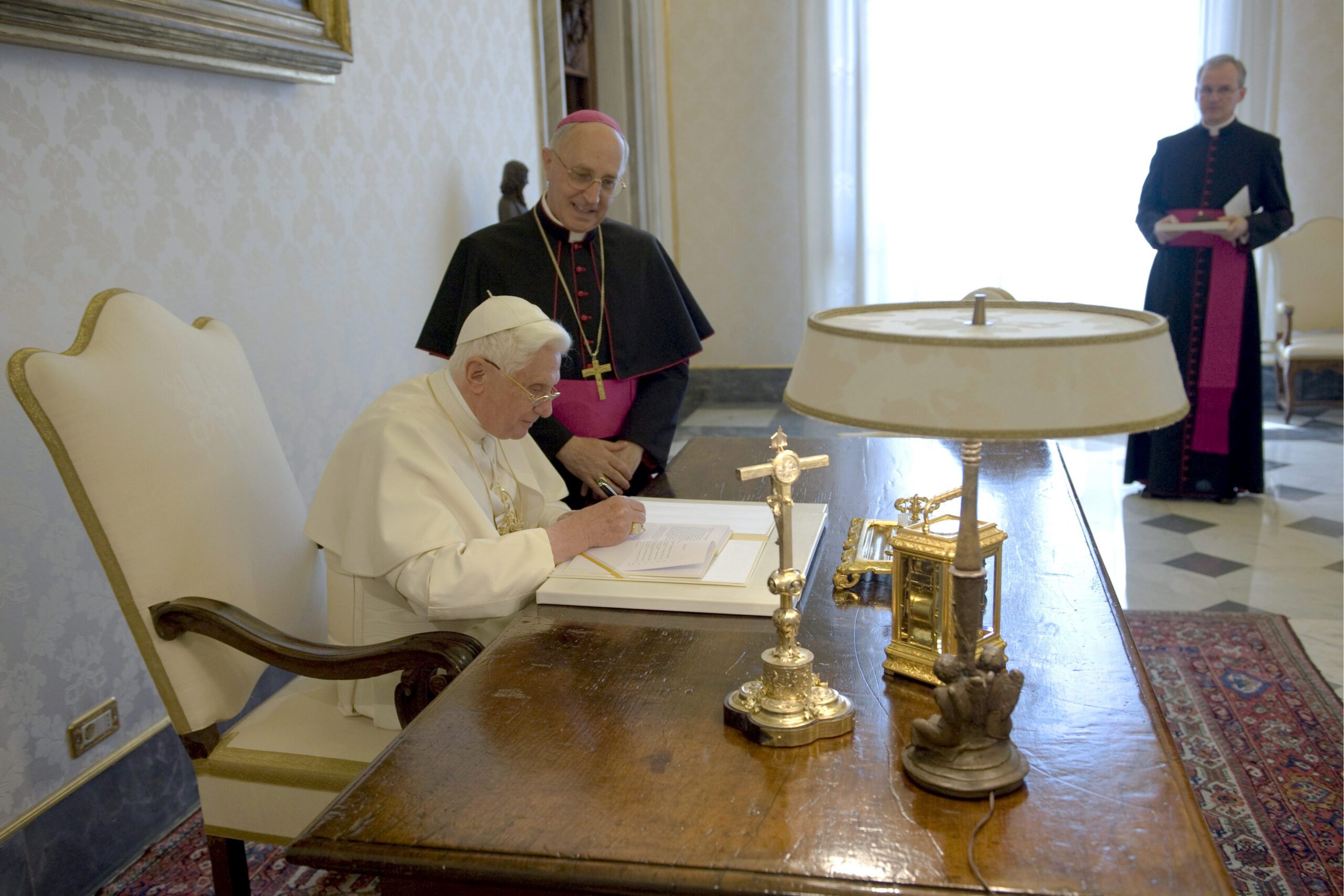
One of the most positive statements on the environment from Pope Benedict XVI, came during the welcoming ceremony at the World Youth Day on 17th July. He said that the wonder of God’s Creation reminds us of the need to protect the environment and to exercise responsible stewardship of the goods of the Earth and the need “to reflect upon the kind of world we are handing on to future generations.” These words are fine as far as they go, but the Pope was speaking in the archdiocese of Sydney. The bishop of the diocese, Cardinal George Pell, is a well-known critic of climate change, despite the fact that the 2002 Social Justice Statement from the Australia hierarchy stated that “possibly the most disturbing environmental phenomenon of recent times is the threat of global warming.”
HORRENDOUS CONSEQUENCES
If Cardinal Pell had raised questions about the validity of the argument against artificial birth control in Humanae Vitae, I am sure Pope Benedict would have challenged these views. Yet, the long-term consequences of doing nothing about greenhouse gas emissions are horrendous. The same Social Justice Statement is clear on this: “As the worst emitters per person of greenhouse gases on the planet, Australians are particularly challenged in justice to reflect on the plight of our Pacific Island neighbors. The cry of seven million inhabitants of these beautiful islands… who fear that their lands will be battered and submerged by rising sea-levels and changing weather patterns, require us to take immediate measures to reduce greenhouse gas emissions.”
It would appear that many Church leaders believe that while sexual matters must be dealt with immediately and decisively, environmental problems can be put on the long finger. This seems to be what has happened to the proposed Pastoral Letter on Climate Change from the Irish hierarchy which has now been in gestation for more than 18 months. After the September 2007 meeting of the Hierarchy in Maynooth, it appears to have slipped into an ecclesiastical black hole! Hopefully it will soon see the light of day. The issue, in terms of the destruction to the lives of tens of millions of people and all future generations, is too serious to prevaricate.
To finish on a positive note, CIDSE, which is made up of 16 Catholic development agencies in Europe and North America, including Trócaire, launched a document, Development and Climate Justice, in Poznan. It is an excellent document which links together ecological and justice issues and follows that up with a number of well-thought-out recommendations about how to creatively tackle climate change. The document can be downloaded from www.cidse.org. I hope and pray that the whole Catholic community can row in behind these recommendations.
Then, maybe, concern for God’s creation will move to the heart of the Church’s ministry where it belongs today.