
Iceland is a good case study. An island standing alone in the middle of the North Atlantic, between the European mainland and Greenland, with a big part of its territory formed by glaciers, mountains and sands, it was ranked last year as the most developed country in the world by the United Nations’ Human Development Index. But all of a sudden, the country is facing bankruptcy. Banks have been nationalized, the crown, the national coin, has collapsed, and retired people are losing their lifetime savings. Some would ask: Is it possible for such a rich nation, with no more than 320,000 inhabitants, to become suddenly poor? The answer is not a simple “yes” or “no.” The activities that sustained its stable and solid economic growth are still there. The problem is in the banking system that was so “fat” that it started to gamble like a reckless billionaire in a casino.
With too much money, banks began to invest in other parts of the world and started to trade in risky financial assets that granted high returns: it came to a point that their funds summed up to something like 133% of the annual Gross Domestic Product. But, like the careless billionaire playing roulette, they betted on products that seemed good and safe but, actually, “toxic,” as they are now known – so sophisticated that they were hard to understand and so risky that when the financial crisis erupted in the US, these products consequently lost their value.
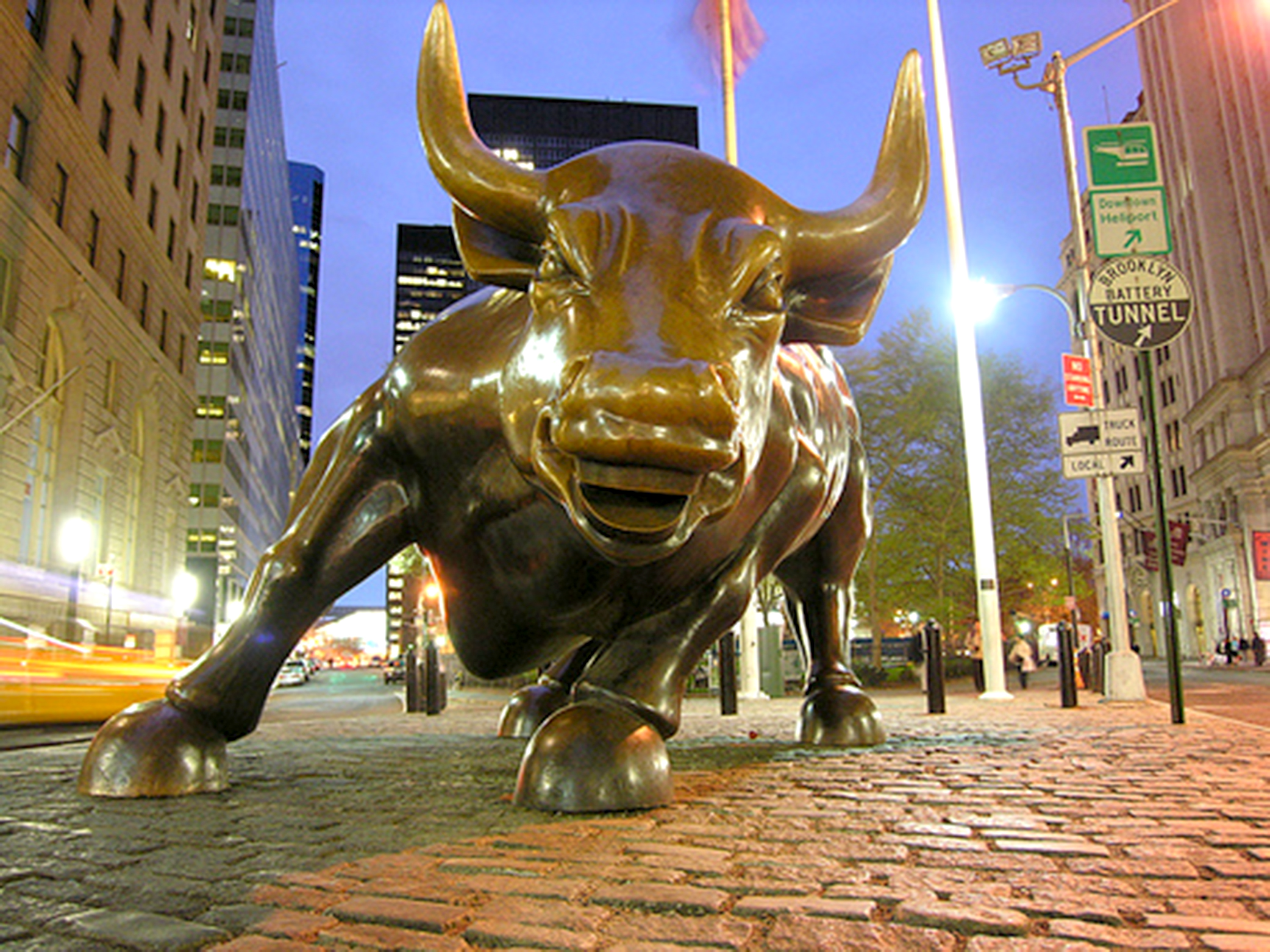
Iceland illustrates what is happening, at present, all over the world – that just because of those “toxic” products, the world is at the brink of experiencing what some analysts fear can be the first global recession. “What?” – one would exclaim – “Are these products that powerful?” Yes, they are. We must say they were “invented” in Wall Street, New York’s Mecca of global finance, with the endorsement of some of the most prestigious and powerful investment banks in the planet. Meanwhile, some of those “venerable” institutions had to be rescued or simply closed with the help of the federal government. Nonetheless, the “toxic waste” had already contaminated the global banking system like a flu virus.
THE BUBBLE EXPLODED
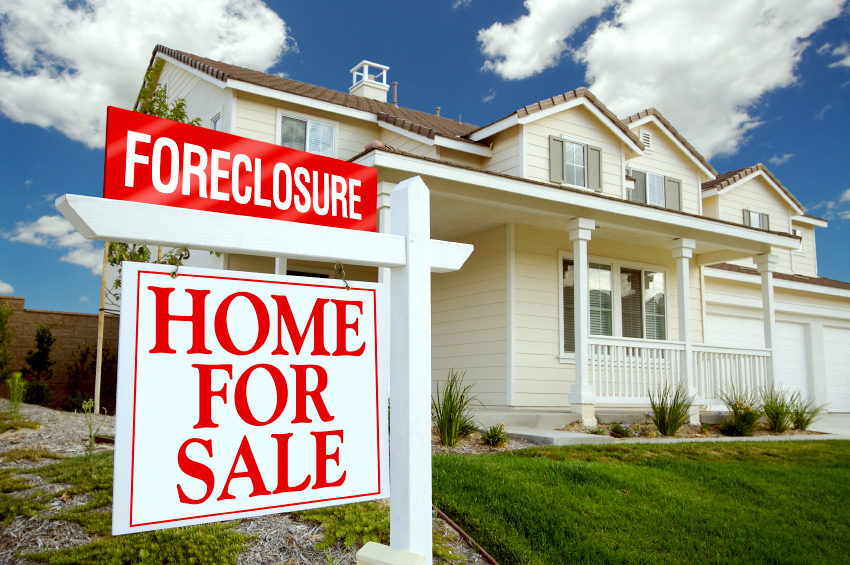
This all started with a huge real estate speculation in the US, where the cost of houses was so over-evaluated that many made money buying them one day and selling them on the next. As the prices continued to go up, the banks went in a frenzy, lending money to everyone who desired to own a house – even if they had not enough or stable revenues. The only guarantee was the mortgage of the house itself. Attracted by the greed of making money just by lending money at random, banks forgot the old principle that what goes up must come down. And down it came, indeed. When prices reached the top, the bubble exploded. The poor and middle class Americans began to lose their houses because the value of their asset – their homes – was not enough anymore to guarantee the mortgage. Many are already homeless and, according to an estimate made by Moody’s, an enterprise of credit analysts, there will be 7.3 million homeless till 2010. This is the basis of something that will be remembered in the future as the “subprime (high risk mortgage credit) crisis” – the beginning of one of the darkest periods in world economy.
But let’s return to Iceland. What houses in the U.S. have to do with an island facing bankruptcy? The answer is again Wall Street. The big moguls turned the “value” represented by the more than frail credits into dubious and very hard to understand products that were coveted by hedge (risky) and pension funds (usually conservative) alike. The interests seemed so attractive that banks, institutions and individuals all over the globe bought them. What followed was like a house of cards collapsing: first, the buyers discovered that they had plenty of paper with no value and they suspected that some banks were not reliable because of their exposition to this “toxic waste,” stopping the flow of credit, thus affecting the real economy and provoking crashes in the stock markets all over the world – from London to Tokyo, from Madrid to Hong Kong. Enterprises and consumers began to have cold feet. They stopped investing and buying. Millions of jobs were lost in the process. And with less jobs, there is less money to pay mortgages and other forms of credit and so on.
Great Britain, which had her own construction frenzy, was one of the first European countries to nationalize banks, and is facing recession. The same thing happened with other members of the European Union, which tried to save banks, in some cases, owned by more than one country investors. The British Prime Minister, Gordon Brown, was able to convince the EU leaders to agree to a common plan to fight the crisis together. Funds were created to try to stabilize the markets and restore confidence. But the stock markets kept going up and coming down – mostly down, unfortunately.
THE EFFECTS OF DEREGULATION
To Joseph Stiglitz, Nobel Laureate in Economics, the global crisis began with both the American policy of lowering interest rates, thought to revitalize the economy, and complete deregulation that allowed banks and big financial institutions to spread credit like water and, after that, sell it all over the world as if it was gold. Says the economist and, at the moment, professor at Columbia University: “Hundreds of billions of dollars were allocated to home loans beyond the Americans’ ability to pay. And, rather than managing risk, financial markets created more risk. The failure of our financial system to do what it is supposed to do matches, in destructive grandeur, the macro-economic failures of the Great Depression. Economic theory – and historical experience – long ago proved the need for regulation of financial markets. But ever since the Reagan presidency, deregulation has been the prevailing religion. Never mind that “free banking” has been tried a few times, most recently in Pinochet’s Chile, under the influence of the doctrinaire free-market theorist, Milton Friedman; the experiment was a disaster. Chile is still paying back the debts from its misadventure.”
Ironically, the “mantra” of “liberalize,” “let the markets work,” “no State intervention,” “more and more deregulation,” that is preached since the Reagan-Thatcher period, as a sort of a dogma of faith and forced by institutions like the International Monetary Fund (IMF) and the World Bank on the poorest countries of the world, sounds like a curse now. For the faithful believers of the “free market religion,” what is happening with nationalizations and calls for a strong market regulation, seems a “sinful” form of socialism. But even the ultra-liberal Americans are tired of the luxurious lives and huge perks of the crisis makers, and are not happy at all with the idea that they will have to pay, from their own pockets, the price of the magnates’ misbehavior.
Ironically, the poor and developing countries of the world would not be in such trouble if “free market crusaders” had crashed some decades ago. Writes Stiglitz in his last book: “To date, not one successful developing country has pursued a purely free market approach to development.” And what about Iceland? After knocking at some doors, it is likely to get a US$5.4 billion loan from Moscow to clean the house from the… IMF; with certainty: the island will lose at least 10% of its Gross Domestic Product next year. The same happened to Hungary and Ukraine, and next in line are Pakistan and Byelorussia.
Are the “toxic” products under control? Nobody knows. But, according to Transparency International, two thirds of the risky hedge funds – something more than US$10 billion – are still hidden in dozens of fiscal havens around the world, the piracy dens of two million ghost-enterprises. Is this global crisis going to last? The Organization for Economic Cooperation and Development (OECD) can only say that the crisis will be long, deep and hard.