My purpose is to provide a reflexive narrative of the problems encountered by Philippine society as it travels the road to modernity. It is based on the belief that most of these problems are normal manifestations of the difficult and often confusing transition to modernity, which every society faces at one time or another – rather than symptoms of an accursed condition for which there is no cure or redemption.
Some of these problems are unique to us Filipinos in the sense that they cannot be understood except in relation to our historical past. It is useful to bear in mind, for example, that most of our institutions – like elections, constitutional government, a public school system, a career civil service, an independent press – are advanced structures taken from the modern West and grafted by American colonialism onto our basically feudalistic society and pre-modern culture. I say this, of course, without implying any value judgment. Our colonial past is neither inherently a disability nor necessarily an advantage. A lot depends on what we do with it.
Our transition to modernity is also complicated by the fact that it is taking place in the context of a rapidly emerging global society. As we are now seeing – because of modern technology’s amazing compression of time and space – migration, economic transactions, and information exchanges have assumed a global and real-time character. The immediate impact of this is to render existing national boundaries extremely porous and almost obsolete and superfluous.
UNPRECEDENTED EXODUS
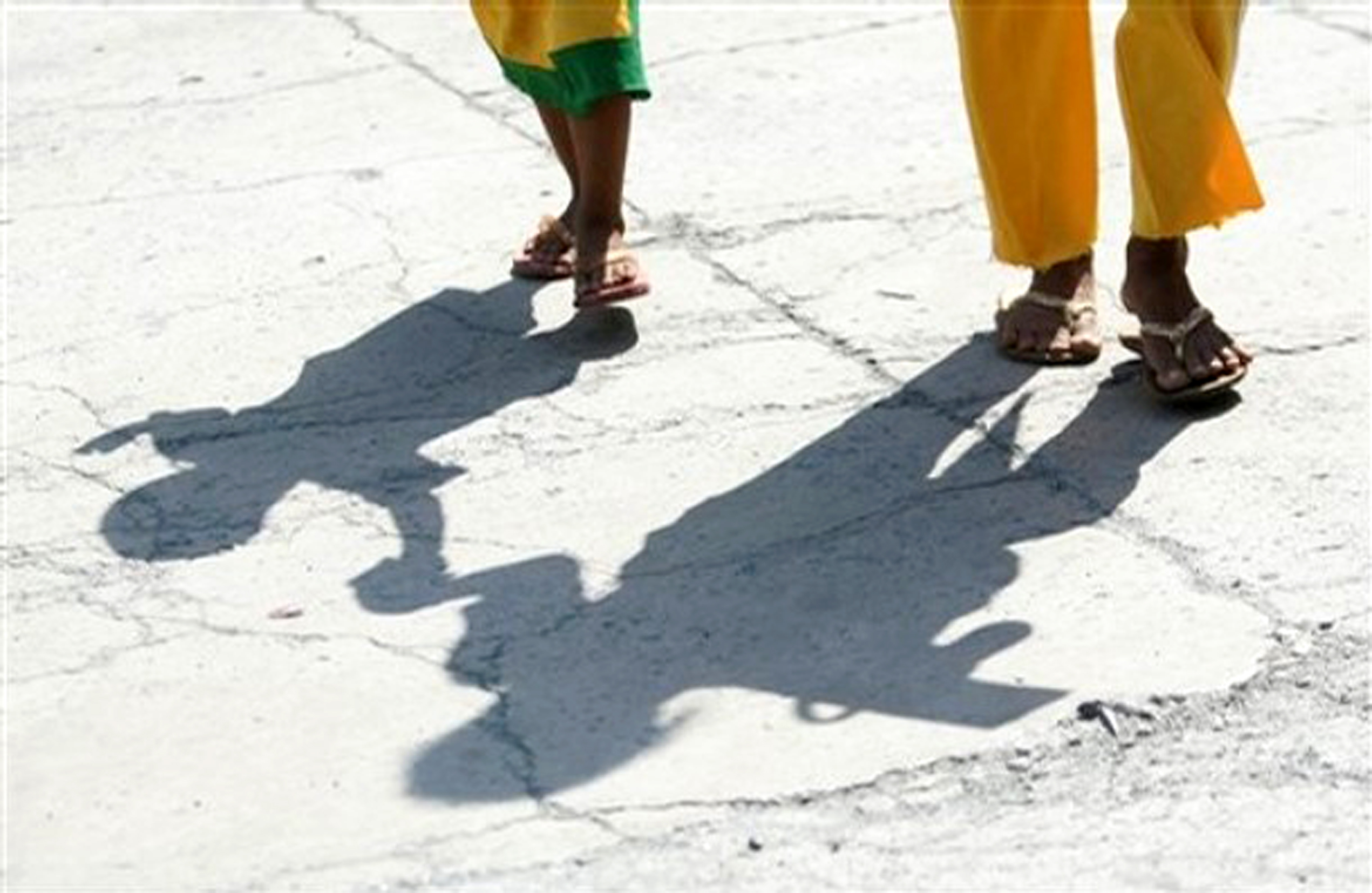
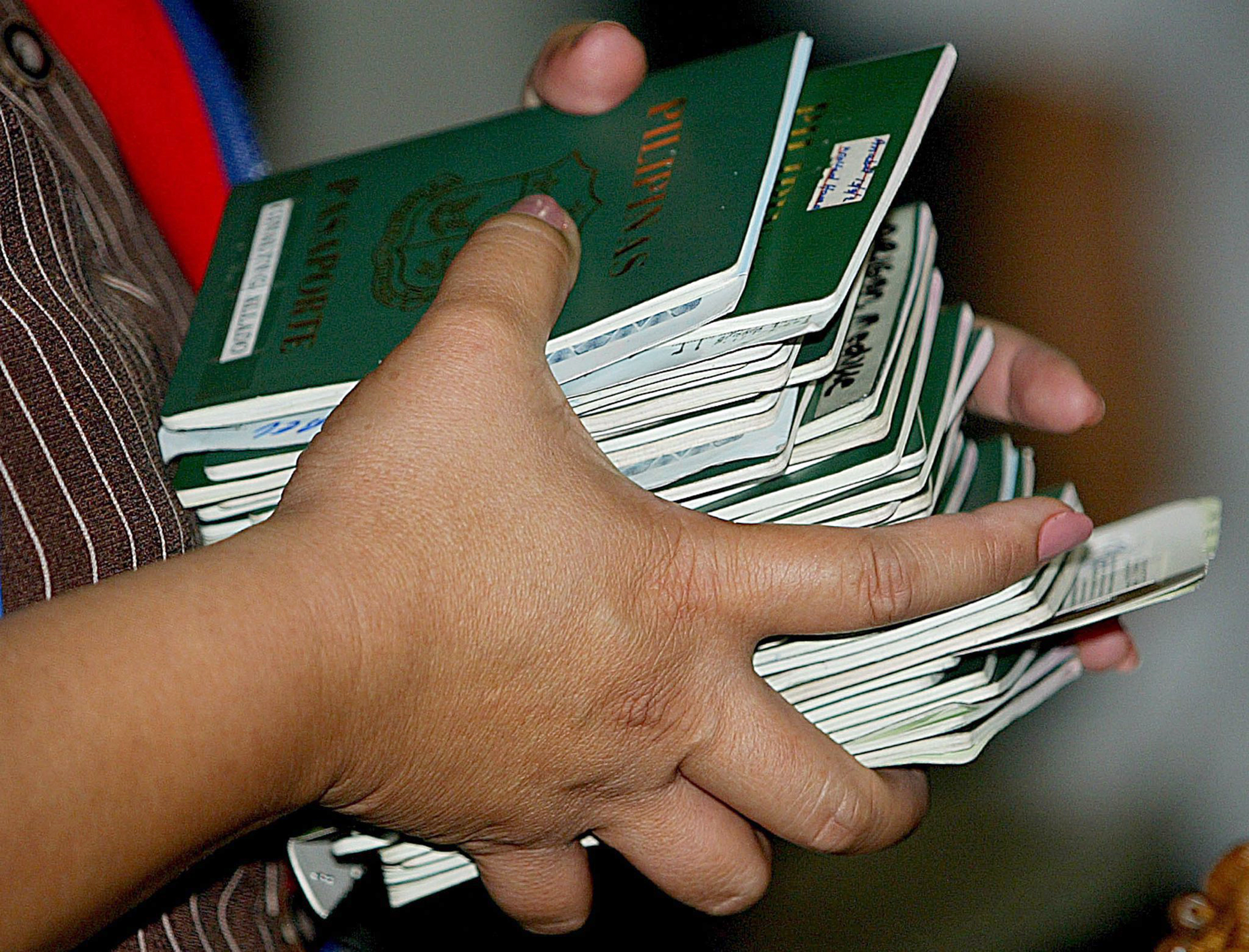
Changes within our own society – many of them instinctive responses to dramatic transformations in the global environment – have occurred very fast in just the last 30 years, more than at any other time in our history. One of the most interesting of these developments is the massive and unprecedented emigration of our people for overseas work. The impact of the Overseas Filipino Workers (OFW) exodus on our way of life is so comprehensive that we can hardly begin to understand what’s happening today to our families and communities. Our values and beliefs are being tested and strained every day. We feel the ground shaking in almost every sphere of our social life. We feel ourselves drawn almost against our will into uncharted territory and to try new courses of action about which we know little. We sometimes turn to our institutions and to the traditional markers of our culture in a desperate effort to find our bearings, only to realize how out-of-step with the rest of the world these, too, have become. Even our theories, our perspectives and visions, seem to have been left behind. Ironically, what is truly radical today may be found in the practical choices that real people actually make in everyday life. The image of the young Filipino mother who leaves behind her children to find work as a domestic helper in the Middle East comes to mind.
The task of sociological analysis is to understand these social processes – and to weave a coherent story of what is happening to us as a society. The ability to locate ourselves in this narrative is an important step toward determining how we should live in an increasingly complex world, and what we should do next.
A STORY OF FRUSTRATED MODERNITY
The history of our society in the last 60 years may be viewed as a nation’s successive attempts to make the modern institutional system, patterned after American liberal democracy, and the market economy work within a feudalistic culture and pre-industrial economy. Or to cast aside its basic rules in a bid to accelerate growth, or to reconstitute institutions in such a way as to create leeway for the play of inherited cultural features and the demands of a global economy.
These three modes, I think, correspond roughly to: the immediate post-independence period from 1946-1972, under the 1935 Constitution; the authoritarian period of Martial Law from 1972-1986, under the 1973 Constitution; the post-EDSA period, from 1986 to the present, under the 1987 Constitution.
• The post-independence period. The post-independence period was a continuation of the learning process started during the Commonwealth years, when our people and leaders were still in awe of the modern institutional system introduced by the Americans. We were not only respectful and proud of this inherited modern institutional system; we were also determined to make it work for us. Thus we had leaders who were tutored in the modern way, and civil servants who were expressly trained to run a modern government and economy.
But, on the other hand, we were also oblivious of the problems arising from the large gaps in wealth and power that separated the educated and propertied elite from the rest of the Filipino public. The masses became passive spectators of a modern way of life that remained largely foreign to them. It took less than a decade for these contradictions to manifest themselves in the form of worsening mass poverty, neglect, and exclusion from meaningful participation in the national life. The most dramatic expression of these contradictions came in the form of the communist insurgency and the Moro secessionist movement.
• Martial Law. It took someone as daring as Ferdinand Marcos to see the political dangers and opportunities that lay ahead for Philippine society if these conflicts and the conditions that spawned them were not decisively addressed. Developments in the region – notably the economic successes of South Korea, Taiwan, Singapore and Malaysia under authoritarian leadership – forced Filipino leaders to take a second look at the applicability of the liberal market model to an underdeveloped economy that was struggling to survive.
From a systems perspective, we may view Martial Law as an attempt to assert the pre-eminence of the political system over the economy. It was a confirmation of the failure of the liberal model and of the modern system of differentiated institutions. Indeed, some analysts called ML the return of the sultanate system. That the authoritarian experiment failed in the Philippines, whereas it succeeded in fuelling economic growth in Korea, Taiwan, Singapore and Malaysia, requires a separate paper. Suffice it to say that an overburdened authoritarian State, that tried to gradually loosen its grip under pressure from outside, soon found itself unable to attend to the myriad problems posed by a global economy wracked by crisis.
• The post-EDSA period. The overthrow of Marcos in 1986 paved the way for the country’s return to the liberal democratic and free market model. But a lot had changed since 1972, and a restoration of the status quo ante would not have been enough by any measure. Hand in hand with the demand for the return of democratic institutions, two other imperatives confronted the Aquino government – the modernization of the economy and social equity. After holding absolute powers for one year under a Freedom Constitution, the Cory Aquino government found itself besieged by successive military coups that threatened its very survival. Desperate to find stability, it shed its revolutionary beginnings, set aside the social justice bias of its own 1987 Constitution, and became content with restoring the pre-ML mode of liberal elite rule under the regime of traditional politicians.
It was left to Fidel Ramos to pick up the agenda of economic modernity whose aim was to flatten the privileges inherited from the past and thus create a more or less level playing field. Similarly, it was left to Joseph Estrada to pick up the challenge of social justice with his campaign slogan “Erap para sa mahirap.” (“Erap is for the poor.”) His presidency, however, proved inadequate to this huge challenge. And he did not stay long enough to make a dent on the problem of mass poverty.
THE POLITICAL DEBTS’ RECORD
The dramatic ouster of Erap by a combination of people power and military withdrawal of support in 2001 plunged the country back into a cycle of political instability. Gloria Macapagal-Arroyo’s presidency continued to be questioned even after the Supreme Court affirmed the legality of her succession. In retrospect, the issue would have died a natural death if Mrs. Arroyo had been content with serving out the remainder of Erap’s term, and not sought another 6-year term of her own. The 2004 election could have put the country back on track, giving the newly-elected president a chance to fine-tune the economy and address the needs of the poor.
But, this is not what happened. Instead of resolving the issue of presidential legitimacy once and for all, the 2004 presidential election gave it a new life and brought it forward. The ensuing crisis kept Mrs. Arroyo preoccupied with the imperatives of political survival. No other president in our history perhaps incurred more political debts than Mrs. Arroyo. Payback became the operating mode of the presidency in her time. Nearly every institution was turned into a resource or a weapon in a continuing war of attrition – the justice system, the police and the military, the government bureaucracy, the mass media, the churches, the local governments, and indeed the business sector.
To be fair, the picture has not been entirely gloomy. Amid this intensely politicized atmosphere, pockets of autonomy have emerged in the social structure – institutional spaces relatively insulated from the give-and-take of the political system. The independence stance taken by the Supreme Court, for instance, has been truly remarkable. It has consistently taken the side of the victims in cases where political liberty has been at stake, while it has recognized the prerogative of the political organs of government to make decisions concerning issues of economic strategy and policy. At the same time, it is worth noting the steadiness of the economy throughout this political crisis. It is a sure sign of the growing autonomy of the economic system, that has given it immunity from political infection.
AN ASSERTIVE VOTING PUBLIC
Even the electoral process has shown a remarkable stubbornness that compensates for the institutionalized incompetence and corruption of some officials of the Commission on Elections. We saw this in the 2007 elections, which mobilized an engaged citizenry in order to make a deeply flawed electoral process work. Indeed there was rampant vote-buying all over again, and there was dagdag-bawas (increase-decrease) too, but in most places we saw that these fraudulent schemes did not significantly affect the will of an informed and assertive voting public. Voters showed that their admiration for their movie and sports heroes did not automatically translate to blind political support. Clearly, they were able to make a crucial differentiation between entertainment and politics. That’s a sign of progress.
Still, there are developments, some surprising, that are worth examining in the light of our quest for modernity. The first concerns the so-called political dynasties. How does one explain the role being played by kinship ties in the political sphere? The second concerns the election of a priest as governor of a major province. Did the Filipino voters perhaps fail to make a crucial distinction between spiritual leadership and political leadership when they voted Fr. Panlilio as governor of Pampanga? Are we seeing here a problematic collapsing of the two separate realms of religion and politics that could amount, in Luhmann’s view, to a retreat from modernity? And finally, what message is being conveyed by the election to the Senate of a detained former military officer accused of coup d’etat? By voting for Antonio Trillanes IV, weren’t Filipino voters exacerbating the politicization of the military as an institution?
THE NEED OF STABLE PARTIES
My view on these questions is straightforward. In the absence of modern political parties with well-defined constituencies, networks like kinship groups will continue to serve as vehicles of political power. Banning dynasties from politics by legislation is not going to work unless there is, at the same time, a concerted effort to nurture stable political parties as vehicles of interest aggregation.
In the Pampanga gubernatorial race, on the other hand, it is important to note that Fr. Ed Panlilio was suspended from his priestly functions by his own superiors in the Church the moment he filed his certificate of candidacy. To all intents and purposes, he ran not as a religious, but as a member of the laity. During the campaign, the Catholic Church studiously stayed clear of any form of involvement. Indeed, some bishops were very vocal in their criticism of Fr. Panlilio’s decision to abandon his religious role and turn to secular politics. But for the purposes of our analysis, what is important is that Fr. Panlilio’s messages are not moral-religious, but political – in the sense that they center on issues of governance. So far, we have not seen any sign that what he is bringing to the governorship are the explicit priorities and judgments of the Church.
My take on the surprise victory of ex-Navy Lieutenant Antonio Trillanes IV is equally simple. I do not take his winning to be an endorsement of the military option of seizing power. Rather, I view it as an expression of support for his reformist intentions, and a strong affirmation by the electorate of the superiority of the electoral way. As soon as he filed his certificate of candidacy, Trillanes ceased to be a member of the armed forces. Nothing in what he has said, both as a candidate and as an elected senator, indicates that he sees himself merely as a soldier representing the security sector.
This is what is important in the final analysis, says Luhmann – that the various institutional spheres are allowed as much as possible to function according to their separate codes, media, and success criteria. Thus, for example, political interests are not allowed to interfere with economic decisions, and vice-versa, economic interests are prevented from controlling decision-making in the political realm. Of course, we all know that, in the real world, this is easier said than done. Politics’ power of taxation, regulation, and distribution are always capable of destabilizing the self-referential logic of the economy. But the idea is there – that the subordination of the economy to political power would always result in unpredictable and often uncontrollable consequences.
REASONS TO HOPE
The Philippines was ahead of many countries in the Asian region insofar as having modern institutions was concerned. Unfortunately, these transplanted institutions could not work properly in a personalistic patron-client culture nurtured by mass poverty and social inequality – where at almost every turn, the logic of a feudalistic culture could trump the rule of law and the claims of meritocracy. But, hopefully, things are changing.
• The spread of education, the rise of the mass media, and the growing emancipation of large numbers of Filipinos from absolute poverty through overseas work are creating the conditions that make it possible, even necessary, for modern institutions to function properly. Consciousness of what they have had to give up in exchange for their hard-earned incomes is making Filipinos demand value for every peso they earn. If now they demand quality goods and services, it will not take a big conceptual leap for them to demand good governance as a right tomorrow.
• The relationship in Philippine society between the political system and the economic system has been a particularly troubled one. The troubles have been variously labeled as “cronyism,” “rent-seeking,” “booty capitalism” or plain “graft and corruption.” But the basic problem is the same: market values and opportunities are distorted by arbitrary political meddling, and vice-versa, political decision-making and policy-formulation is heavily shaped by economic interest groups, and even State regulatory bodies are “captured” by economic blocs. This problem is compounded by the erosion of traditional moral restraints, even as the rule of law has not been fully established. In many ways, the global character of doing business is forcing its own disciplinal regime. What is happening in many societies is that, as the political system stabilizes and becomes more predictable, heavily politicized business loses its appeal. Having said that, I must also add that I am not under any illusion that the market can solve problems of social inequity. It requires political will to solve mass poverty and social inequity. Without a strong political system that enables will-formation and goal-setting to freely take place, the play of market forces will only further marginalize the poor and exacerbate inequity.
• I believe it can be persuasively argued that our basic problems as a society have been mainly political. The failure of politics and governance has been primarily responsible for almost all the weaknesses we find in every institutional sphere of our society – from education to law, to the economy, to science and technology, etc. Our people are fed up with our political elite – that’s the reason they are leaving the country. The growing inability of the traditional political class to justify themselves before our people and win their support has made recourse to electoral fraud a necessity. This makes elections even more expensive than they have been. The massive financial requirements of winning public office are inevitably passed on to the business community. This connection has to be severed. Business must find the collective will to stop feeding politicians and enlisting their patronage. I think the conditions that make that possible in our society are already emerging.
• Politically, there are signs that the voting public is becoming more discriminating in its choice of public officials. In the 2007 elections, however, there were very few choices at the local level. Many candidates ran unopposed. Possible alternatives were deterred by the enormous costs of running. Hopefully, this situation will improve in 2010, when the crisis of presidential legitimacy that has weakened the whole political system will have passed on – assuming that GMA will not insist on remaining in power beyond her present term.
• We will have to work very hard to repair our deeply fractured political system so that the issues it spawns are safely resolved within its own boundaries, and not passed on to the other subsystems of society. To start with, there is a need to professionalize and modernize the electoral commission. Voting can remain manual, but the counting and canvassing must be automated for the 2010 election. A new breed of election officials, distinguished by their credibility and integrity, must be put in place of the Bedols and Garcillanos. Until we can establish a trustworthy electoral process, we may as well forget about having a stable democratic system. But in addition, highly qualified Filipinos from all walks of life must be encouraged to join the public service as elected or appointive officials. The mass media must do their part and give new leaders the kind of public exposure they need.
• Finally, looking back at our recent political experience, we will perhaps note that during heightened moments of the political crisis, there is a great temptation to draw every institution into the fray in what, on hindsight, seems like a reckless bid to produce cataclysmic change. Thus, we have seen how, in 1986 and 2001, bishops and businessmen, jurists and civil servants, civil society, businessmen and the military found themselves drawn into an open-ended free-for-all without a clear resolution. These two “EDSAs,” in both instances, brought in a new government, narrowly avoiding a dangerous fragmentation that could easily have ripened into a civil war. Both events stemmed from a malfunctioning of the political system. A strict observance of the basic norms of functional differentiation, and the preservation of the autonomy of institutions, would spare us these dangers in the long term. We pay a high price for those moments when we are compelled to resort to quick-fixes. Our institutions not only fail to mature, we may also not be lucky the next time around.
A FREE SOCIETY
On the whole, looking at our nation’s progress in the last one hundred years, I would say we have not really done too badly, even if we could surely have done more for the underprivileged among our people and for our children so that they may have a more secure future in their own country.
We are still troubled by insurgencies in our midst, and by unsolved killings of an obviously political and ideological character, but, on the bright side, we have avoided large fratricidal wars such as those that have plunged some societies in Asia and Africa into chaos.
Despite the many imperfections and weaknesses of our democracy, and despite the persistence of mass poverty, our country remains among the freest societies in the world.
Finally, despite the mass exodus of Filipinos for overseas employment in the last 30 years, a phenomenon that should compel every country to take a second look at itself, only a few have sworn not to return. This is still a place that our people proudly call home. Definitely, there is hope for this beautiful country and its people. That hope is not grounded on any theory or principle. Its only basis, in the final analysis, is our irrepressible desire to achieve the nation imagined by our forefathers.