Major wars — armed conflicts of greater dimension between opposing countries or factions within the same country — are becoming less frequent. This doesn’t mean, however, that our world is experiencing less violence.
The truth is conventional wars that used to break out between or among nations, have become rare, as an account of the conflicts for the last 25 years shows. Wherever people are, so are battlefields. Military confrontations occur in the presence of citizens, against citizens or in defense of the citizens. “The citizens are the targets, the objects to conquer, in the same way that they are the opposing force,” maintains General Rupert Smith in his book “The Utility of Force” (2005).
After the Gulf War in 1991, it became evident that great confrontations between blocks no longer exist and traditional armies have become obsolete. Wars and conflicts are no longer the traditional “industrial wars,” but primarily “wars between peoples” — without an end in view.
Since the collapse of the Berlin Wall in 1989, the international political system has undergone great transformations, without generating war outbreaks of world dimension. The disintegration of the Soviet Empire and the unification of Germany saw deep changes in the European and world political scenario sans war. The disintegration of Socialist Yugoslavia, however, has been accompanied by great violence and conflicts continue to occur in various regions of Caucasus (Chechnya, Georgia) and sub-Sahara Africa. The only difference is that they are localized wars.
THE FIGHT FOR RESOURCES
Michael Klare, director of PAWSS, a study program on world peace and security of the University of Hampshire, USA, studied the causes of war, after the collapse of the Berlin Wall (1989) — in the light of new facts like the Gulf War (1991), the absurd proliferation of civil wars in Africa, the simulation of operations of the CIA in the Caspian Sea region and the increase of tension in the South China Sea (2001). In the geography of conflicts, competition for the control of the natural strategic resources has been playing a major role — as a result of an increased interest in geo-economy deriving from globalization. In Africa, we can cite Angola, Sierra Leone, DR Congo and the Sudan as examples.
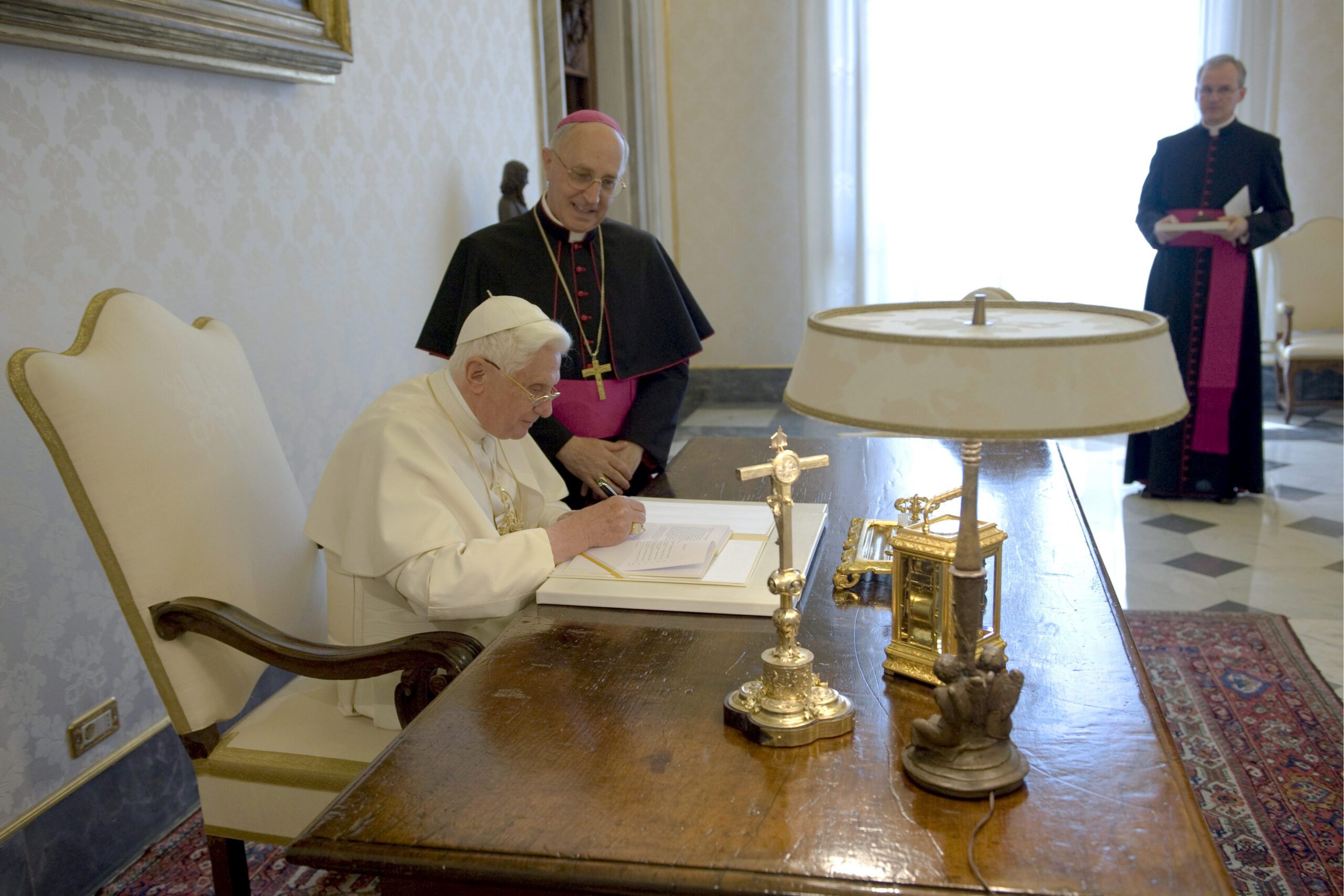
“Ideology and politics will continue to be the inciting factors. But I think the competition concerning natural resources will become an even more important factor, at least in certain areas of the globe, considering that the reserves of vital raw materials, specifically water, sources of energy and arable land, will become scarce,” foresees Michael Klare. In Pope Benedict XVI’s message for this year’s World Day of Peace, he also faces this reality, and asks: “What injustices and conflicts will be provoked by the race for energy sources? And what will be the reaction of those who are excluded from this race?”
CULTURAL CLASHES
The concept of “clash of civilizations,” introduced by the North American political scientist Samuel Huntington, foresees conflicts among very different cultures, such as the Orthodox, Muslim and Western European in which the unleashing factors are the ethnic and cultural antagonisms. For those who accept his thesis, which has been rejected by many analysts, these conflicts are already present like a shadow over Europe, either demographically, due to the significant number of immigrants from Muslim Africa, Turkey or the Middle East, or as a consequence of a possible interruption in the supply of oil and natural gas, or because of the involvement of the Europeans in Iraq, Afghanistan or in various peace-keeping operations. For the followers of Huntington, the bomb attacks that have sent London and Madrid into mourning are already a forewarning of what may be coming. On the other hand, the friction among the United States, China and Russia does not, however, show signs that it will attain the high tension that characterized the Cold War period.
GUERILLA AND TERRORISM
When there is such a big disparity in capability of the adversaries which alters the conflict dynamics, we speak of asymmetric conflicts that can foment guerilla actions or terrorism. These asymmetric conflicts have an increasingly greater weight on the global violence scenario, once there is less occurrence of war between states. After the fight for world hegemony between the two great blocks that championed the Cold War ended, the geography of conflicts was redesigned.
The need for oil, gas, minerals, precious stones and exotic timber can impel countries into civil wars and regional conflicts. Statistics of the Stockholm International Peace Research Institute (SIPRI) show that, in 2003, only one conflict in a total of 20 broke out between states and this was USA against Iraq. In 2004, all the reported 19 conflicts were civil wars or conflicts within the borders of a given state. These conflicts were asymmetric: between the conventional army and guerilla groups that intended to overturn the established power.
The war between USA and Iraq in 2003 was hardly a conventional one, given the overwhelming asymmetry in the level of war power between the two parties. It unleashed the deadly insurrection that has been killing dozens of citizens per day.
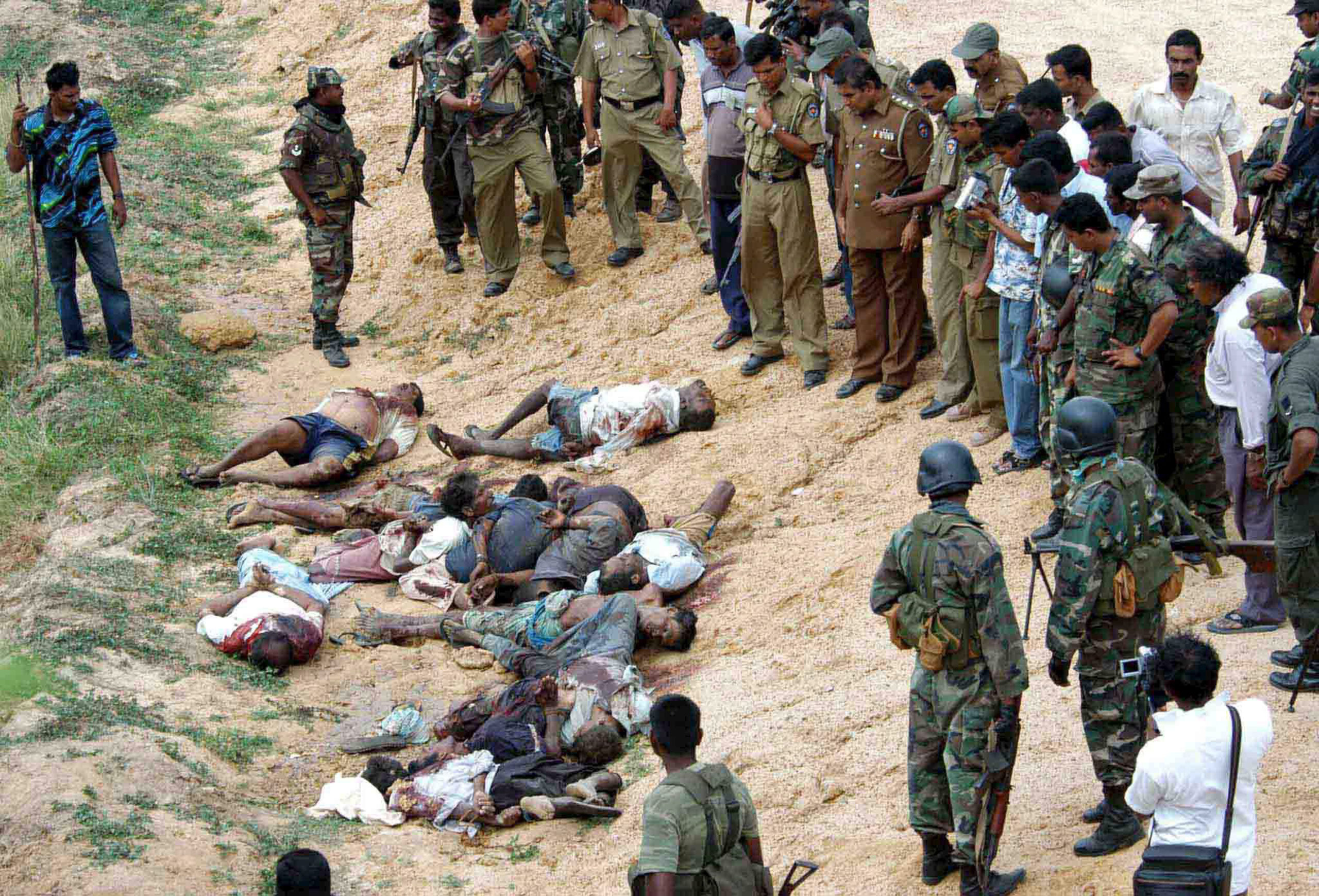
There are political and military analysts who compare Iraq to Vietnam: the various groups of insurgents are resorting to mainly urban guerilla warfare or to terrorism in facing the forces of the greatest world power and its allies. The conflict has also become interreligious — more precisely inter-sectarian, since it opposes Islamic factions — based mainly on armed attacks, kidnapping and bombings that have caused heavy casualties among the people.
At the global level, the number of terrorist attacks has been increasing in the last years. The old bipolar division of the world, according to ideological influence, has given way to multi-polar mosaic of conflicts rooted in old resentments or territorial disputes, hegemonic ambitions at a world level, mere economic interests, or a mixture of two or more of these and other factors.
THE DANGER TRIANGLE
In his book “Resource Wars,” Michael Klare refers to three particularly critical and strategic zones in the present geo-political scenario: the Persian Gulf, the Caspian Sea basin and the South China Sea. Klare considers these the most important political and military “fracture lines” nowadays for reasons that have to do with the dispute over energy resources by actual or evolving powers. He also draws attention to the “water wars” that can become equally significant, in the future, to war for oil. Potable water, indispensable to life, is becoming scarcer and the source of water supply will be disputed by neighboring countries that frequently depend on a river that crosses various nation territories.
Minerals, precious stones and exotic timber of tropical forests are also critical resources, according to Klare. A major concentration of endemic civil wars or local conflicts is found in areas where important reserves of these precious products exist, as in Liberia and Sierra Leon, Angola and DR of Congo, specific zones in Africa where diamonds, copper and other rare resources are abundant or in countries of Southern Asia, such as the Philippines and Indonesia, which are rich in timber. The United Nations, on the occasion of the International Day for Preventing the Exploitation of the Environment in War and Armed Conflicts, asked governments to “stop using natural resources in order to provoke wars.”
DEMOCRACY AND DEVELOPMENT
It can be seen that the greater the concentration of military power, be it of the unique big power resulting from the Cold War (USA) or of the two emerging powers (China and India), the greater the tendency to turn to asymmetric strategies. “Global and regional hegemonies put up resistances that make use of guerilla or terrorism, the only efficacious way to face a powerful military enemy,” affirms Bruno Reis, of the War Studies Department of King’s College in London.
Since guerrilla and terrorism are weapons of the weak, they will be increasingly used by people. That is, the conflicts will be a problem to settle not only between military forces, but will involve — and kill, dislocate and impoverish — an ever increasing number of civilians.
If terrorism cannot be overcome with purely political measures, then asymmetric conflicts cannot be resolved using only military strategies. This does not mean that armed groups should not be confronted: only by using military pressure can some of their members decide to surrender and be reintegrated into society, since some of the terrorists or guerrilla fighters are too radical to admit defeat. Moreover, their aims tend to be “religious” or too idealistic thus making negotiations very difficult.
If we want to discourage people from joining terrorist groups, it is essential to reduce the indifference and complicity of some sectors of society. In present circumstances, that means supporting moderate forces, fostering regional development, and exerting pressure so that the international system may become more equitable and multilateral.
Only through further development of underdeveloped and developing countries and having truly democratic countries can conditions be created to reduce the number of conflicts. n