“Away from the blooms, the sweet scent and the beautiful scenery, this place represents the ugly side of capitalism.” This is how Joseph Mwaura, a resident of Karagita, describes Naivasha, the small Kenyan town which is the center of cut-flower farming in Kenya. Judging from the thousands of acres devoted to flowering plants in the district, coupled with government statistics on the millions of euros the country is earning from its flower industry in terms of exports, one might be tempted to dismiss Mwaura as a disgruntled voice in the wilderness.
Yet, Mwaura, 32, a father of three and a worker in a vast flower farm in Naivasha, is voicing what many others have been saying. The conditions under which workers in these flower farms toil are often very difficult, sometimes inhuman. Indeed there have been campaigns for boycotts until working conditions are improved, both locally and in countries where cut flowers from Kenya are sold. In 2002, for instance, the Kenya Human Rights Commission (KHRC) was up in arms against what it termed “exploitative labor conditions of workers” in Kenya’s cut-flower industry.
In Naivasha alone, there are more than 50 flower farms, among the largest of which are the Homegrown Flowers, Sulmac and Oserian. According to the statistics of the Kenya Flower Council (KFC), the sector employs more than 100,000 people directly and another 2 million indirectly. Homegrown, for instance, which sits on more than 10,000 hectares of land, employs more than 6,000 casual laborers and accounts for at least 15 per cent of all horticultural exports.
A DEJECTED LOT
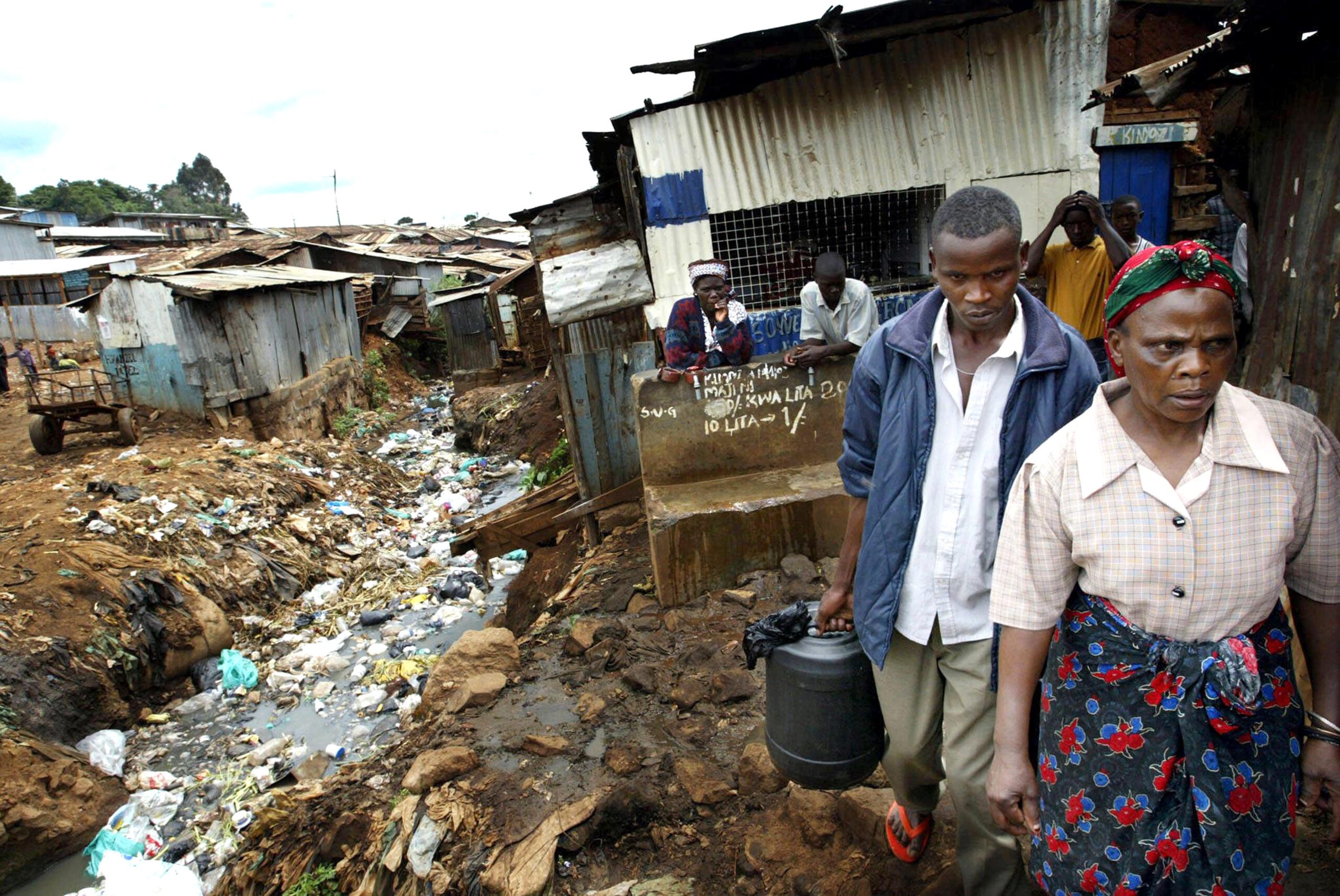
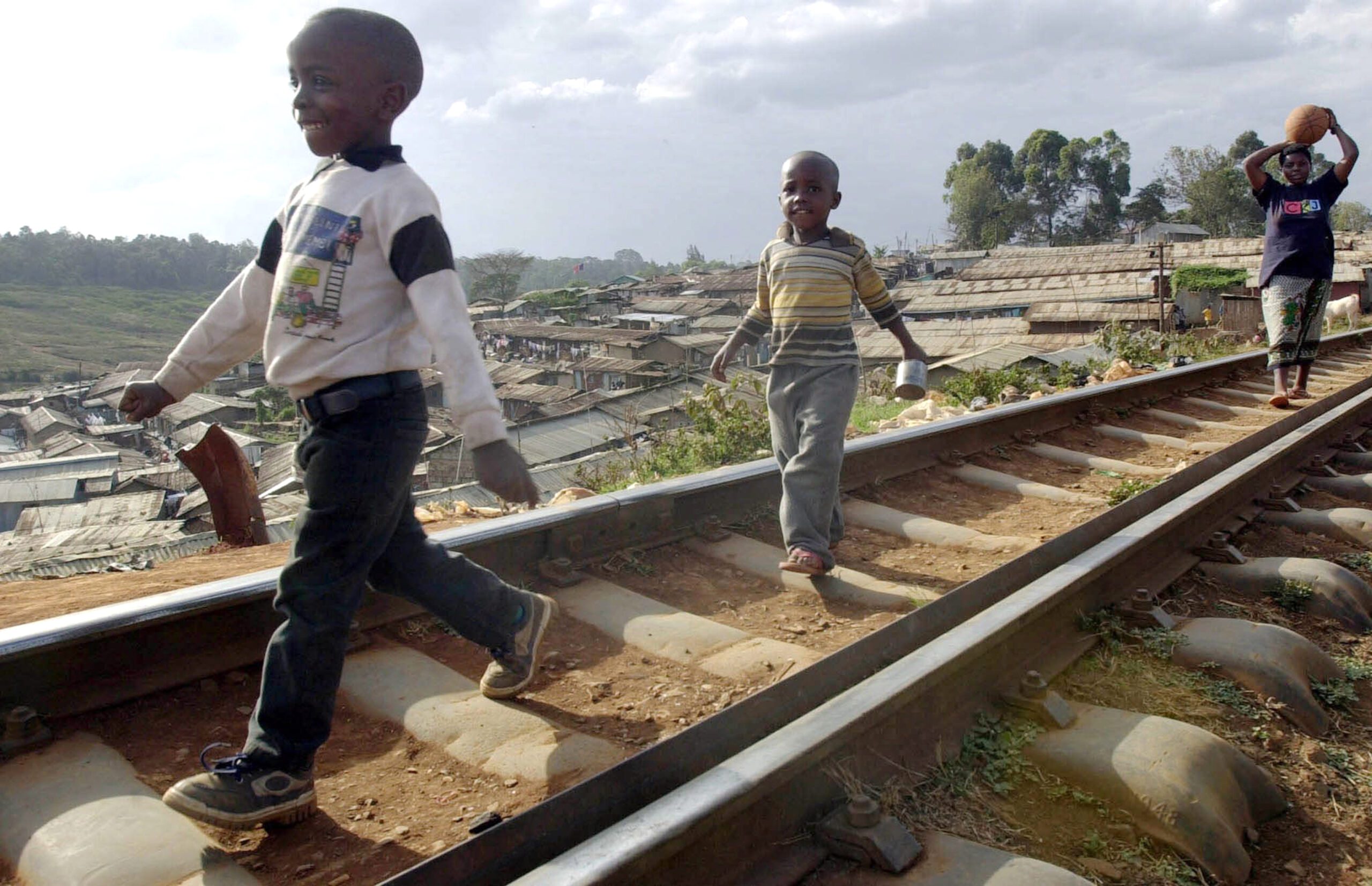
But while the flower firms rake up millions in revenue, their workers are a dejected lot. “It is desperation born out of extreme poverty that makes us work in these farms” explains Mwaura. A brief visit to Karagita, where many flower-farm workers live, is a confirmation of his words. To one who is familiar with Nairobi slums, the abject poverty that surrounds them would not be a surprise. Rather, it is the sight of people with missing limbs, hairless women, deformed children, blind men and those with countless scars that is surprising.
Take the case of Albert Wanyama, for instance. When he landed in Naivasha from his Bungoma home, Wanyama was just like any other boy who could not afford to continue his studies due to lack of fees. “After two years of staying at home doing nothing, I decided to look for casual work” says the 23-year-old. Nine months later in one of the farms, his skin developed a queer rash and despite seeking medication, it would not go away. Later, he learnt that he had been exposed to one of the toxic chemicals used in the farms. “Most of the time I cannot sleep because of severe skin itching,” he adds.
So, what exactly goes on in the closed and well-guarded flower farms? To an outsider, the numerous signs saying “Protected”… by this or that security firm, “Beware of Fierce Dogs,” “Trespassers Will Be Prosecuted,” “Do Not Take Pictures” might pass as normal precautionary measures. But to an insider, the signs are pointers to injustices that the workers have to endure.
DANGEROUS CHEMICALS
First, when a person goes to one of the farms to look for a casual job, he/she is usually subjected to an elaborate medical examination. Unsurprisingly, most laborers in flower farms are women. “Women are preferred because they rarely cause troubles,” says Mwaura, adding that because of their softness in nature, they are easy to push and shove around. The risk of sexual exploitation is very high and very common.
Naturally, getting a job is supposed to be the beginning of happiness for any person. But to casual workers in flower farms, the opposite is often the case. Apart from working in hazardous conditions where they handle dangerous chemicals, casual laborers in flower farms work for long hours and are paid meager wages. A normal working day at the farms ranges between 8 and 12 hours with a one-hour lunch break. Wages also differ and range from as low as Kshs120 to Kshs 200 (USD 1.8 to 3) a day. Assuming that one earns an average of Kshs150 a day for six days a week, one takes home a salary of Kshs 4,500 (USD 70) per month. This is far below the government stipulated minimum wage of Kshs 5,200 per month. “This is exploitation by another name,” observes Mwaura.
I DON’T CARE ATTITUDES
Working in a flower farm, he explains, is delicate because the plants often demand careful handling. For workers dealing with chemicals, the situation is even more complex and the risk of being exposed is usually high. Though most farms today provide workers with protective gear, a majority of them are school dropouts who can hardly understand the instructions. “What happens is that a foreman explains how to mix the chemicals to all newcomers but, after that, you are on your own,” Mwaura adds. Besides, in most firms, protective gear is issued within a certain time frame. Due to these “I don’t care” attitudes, cases like that of Wanyama have become regular occurrences in flower farms. And the situation even gets worse! When one is exposed to the chemicals, which may eventually lead to the workers’ loss of sight, skin peeling, or sometimes becoming infertile or impotent, the flower farms refuse to take responsibility. At best, some will refer the victim to their in-house dispensaries. At worst − and this is often the case − the worker is dismissed.
Although the Kenyan Constitution allows employees to form or join a workers union of their choice, in the case of flower farm workers, even imagining that move is taboo and is reason enough for instant sacking. It is ironical to note that, while workers are prohibited from having a forum that can stir up their rights, owners of flower farms make the utmost use of Fresh Produce Exporters Association of Kenya (FPEAK). Seventy-six per cent of flower farming in Kenya, being in foreign hands, FPEAK has been effective in ensuring its members read the same script when it comes to treating their workers.
PREGNANCY IS FORBIDDEN
According to Alex Mureithi, KFC’s outspoken chairman, the era of exploitation in flower farms is long gone. He explains that KFC members adhere strictly to a code of conduct and that flower farming is closely monitored by agents of various countries that Kenya exports to. “A country like Britain carries out regular inspections on flower farms to ensure cultivation is not carried out under inhuman conditions,” he emphasizes, adding the Council has also put in place a mechanism through which rogue members who go against the code of conduct are disciplined.
Joyce Wandia, whose work is pruning the flowers, says she once had a miscarriage because of exposure to chemicals. “We were forced to prune the flowers before the mandatory nine hours after spraying,” she says. Asked why she never told her employer about her condition, she answers rather painfully; “If I had said I was pregnant, I would have been sacked there and then,” she says adding that, at the flower farm where she works, getting pregnant is prohibited.