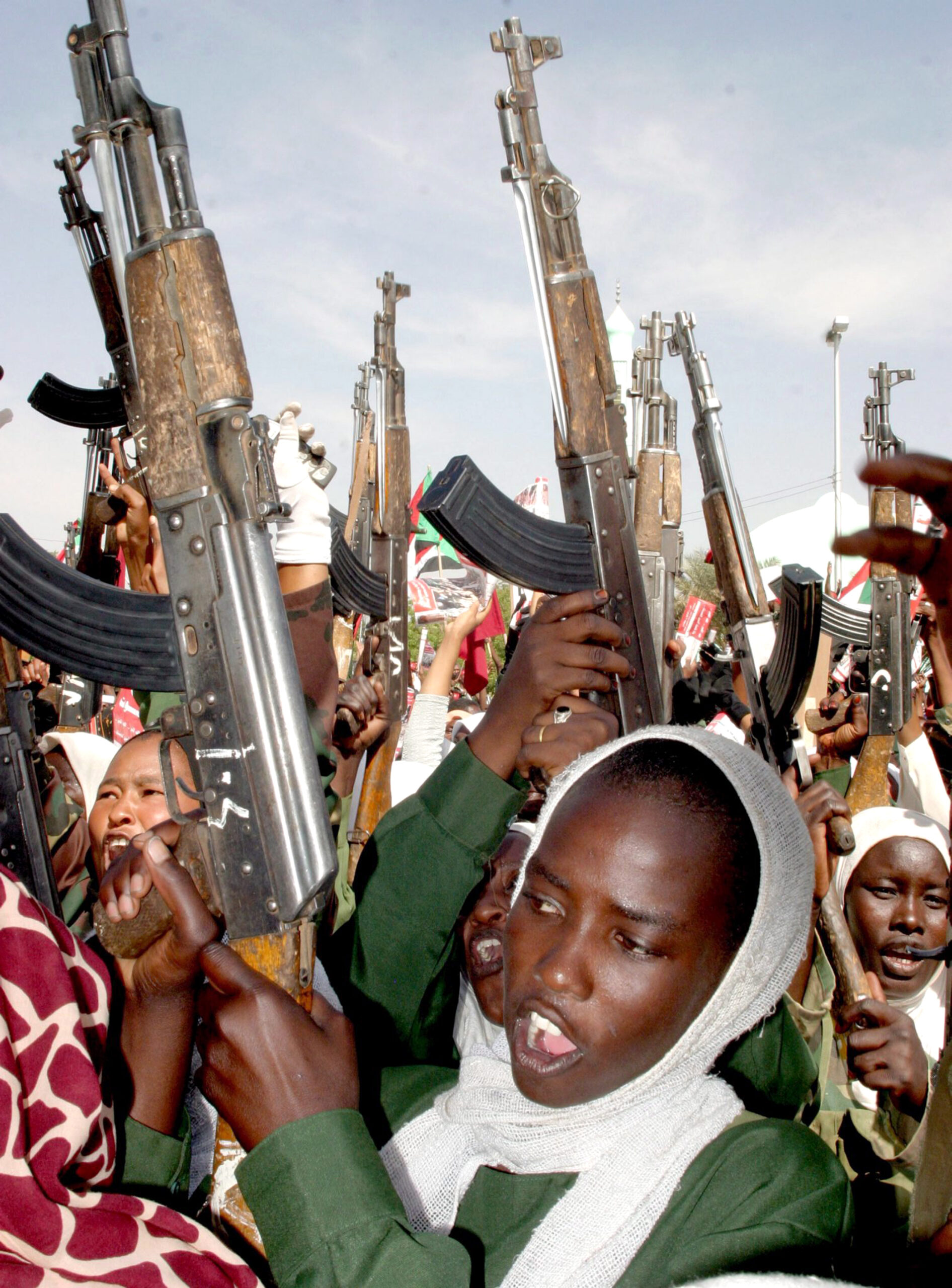

Created in the 1970’s, the Liberation Tigers of Tamil Eelam (LTTE) have been fighting for an independent State in the North and East of Sri Lanka. Their methods include frequent life threats against political leaders — even to the Presidents of the country — and also attacks against civilians.
Last July, in a new wave of confrontations with the government troops, the Tamil Tigers decided to close the sluice gate of a water reservoir in Trincomalee district, depriving around 60 thousand people, who lived in that government -controlled area, of this precious liquid. The situation continued for about three weeks, and it contributed, undoubtedly, to the increase of war-displaced peoples.
However, and we must acknowledge it, the Tamil Tigers are not the only ones using an essential good like water – ever more scarce – as a political or military weapon. Nor is this a new strategy.
Indeed, in the recent military incursion of Israel in Lebanon, there were attacks against water pumping and treatment stations. They were denounced by the Amnesty International as a “deliberate and an integral part of the military strategy to force the Lebanese Government and civil populations to turn against” the armed group Hezbollah.
Maneuvers to block water supply to populations or to prevent the incursion of armies can be seen during the war in Kosovo (1999), in Vietnam (1960’s and 70’s), the Sino-Japanese war (1937-1945) or, going back in time, when King Nebuchadnazar (Babylon, 6th century AD) gave orders to destroy an aqueduct that gave water supply to the city of Tire, to finish a siege. It can also be remembered that, at the beginning of the 16th century, the famous Leonard da Vinci, together with Machiavelli, studied the possibility of changing the direction of the Arno waters away from Pisa, the city with which his birth city, Florence, was at war.
A FUNDAMENTAL RIGHT
In November 2002, water was acknowledged as a fundamental human right by the United Nations Committee on Economic, Social and Cultural Rights. In its General Comment N. 15 about the Right to Water, the commission stresses that water is inseparably linked to the right to good health, housing, food, as well as to the right to life and human dignity.
Already in 1977, Protocol I Additional to the 1949 Geneva Conventions prohibited “starvation of civilians as a method of warfare” and also “to attack, destroy, remove or render useless objects indispensable to the survival of the civilian population, such as foodstuffs, agricultural areas for the production of foodstuffs, crops, livestock, drinking water installations and supplies and irrigation works.”
In the IV World Water Forum, which took place in Mexico in March this year, Loic Fauchon, president of the World Water Council, suggested the establishment of a special army of Blue Helmets to protect the distribution mechanisms of water and its treatment stations during armed conflicts.
The suggestion may not seem very feasible, but it comes from the ever growing acknowledgement that “water is a right” of which peoples must not be deprived, so that they may not become even more victims of wars and guerrilla actions.
Water is not only an instrument of war. Often, it is itself the origin of political conflicts and wars. Moreover, analysts agree that, in the future, water may become one of the main causes of international tensions.
Nowadays, it is known that 40% of the world population lives in the 250 cross-border Hydrographic Basins of our planet. That is, the countries that have water resources have to share them with their neighbors and it gives them predominance over the others. Moreover, the countries that do not have such resources wish to get them because they see in them, naturally, an important means for their economic development.
A SOURCE OF CONFLICTS
The Middle East is one of the geographical regions where this fact happens more frequently. Without proper water resources, Israel depends on the Cisjordan layers and on the river Jordan, whose bulk waters come down from Syria (Golan Heights) or from the south of Lebanon.
Therefore, the Seven-Day War (1967) was, in great part, a war for the control of water — having Israel taken and later annexed the Golan Heights and Cisjordan. Since then the Palestinians of Cisjordan do not have the right to open new water boreholes, and have access to only ten per cent of the water resources of the territory. Nowadays, 60% of the water consumed in Israel originates from the occupied territories or from places already under control by the Palestinian Authority.
The present situation leaves Jordan, for example, dependent on Israel’s good will for its water supply, while Iraq and Syria are at the mercy of Turkey, origin of the two rivers that provide water to them: the Tigris and the Euphrates. On the other hand, Egypt, that depends entirely on the Nile for its supply of water and for its agriculture, can never forget that the longest river in the planet emanates from Lake Victoria (White Nile), that its main affluent, the Blue Nile, originates in Ethiopia, that after they join together around Khartoum still cross a considerable extension of the territory of the Sudan, before entering into Egypt.
If we look at the Asian continent, we can also see that the big rivers of India are or may be a source of conflict with the neighboring countries. In the case of the Ganges, the treaty signed in 1996 and valid for 30 years, doesn’t leave Bangladesh totally serene since it can control neither the quality nor the quantity of the water due to the fact that it has the lower part of the river basin in its territory. The Brahmaputra, which originates in the Himalayas, crosses Tibet – politically controlled by China — then India and Bangladesh, is at the center of a latent conflict since the three countries refuse to exchange any information referring to it.New Delhi has still problems with Pakistan because of a dam on the river Jhelum, in the Kashmir disputed region. India started the construction of the Wullar Dam in 1980, but had to abandon the project because of Islamabad’s complaints that the water stream in the river would thus be controlled by India and that this country could allow great quantities of water to release/escape in case of an armed conflict.
Still in Asia, water control projects of the Mekong river in China, by means of the construction of a series of dams, would affect its water supply to Cambodia, Myanmar (Burma), Thailand and Vietnam. In 1995, the Mekong River Commission was created to promote and coordinate a viable management of the river waters for the mutual benefit of these countries, but it is a significant fact that China and Myanmar are the only ones that are not part of this Commission.
MORE PRECIOUS THAN OIL
United Nations studies point out that water will become, within the next 50 years, more precious than oil/petrol. The inequality of its distribution in the planet, the desertification, its progressive disappearance as a consequence of global warming and also because of human activity, its wasting or at least its poor rational use and its importance for the growth of every economy will certainly end up by leading to that prevision.
In the last three decades, there have been frequent international gatherings on the topic of water, and the participant countries have tried to reflect on the manner of a more rational management of a commodity that seems to be threatened by extinction. However, the truth is that these encounters have not been followed by concrete measures to make possible the achievement of the wanted objective.
In the first of these UN conferences, which took place at Mar del Plata in 1977 in Argentina, water was defined as a “common good” and, in 1992, in Dublin, it was declared an “economical good,” because of the diminishing of its potable reserves at planetary level. The Second Earth Summit in New York, 1997, limited itself to consider water a “priority issue.” And, in the IV World Water Forum, the disagreement about this matter was very evident: while countries like Venezuela were insisting on considering water a universal and fundamental human right, others like France were defending the view that they were dealing with an “essentially financial” topic.
The potable water existing in the planet represents less than one per cent of the water stored in the oceans, the ice layers and in the glaciers. To this, we must add the above-mentioned inequality of its distribution. The Amazon, for example, concentrates 15% of water resources whereas not more than 0.3% of the world population lives there. Yet in the Asian continent, including the Middle East, 30% of water resources have to supply 60% of the world population.
In consumption terms, it is well known that agriculture consumes 70% of potable water, while industry absorbs 20% and home (domestic) usage, only ten per cent. Agriculture together with industry, especially in the developed countries, are responsible for another phenomenon, and it is very regrettable: pollution. It is a well-known fact that in the so-called northern countries, 90 per cent of the surface waters and about 60 per cent of the underground water layers are contaminated with pesticides, with all the effects that these will inevitably have on the public health.
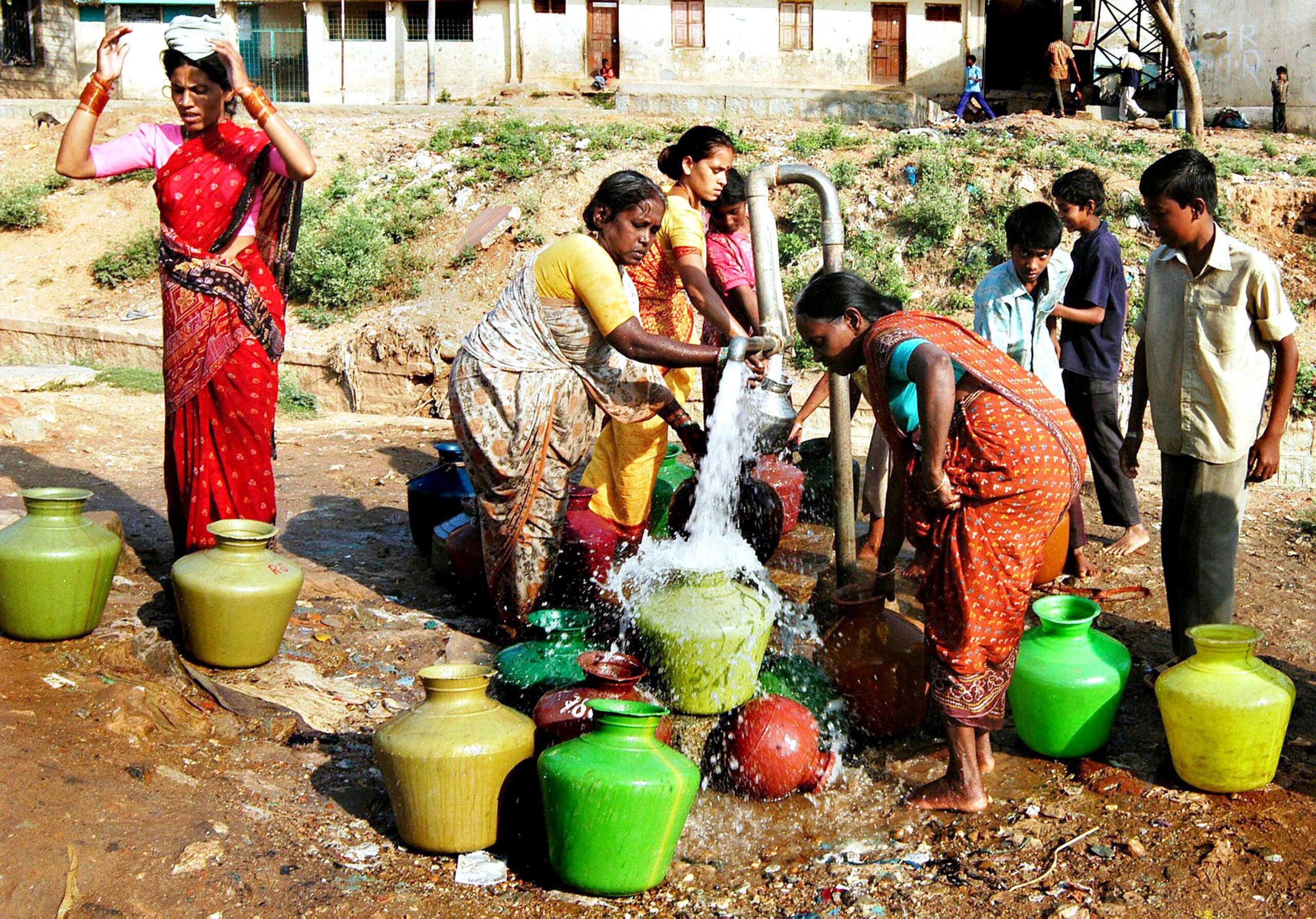
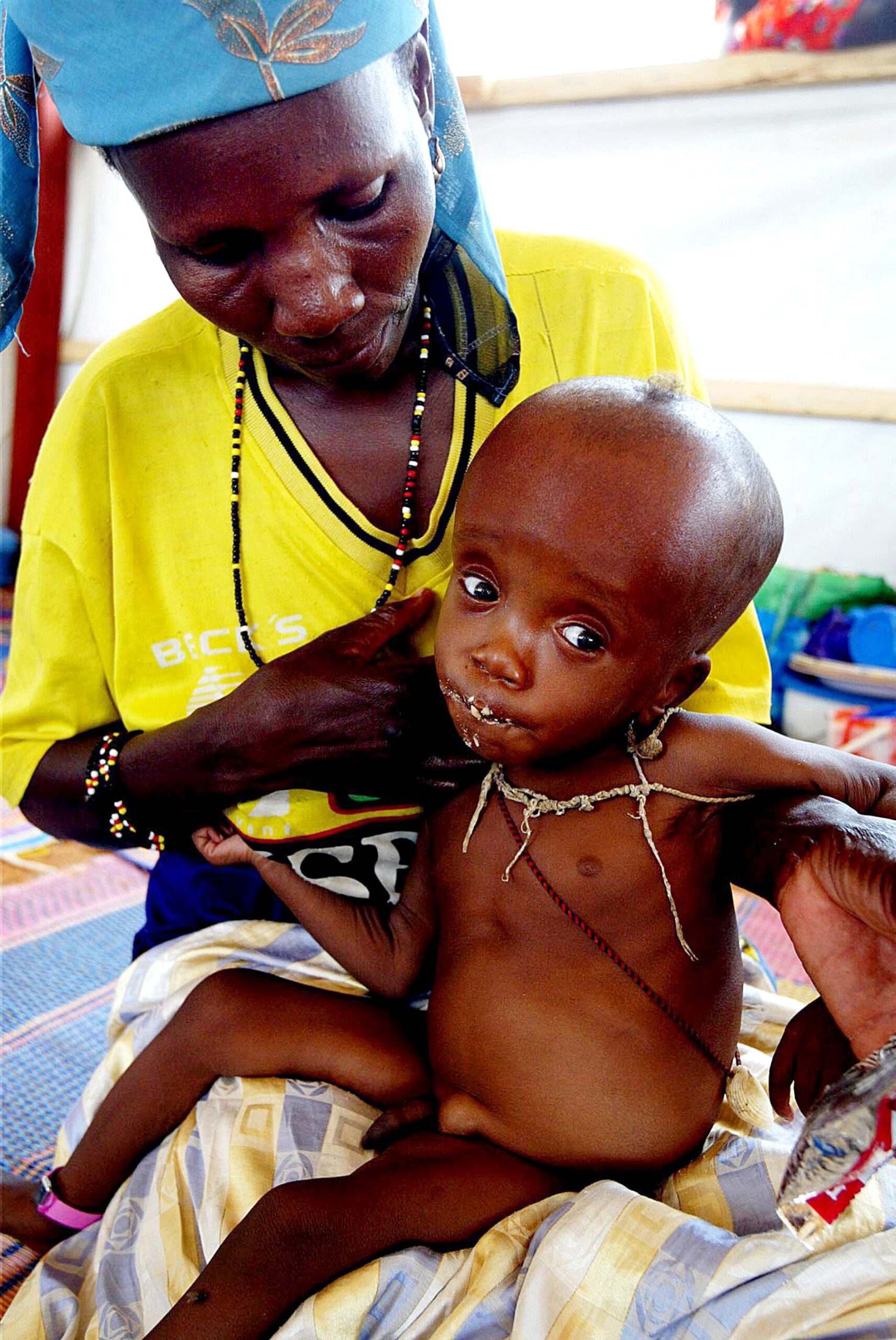
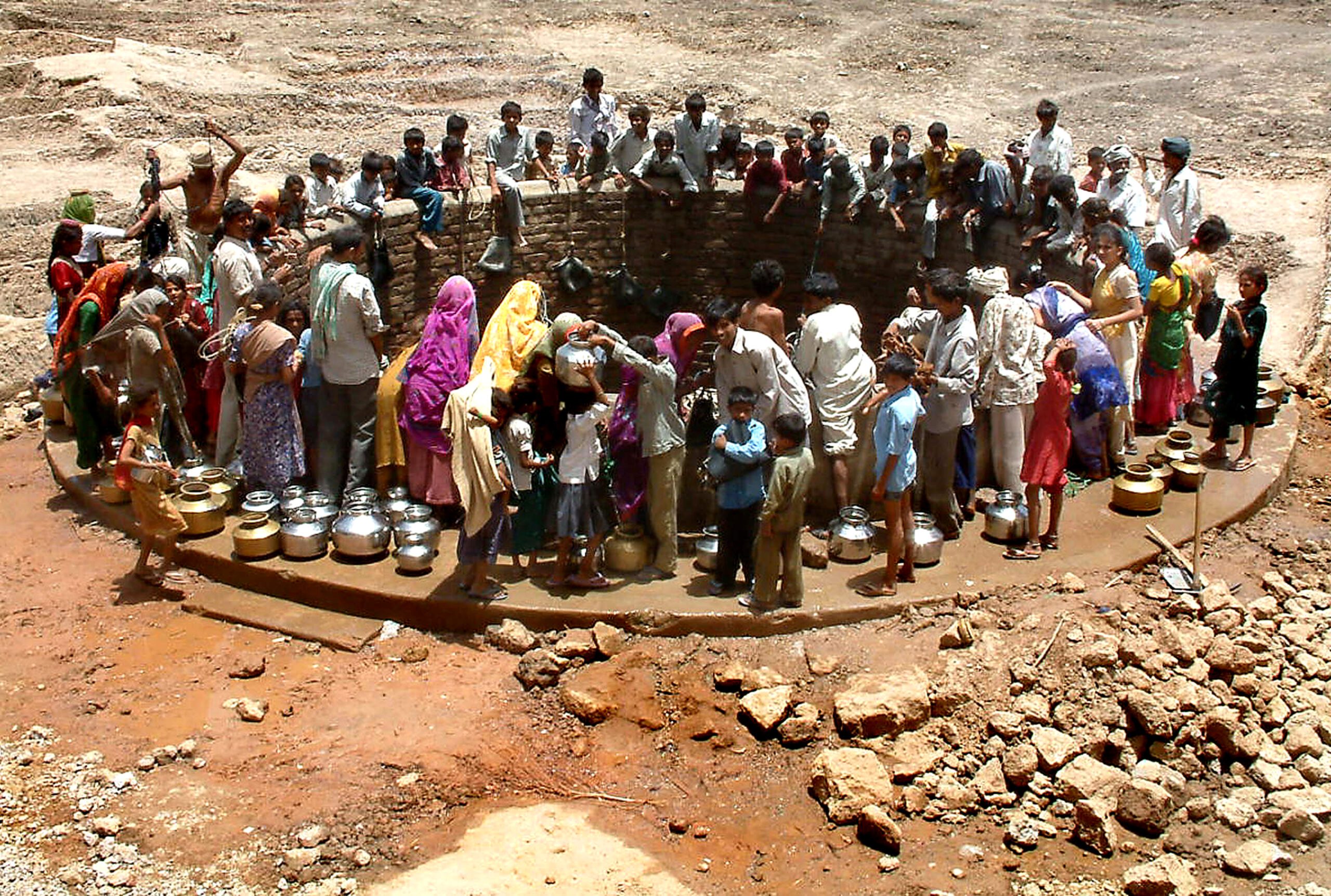
In this year’s UN report on the World Water Situation, it is stated that 1,100 million people in the whole world do not have access to the supply of quality water, that 2,600 million people do not have access to sanitation and that “in many regions of the world, the quantity of available water is diminishing and the quality is worsening.” That is, only with difficulty can the announced Millennium Development Goals to reduce to half the population that does not have water or sanitation be accomplished by 2015.
THE BAD EXAMPLE OF THE RICH
In the recently published report entitled: “Rich Countries, Poor Water,” the global environmental conservation organization — WWF — analyzed the situation of water resources and water usage in a series of developed countries and reached the conclusion that they are also going through a “water crisis.”
Summing up, we give here some of the conclusions that the study reached:
The United States has the most wasteful water consumers of the planet. Many areas of the country are using more water than can naturally be replaced, a situation that is aggravated by low rainfall, the evaporation increase and the changing patterns of snow melting. Salinity is threatening important irrigation areas and the contamination level of the water sources is a matter of concern.
In Japan, contamination of water sources, including the underground ones, is highly worrying. In spite of high rainfall level, some cities have surprisingly low water levels per capita. In the cities, flood periods can alternate with other periods of water scarcity.
In Europe, the countries facing the Atlantic suffer repeated droughts and the explosion of the irrigation agriculture puts in danger the water resources of the Mediterranean. Contamination of water resources is more serious in East Europe and the problem has not been adequately faced.
Australia, already a very dry continent, runs the risk of becoming even more arid, with the decrease of rainfall in the last decades. Almost all the cities have adopted restrictive measures regarding water consumption. Salinity is a threat to a great part of agricultural areas, and even to the drinkable water of some cities.