
Your Eminence, how do we build peace in a global village where there are still many situations of sorrow and despair?
We must bear in mind that “He, Christ, is our peace” (Eph 2:14). A fundamental element for building peace in today’s world is the recognition of the essential equality of human persons springing from their common transcendental dignity. In this perspective, the extremely grave deprivation afflicting many parts of certain geographical areas I have visited during these years as President of the Pontifical Council Justice and Peace can only be healed by listening to His Word, a Word of Love and Reconciliation. We read in the Holy Scripture that “God created man in His own image, in the image of God, He created them; male and female He created them” (Gen 1:27). It means that each human being has a divine dignity, the dignity of a person. He or she is not just something, but someone, capable of self-knowledge, self-possession, free self-giving and entering into communion with others. This is the kind of awareness we must spread everywhere in the so called “global village.”
In this perspective, does Africa constitute a priority in the work of the department you head?
Before being appointed President of the Pontifical Council for Justice and Peace, I was Permanent Observer of the Holy See to the UN for 16 years. During that period, I reached the conviction that Africa is a forgotten continent, that nobody bothers about. And because of that, it was my intention, as soon as I was installed in Rome, to work for Africa, to make noise for Africa.
THE FORGOTTEN WARS
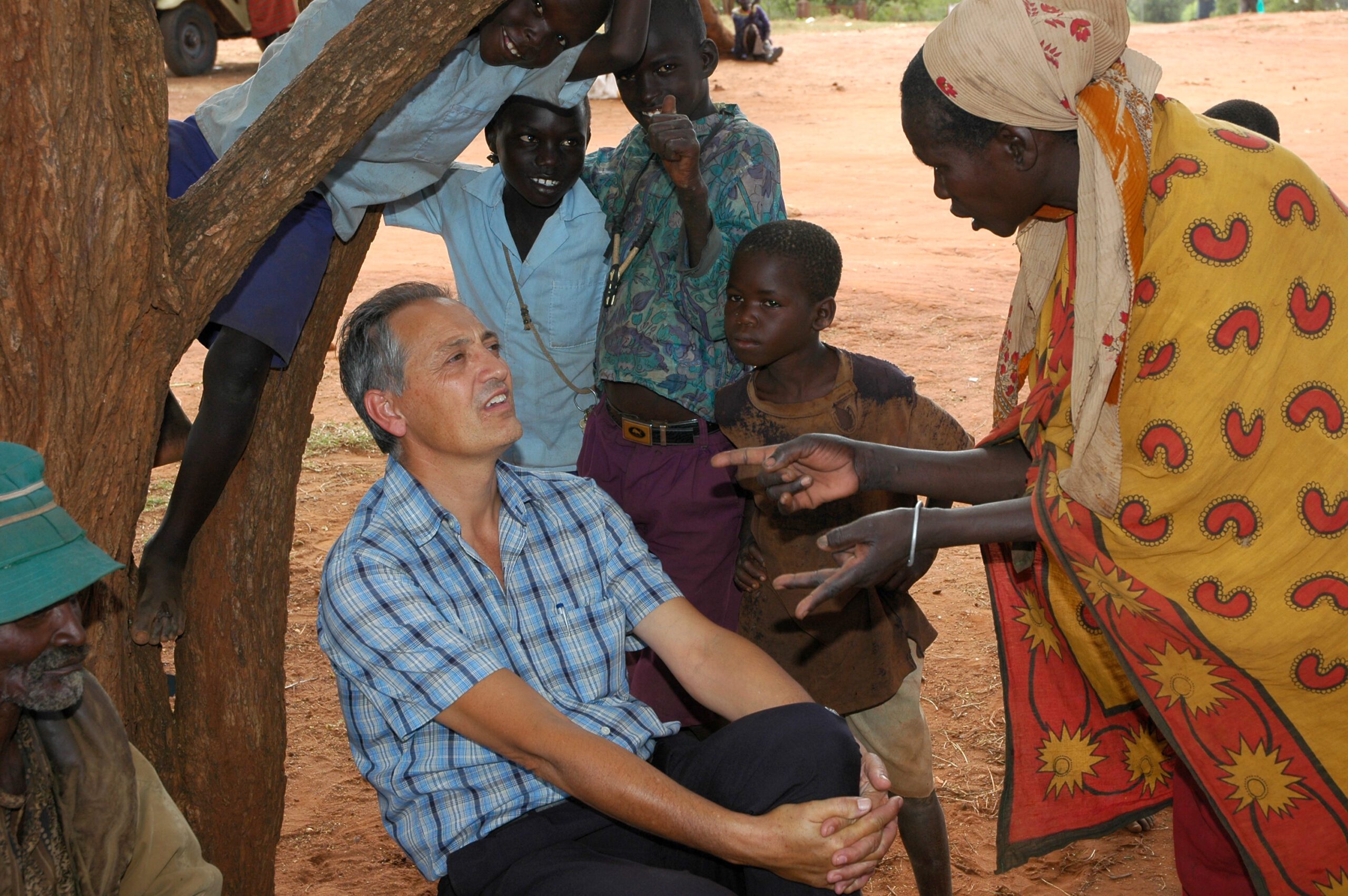
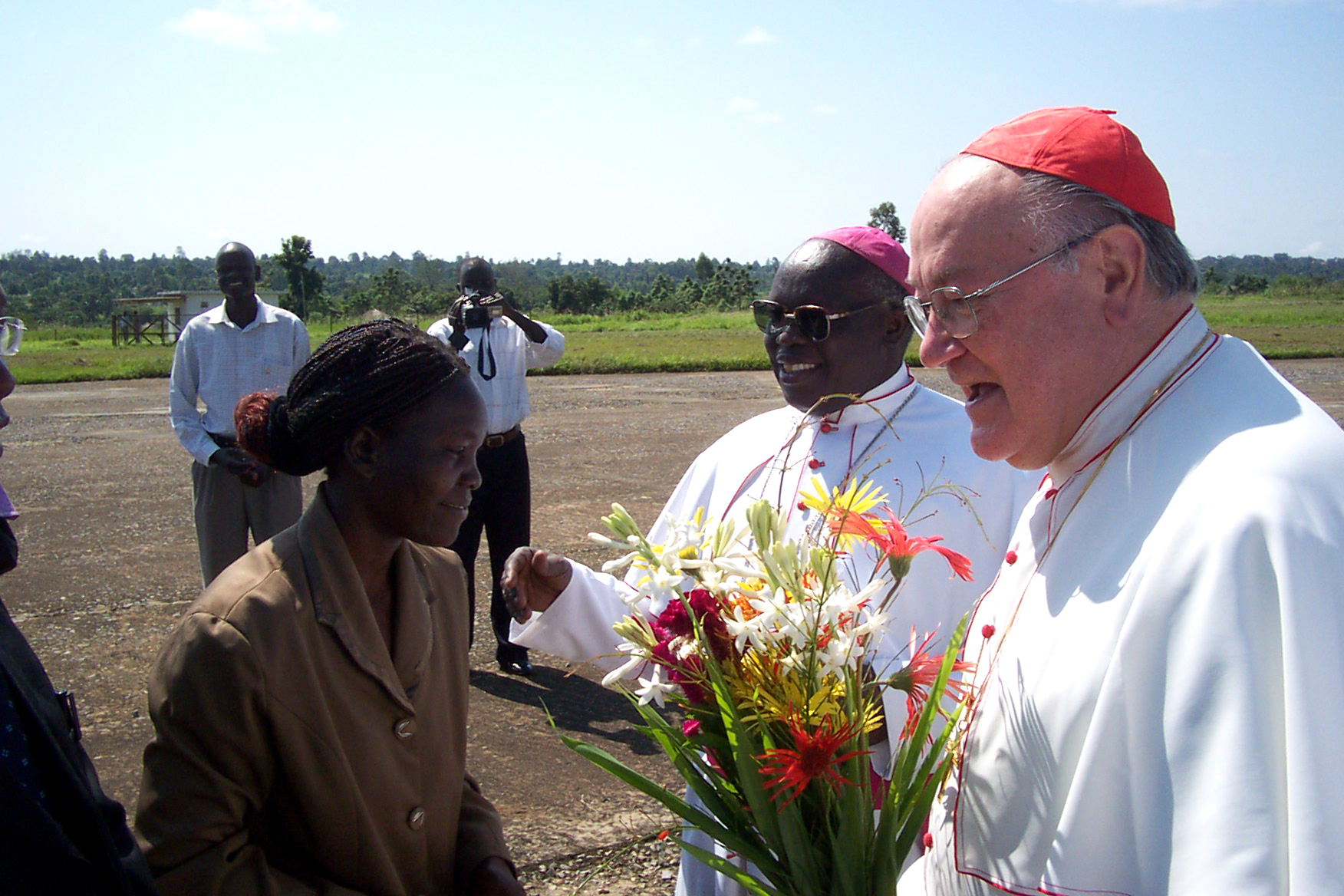
Last August you visited the displaced camps in Northern Uganda. What message have you delivered to the Acholi people who have suffered a lot during the civil war?
I was there in an attitude of sincere Christian solidarity. We prayed together for the progress of negotiations between the parties, in order to hasten the end of that cruel conflict which has even seen numerous children enlisted and forced to become soldiers. This would allow the many displaced persons to return home and to resume a dignified way of life. As far as their humanitarian needs are concerned, we should note that the organizations dealing with the displaced people deserve greater support, so that they can be equipped to provide protection and assistance to the victims. Another concern which looms even larger is that of the rehabilitation of the former rebels into mainstream society by developing the capacity of NGOs and community-based and Christian organizations to identify, raise awareness of, and respond to their specific needs. There is no doubt that the difficulties of tracing family members, and the rejection of child soldiers because of their former status as combatants, are just some of the challenges that stand before their families and communities.
What do you think of the role played by the international media in Africa?
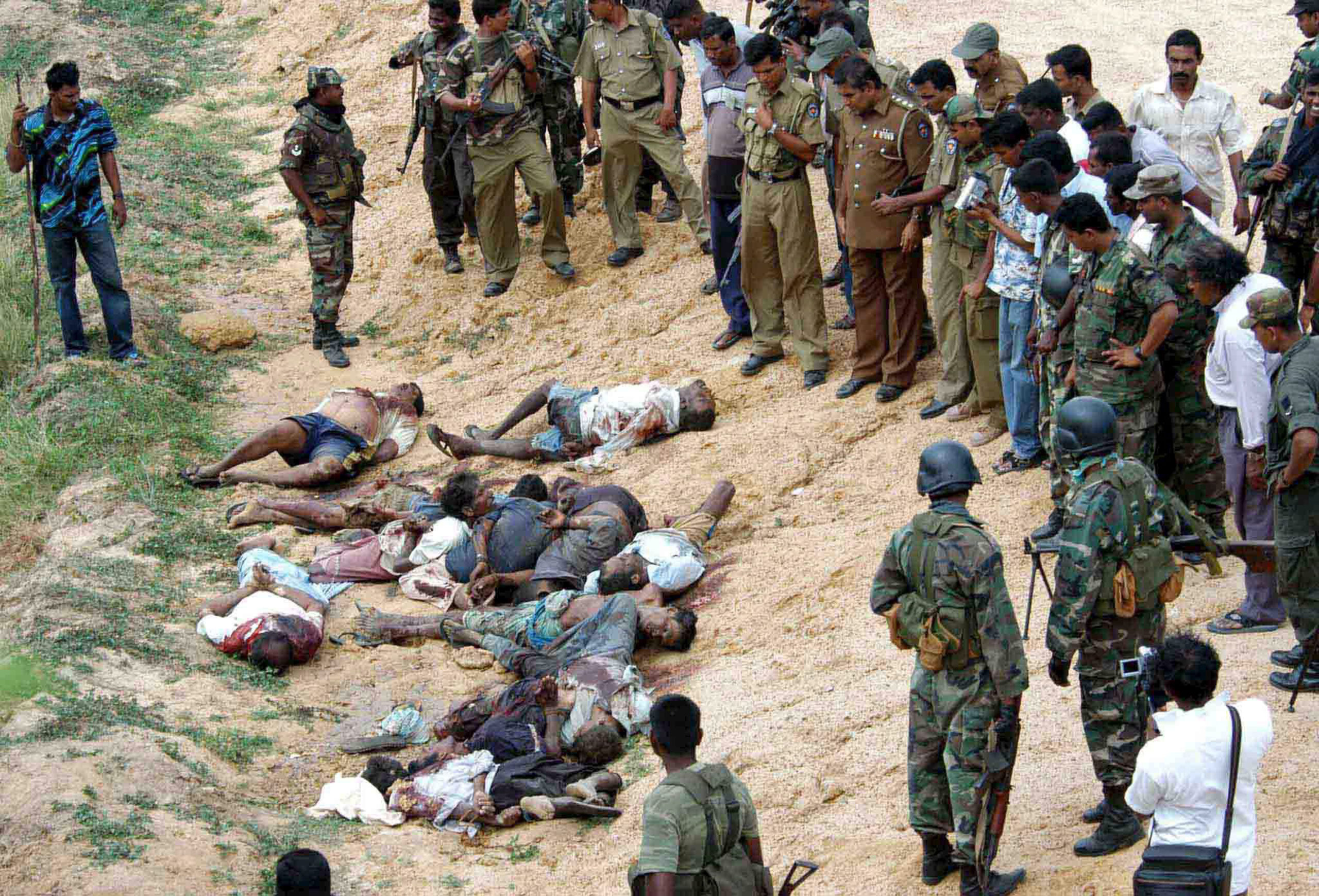
During these years, Africa has been the continent that suffered most because of the so called “forgotten wars” that very seldom are decently covered by the foreign press. The war in Uganda is one of these, a sort of “second-class war” in comparison with other conflicts fought in other parts of the world, like in Iraq or Afghanistan. I invite all those concerned to act with determination to give voice to the voiceless everywhere. We cannot accept that the international media would keep ignoring the innocent people slaughtered on the altar of human selfishness. At present, the situation in Uganda is better because the rebels have withdrawn on the other side of the border in Sudan, not far from Congo, and the negotiation between the Government of Kampala and the rebels is bearing fruits… But please, let us not forget that there are still fightings in Somalia, Darfur and in other African countries…
Are the wars mainly fought because of economical interests in the Black Continent?
For sure… You know, in Africa there are plenty of raw materials − gold, diamonds, steel… − which have paradoxically become a curse for certain countries…
NO MORE PROMISES
What do you think of the Millennium Goals focused on eradicating hunger and poverty, achieving universal primary education, promoting equality between men and women, reducing child mortality, improving maternal health, combating AIDS and malaria, protecting the environment and developing a global partnership for development?
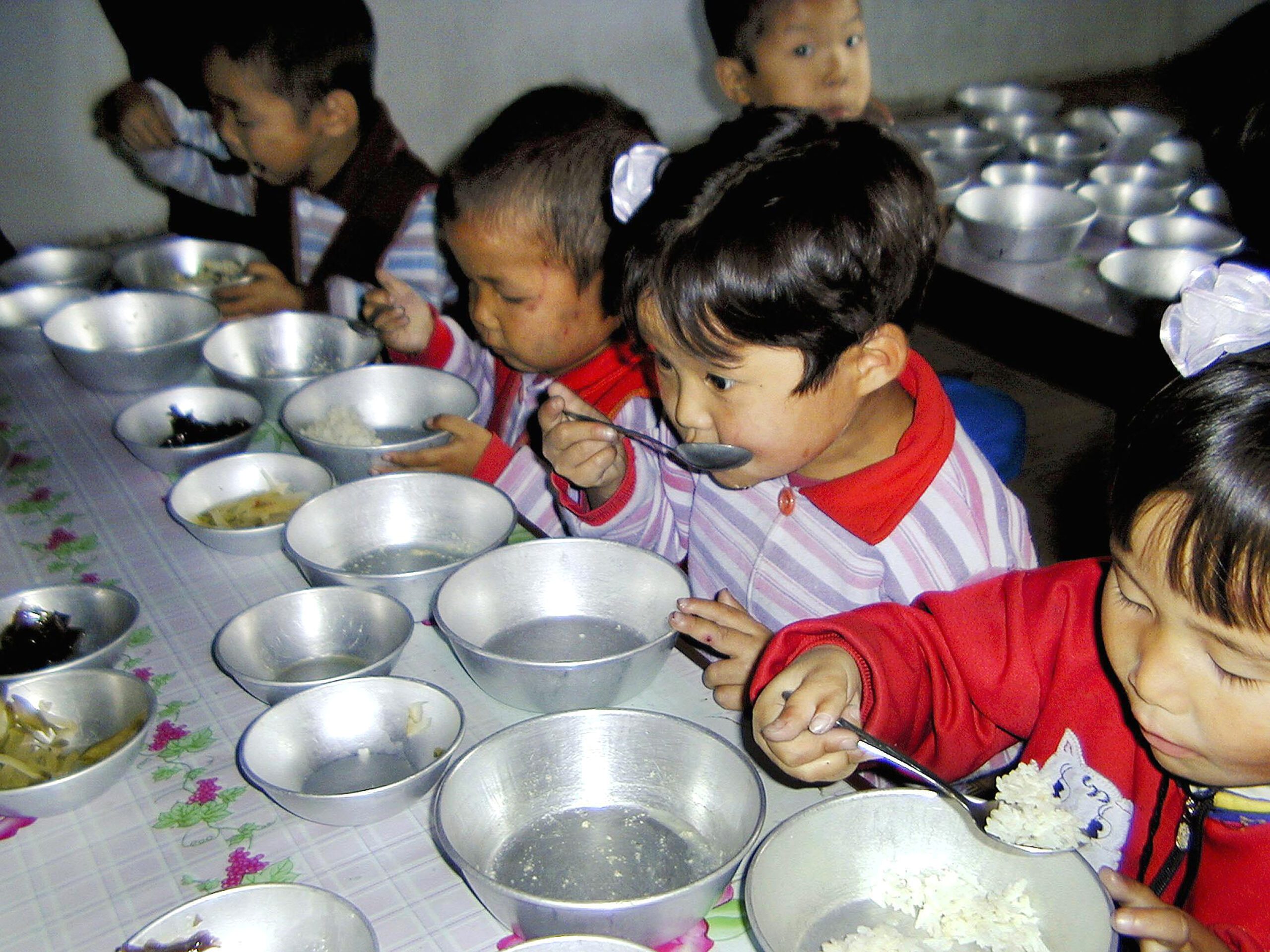
We must shift from words to deeds, looking at the Millennium Developments Goals as something that can be achieved with commitment and goodwill. After all, the time for simple promises has passed and I fully support the recent call from the new British Prime Minister, Mr. Gordon Brown, to mobilize governments, business and faith-based organizations in a bid to cut poverty. Saying that it is time for change, Mr. Brown has called for an international United Nations summit in 2008 to pressure governments to meet their commitments for reducing poverty and promoting development. When most nations of the world signed on to the Millennium Development Goals in 2000, it was believed that 15 years would give governments sufficient time to mobilize efforts to meet the goals. There is no doubt that some progress has been made in some areas which should be applauded. However, even with limited progress, governments must continue striving for more, especially on health, education and the eradication of poverty. Governments have repeatedly pledged to dedicate the equivalent of 0.7% of their GNP to the Official Development Assistance (ODA). If that pledged target amount were achieved, a total of US$192 billion would be made available annually, instead of the US$78.6 billion presently being made available. A new starting point, built upon renewed political will, the mobilization of efforts and resources and the shaping of a true, recognizable and viable global partnership for development should be welcomed and fostered by everyone.
In Uganda, you met, in the Cathedral of Lubaga, with the Bishops of the local Catholic Episcopal Conference and, at the Ggaba National Seminary in Kampala, you opened the International Young Catholic Students’ (YCS) Council. In both meetings, you spoke about the Compendium of the Social Doctrine of the Church…
Yes, because it is an extremely important document for the Mission of Christ in the global village. It offers a complete overview of the fundamental framework of the doctrinal corpus of Catholic social teaching. Faithful to the authoritative recommendation made by the late John Paul II in No. 54 of the Post-Synodal Apostolic Exhortation Ecclesia in America, the document presents in a complete and systematic manner, even if by means of an overview, the Church’s social teaching, which is the fruit of careful magisterial reflection and an expression of the Church’s constant commitment in fidelity to the grace of salvation wrought in Christ and in loving concern for humanity’s destiny.
There is no doubt that the “missio ad gentes” witnessed by many missionaries in Africa and in other parts of the world can find in this Compendium a fantastic source of inspiration.