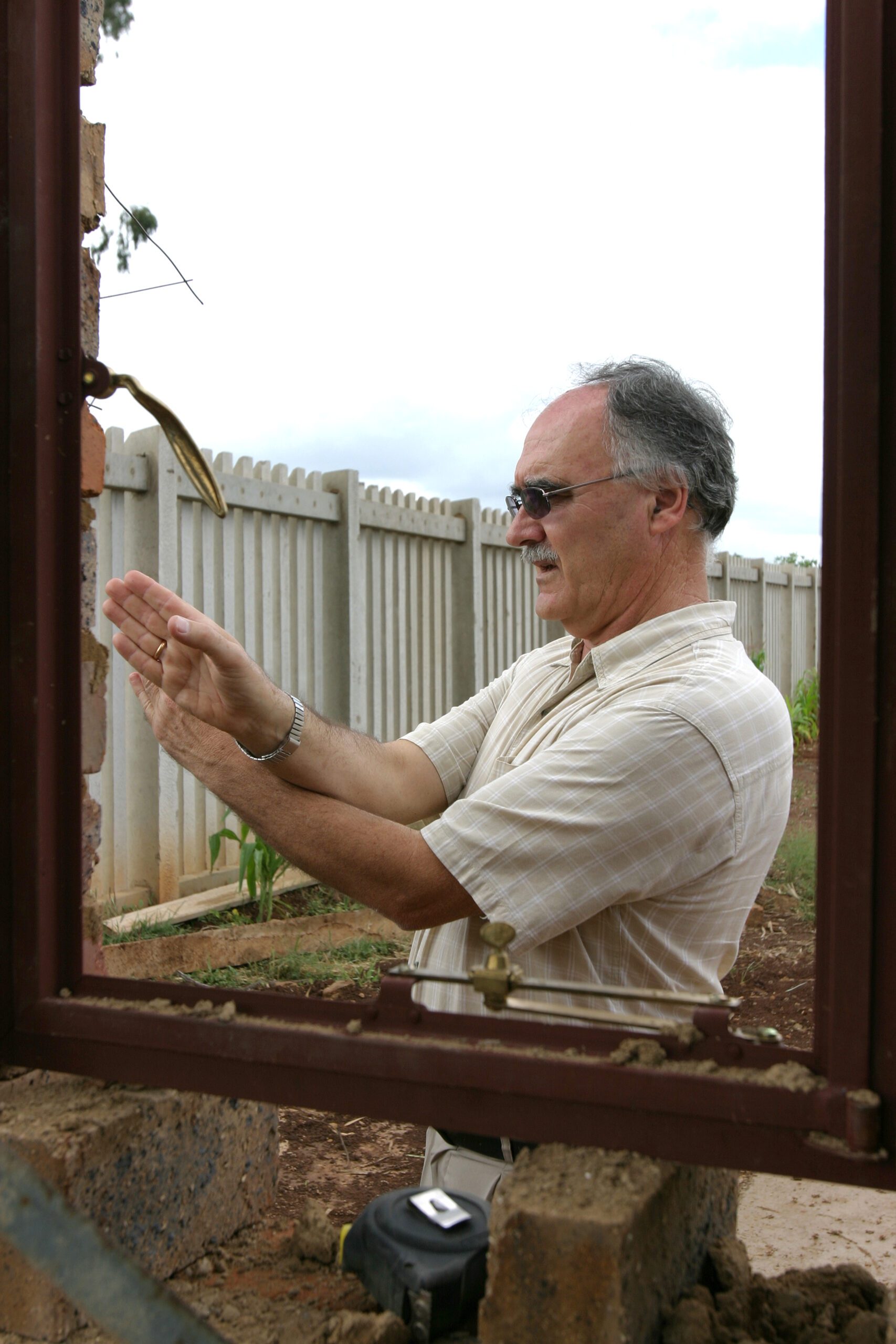

A few kilometers from a small trading centre in the middle of the vast Maasai plains stretching towards the snow-topped peaks of Mount Kilimanjaro, Fr. Karl Oberprantacher supervises the building of a Maasai cultural center. Progress has been slow but steady. A lecture hall, library, and accommodation for staff all built in the form of a quadrangle will soon be finished. Accommodation for course participants is still in the pipeline.
In many ways, it seems incongruous to situate an ambitious project like this one ‘in the middle of nowhere’ far away from any significant centers of population. The place’s name ‘Oltépési’ i.e. ‘thorn tree’ couldn’t be more appropriate for, apart from a few Maasai dwellings and a water hole, thorn trees are about all that you find there. Fr. Frans Mol, a renowned expert on Maasai language and culture, with among other publications, a well-researched dictionary and grammar to his name, originated the idea of building this center right where the Maasai roam the plains with their herds of cattle, goats and sheep. Those who would come to the center would be able to observe firsthand Maasai culture and traditions, mingle with the people, try out their knowledge of the language. The ready availability of clean drinking water and the promise of electricity helped to tip the scales in favor of Oltépési.
SENSITIVE EVANGELIZATION
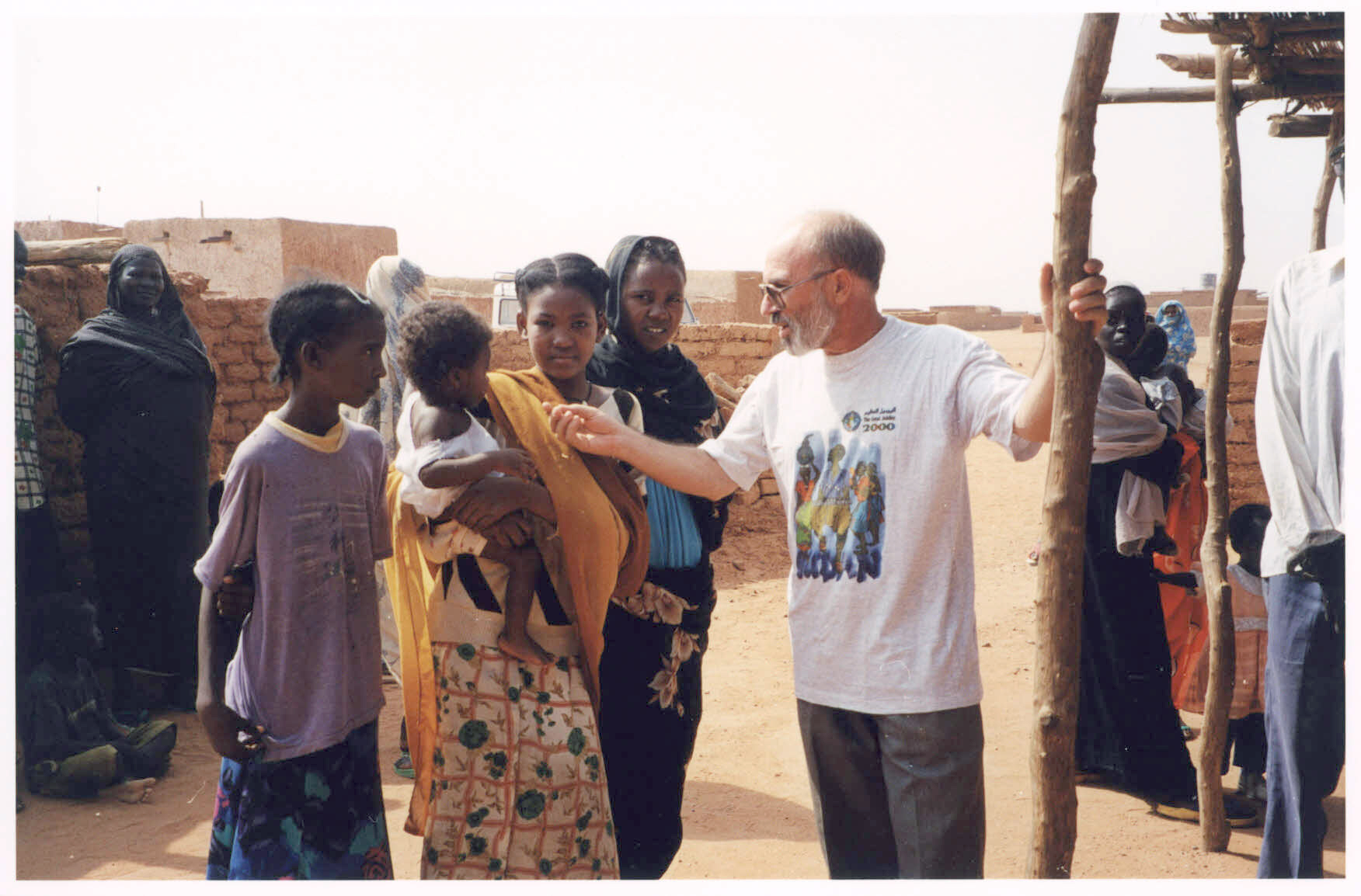
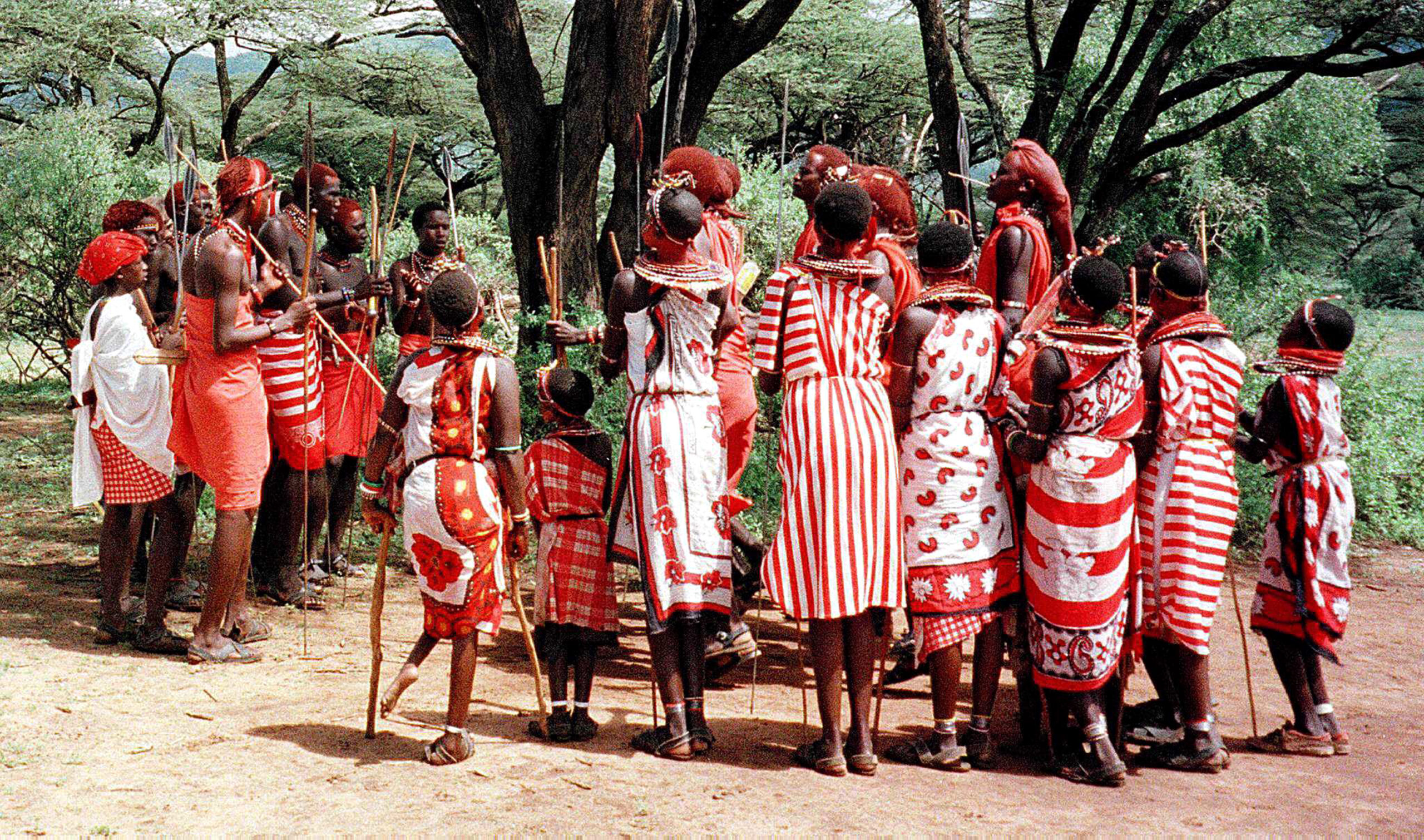
No doubt this center is called to play a significant role in the preservation and study of Maasai culture and pave the way for culture sensitive evangelization. For many, the world over the word Maasai conjures up images of beautifully adorned African women in colorful traditional dress and tall proud ‘warriors’ in red ‘shuka’ cloths herding cattle or performing traditional dances. In East Africa, the Maasai form part of a huge cultural entity which stretches all the way from beyond Mount Kilimanjaro in Tanzania to cattle herding peoples in North Western Kenya, Northern Uganda, South Sudan and Ethiopia. Most of these stand out by their tenacious adherence to age-old traditions and a time- honored way of living which leaves them on the margins of the modernizing influences that sweep Africa as they do elsewhere.
When I visited Oltépési recently, I accompanied Karl to the house of the local chief where we found the entire group of clan elders gathered together feasting on roasted cow meat. It was all part of the elaborate traditional ceremonies surrounding the circumcision of the next age group of young men and boys which had taken place the previous week. Such ceremonies as these sustain and assure the handing on of the cultural heritage.
But culture is never static. And Africa is changing fast. Will Maasai culture be able to survive the onslaught of globalizing influences? Exploring the surroundings of the Maasai Cultural Center I bumped into Joshua, a young educated Maasai, who invited me for a cup of tea with his family at their ancestral home. He told me he was the area officer for voter education and had been going around the Maasai communities talking about the upcoming elections. “How do you translate the word ‘democracy’ into our Maasai language,” he wondered aloud as he talked about his work. “What advice do you give people?,” I asked. “I tell them to vote for someone who will promote development. We want more schools, better education!”
TO RAISE AWARENESS
Not surprisingly, here, too, education is a major motor for change. Educated young people often migrate to the towns in search of employment and feel progressively alienated from their traditional background. Modern media such as radio, TV, mobile phones as well as intermarriage among tribes are all transforming the cultural landscape. So how do young people in these areas experience the present transitions? What do they want? To find out more, Hans Stoks, a Dutch cultural anthropologist with extensive knowledge of the Maasai language and culture, and Paulo Múréró, a Maasai schoolteacher and catechist, who together form the staff of the Maasai Cultural Center, had invited a group of secondary school pupils to a week-long ‘holiday camp.’ During this time, they explored issues of culture, tradition and modernity, learned to write their own language and discussed proverbs, riddles, cultural practices. For most of these youngsters, the seminar was an occasion to rediscover their own heritage. As Hans put it: “They all know English, speak the national language Kiswahili, but are losing their mother tongue!”
If Hans gets his way, the Maasai Cultural Center will organize many more such holiday camps for young people to raise their awareness of the rich cultural heritage that is theirs. And once it is fully operational, the Center will offer courses for pastoral agents − expatriate missionaries, local priests and sisters, catechists − focusing on language learning, and cultural familiarization. The translation of liturgical texts and inculturation − situating the Gospel in Maasai culture − will also be an important part of the ambitious program. An excellent, well-furnished library stands at the disposal of the participants.
A LONG WAY TO GO
But will this noble effort bear fruit? Should the aim be preservation or guided transformation? In the face of often aggressive evangelization by Pentecostal groupings which largely ignores cultural sensitivities, the Catholic Diocese of Ngong wants to make its contribution to helping the Maasai find their dignified place in modern society and in the Church. Doubts remain about the commitment of the local African clergy, many of whom are non-Maasai, to the project. To get a clearer picture of what people want, their prevalent needs and desires, the staff of the Cultural Center is preparing a feasibility study. This poll, it is hoped, should make it possible to map the way ahead.
“As we send our children to school, let us teach them about our culture,” I heard a Maasai elder say expressing the present predicament of his people. The survival and harmonious integration of Maasai culture into modern society and the Church is a wager that is far from having been won.