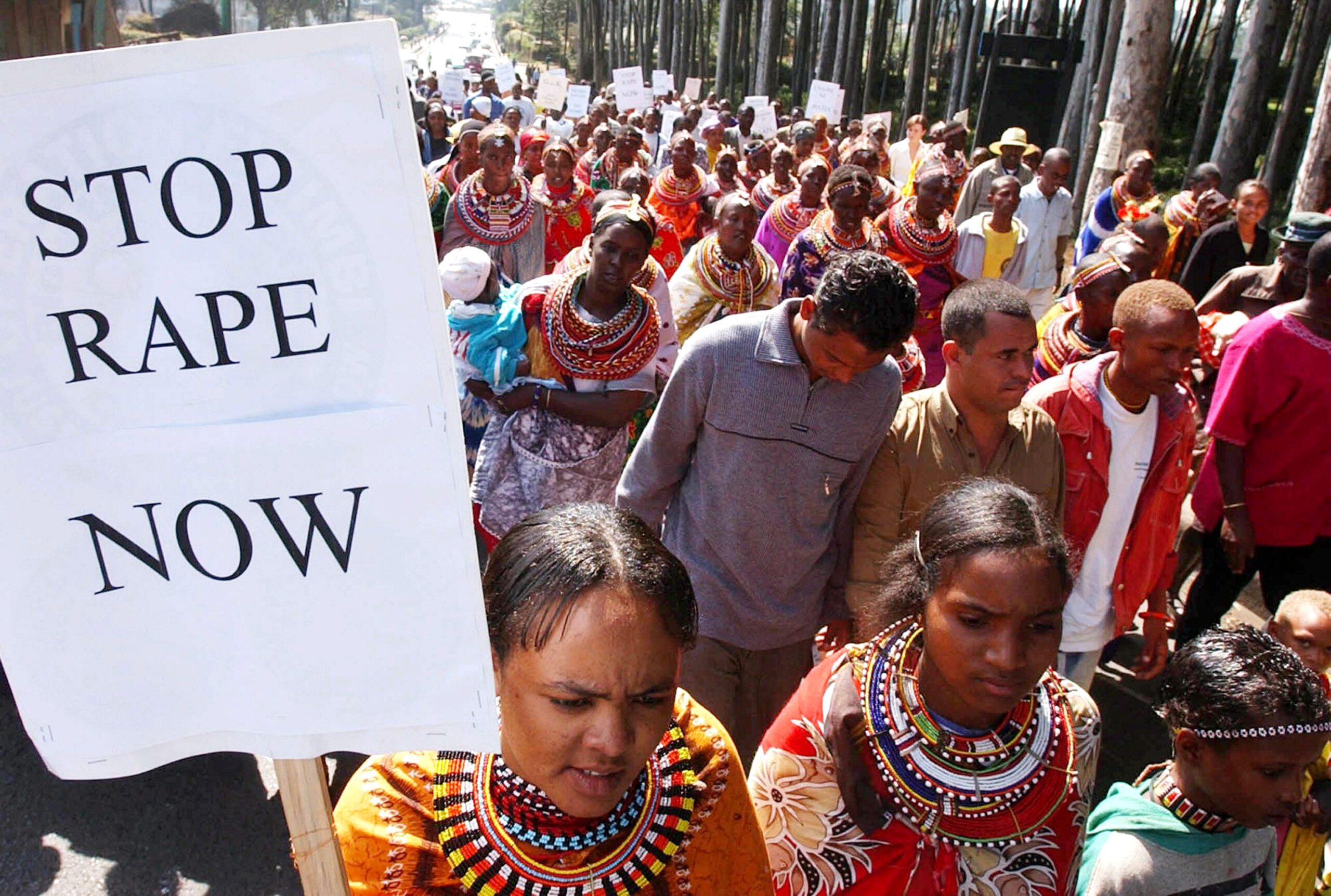
“A man defiles her underage daughter.” “Minor defiled by a neighbor.” “An eight-year-old girl is gang-raped on her way to school.” These were some of the newapapers headlines in Naivasha, a small Kenyan town that has, in the recent past, earned notoriety owing to escalating cases of rape, defilement and incest. Hardly does a week pass without an incident.
But one woman’s efforts are now paying off. Rahab Wairuri is the director of Naivasha Disadvantaged Support Group (NADISGO) which was started in 2003. The group has been involved in advocacy and educating Naivasha residents on the importance of reporting sexual offenses. “We educate the residents on the importance of breaking the silence when one is offended,” says Wairuri. She says the number of sexual offenses has been on the rise in Naivasha, but thanks to NADISGO, the number of cases being reported has also gone up. “When NADISGO was formed, we focused on the Children’s Act that had just been passed and educated the public on its benefits,” says Wairuri.
FIGHTING SHAME AND FEAR
She says it was while doing advocacy on the Children’s Act that they realized women and children were suffering in silence. “Mothers did not know what to do after finding out that their husbands had defiled their daughters,” she says. The women, she adds, were afraid to report the grave misdeeds in order to save their marriages. Others found it too shameful to report the sexual abuse as they would be the “talk of the town.” Some victims also feared reporting their assailants as they knew, sooner or later, they would be released by law enforcers. “There was also ignorance in the procedure. They thought that when the assailant had been arrested, taken to court but granted bail, he was acquitted of the charge. The victims, therefore, resort to keeping quiet lest they are attacked again by the same individual,” she says.
Once freed, some of the assailants so bragged to villagers about their release that the victims got scared and kept their silence. “I realized that there is an urgent need for more advocacy so that victims can overcome the fear of reporting when they are sexually assaulted,” she adds.
PREVENTING HIV
In 2004, NADISGO changed its strategy and started educating women on issues of rape and defilement. Wairuri and her colleagues embarked on a school-to-school education of what the law says about sexual offenses, the penalties and the importance of reporting the cases. They also attended barazas (meetings) organized by chiefs and soon people started coming out. People did not know also the importance of getting help within 72 hours after being raped. “If a victim is raped or defiled, they can get treatment that helps prevent contraction of HIV/AIDS within the 72-hour ‘grace’ period,” she explains.
Again, people did not know the procedure of reporting cases. The Ministry of Education came to the rescue by giving them permission to talk to pupils and students against sexual crimes and what to do if they become victims. People learned to break the silence and soon started seeking help from the police. NADISGO also took up the task of assisting victims in reporting to the police and taking them to a hospital for examination and treatment. “We also follow up cases until they are taken to court and, at times, assist victims at the court as most of them do not know the procedure,” she says.
Wairuri says that, last year alone, 180 defilement, 90 rapes and 16 sodomy cases were recorded in their offices. She is happy that the culture of silence in previous times has been broken. People are now aware and in some areas, the communities are helping the victims seek help. “If a family keeps quiet about a case of incest, you would find neighbors intervening and reporting the case to the police. Even in schools, pupils and students are more aware of sexual offenses and make a report as necessary,” she says.
BREAKING THE STIGMA
“People are now talking openly about sexual offenses and this helps break the stigma initially associated with it. Girls have learnt to report if their fathers or brothers molest them,” says the 38-year-old mother of two.
But the fight against the crime has not been without opposition. Wairuri recalls of an incident last year when a local politician and provincial administration representatives approached the group and asked them to go slow on the issue as they were scaring away investors. Naivasha is the hub of flower farms in Kenya and the politician was not happy due to the negative publicity the town was getting. “I told them that we would not stop. The fight against rape and defilement is more important than people coming to start business here,” she says. Wairuri believes that the war of sexual crimes can be won in Kenya if the culture of silence is broken. “If people stop keeping quiet when they are raped or defiled, the war can be won,” she says.
Wairuri is a plump woman with an easy smile, the opposite of the stereotyped enraged feminist. She believes in the basic goodness of human beings, and that such crimes are fostered by the inhuman conditions of life for the majority of people working in the flower farms.
“This is a journey of a thousand miles that has to begin with a step. With the improvement of the conditions of the workers and their growing awareness of their dignity and the dignity of their children, sexual crime, in the near future, will completely disappear. Thus, women and girls can finally live without fear.”