

Mary Josephine, nicknamed “Jojo,” 50, defines dialogue with creation as “a continuous way of discovering God’s gifts and caring for them in the most natural way, using the four laws of nature: everything is interconnected, everything goes somewhere, nothing is free and nature has always the last say.”
And she adds: “Everything comes from God and has a reason to exist. We have to use, not to abuse, what God gives us, in a friendly manner. This leads to harmony with creation. In nature, everything is alive. This should be labeled ‘living agriculture’ that is more than sustainable. It makes things more beautiful.”
Jojo studied agri-business, farm management and agriculture economics. She learned biodynamic and sustainable agriculture in the University of the Philippines. Then, endorsed by the Good Shepherd Sisters and supported by her family, she made further studies in New Zealand and Australia. She is a representative of the Filipino Biodynamic Agriculture Research Foundation.
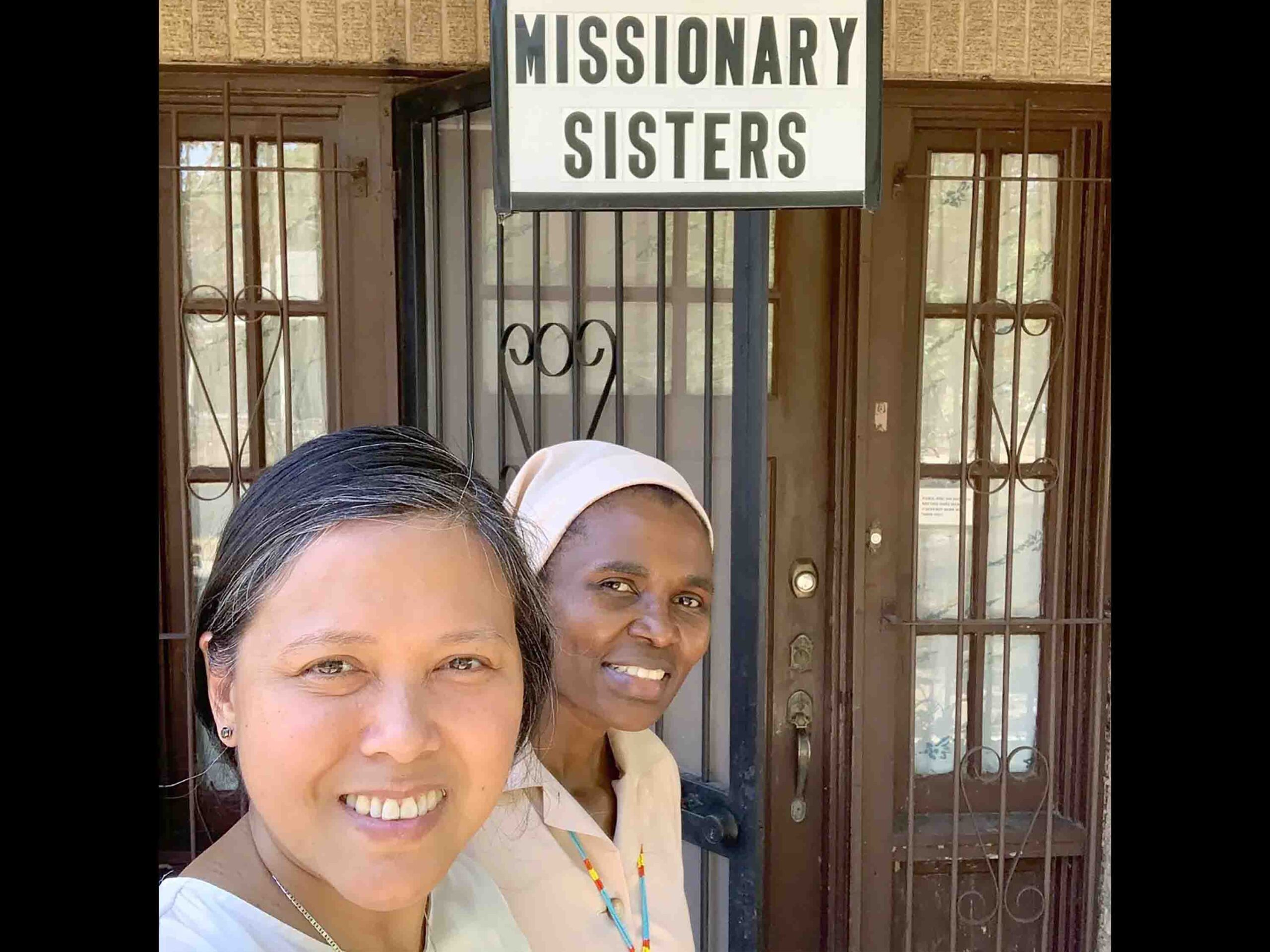
Before coming to Harmony Village, she was working as a lay missionary in Tiaong, Quezon Province, with ex-Good Shepherd nuns. But she had to leave the place. Her house was burnt down and, thought to be an NPA, she was under police surveillance. Part of the confusion comes from the fact that she had short hair and used to ride on a motorbike. They even thought she was a Father – “Father Jojo!”
In that way, the place lost a roving technician consultant for sustainable agriculture. Then, through Sister Marion, she joined Silsilah. “I was attracted to Silsilah because of their quest for harmony,” she admits.
Now, she is training Silsilah farmers in sustainable agriculture, ecological waste recycling and management, production of organic fertilizers and natural pesticide, and following up their activities. She tries to combine indigenous knowledge (about cosmic rhythms and natural energies) with scientific discoveries. “We have to form the consciousness of farmers before we farm the soil, that is to transform their hearts,” she observes.
Besides that, she is researching, identifying and collecting indigenous herbs and plants endemic to Zamboanga region and which might be important to health, nutrition and well-being of all creatures.
EMPOWERING FARMERS
After winning the opposition of some barrio captains who probably wanted to take advantage of some government funds, Silsilah managed to establish a cooperative in the uplands, in March 2004. The aims were: to pursue dialogue with creation; save small-scale farmers in risk of losing their land and becoming workers – slaves – of big corporations; and save the existing watersheds by impeding the continuation of mining activities.
Fr. Sebastiano explains that the area, rich in minerals, is like a buff area between two watersheds – Pasonanca and Ayala. Pasonanca watershed, 7 km north of Zamboanga, is about 10,000 hectares and it is quite developed and protected because it is the only source of potable water for Zamboanga City. Ayala watershed is on the way to be protected, but there is a mining threat: foreign investors visit farmers often to entice them to sell their rights to land and give up farming.
The existence of the cooperative is a deterrent to restart operations. Farmers know by experience the harm mining causes to their fields. A Japanese mining firm (Zambales Base Metals, Inc.) operated in the area between 1972 and 1982. The chemicals they were using to separate the minerals – cyanide and mercury – seriously contaminated water and rice fields.
The threat resurfaced recently: a company was about to receive the permit to operate again. Through a strong campaign against mining in that area and the constitution of the “friends of the watershed,” Silsilah was able to stop the process. But, they are aware that they have to be vigilant, because politicians are cunning in finding loopholes and playing with words (for instance, considering that there’s only a “small-skill mining which does not destroy nature”) to achieve their purposes.
Edwin Hipolito Francisco, 43, is the president of the Silsilah-sponsored cooperative, called Bayanihan del Siembradores. (Bayanihan means working together in a harmonious way; Siembradores is Chabacano for farmers.) It already includes around 200 farmers. They produce organic vegetables and fruits, using green and cow manure. They don’t use chemicals and pesticides that kill also the good worms and they don’t practice field burning.
He explains that organic products are nicer, tastier (sweeter), healthier and even last longer. Their organic farm products are brought and sold in a store (Tienda del Harmonia) set up in front of the entrance of Harmony Village.
Silsilah started a school (Escuela del Siembradores) in the mountain where farmers meet and they share their experience and results with other farmers. They are preparing a curriculum for them. Farmers are divided into sectors and neighbors are learning from their example. Their farms are like a laboratory where they experiment new methods and techniques. Besides, there’s a demonstration farm. In this way, the school goes to the farm and the farm goes to school. More and more they are called to share their knowledge and train other farmers in universities, like in the Ateneo de Zamboanga.
Peasants’ skills are improving by strides and their dignity is being restored. Jojo is proud of what has been achieved so far: “Our farmers are becoming researchers, scientists. We empower them to become technicians, barefoot trainers and managers. Now they are proud of being farmers. We are restoring their dignity.”