Anger and violence have become the national song today in many parts of the world, the group anthem of social organizations. Aggressive attitudes are being pumped into community bloodstream in diverse places. They are fast becoming part of our collective culture. Prejudices are planted, the “killer instinct” is cultivated, and a vengeful attitude is viciously fostered. Vendetta politics rules nations.
It is emotion that drives society today, not sound reasoning. Money-makers provide the resources for rashness when it can be turned to their advantage. Populist leaders play on the religious or the nationalistic sentiments of the masses to promote their own political goals.
Social zealots tap the resource of a community’s resentment to further their ambitions. Justice fighters breathe fire and fury against the elite, proclaiming a philosophy, “You fight fire with fire”. Collective anger has become more widespread than Covid, carrying away millions.
LESSONS FOR US
“I prefer the most unjustest peace to the justest war that ever was waged”. Cicero wrote to Atticus. He was very perceptive when he said these words, because he was living during one of the bloodiest periods of Roman history. He had seen violence at close quarters. Those who have been in the middle of events in a brutal war have witnessed some of the ugliest dimensions of human nature. They ask themselves from time to time whether they had ceased to be human beings for a while. It is the harshest question one can ask oneself.
Apart from individual cruelties in war, war itself is suicidal. The Persian Empire had vast possessions. But the emperors were not satisfied until the Greek cities too were brought under their control. The Greeks resisted. They defeated the Persians at Marathon, Thermopylae and Salamis. Alexander, going further, pushed them back to their very capital, carrying all before him even up to India. The Persians lost even their homeland. Herodotus warns us against such folly.
It was the Peloponnesian War between Athens and Sparta that ruined Greek civilization. It was a conflict between neighbours. Lost in her self-importance and proud of her democratic traditions, Athens was determined to teach autocratic Sparta a lesson. But she destroyed herself. Thucydides describes the war at length. He had served in the Athenian army; so had Plato. Pride showed itself futile!
Similarly, the two World Wars turned out to be the “collective suicide” of Europe. A continent that controlled over 90% of the political space of the world drove themselves to total helplessness by the end of the two Wars. They were able to stand on their feet again only with American help. We have learnt nothing from these negative experiences.
Francis Fukuyama, an American political scientist, points out that all people long for recognition. Smaller and humbler societies used to feel disrespected in earlier times. Today it is the other way round. It is the dominant groups and nations that are calling for recognition. Their claim to attention is to their ‘superiority.’
Donald Trump set the tone with his call: “America first.” His voice echoed in each nation in the world with their own name first: claim to greatness, resentment against non-recognition. Exaggeration on one side invited exaggeration on the other. One learnt from the other.
Resentment against non-recognition is like a new form of pandemic. Viktor Orban says Hungary wants to regain her self-esteem. Putin wants to win for Russia the super power status which, he feels, America had snatched away from them. Xi Jinping laments a 100 years of humiliation that China suffered; Hindu radicals of 1000 years of subjection.
EXAGGERATION
Exaggerated forms of self-esteem lead to narcissism which characterizes many communities in the modern world. Self-esteem has turned self-conceit, with people making ‘superiority’ claims. Taking advantage of it, an ambitious leader weds his pretensions to those of his community, and the resentment becomes collective and inflated. He poses as an icon of his community’s/nation’s/religion’s collective identity and pride. He acts as a Nietzschean superman holding aloft the greatness of his people, even at the cost of violence. “War is a noble mission”, claimed Putin.
When national self-projection is linked with religious fanaticism, things get worse. What people love today are bluster and bravado, tongue-lashing and escalating rhetoric. Foul-mouthed, venom-spitting, and hate-words hurling leaders win adoring crowds… supportive groups that are thrilled.
Their echoes alone accomplish what is intended. The Roman poet Horace says, words, once spoken, take flight beyond recall. “Everything will be remembered.” Violence gets outsourced. Vigilantes take over. The violent ‘fringe’ completes the job. Ordinary citizens are mere observers or victims. Youth are easily drawn onto a path of adventure.
Wizards in mass-psychology know the advantage of projecting an enemy, building up a sense of victimhood, creating a moment of collective anxiety. That sets the climate for assuming ‘special powers.’
The mood for war is collectively constructed. Partisan groups are made to go around planting prejudices, promoting hatred, stirring up emotions through fake news, fomenting polarisation, dividing communities, diverting youth anger against ethnic minorities and targeted institutions. What is taking place in many countries today is nothing short of a ‘civil war.’
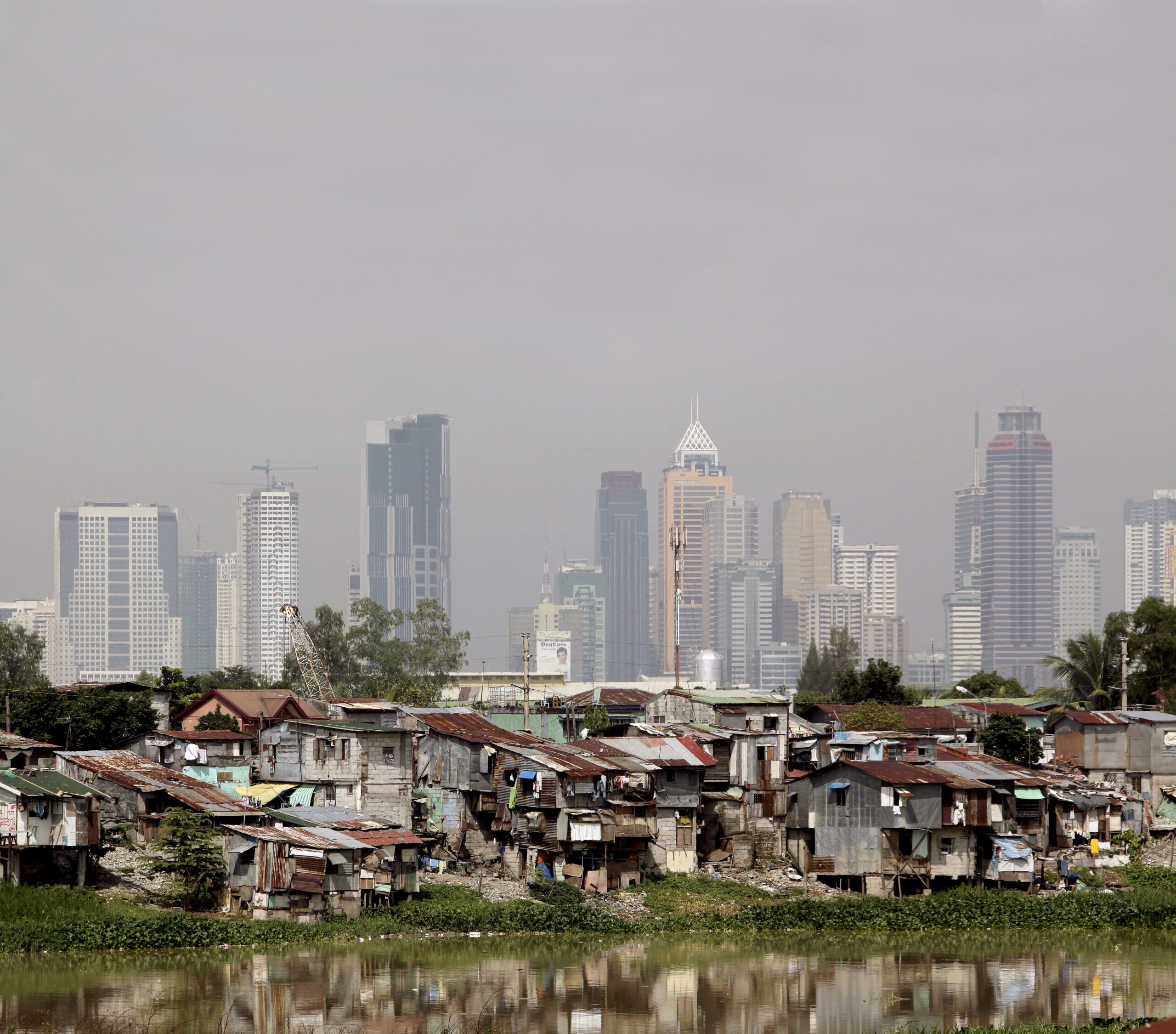
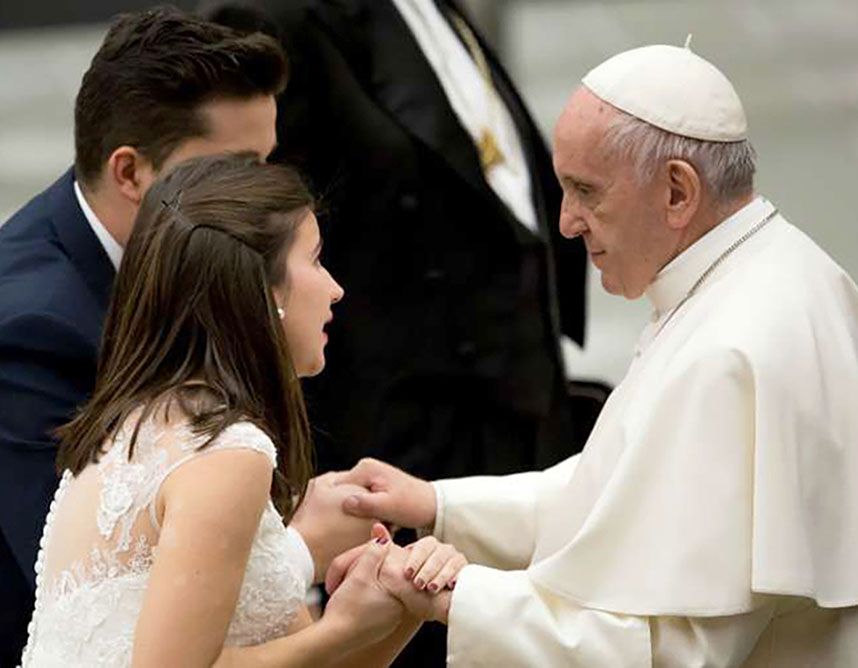
Thomas Piketty links violence with mounting inequality. He seems to echo the ancient Chinese classic Tao Te Ching, “When governments spend money on ostentation and on weapons; when the upper class is extravagant and irresponsible, indulging themselves and possessing more than they can use, while the poor have nowhere to turn. All this is robbery and chaos. It is not in keeping with the Tao” (TTC, 53). Are we not in such an age? Pope Francis expresses similar anxiety in his “Joy of the Gospel”. “Inequality eventually engenders violence,” he says (EG, 59-60).
As communities arm themselves against communities, nations arm themselves against nations. The greatest beneficiaries from a war will be weapons-makers. They have become the chief advisers to top level leaders. They deliberately misinterpret trends, aggravate tensions. The present day looks like those of the pre-World War II era. World powers in Europe collapsed with World War II and became non-entities. But they are arming themselves again in our own days. Their economies have become heavily dependent on arms sales. Ambitious Asian nations are on the same path. Things look ominous. “Asia will collapse even before it rises,” people whisper.
AVOID EXTREMES
It is precisely when we feel helpless before mighty problems that we begin to hear an inner voice, a soft whispering. Ancient teachings come alive. In Greece, Heraclitus taught the virtue of moderation. Solon said, “Nothing too much.” Aristotle spoke of the “Golden Mean.” Avoid extremes, he suggested. Thomas Aquinas and the Scholastics drew this teaching into the Christian tradition.
In India, Buddha proposed the Middle Path. Emperor Asoka believed, “There is no higher duty than the welfare of the whole world”. Prince Shotuku of Japan encouraged respect for those who differed. “Forgive,” taught Jesus (Luke, 6:47).
We all have negative memories. A word of apology can heal. Shinzo Abe of Japan expressed grief at Pearl Harbor, Barack Obama at Hiroshima, Angela Merkel at Jerusalem, Tony Blair referred to the Irish famine. Kind words elicit kind words, respect generates respect. Bridges can be built across cultures, characters, interests, emotions, resentments.
The deeper we think, the more fully we realize that we are interdependent. Nature has distributed abilities, talents, skills, and insights in such a way, that what is meant for one is given to another: to be discovered, appreciated, tapped, and generously shared. Even in politics and economics we do not know who the giver is and who the receiver is. Everything ultimately turns to everyone’s benefit. When we begin to recognize this truth both in theory and practice, we will have an inclusive outlook. Peace comes spontaneously.
Nature gives us models of several patterns of inter-relationships and integrated systems: atoms, molecules, organs, body; individuals, families, tribes, societies, and nations. As the material world is made up of an inseparable network of linkages, and as the human body and nature itself are self-regulating systems, in the same way we belong to each other in an intimate fashion within the human family. We depend on each other.
Religion may be defined as a spiritual energy for human benefit rather than a competitive urge to humiliate each other. All religions have taught happy relationships, peace, impartiality, fairness, and harmony. Centuries ago, ancient Indians exhorted each other, “Meet together, speak together, and let your minds be of one accord… Let your aims be common, and your hearts be of one accord, and all of you of one mind, so you may live well together” (Rig Veda, 10.191.2-4). The Quran echoed similar sentiments (49.10). “Love one another as I have loved you”, Jesus pleaded (John, 13:34).