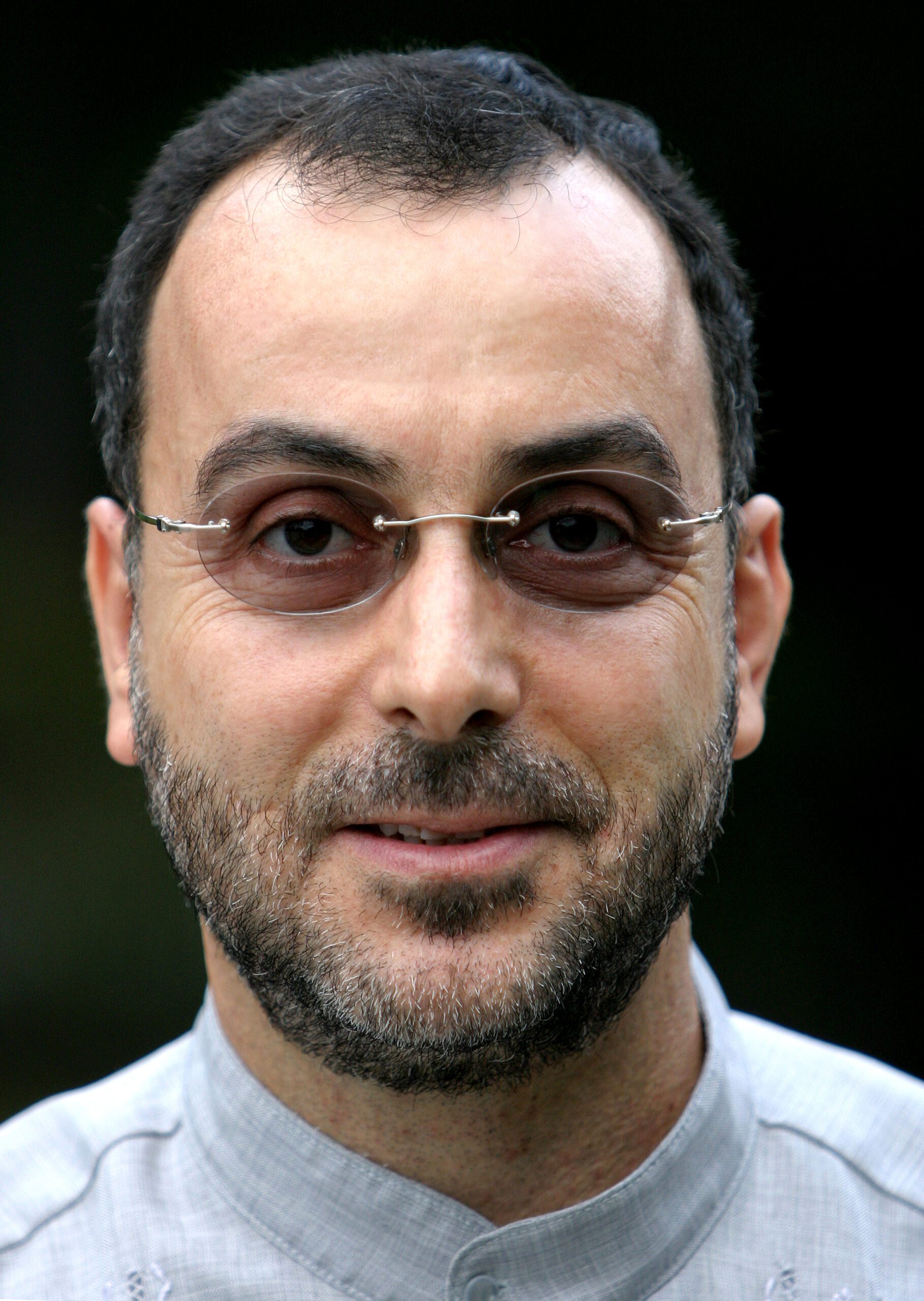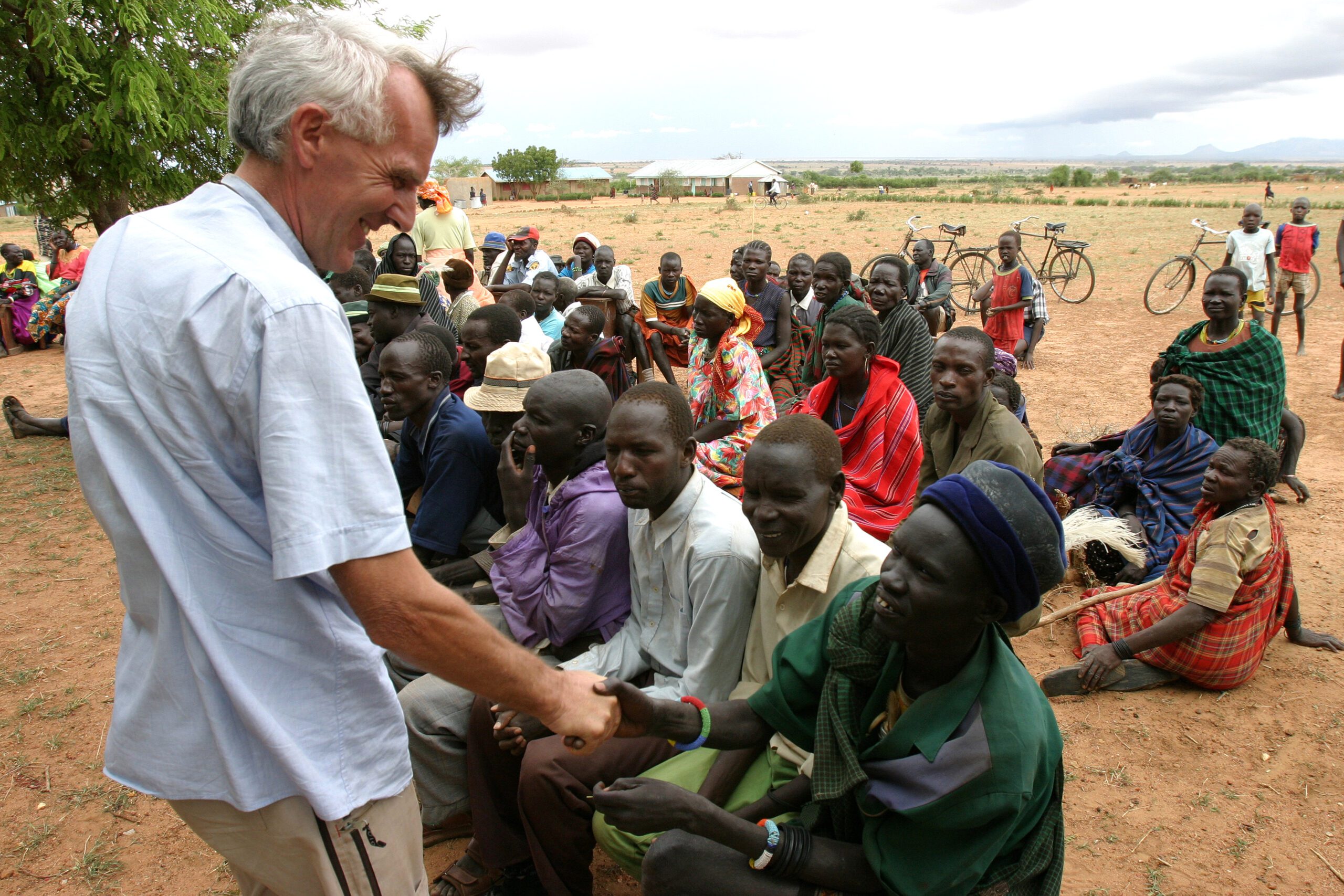
Father Pietro Ciapponi, 54, is an Italian Comboni missionary. He has been working for nine years among the Karimojong, a semi nomadic tribe that lives in the Karamoja region, in the Northeast of Uganda. In this area, conflicts caused by catlle raids are a big problem. And, some time ago, he decided to promote peace initiatives: “I began this work,” he explains, “because I have realized that it was not enough to preach; I had to go to the core of the problems and to reach the kraals (places where they keep their animals during the night; see box).
The churches and the chapels are in the villages; the core of the problems is in the kraals, with the shepherds, the warriors and the raiders. Unless they are touched by the message of peace – the message of the Gospel — the problems will continue.”
Between Fr. Pietro and the Karimojong are old and strong ties: at the time of his theological studies in the capital, Kampala, at the beginning of the eighties, he started spending his summer holidays with them. In 1997, after working in Italy and Poland and having done his sabbatical in Mexico, he returned to Uganda. He went directly to Kanawati, one of the four missions the Comboni missionaries have among the Karimojong. There, he learned the local language.
The Karimojong (or Karamojong) live in the region of Karamoja, an area of roughly 30,000 sq. km with a population of 362,000 (according to the 1991 census); half belong to this ethnic group of pastoralists: they depend exclusively or mainly on cattle for their survival. Due to aridity, the soil is normally shallow and porous, with scarce vegetation and dependent on annual rains, the Karimojong have always practised a sort of pastoral nomadism. Food and water are always a concern, as well as their interaction with the other tribes.
SHEPHERDS WITH MACHINE GUNS
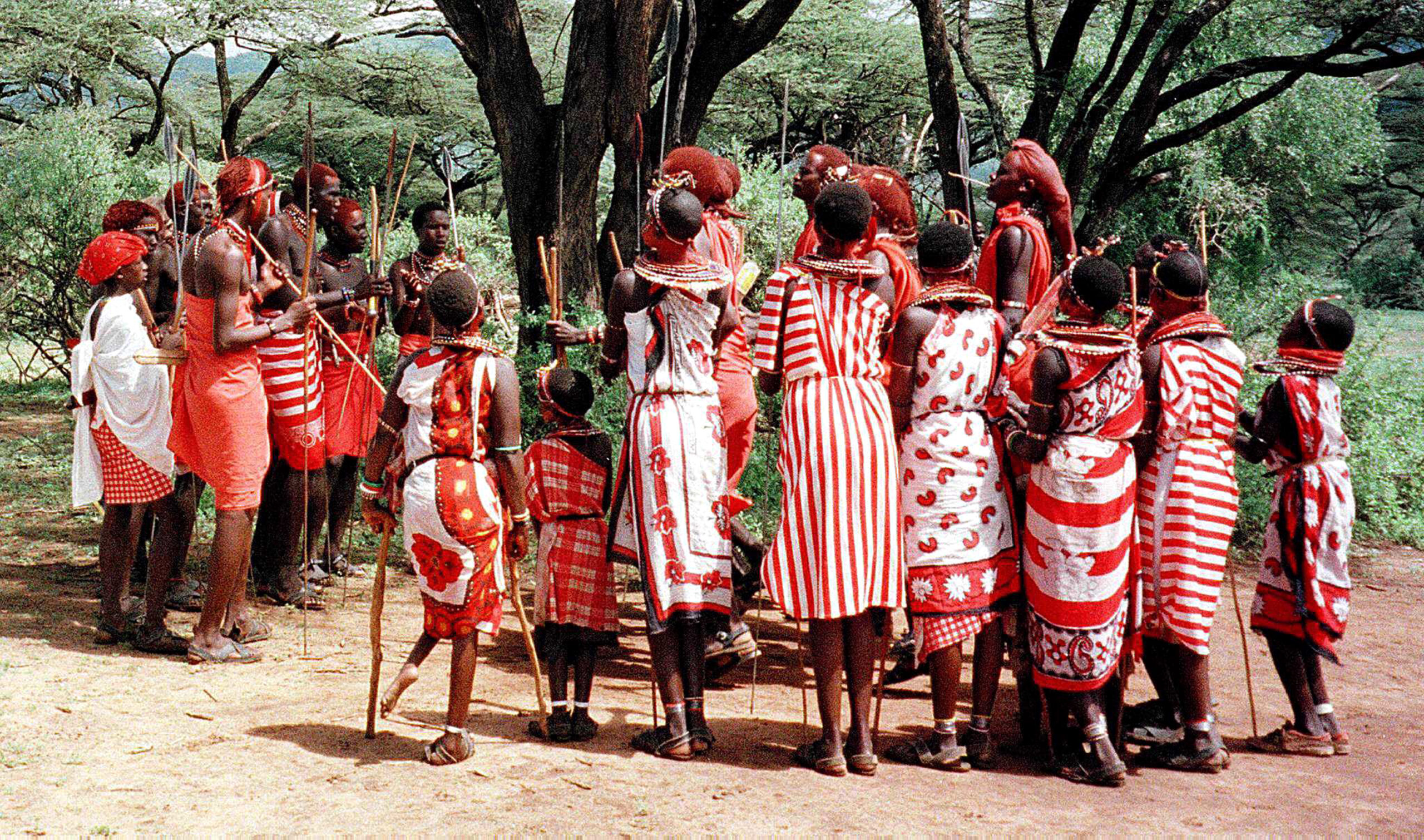
Crossing the Karamoja plateau, is like entering into a time machine and “travelling” back to the Stone Age. The Karimojong shepherd the herds with their birth attire (naked) or just half wrapped with a piece of cloth. The sandals are made of tyres. Usually, they carry a stick (the symbol of a shepherd) and a little stool (so they don’t sit on the ground). They depend on cattle, goats, sheep and even donkeys, to transport their goods.
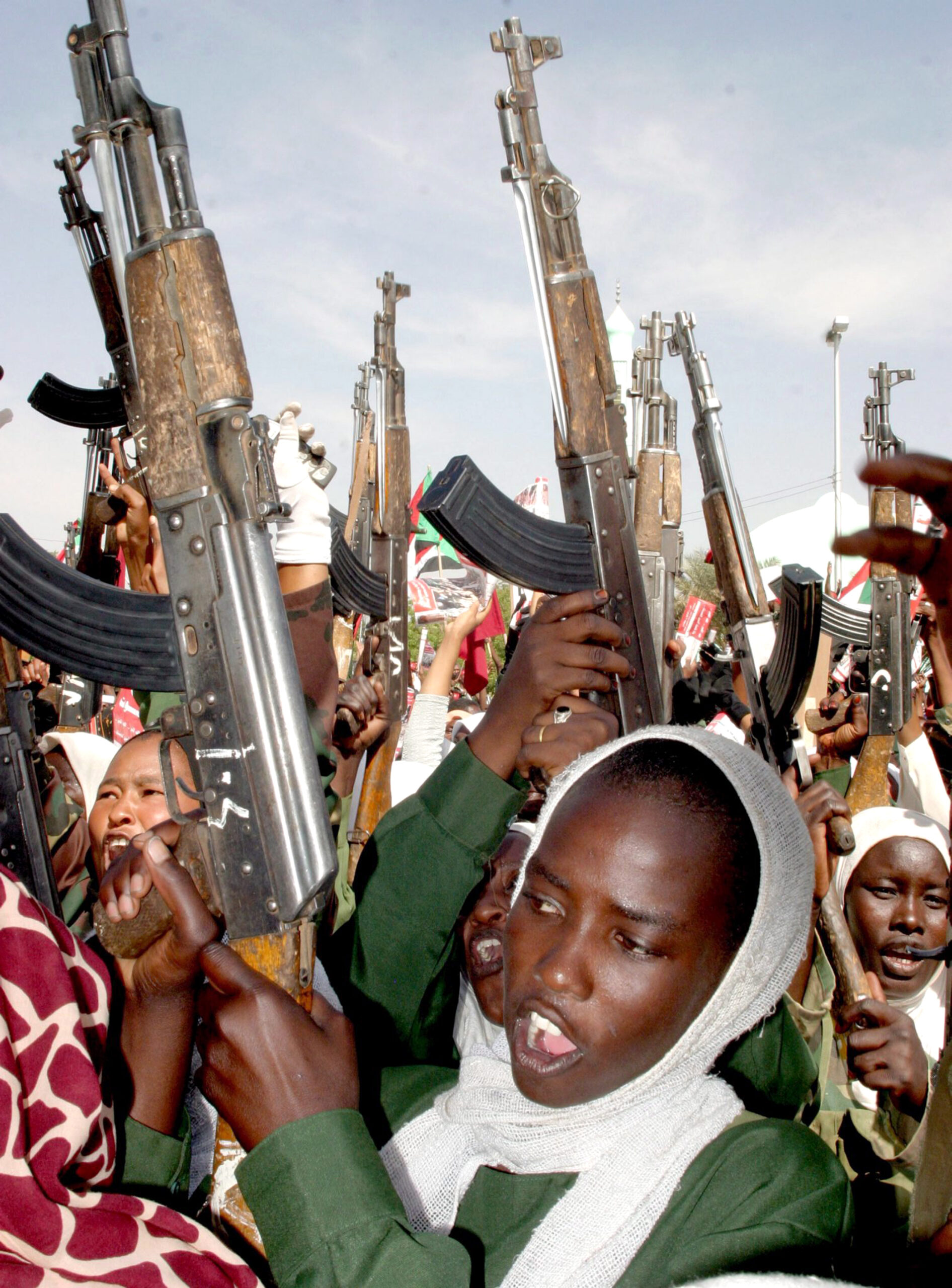
Besides the stick, many are armed with machine guns of different types and proveniences. The most common is the classical AK47. However, Martin Devenish, a Comboni missionary working also in Karamoja, has seen more modern ones and explains how they reached the Karimojong’s hands: “The arms were brought to South Sudan, to the SPLA (Sudan People Liberation Army) by Air Sudan, a company belonging to Oliver North. “Recently,” he adds, “I have seen a new development in our area of Moroto: some are using UZI, the Israelite’s very handy machine gun, trafficked by the Somalis.”
They use them to protect the herds from the raiders. Some of them are also raiders: they steal the cattle of other groups, even across the border into Kenya, a permanent source of conflict and the reason for their notoriety. Raiding is still one of their trade-marks: “It is true, it is ancestral, it is still a habit, but not for everybody,” acknowledges Father Pietro. “Karimojong are able to make peace agreements. Some others break them.”
SOLDIERS STOLE AND TORTURED
The authorities should enforce the law. But according to Fr. Pietro, they “don’t have the capacity or enough will.” He explains: “Karimojong do not trust the Government. Recently, for at least three times, the Government tried to disarm them without success. People said jokingly that it would be easier for the Karimojong to disarm the soldiers. The Government was also not protecting their lives and property: The soldiers themselves were stealing their animals and torturing people.” Besides, there’s also a “political reason” not to disarm: “Karimojong voted for (Yoweri) Museveni,” the incumbent President, in the last elections.
Meanwhile, the Karimojong are still an armed tribe. Conflicts involving cattle raids, ambushes on the roads and fights with the Uganda military make Karamoja a very insecure region, where many people are killed every year.
CATTLE IS LIFE
The Karimojong are ready to die and to kill for cattle. The reason is that their livestock is not only a way of living but has also a social and cultural importance. The late Fr. Bruno Novelli, a Comboni missionary expert on the Karimojong, wrote: “Possesssion of cattle for pastoralists, like the Karimojong, is not a purely economic necessity, but it is a social, spiritual, cultural necessity as well. Possession of cattle is a matter of social pride, of self-respect, esteem and satisfaction. Only with cattle can a Karimojong meet all the requirements of life: economically, alimentarily, socially, religiously and culturally. Only persons who own cattle have a real social status in Karimojong society. Those who lose them, for whatever reason, and do not manage to recover them in a reasonable stretch of time, are left to drift at the margins of social life.”
There is even a religious factor: “Cattle represent life in all its aspects. And since life depends on God, their relationship with God is marked by the presence of cattle. After all, their traditional religion is geared around the necessity of survival in their difficult habitat.
Without cattle, the cultural and religious life of the Karimojong would be almost impossible. Important events in their social life are marked by the essential presence of cattle: at birth, initiation, marriage and death, during the redress of wrongs done to members of society; friendships, too, start and are strengthened with gifts of cattle. Major ceremonial celebrations of pastoral life have cattle at the centre … And particularly the solemn assemblies of their social life would be impossible without cattle because the ritual killing of oxen is an essential part of them.”
THE “MODEL” ANIMAL
Fr. Novelli explains that, in their case, an animal is not only just an animal: “Their relationship with cattle is characterized by certain features proper to the pastoralist tradition. Cattle are different from all the other domestic animals. From how they treat them, it is possible to gather that the cattle’s status is something between an animal and a human being. They are never counted, but recognized one by one by their particular physical, or behavioural features, and each one of them has a proper name derived from the color of the hide, the shape of the horns, or by some particular traits of behavior.”
That’s why cattle becomes a “model” for humans: “The association between a man and an animal with particular characteristics is done on the basis of certain similarities in their physical appearance or behavior as it is perceived by the Karimojong.”
THE WHITE PEACEFUL
Father Pietro, for instance, has received from the Karimojong the praise name of “Pater Apayamakwang” (“the white peaceful/quiet bull”) which shows the way he is perceived among them — a man of peace and someone who has managed to touch their hearts.
Father Pietro tells how he discovered the need of a new way: “We were preaching the Gospel from afar. It was necessary to cut the distance and to interact with them, to engage in dialogue – to listen and to talk. I started showing interest in their lives and getting closer to them, being friendly, showing them support, listening to them, seeing their problems and understanding them. For me, understanding what is behind their lives has become an exercise. If we don’t understand, we cannot speak to them.”
In a desertic land where the most common vegetation is thornbushes, Father Pietro enunciates his evangelizing methodology: “The aim of dialogue is to create a relationship that can be the ground where the message of the Gospel can be sowed upon. One cannot sow a field full of thorns. It will not produce anything. It has to be ploughed and prepared before sowing. The problem is not the seed, but the unreadiness of the ground.”
THINGS ARE CHANGING
So far, the missionary is satisfied with the work done: “Before, it was difficult to approach them because they were suspicious. Now, the problem is more physical: it is difficult to be with them in the kraal, to eat, drink and sleep as they do. But some barriers have been removed and there’s now an open dialogue. I can go and stay there with them; if I say that I’ll go there to pray, they accept. Sometimes, they come to talk. This means that the ground has somehow been prepared. Now, it is just a matter of throwing the seed, irrigating and waiting for the fruits. My concern is that I may clearly pass the message so that it reaches the heart of the listeners and challenges them to change their attitude. The response would be up to them. God will find the right moment to instill in them the conviction of righteousness, of justice.”
Positive signs are appearing and Father Pietro is confident that his approach to this rather violent culture will have good results.
“Yesterday, I heard an encouraging testimony. Someone told me that the Bokora had raided his cows, but then he will not strike back with revenge, which is contrary to their old rule. Breaking the spiral of violence and retaliation means things are changing.”