
Flowers’ Bad Scent

INTRODUCTION

Mostly in the hands of foreign companies, the flower farms in Kenya represent millions of euros in terms of exports. But the booming blooming industry has heavy costs to the workers.

WRITTEN BY

SHARE THE WORD

PUBLISHED ON

“Away from the blooms, the sweet scent and the beautiful scenery, this place represents the ugly side of capitalism.” This is how Joseph Mwaura, a resident of Karagita, describes Naivasha, the small Kenyan town which is the center of cut-flower farming in Kenya. Judging from the thousands of acres devoted to flowering plants in the district, coupled with government statistics on the millions of euros the country is earning from its flower industry in terms of exports, one might be tempted to dismiss Mwaura as a disgruntled voice in the wilderness.

Yet, Mwaura, 32, a father of three and a worker in a vast flower farm in Naivasha, is voicing what many others have been saying. The conditions under which workers in these flower farms toil are often very difficult, sometimes inhuman. Indeed there have been campaigns for boycotts until working conditions are improved, both locally and in countries where cut flowers from Kenya are sold. In 2002, for instance, the Kenya Human Rights Commission (KHRC) was up in arms against what it termed “exploitative labor conditions of workers” in Kenya’s cut-flower industry.

In Naivasha alone, there are more than 50 flower farms, among the largest of which are the Homegrown Flowers, Sulmac and Oserian. According to the statistics of the Kenya Flower Council (KFC), the sector employs more than 100,000 people directly and another 2 million indirectly. Homegrown, for instance, which sits on more than 10,000 hectares of land, employs more than 6,000 casual laborers and accounts for at least 15 per cent of all horticultural exports.

A DEJECTED LOT
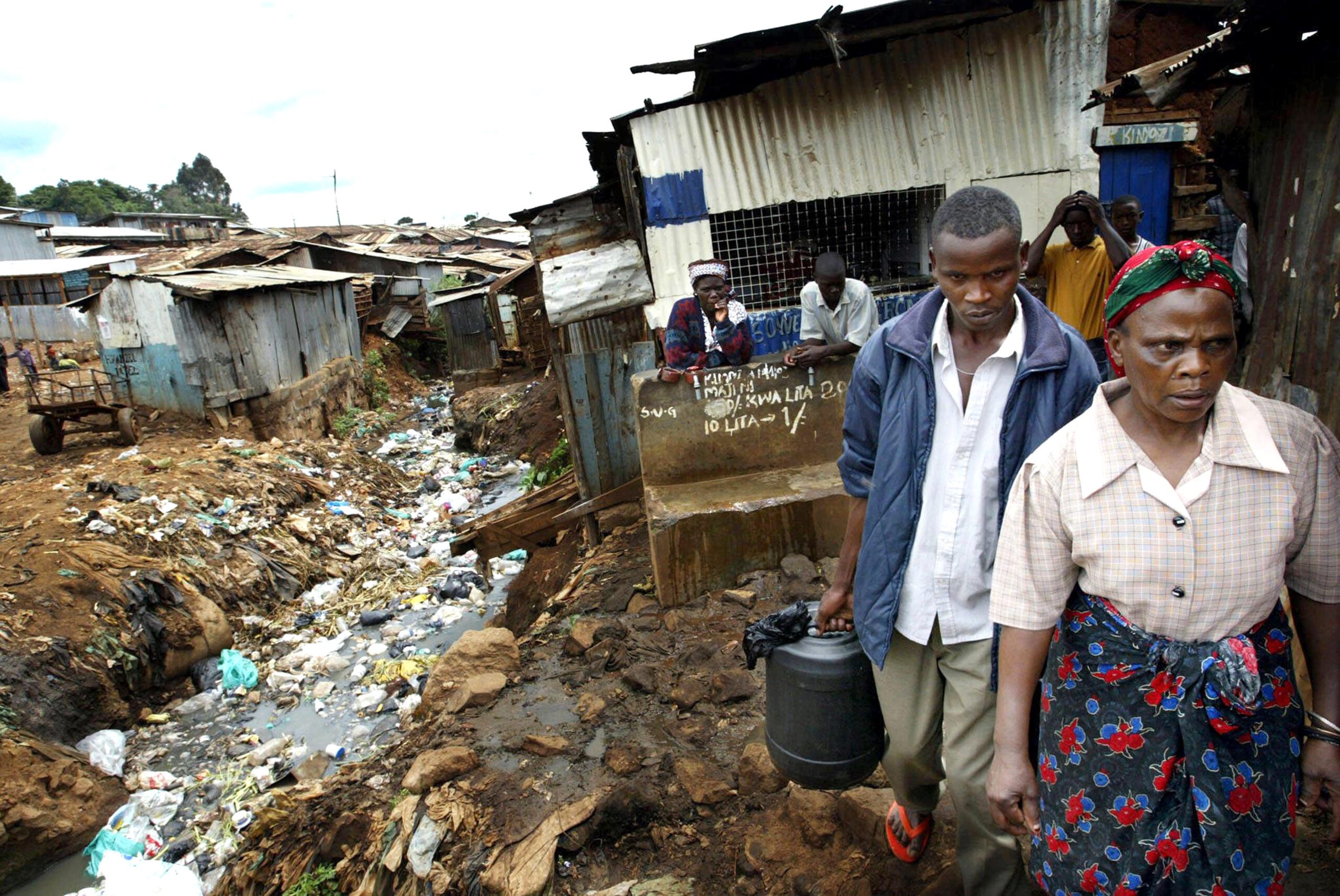
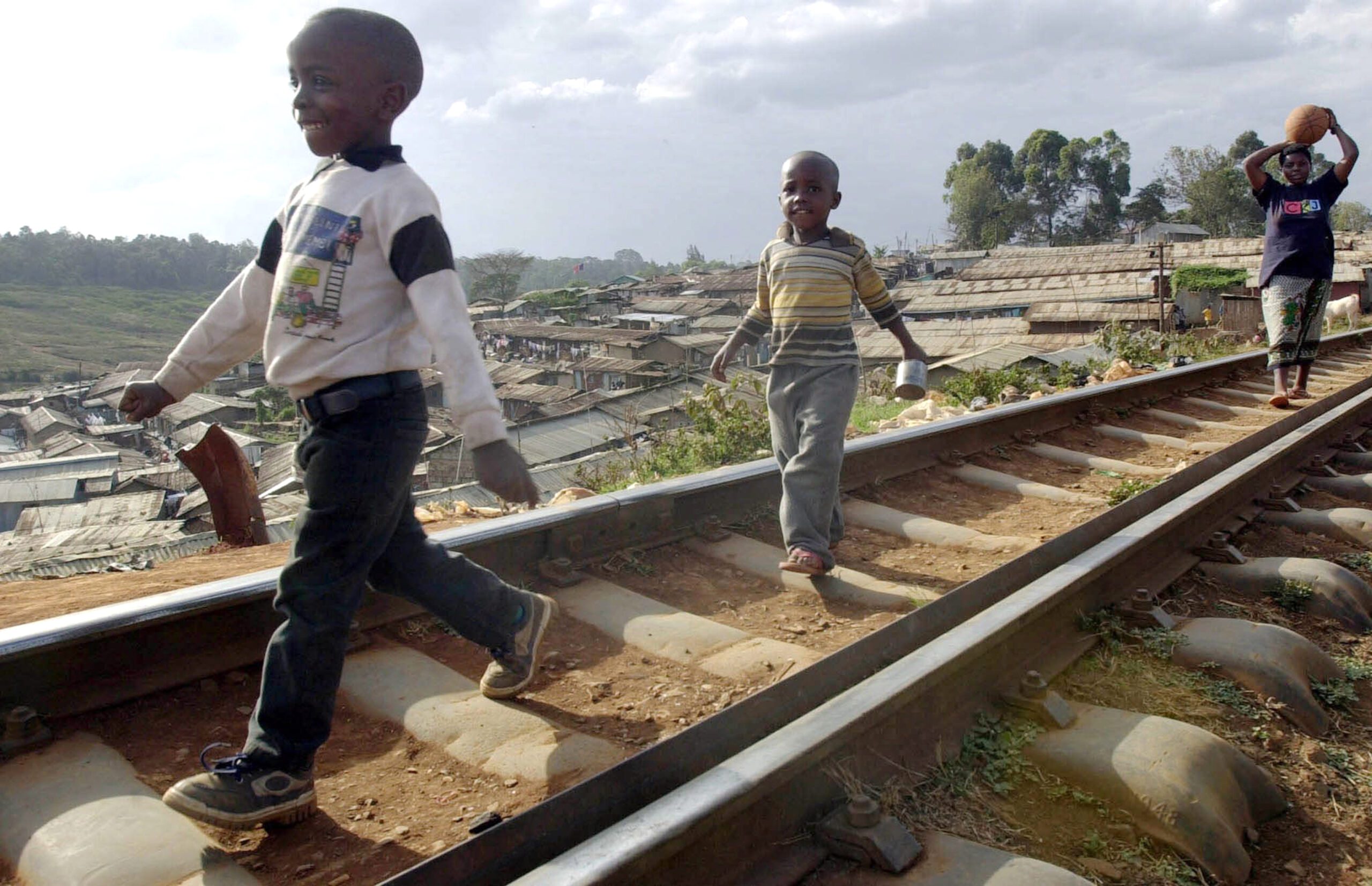
But while the flower firms rake up millions in revenue, their workers are a dejected lot. “It is desperation born out of extreme poverty that makes us work in these farms” explains Mwaura. A brief visit to Karagita, where many flower-farm workers live, is a confirmation of his words. To one who is familiar with Nairobi slums, the abject poverty that surrounds them would not be a surprise. Rather, it is the sight of people with missing limbs, hairless women, deformed children, blind men and those with countless scars that is surprising.

Take the case of Albert Wanyama, for instance. When he landed in Naivasha from his Bungoma home, Wanyama was just like any other boy who could not afford to continue his studies due to lack of fees. “After two years of staying at home doing nothing, I decided to look for casual work” says the 23-year-old. Nine months later in one of the farms, his skin developed a queer rash and despite seeking medication, it would not go away. Later, he learnt that he had been exposed to one of the toxic chemicals used in the farms. “Most of the time I cannot sleep because of severe skin itching,” he adds.

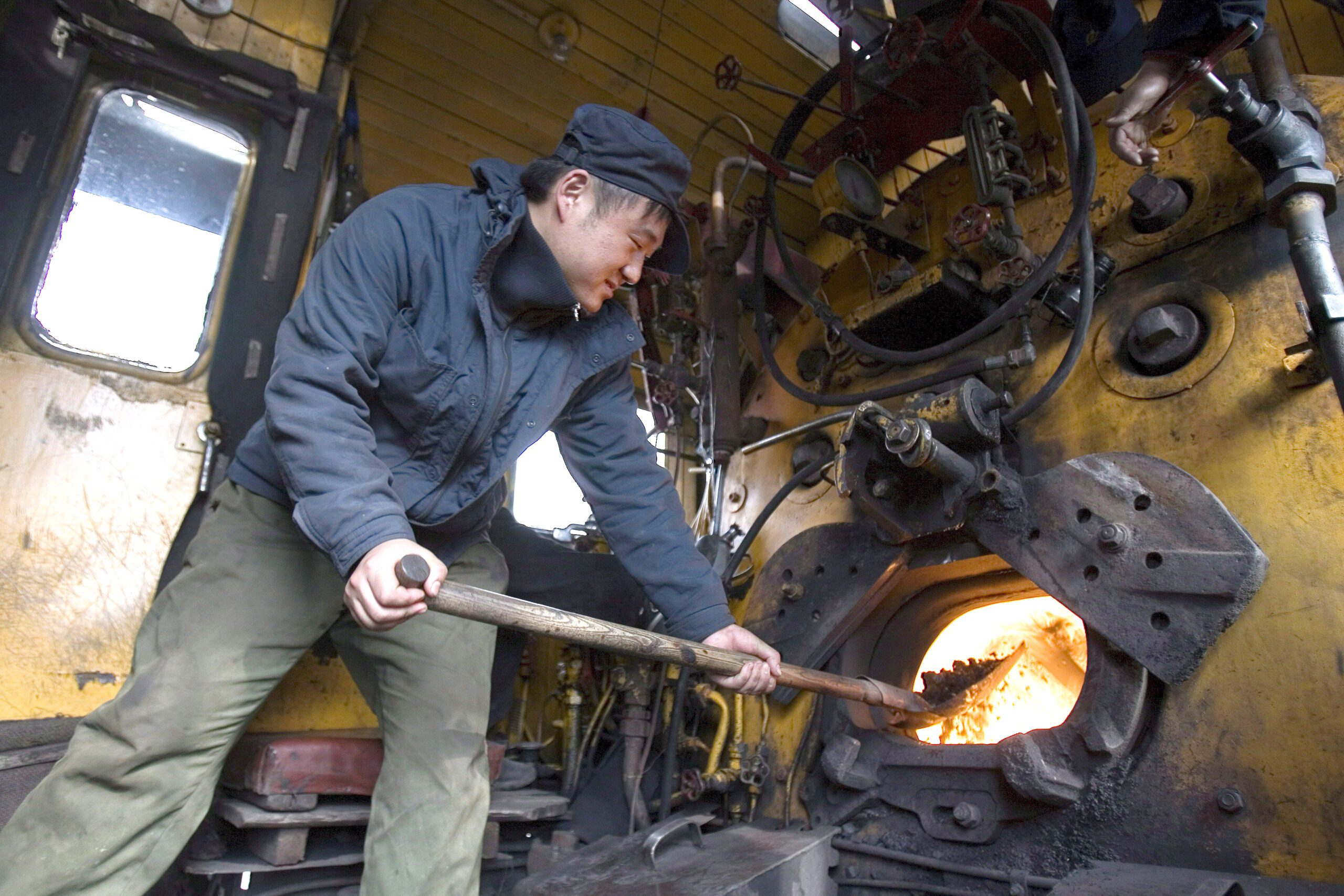
So, what exactly goes on in the closed and well-guarded flower farms? To an outsider, the numerous signs saying “Protected”… by this or that security firm, “Beware of Fierce Dogs,” “Trespassers Will Be Prosecuted,” “Do Not Take Pictures” might pass as normal precautionary measures. But to an insider, the signs are pointers to injustices that the workers have to endure.

DANGEROUS CHEMICALS
First, when a person goes to one of the farms to look for a casual job, he/she is usually subjected to an elaborate medical examination. Unsurprisingly, most laborers in flower farms are women. “Women are preferred because they rarely cause troubles,” says Mwaura, adding that because of their softness in nature, they are easy to push and shove around. The risk of sexual exploitation is very high and very common.

Naturally, getting a job is supposed to be the beginning of happiness for any person. But to casual workers in flower farms, the opposite is often the case. Apart from working in hazardous conditions where they handle dangerous chemicals, casual laborers in flower farms work for long hours and are paid meager wages. A normal working day at the farms ranges between 8 and 12 hours with a one-hour lunch break. Wages also differ and range from as low as Kshs120 to Kshs 200 (USD 1.8 to 3) a day. Assuming that one earns an average of Kshs150 a day for six days a week, one takes home a salary of Kshs 4,500 (USD 70) per month. This is far below the government stipulated minimum wage of Kshs 5,200 per month. “This is exploitation by another name,” observes Mwaura.

I DON’T CARE ATTITUDES
Working in a flower farm, he explains, is delicate because the plants often demand careful handling. For workers dealing with chemicals, the situation is even more complex and the risk of being exposed is usually high. Though most farms today provide workers with protective gear, a majority of them are school dropouts who can hardly understand the instructions. “What happens is that a foreman explains how to mix the chemicals to all newcomers but, after that, you are on your own,” Mwaura adds. Besides, in most firms, protective gear is issued within a certain time frame. Due to these “I don’t care” attitudes, cases like that of Wanyama have become regular occurrences in flower farms. And the situation even gets worse! When one is exposed to the chemicals, which may eventually lead to the workers’ loss of sight, skin peeling, or sometimes becoming infertile or impotent, the flower farms refuse to take responsibility. At best, some will refer the victim to their in-house dispensaries. At worst − and this is often the case − the worker is dismissed.

Although the Kenyan Constitution allows employees to form or join a workers union of their choice, in the case of flower farm workers, even imagining that move is taboo and is reason enough for instant sacking. It is ironical to note that, while workers are prohibited from having a forum that can stir up their rights, owners of flower farms make the utmost use of Fresh Produce Exporters Association of Kenya (FPEAK). Seventy-six per cent of flower farming in Kenya, being in foreign hands, FPEAK has been effective in ensuring its members read the same script when it comes to treating their workers.

PREGNANCY IS FORBIDDEN
According to Alex Mureithi, KFC’s outspoken chairman, the era of exploitation in flower farms is long gone. He explains that KFC members adhere strictly to a code of conduct and that flower farming is closely monitored by agents of various countries that Kenya exports to. “A country like Britain carries out regular inspections on flower farms to ensure cultivation is not carried out under inhuman conditions,” he emphasizes, adding the Council has also put in place a mechanism through which rogue members who go against the code of conduct are disciplined.

Joyce Wandia, whose work is pruning the flowers, says she once had a miscarriage because of exposure to chemicals. “We were forced to prune the flowers before the mandatory nine hours after spraying,” she says. Asked why she never told her employer about her condition, she answers rather painfully; “If I had said I was pregnant, I would have been sacked there and then,” she says adding that, at the flower farm where she works, getting pregnant is prohibited.

Share Your Thoughts

All comments are moderated

From The Same Issue

The articles and content about this issue

From The Same Issue

The articles and content about this issue

WM Special

Mission And The City

From This Topic

The articles and content about this topic

From This Topic

The articles and content about this topic

African Insight

Active Love

Explore Other Topics

Browse other coverage

Explore Other Topics

Browse other coverage

WM SPECIAL

Presents, discusses and draws readers to reflect on issues of outmost relevance to the world today.


FRONTIERS

Very often, mission is carried out in frontier situations around the world. Those who embrace these situations have much to share.


UNITY IN DIVERSITY

Writer Ilsa Reyes will be exploring the richness of Pope Francis’s latest encyclical Fratelli Tutti with a view of helping our readers to get a grasp of the this beautiful papal document.


FRONTLINE

Puts to the front committed and inspiring people around the world who embrace humanitarian and religious causes with altruism and passion.


IN FOCUS

Focus on a given theme of interest touching upon social, economic and religious issues.


FAITH@50

As the Philippines prepares to celebrate 500 years of the arrival of Christianity. Fr. James Kroeger leads us in this series into a discovery journey of the landmark events in the history of faith in the Philippine archipelago.


INSIGHT

Aims to nurture and inspire our hearts and minds while pondering upon timely themes.


FILIPINO FOCUS

The large archipelago of the Philippines, in its richness of peoples and cultures, offers varied and challenging situations for mission.


FOLLOW ME

Reflections and vocation stories that shape up the lives of young people.


MISSION IS FUN

As humor and goodness of heart are qualities of Christian and missionary life, the new column “Mission is fun” will be publishing some anecdotes and stories that have happened in a missionary context to lighten up the spirits and trigger a smile in our faces.


LIVING COMMUNION

To help readers of World Mission live this year dedicated to Ecumenism, Interreligious Dialogue and Indigenous Peoples, Tita Puangco, writer and lecturer, shares in this section insights on the spirituality of communion.


WINDS OF THE SPIRIT

A historic view of the Catholic movements that emerged from the grassroots as an inspiration by the Holy Spirit.


BRIDGE BUILDERS

On the Year of Ecumenism, Interreligious Dialogue and Indigenous Peoples, radio host and communicator Ilsa Reyes, in her monthly column, encourages Christians and people of good will to be one with their fellow people of other sects, religions and tribes.


INTERVIEW

Questions to a personality of the Church or secular world on matters of interest that touch upon the lives of people.


WORLD TOUCH

News from the Church, the missionary world and environment that inform and form the consciences.


CARE OF THE EARTH

A feature on environmental issues that are affecting the whole world with the view of raising awareness and prompting action.


EDITORIAL

The editor gives his personal take on a given topic related to the life of the Church, the society or the world.


YOUNG HEART

A monthly column on themes touching the lives of young people in the Year of the Youth in the Philippines by radio host and communicator I lsa Reyes.


SCROLL

A missionary living in the Chinese world shares his life-experiences made up of challenges and joyous encounters with common people.


EXTRAORDINARY PEOPLE

Life stories of people who deserve to be known for who they were, what they did and what they stood for in their journey on earth.


ONE BY ONE

Stories of people whom a missionary met in his life and who were touched by Jesus in mysterious ways.


INCREASE OUR FAITH

Critical reflection from a Christian perspective on current issues.


SPECIAL MOMENTS

Comboni missionary Fr. Lorenzo Carraro makes a journey through history pinpointing landmark events that changed the course of humanity.


PROFILE

A biographical sketch of a public person, known for his/her influence in the society and in the Church, showing an exemplary commitment to the service of others.


WM REPORTS

Gives fresh, truthful, and comprehensive information on issues that are of concern to all.


LIFE'S ESSENTIALS

A column aimed at helping the readers live their Christian mission by focusing on what is essential in life and what it entails.


ASIAN FOCUS

Peoples, events, religion, culture and the society of Asia in focus.


THE SEARCHER'S PATH

The human heart always searches for greatness in God’s eyes, treading the path to the fullness of life - no matter what it takes.


INDIAN FOCUS

The subcontinent of India with its richness and variety of cultures and religions is given center stage.


AFRICAN FOCUS

The African continent in focus where Christianity is growing the fastest in the world.


JOURNEY MOMENTS

Well-known writer and public speaker, Fr. Jerry Orbos, accompanies our journey of life and faith with moments of wit and inspiration based on the biblical and human wisdom.


IGNATIUS STEPS

On the year dedicated to St. Ignatius of Loyala, Fr. Lorenzo Carraro walks us through the main themes of the Ignatian spirituality.


THE SEVEN LAST WORDS OF JESUS

Fr. John Taneburgo helps us to meditate every month on each of the Seven Last Words that Jesus uttered from the cross.


INSIDE THE HOLY BOOK

In this section, Fr. Lorenzo delves into the secrets and depths of the Sacred Scriptures opening for us the treasures of the Sacred Book so that the reader may delight in the knowledge of the Word of God.


CONVERSATIONS

Reflections about the synodal journey on a conversational and informal style to trigger reflection and sharing about the synodal path the Church has embarked upon.


VATICAN II

This 'mini-course' series provides a comprehensive exploration of Vatican II, tracing its origins, key moments, and transformative impact on the Catholic Church.


COMBONIS IN ASIA

This series offers an in-depth look at the Comboni Missionaries in Asia, highlighting their communities, apostolates, and the unique priorities guiding their mission. The articles provide insights into the challenges, triumphs, and the enduring values that define the Comboni presence in Asia.


BEYOND THE SYNOD

Following the Synod on Synodality, this series examines how dioceses, parishes, and lay organizations in the Philippines are interpreting and applying the principles of the synod, the challenges encountered, and the diverse voices shaping the synodal journey toward a renewed Church.


A TASTE OF TRADITION

This series introduces the Fathers of the Church, featuring the most prominent figures from the early centuries of Christianity. Each article explores the lives, teachings, and enduring influence of these foundational thinkers, highlighting their contributions the spiritual heritage of the Church.


A YEAR OF PRAYER

In preparation for the 2025 Jubilee Year under the theme “Pilgrims of Hope,” 2024 has been designated a Year of Prayer. World Mission (courtesy of Aleteia) publishes every month a prayer by a saint to help our readers grow in the spirit of prayer in preparation for the Jubilee Year.


OUR WORLD

In Our World, the author explores the main trends shaping contemporary humanity from a critical and ethical perspective. Each article examines pressing issues such as technological advancement, environmental crises, social justice, and shifting cultural values, inviting readers to reflect on the moral implications and challenges of our rapidly changing world.


CATHOLIC SOCIAL DOCTRINE

This series unpacks the principles of Catholic Social Doctrine, offering a deep dive into the Church's teachings on social justice, human dignity, and the common good.


HOPEFUL LIVING

Hopeful Living’ is the new section for 2026, authored by Fr. James Kroeger, who dedicated most of his missionary life to the Philippines. In this monthly contribution, he will explore various aspects of the virtue of hope. His aim is to help readers align their Christian lives more closely with a hopeful outlook.


PHILIPPINE CROSSROADS

Filipino Catholic scholar Jose Bautista writes each month about how the Philippines is at a crossroads, considering the recent flood control issues and other corruption scandals that have engulfed the nation. He incorporates the Church’s response and its moral perspective regarding these social challenges.


BIBLE QUIZ

Test your knowledge and deepen your understanding with our Bible Quiz! Each quiz offers fun and challenging questions that explore key stories, themes, and figures from both the Old and New Testaments.


Shopping Cart