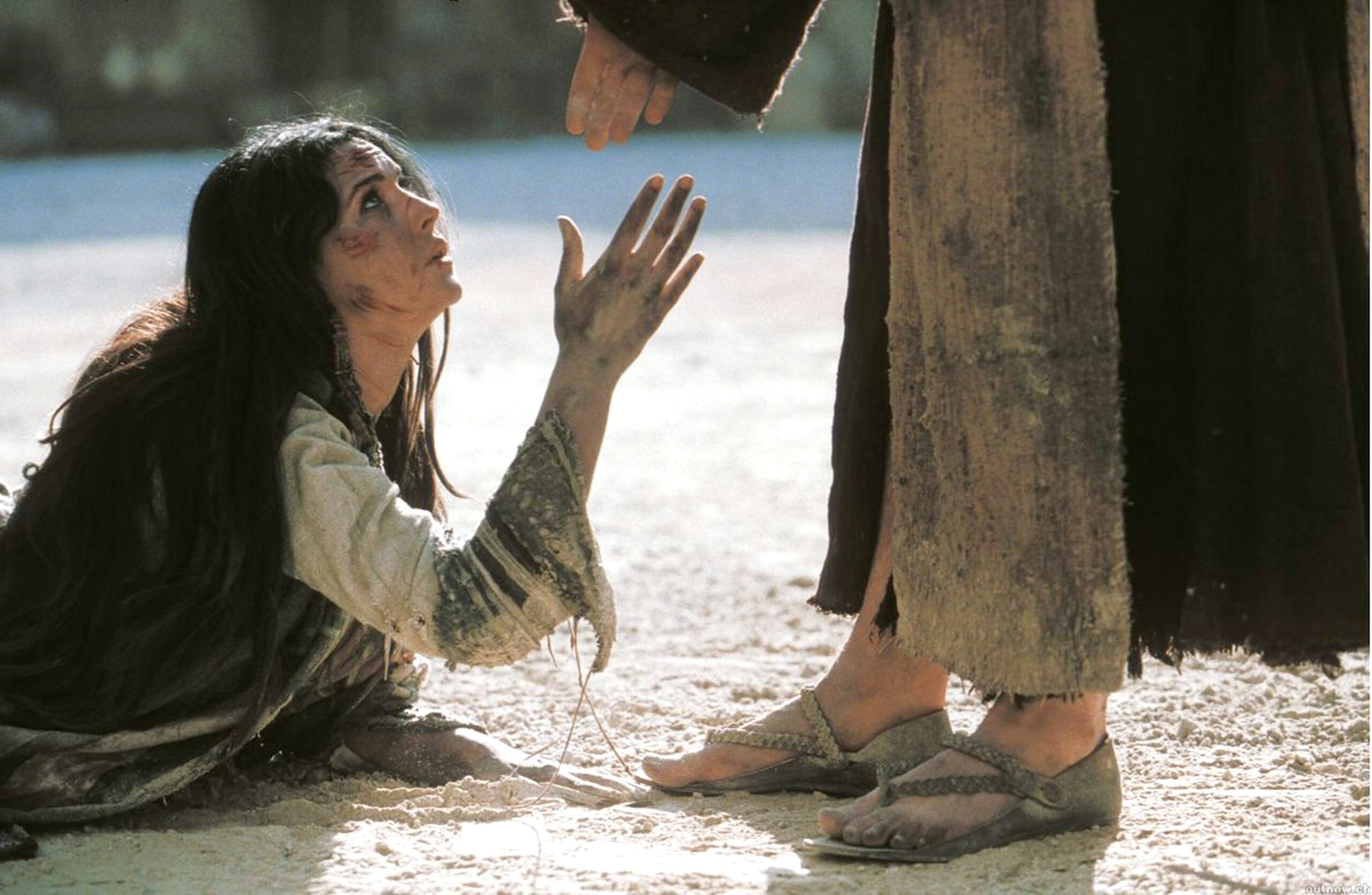

It seems like fiction, but it is much more astonishing than a movie. Doubts? Let’s make a rewind. Municipality of Porto Franco, in the State of Maranhão, northeast of Brazil, 1979. A family of Indians Awá-Guajá – one of the last nomadic hunter-gatherer tribes – is hunted down by gunmen employed by cattle ranchers and loggers who are invading and plundering their land. Karapiru, together with his wife, a son and a daughter, ages 5 and 8, respectively, try to flee through the sparse and small vegetation, while the gun shots of their pursuers’ rifles become more and more close and deafening. Suddenly, Karapiru’s wife is hit, falls and agonizes. The frightened children throw themselves over their mother’s lifeless body weeping. Karapiru wants to return to give assistance. But realizing the proximity and the murder intentions of his pursuers who are ready to wipe him out, too, he could not go back. To survive the vicious assault, he must run, run… the farthest he can!
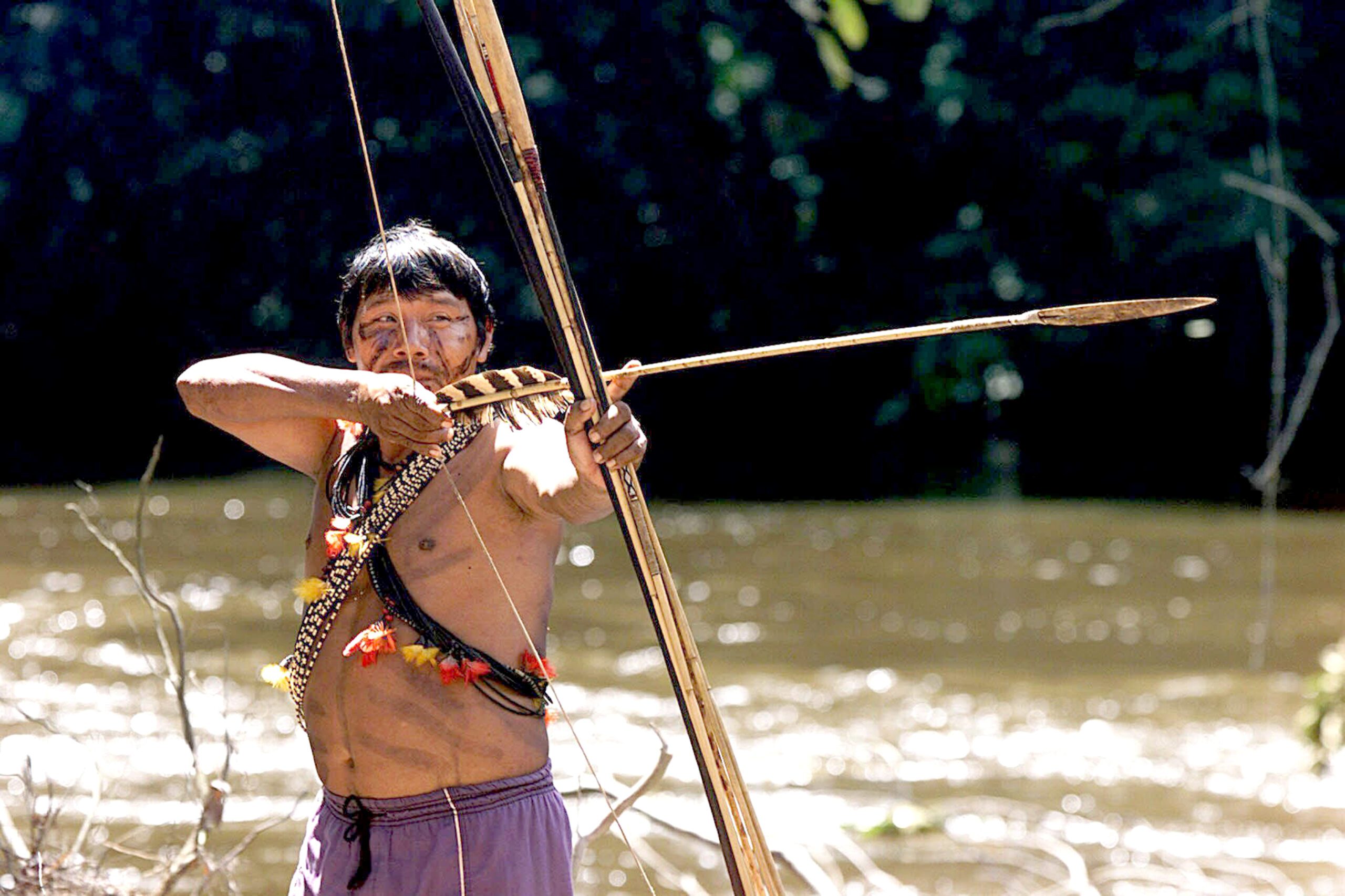
The saga goes on. Ten years later, in 1989, in the Municipality of Feira de Santana, Bahia, a group of peasants of a rural community notices that several of their animals have been disappearing. Many of them had been found killed by arrows and quartered. The local population is baffled and frightened. The mystery is revealed when, on a certain day, a nude man, holding an enormous arch and a bunch of arrows, appears in the small village. He is an Indian and starving. His eyes are fearless. At the beginning, the inhabitants were terrified, but noticing his serenity, they offer him food and shelter. They didn’t manage to communicate. He speaks a strange language. The Indian spends three months with them. One day, however, a car of the federal government arrives with employees of the National Indigenous Foundation (FUNAI, the Brazilian government body that establishes and carries out policies relating to indigenous peoples). They have been called by the villagers. They manage to convince the Indian to accompany them to Brasília. There, at the FUNAI headquarters, linguists and anthropologists take turns to discover his identity. They came up with various hypotheses. They summoned Indians from several areas to speak with the recently-contacted, but nobody understands him. They discover, however, that he speaks a Tupi language. An employee of the agency who had worked for some years in Maranhão suggests he could be an Awá-Guajá. They called an Awá youth from Maranhão. He comes and begins to speak immediately to the other Indian. The conversation smoothly flows. There is satisfaction on the faces of the FUNAI employees. At a certain point, the youth lifts the shirt of the other. Old scars are visible in the brunet and rough skin of his back. Then the youth turns to the people present and with excitement exclaims: “He is my father!”
The “plot” is almost unbelievable. After ten years of solitude, changing night into day and around 1,300 kilometers from his homeland, Karapiru finds part of his family he thought he had lost definitely. Benvindo, the name given by officials to that 8 year-old boy they had found with the sister over their mother’s cold body, encounters his missing father.
This true story has a mixed happy ending – 30 years after its beginning. Tiracambu village, indigenous land of Caru, Maranhão, 2009. Karapiru lives with his young wife and a 13 year-old daughter. The serenity and the calm that characterize Karapiru’s presence and gestures do not belie the deep sadness in his eyes. Karapiru is afraid of reliving the dramatic events of the past. Recently, with some Indians, he discovered that not very far away from the village, in the forest of their land, lumbermen have built roads. He sees signs of destruction and invasion everywhere. Karapiru and his relatives fear that, at any moment, armed lumbermen and their gunmen can invade the village and the worst may happen…
CHASED IN THEIR OWN LAND
Karapiru’s dramatic story is far from being unique or rare. It illustrates in an emblematic way what has been happening to many indigenous people in our State of Maranhão and all over Brazil. It is true that there have been a lot of achievements, but the indigenous do not yet enjoy peace and safety in their own lands. Land for indigenous peoples is fundamental to preserve their socio-cultural identity. They are recognized as Indians exactly for their specific relationship with the earth. Land for them is neither a merchandise that can be sold or exchanged nor a property to be registered at the notary’s office. For indigenous peoples, land is a gift, thus it cannot be appropriated either individually or collectively. It can only be inhabited, admired, loved. It is not the soil’s fertility that makes people consider the land as mother. It is mother because ‘they were born’ from it. The land is not only the source of food for the children it generates, but also of myths, sacred places and all the references that give sense to their existence and behavior. In it, they find shelter in life and repose in death.
The Guajajara of Maranhão, for instance, until some time ago, were refusing to adopt the plough in their cultivations. Ploughing the fields was like ‘to tear open the belly’ of Mother Earth, an inconceivable violence, for them.
The same group, until some years ago, used to speak to a tree before cutting it – a habit which the elderly still keep to this day. They would explain that they had to cut it, but it would continue to be alive in their midst – in the ridges, doors and windows of their houses, in the work instruments or in the hunting arches and arrows.
Many indigenous lands that should have been demarcated and recognized formally were invaded and are still occupied and being exploited by lumbermen, miners, drug traffickers and hunters. The federal government, according to the 1988’s Constitution, had a 5-year deadline to demarcate and legalize formally all indigenous lands. After all, they are a federation’s patrimony and to the indigenous peoples, only usufruct was granted.
Twenty-one years have passed and Brazil has demarcated only less than 40% of the more than 650 existent indigenous lands. And the ones that are officially legalized suffer continuous aggressions. The homeland of the Awá-Guajá, of Karapiru, even though homologated by the incumbent president in 2005, is being used by lumbermen’s trucks and clandestine buses, several settlements appeared and there are a number of armed hunters threatening the last 330 survivors of an ethnic group that has been experiencing insecurity and deadly violence in its own land.
THE OBLIGATION OF SHARING
Another remarkable trait of indigenous culture down the centuries has been the non accumulation of goods and of power. Everything that is produced is for the welfare of all. All have the moral obligation of sharing what they get, specially the hunted animals. Eventual abuses, like keeping goods only for oneself and refusing to distribute them to others are ‘punished,’ by denying access to the goods produced by others. It is a pedagogic form to educate all the clan members to share and not to feel like owners of things. In that way, accumulating goods, power and authority over others is prevented. That’s why, over the years, there haven’t been economic and social inequalities among the members of indigenous villages. If there’s abundance, it’s for all; if there’s a shortage, everybody suffers the pinch.
The service of authority and political leadership used to be also very different from what we have in our societies. In most cases, the cacique or indigenous chief is not a bossy person with the power of dominating and demanding obedience and submission. Indigenous societies do not have tribunals to judge, police or army to impose norms and enforce laws. A true indigenous leader maintains order with his moral prestige, coherence and fidelity to his people. In fact, the old criteria in choosing a cacique include: his generosity, capacity to distribute goods and allot security, ability to hunt and to fish, and his sensibility to interpret people’s expectations and longings and to be able to speak to their hearts.
Things have changed in these regards. The federal social policies concerning indigenous peoples during the last 15 years aimed at integrating them in the social and economic national system without respecting their social and cultural differentiations – like the exchange system and fraternal share that existed inside indigenous communities. The same government, when demanding from indigenous peoples standardized forms of organization to increase revenue, has been interfering negatively in their social structure. The introduction of social programs, retirement schemes, maternity subsidies and other official forms of assistance to indigenous persons and families, although designed to lessen indigenous poverty, was not actually for their benefit as the modalities are extraneous and unknown to their culture. The implementation of the system of wages and monetary bonuses induced a true process of “monetarization” of social relationships, inoculating in people the “virus” of competition and rivalry.
The standardization of these associative mechanisms, even in the symbolic plan, is supposed to affirm national equality that, in fact, does not exist, nor could exist since legal and formal equality are not synonymous to equity and justice. Therefore, indigenous communities are the ones that have to adapt and comply with the public powers’ decisions, while it should be the opposite, as stated in the Constitution when it affirms that “Indians social organization, habits… are recognized” (Art. 231).
THE THREAT OF ECONOMIC PROJECTS
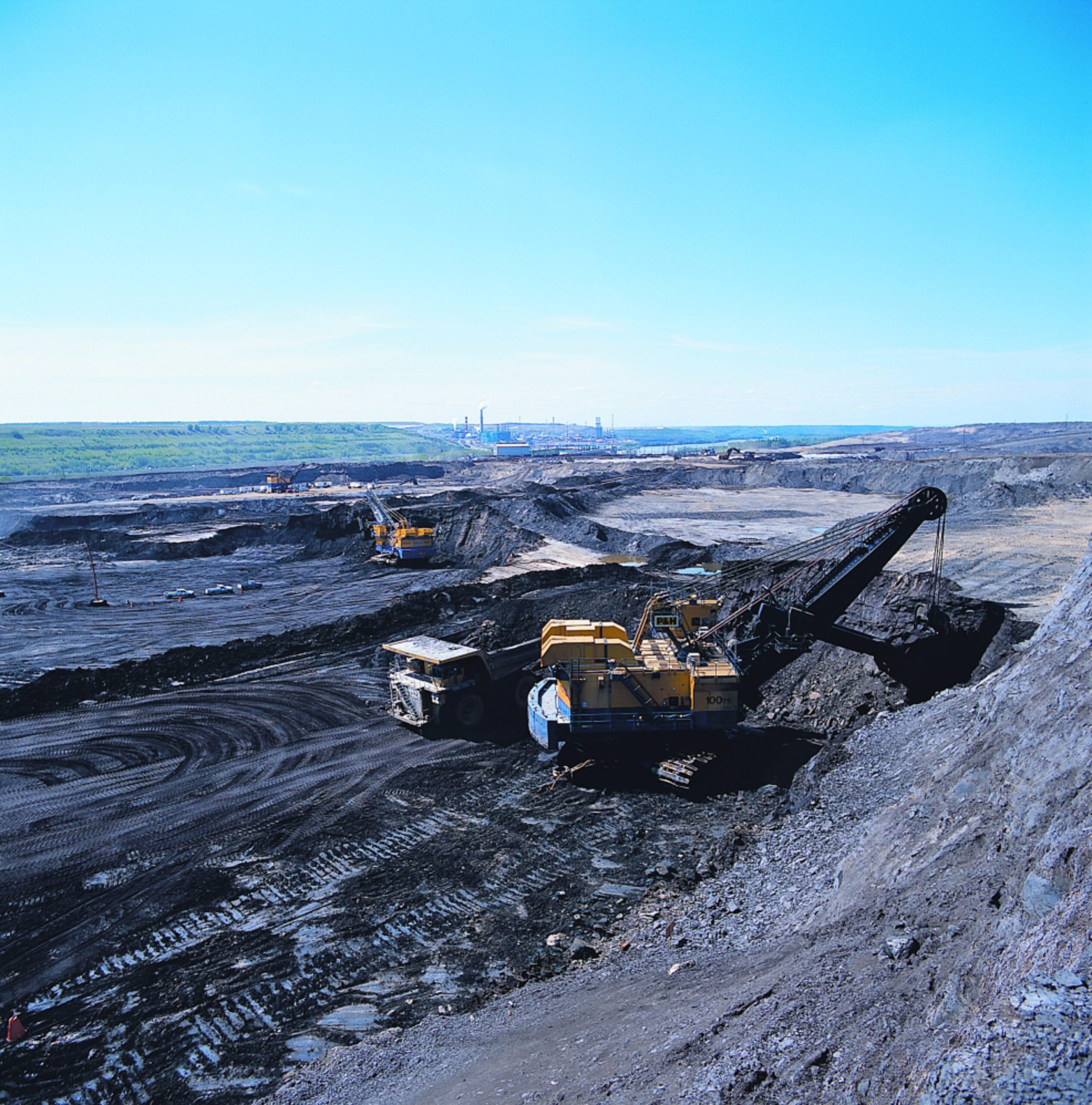
The advancement and proximity of non-indigenous communities and the establishment of great economic projects in indigenous homelands (mining, logging industry, hydroelectric power stations, monocultures, agribusiness, etc.) are among the main causes not only of deforestation, but also the main threats to the future of indigenous peoples.
In the State of Maranhão, for instance, in the beginning of the eighties, a long railroad that transports iron ore from Carajás (Pará) to São Luís port, was built. Its more than 900 km of length borders several indigenous lands and crosses three, like the territory of some groups of Awá-Guajá which have no contact yet with society. That railroad made possible the coming of thousands of colonist families, bringing close to the villages the crazy dispute for lands, environmental destruction, sprees, prostitution and other various social conflicts. Even the compensation granted to the villages by the company exploring the mines, with the intention of softening the socio-environmental impacts, produced internal disputes. Satellite pictures show how indigenous lands are suffering from a fast and frightening environmental degradation. The lumbermen’s and agribusinessmen’s aggressiveness, associated with the absence and negligence of the State, attacks, on one hand, the territorial integrity and the physical safety of the indigenous peoples that do not possess means to defend themselves and, on the other hand, forces them to negotiate and to give up their natural resources, especially the forest, under the threat of being attacked. This has been loosening the people’s ‘ethical sense’ and destroying indigenous culture.
New forms of co-optation, greed and perspectives of profits are taking root in the minds if not the life of many Indians.
Also, this has been affecting negatively the traditional concept of indigenous leadership. A cacique of value is no longer the one who is generous, welcoming, fair and who speaks to his people’s hearts, but the one who knows how to speak and negotiate in Portuguese, the one who links and bargains well with the ‘kariw’ (the whites) – merchants and lumbermen, who makes (crooked) deals with local politicians – who is shrewd and knows how to amass resources (for his family). We are witnessing a true assault to the conscience and moral integrity of many indigenous leaders on the part of unscrupulous people. Indigenous peoples of our state live in a moment of disorientation, a kind of shock and collective dazzlement with progress. This is comprehensible, because the challenges are new. Culture is something dynamic that changes throughout time and space. But there’s the fear that the speed and brutality of the changes may harm definitely the typical indigenous manner of being and acting, in short, the people’s identity.
LAND WITHOUT EVILS
According to a Guarani myth, when Nhanderuvuçu (our Father) decided to put an end to the Earth, due to men’s cruelty, he informed in advance Guiraypoty, the great pajé (the medicine man, magician), and ordered him to dance. When Guiraypoty finished dancing, Nhanderuvuçu removed one of the pillars that sustained the Earth, provoking a devastating fire. Guiraypoty, in order to flee from danger, took his family towards East, to the direction of the sea. When they reached the coast, their first task was to build a timber house so that it could withstand the waters. The danger was becoming more and more imminent, because the sea was swallowing the whole Earth. When they were about to be engulfed by the water, the house moved, rotated, floated and went up until it arrived at the heaven’s door, where they would live. That place is called Yvy marã ei, the “land without evils.” There, the plants germinate freely, the cassava already comes transformed into flour and the game arrives already dead at the hunters’ feet. The people there neither age nor die: there’s no suffering there.
This well-known myth among the Tupi people of Brazil reflects the power of indigenous people to dream about something real, something that can be built and achieved concretely. The dream of building a reality (world) in which, finally, people can find safety, protection from humiliation and threats, and where there’s no hunger and destruction.
A myth, in general, reflects and gives new meanings to existing realities and to others that people wish and dream about. On one hand, it justifies symbolically and gives sense to the past and present; and, on the other, the myth aims at motivating people to build the future with its ambiguities and uncertainties, but also with its potentialities.
A GREAT FEELING OF HOPE
In spite of all the threats to the physical and cultural integrity of Brazilian indigenous peoples, there is still a great feeling of hope for the future. If it is true that the federal government does little to protect the integrity of Mother Earth, it is also true that indigenous peoples acquired the conscience that they are the main defenders of the land that generated them. They have been organizing to resist, denounce and repel the invasions of their tabernacles made of forests, rivers and enchantments.
If it is true that many sectors of non-indigenous society do everything to invade and destroy consciences, millenarian cultures and traditions, it is also true that indigenous peoples are increasingly aware of their mechanisms of power and they have been able to adapt to a strange culture, without giving up their inherited ancestral values.
If it is true that public policies have often been pursuing to make them equal to other citizens without recognizing their cultural specificities, it is also true that indigenous peoples have been learning how to strengthen and improve their life quality, guaranteeing access to a differentiated education, to health services and to social and political representations.
Today, the number of Brazilian natives is increasing well above the national average (they are about 650,000 while in the beginning of the 80s they were only 220,000). This is an unequivocal sign that indigenous peoples of Brazil want to perpetuate. Reproduction is a proof that they believe in the future – a future that, in spite of its uncertainty, guarantees them the conditions for existing. This didn’t happen in the decades of the 60s and 70s.
They haven’t reached the “land without evils,” but it is getting closer and can be a reality.