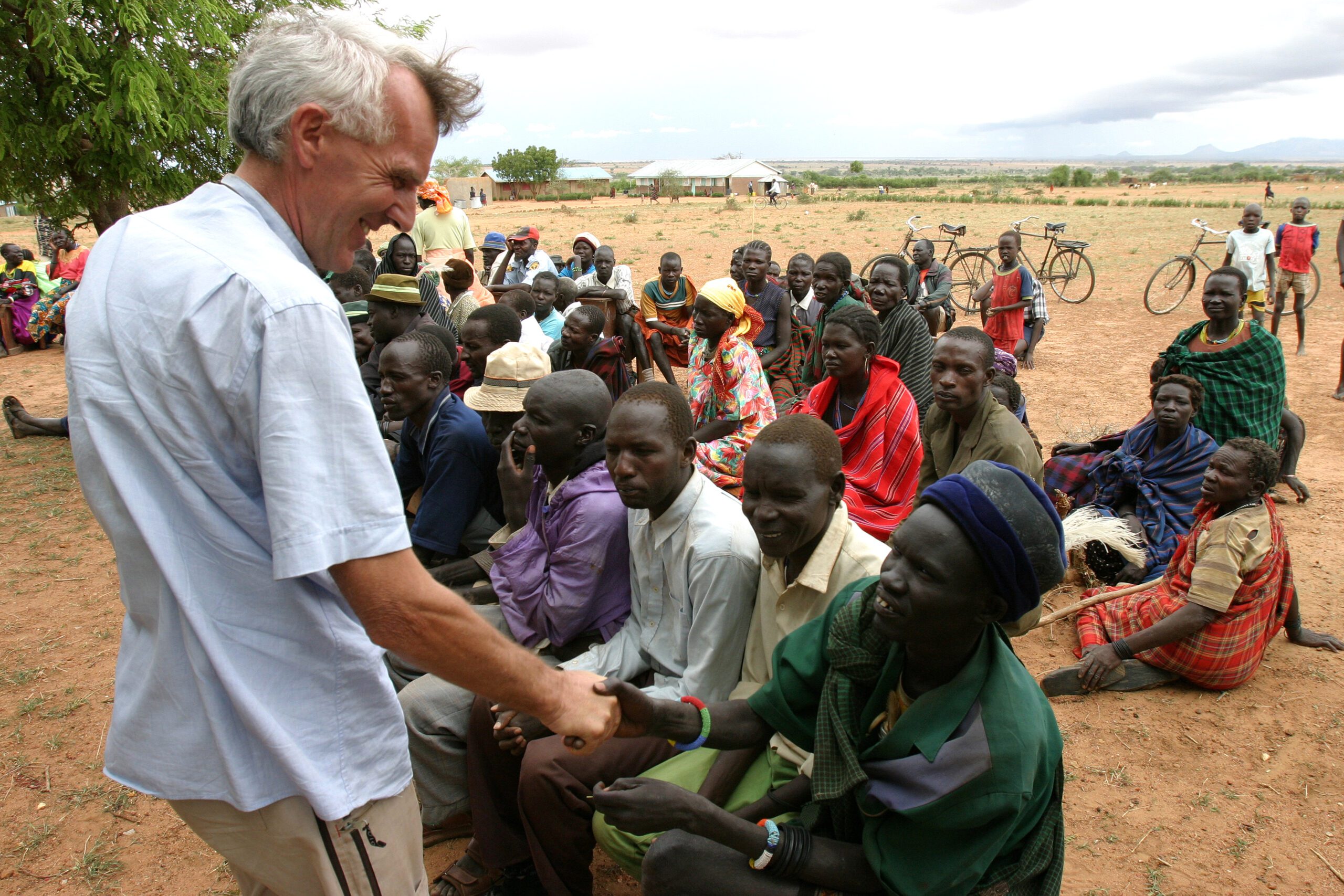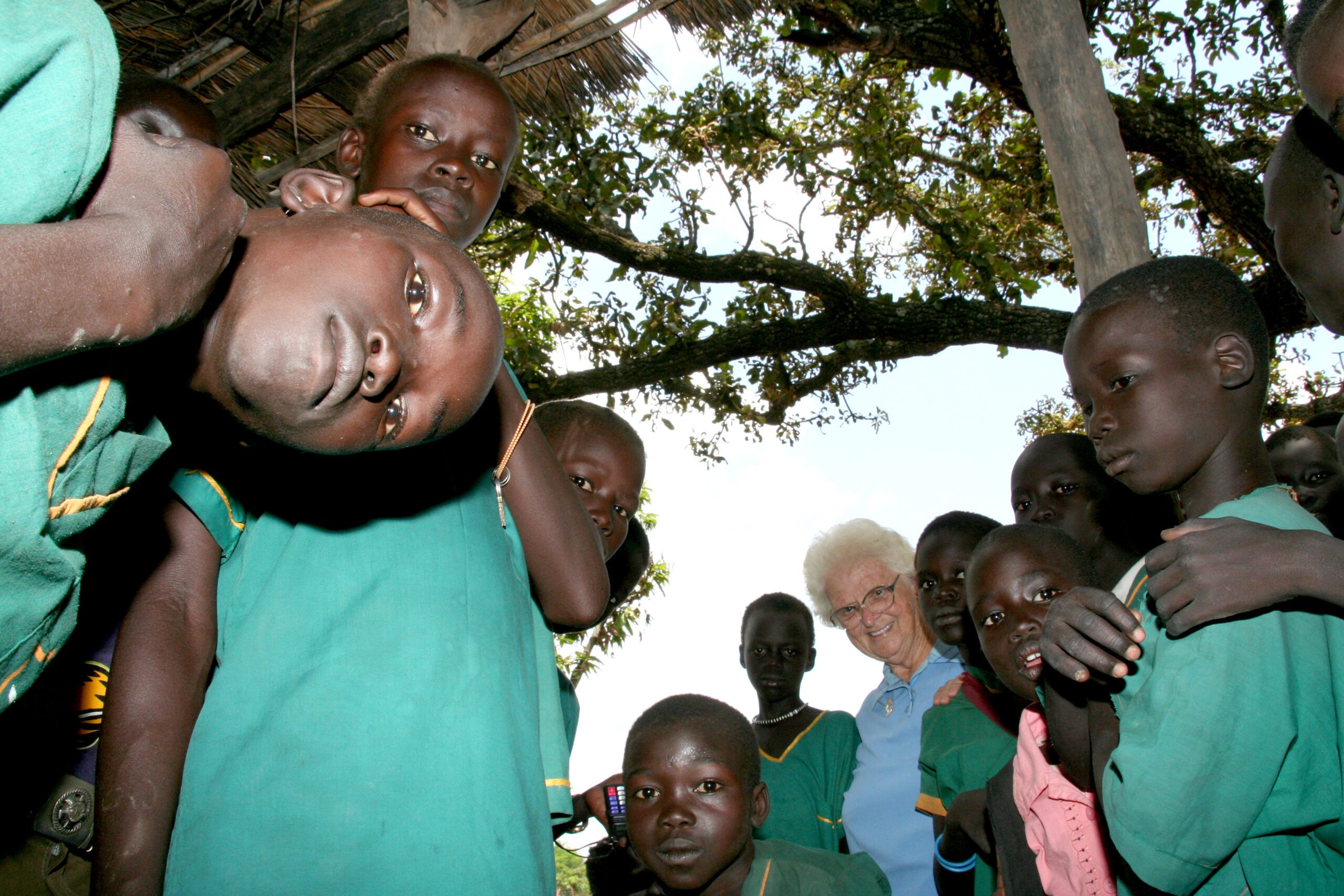
It was my very first trip to India. My destination was the City of Guwahati in the beautiful land of Assam – seemingly a corridor squeezed between Bhutan and Bangladesh – in the northeast of India. As a missionary, I aimed at visiting new Catholic missions which now, despite some difficulties, are flourishing in vibrant faith, nourished by true shepherds – humble and dedicated priests who face all odds in caring for their flock.
After those inspiring days of itinerant travelling from mission to mission in the territory of Guwahati, I travelled to the Apostolic Vicariate of Jowai, accompanied by Archbishop Thomas Menamparampil, former shepherd of the flock in Guwahati and now entrusted with the small, yet vibrant, diocese on the hills of Jowai. It was Holy Week and the fervor of the faithful warmed my heart as we participated in different celebrations in the various communities of Jowai. The unfamiliar languages used by the different ethnic groups in their celebrations did not hinder me from being fully immersed in that spirit of joyful worship as, in their simplicity, they passionately worshipped the Lord in song and in prayer.
During one of those cool nights, I was handed a biography of one of the heroes from northeast India. I had never heard her name before nor had I a hint of her story. But the fact that it was about a woman boxer made me open the book and start to read. Her name is Mary Kom. She is a five-time World Amateur Boxing champion and the only woman boxer to have won a medal in each one of the six world championships. She became the first female Indian boxer to get a gold medal in the Asian Games in 2014 in Incheon, South Korea. No wonder her fame spread under her other title, “Magnificent Mary.”
HUMBLE BEGINNINGS
What is it that makes Mary Kom “magnificent?” She was born in Kangathei, in the remote district of Manipur, northeast of India, to a poor family. Her parents did not own any field but toiled others’ fields. Being the eldest, she spent her time looking after her two younger sisters and a brother, besides helping her father with the work in the fields, cutting wood, making charcoal, and fishing.
At an early age, she was already interested in sports, hoping to carve a name for herself as an athlete. That did not happen – just yet. In 1998, boxer Dingko Singh won a gold at the Asian Games that made India proud. This incident inspired Mary to take up boxing. What a crazy idea! In her traditional milieu, she had to face that reaction of her own parents, besides the financial constraints. Mary, undaunted by the opposition and all the difficulties, travelled to Imphal and requested the coach at Manipur State Boxing, M. Narjit Singh, to train her. She was passionate about the sport and was quick to learn. Often, she would stay late in the night practicing even after others had left.
A WIFE, A MOTHER AND A CHAMPION
Despite social prejudice and financial difficulties, “Magnificent Mary” worked hard to transform her dreams into a reality, winning several competitions, bringing her name, and India’s, into the limelight of world female boxing.
She was able to lift herself out of poverty as a result of her deep commitment to boxing. She also became a loving wife to K. Onler Kom and mother to three children. But her magnificence was further revealed in her hidden works of charity. She was not blinded by her success; her heart was always nurtured by faith. Like all of Manipur’s hill tribes, the tiny Kom community was converted by proselytizing American Baptist missionaries in the late 19th century.
Both Mary and Onler are devout to their faith. Once, her boxing robe bore the words “Jesus 100 percent.” Her faith keeps her humble and sensitive to the needs of children deprived of their dreams. With Onler, she put up an academy for boxing. Meant for poor Manipuri children, admission to the academy is free. In her spare time, Mary herself teaches the children. In her inspirational talks, she advises children never to look back at their old lives, never to cry over their poverty, but to move on, encouraging them to chase their dreams and have faith in God.
Mary Kom’s faith in God and in herself, her heroic commitment to face all odds and fight for her dreams, and her generous and passionate heart for the poor – more than all the titles she has won and will eventually win – make her “magnificent” indeed.
Before realizing it, I had devoured the entire biography and learned a simple, yet very important, lesson on being ‘magnificent’ for the poor.
KOLKATA, MY NEXT STOP
Grateful for the faith-nourishing visit to the hills of Jowai, I then made a short stopover to Kolkata before coming back to the Philippines. It was evening when I arrived. After a much-needed restful night, I found myself walking the streets of the old Kolkata. I wanted to see the real life of the people who struggle in the urban jungle of the third most populous metropolitan area in India. As a growing city in a developing country, Kolkata has substantial urban pollution, messy traffic and alarming poverty. In this scenario, the struggle for survival is clear: children and old people beg, others scramble through the garbage to collect recycables, food, or anything still useful, while others put their weak bodies to work pulling rickshaws through the crowded streets, the cheapest means of transportation for those who can afford it. It was all the more shocking to me to see how extreme poverty coexists with affluence of people engaged in business on its crowded streets. Joy and tears, hope and despair, life and death co-habit on the same streets here.
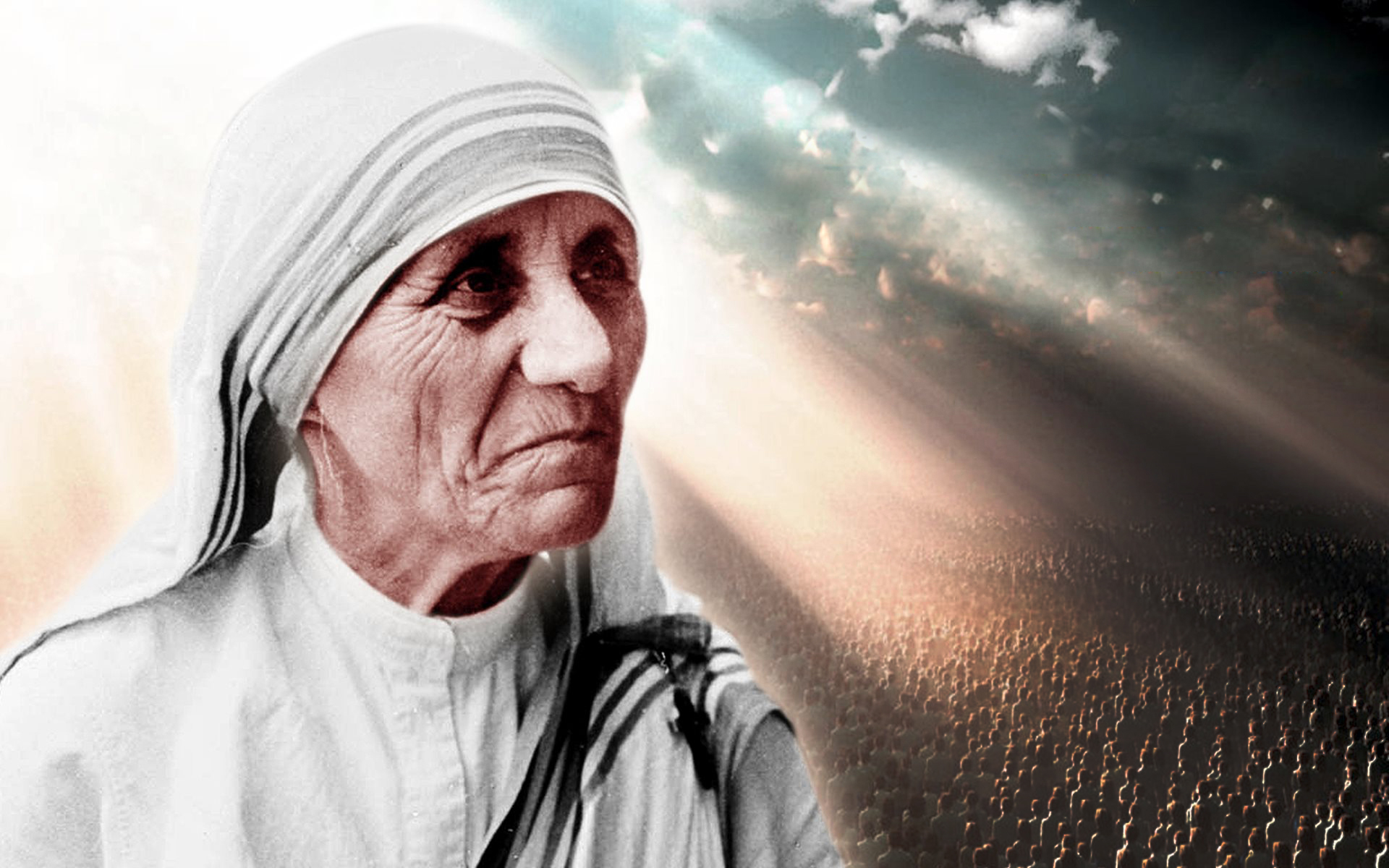
As I kept walking, immersed in my thoughts, I found myself at No. 54A, the resting place of Blessed Mother Teresa of Kolkata and the mother house of the Missionaries of Charity.
A SECOND MARY
A smiling Sister invited me to enter. I removed my shoes, according to the Hindu tradition and entered the simple place where Mother Teresa’s remains dwell. What peace! I sat on the floor and my eyes fell on her tombstone with the inscription “Love one another as I have loved you” (Jn 15:12). The Sister handed me a few flyers on Mother Teresa’s life story and some of her well-known quotes.
I browsed through them and recalled her life journey. As a young girl, when she was only 8, Teresa suddenly lost her father. She became very close to her mother, a pious and compassionate woman who instilled in her daughter a deep commitment to charity. Even though they were not rich, Drana Bojaxhiu, Teresa’s mother, extended invitations to the poor to dine with her family. At the age of 18, Agnes Bojaxhiu decided to become a nun and joined the Loreto Sisters of Dublin in Ireland. It was there that she was given the name of Sister Mary Teresa after Saint Therese of Lisieux. Another Mary! Yes, this was the second Mary making an impact on my journeys in India.
Kolkata was her first assignment after her First Profession, to teach at Saint Mary’s High School for girls. Sister Mary learned to speak both Bengali and Hindi fluently. Only after her Final Profession, on May 24, 1937, as customary to Loreto nuns, she received the title “Mother.” Thus, she became known as Mother Teresa. For several years, she was involved in teaching but she was distressed by the poverty she saw all around her.
Eventually, the call of the Lord to do something to the visible plight of the poor was too clear to be ignored. In 1948, Mother Teresa set aside her nun’s habit. Adopting instead a simple sari and wearing sandals, she moved into a small rented place in the slums to begin her work. Facing all sorts of adversities, her good works began to spread and, soon, she had volunteers wanting to join her. By 1950, she started the Mission of Charity, a congregation dedicated to caring for the hungry, the naked, the lepers and all those who are rejected, unloved and marginalized by society. All found a heart full of love and caring hands in Mother Teresa. She led the Missionaries of Charity through great works of mercy until a few months before she died on September 15, 1997. Beatified in 2003, her canonization is expected in the near future.
THE JOYFUL CRY OF GOD’S TENDER LOVE
Time had passed but I was in no rush to leave such a place of peace. From the corner where I was seated on the floor, I observed how people would walk in silently and be immersed in prayer no matter what their religion is. For some, a smile; for others, tears were their way of expressing their love for a simple Mary who became their inspiration, the joyful cry of God’s tender love for all, particularly for the poor.
Even in silence, from her tomb, Mother Teresa, continues to echo the invitation of Jesus to “love one another.” This mission is unending and all encompassing of all charisms, ethnicities, religions, languages, etc. Mother Teresa had reminded us: “Not all of us can do great things. But all of us can do small things with great love.” Oh, how better this world will be if only all of us would follow Mother Teresa’s exhortation.
THANK YOU, MARYS
A soft hand touched my shoulder, almost like waking me up from a dream, I followed the smiling Sister. We climbed the stairs until we faced a closed door with bars. “This was her room.” The Sister murmured in a soft voice. “That was her bed, this was her simple table. That’s her crucifix… there on the wall… she loved so much…This is a very hot place but, you know, even in the height of summer, she never had an electric fan.” I was silenced by my own shame, thinking of the comforts I have in my room. Again, her words in her biography resounded: “Live simply so others may simply live.” What a powerful practical lesson. Thank you Mary!
As I was going down the stairs, I chatted with that affable Sister, revealing to her that I am a missionary priest working in the Philippines. She grabbed my hand and led me to another staircase until I could see an old Sister on a wheelchair praying the rosary on the balcony. “Go, greet her. Tell her who you are. She is our number 3!” she whispered to my ear. I approached the old Sister who took my hand with affection. I introduced myself to her and she gave me a lingering smile. “Please,” she said, “tell all the Filipino people that God loves them. God loves them very much! I will pray for you.” With those words, she let go of my hand and held her rosary again. I thanked her, turned around and walked down the stairs. As I was about to step out of the door of No.54A, my kind smiling guide shook my hand and thanked me for the visit.
The following day, I flew back to Manila. I thanked God for the two great Marys I encountered in my journey to India. “Magnificent Mary” taught me the will power of a humble heart and the magnificence of helping others. Mary Teresa reminded me that, even in small ways, I can share the great love of God and that this is my basic mission as a missionary priest in the Philippines: to let people know that they are truly loved by God.