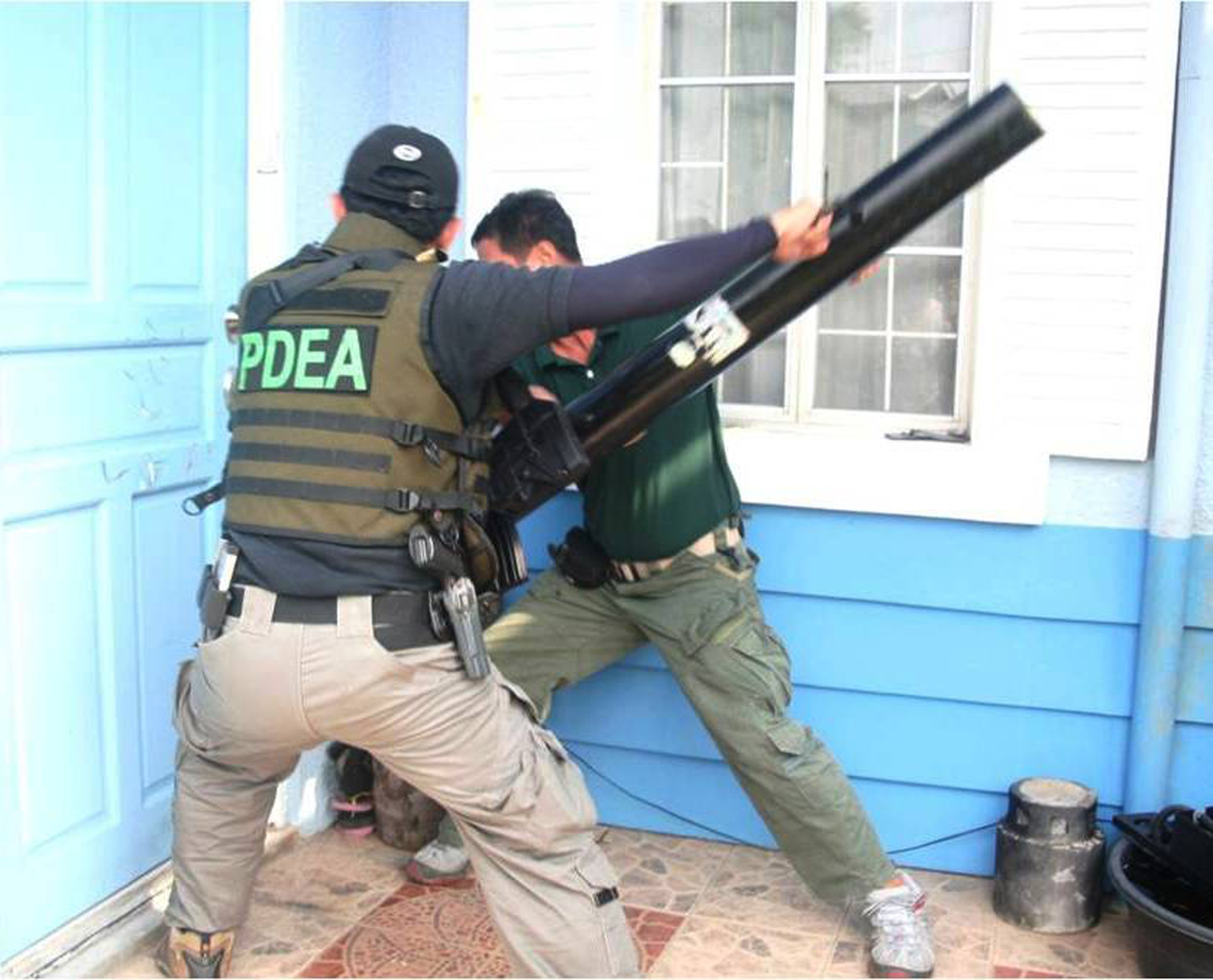


The failed prohibition model. During the decades since Richard Nixon declared “war” on illegal drugs in 1971, the United States has spent nearly one trillion dollars trying to eradicate the drug trade, filled America’s prisons with nonviolent drug offenders, ruined millions of lives and undermined the Bill of Rights – especially the Fourth Amendment’s protections against unreasonable searches and seizures. Beyond America’s borders, the results have been even worse. The greatest tragedy has occurred in Mexico. When President Felipe Calderón took office in December 2006, he launched (with Washington’s encouragement and financial support) a military–led offensive against his country’s powerful drug cartels. The result was an explosion of violence that has claimed more than 50,000 lives. Yet, the cartels are more powerful than ever and challenge the Mexican government’s control in several parts of the country, especially along the border with the United States.
Mexico’s cartels have also set up shop in several Central American countries, putting that region back on Washington’s security radar for the first time since the end of the Cold War. Evidence indicates that those criminal syndicates now control vast swaths of territory in Honduras and Guatemala – perhaps as much as 40% of the latter country. Drug violence and intimidation is also beginning to spill over Mexico’s border with the United States. Ranchers in southern Arizona, New Mexico, and Texas report increasing encounters with heavily armed cartel enforcers, and some ranch workers openly express fear about working on lands anywhere near the border. The reason the Mexican cartels exercise such worrisome clout is because they have vast financial resources at their disposal. By most estimates, they control at least $35B–a–year of a $300B–a–year industry.
Because drugs are illegal, the cartels enjoy a huge black market premium. As much as 90% of the retail price of illegal drugs is a result of that illegality.
Albert Einstein defined insanity as doing the same thing over and over and expecting different results. After waging a futile war on drugs for more than four decades, while causing horrific unintended consequences both here and abroad, it is well past time to try a different approach. The core of a new strategy should be to de–fund the Mexican drug cartels. The only way to do that is to eliminate the lucrative black market premium. And that means abandoning the failed prohibition model. Prohibition didn’t work against alcohol in the 1920s, and it’s not working any better today against marijuana and other illegal drugs. The saddest part of the silence about the drug war in the presidential campaign is that foreign leaders and the American people seem ready for a serious debate about the issue. Numerous foreign leaders, including two former presidents of Mexico, Ernesto Zedillo and Vicente Fox, and former president, Fernando Henrique Cardoso of Brazil, have denounced the war on drugs. And their ranks continue to grow, as other countries grow weary and frustrated at Washington’s demands that they accomplish the impossible and shut off the flow of drugs into the United States.
Domestically, change is in the wind as well. A 2011 Gallup survey showed that 50 percent of Americans were in favor of legalizing marijuana – by far, the largest percentage since the surveys began in the 1970s. Furthermore, solid majorities (some 57%) of both Democrats and Independents endorsed legalization. Indeed, the only demographic sector in the survey that firmly embraced prohibition consisted of people over 65. The mortality tables alone indicate that sentiment in favor of legalization is likely to prevail within the next decade or so. (TGC)
A war on children and the poor. The voters of Colorado and Washington passed measures to legalize marijuana, amounting to local shifts, for the moment. So we shouldn’t delude ourselves that the country will be transformed overnight, but the public thinking, the public spirit is being transformed. Finally, there is a growing realization that this “war” has produced nothing but a legacy of failure. And who wants to be associated with failure? Let’s be clear what we’re discussing here. Not in question is the ravaging impact drugs can have on individuals – too many of us know people who have suffered in this way. But we need to see addiction for what it is – not a criminal matter but a public health issue, and a huge social issue, especially for the young. In fact, instead of a “war on drugs,” it is better to call it a war on children. In many parts of our country, a child strays a little at 14; tries a drug, then unable to think of how to pay for it, sinks into the underground economy. Before long, he has a mark on his record, a mark that will be with him for the rest of his life. So you have a cycle of degradation, starting at 13, 14, and never geting out of it. We now know so much about child development, the importance of the early years, how communities help in the developing process. Instead we eviscerate neighborhoods, we strip away the infrastructure that once provided towns with resources. And with this “war,” we’re talking about the erasure of a population – which was once black America; now, just poor America. These are people removed from the official American story – not able to participate in democratic elections, millions of them, locked up, often for nonviolent drug–related crimes. So, at the very minimum, the poor are taken away from the levers of power.
There is a new consensus that the economic view is becoming very influential in shifting attitudes on drugs, how the money saved from policy–making and the amount gained through taxing legalized drugs can sway opinions.
Obviously, we would all shudder to think that an economic collapse of a depravity like could bring about a country’s end. I think it’s also true that what’s happening is more complicated – economic calculations meeting up with humanitarian concerns. So we have the likes of Grover Norquist, the conservative founder of Americans for Tax Reform, and Chris Christie, the Republican New Jersey governor, finding unlikely bedfellows with Russell Simmons and Danny Glover, producers of my film, “The House I Live In.” All see a failed approach.
When I set off to make my film, I wanted to speak to people all over the country touched by drugs. Not only the users and dealers and family members; but also judges and police and wardens. I was a sort of court reporter, capturing the argument between these two camps. In fact, everybody sounded like a victim. The people who worked in the penal system wanted those jobs like they want a hole in the head; they were doing work they took no pride in. Ultimately, there were very few people who wanted to work in a system whose success relied on churning out fellow humans to lock up. And, of course – in class terms – there’s far more commonality. Prison guards would tell me that they had relatives in prison, high school friends. And, hauntingly, everyone had a story about how broken the system was. But there’s a shocking fatalism in play. What I found was lots of people saying:
“Eugene, I know the system is broken and I wish you well. But dream on, it is so vast and has so much bureaucratic thrust; you’re deluding yourself if you think it can be fixed.” But these wardens would then say: “But until you do, I have to do my job and, by God, I’m an American and I’m going to do it better than the next guy.”
Admirable in one sense, but it greases the wheels for the continuing operation of the machine. So a judge will quite sincerely tell you how he has no choice but to imprison a nonviolent person for 20 years because of mandatory sentencing – and he’s right – but then, over lunch, he’ll tell you how much he regrets doing so. For a country founded in revolution, we have become spectacularly unmoored from the notion of revolutionary behavior. But, we keep the bodies moving through the system. I’m not going to pretend that the collapse of the “war on drugs” would transform life chances overnight for those born poorest in America. But, if we were to stop kneecapping many communities, we would free them at least to get their feet on the ground in normal ways. We could also save a tremendous amount of money that we could ask ourselves: What could I do that would plant a tree? What could I do in the neighborhoods that would actually foster the values that built civilization and would help young people find pathways other than those that end up in addiction?
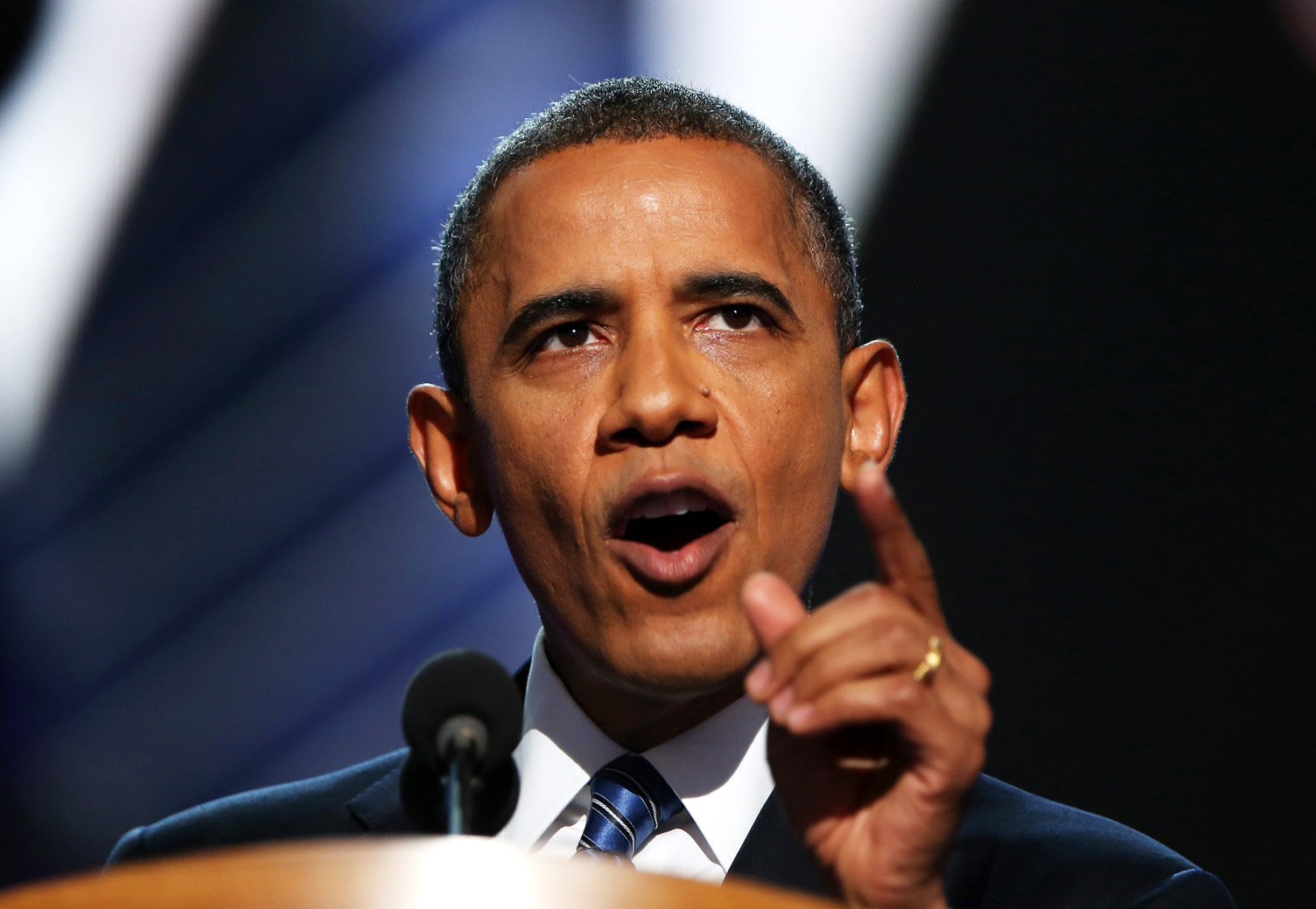
Progress is not going to be immediate on the national stage. Obama, I’m sure, would recognize the logic in the film, and then he would do what he had done for the past four years – he wakes up with the Washington machine.
Four years ago, I met with his team; they said all the right things. Don’t talk about a war on drugs, they said. You don’t have a war against your own people. But, still, they’ve carried on in the same way. What will bring about change is public demand. The public has to boo and hiss politicians who pander in this way – who say they are being tough on crime when they are destroying communities. We need to tell them that we won’t let them vilify our neighbor to keep the penal system running. We will do that if we recognize that drug–mongering is no more substantial than WMD–mongering. And we know how that turned out. Americans have been an impressionable lot, but we’re becoming less so. Bit by bit, we’re realizing that the “war on drugs” makes no sense. And, if we let politicians know this, they have no choice but to become smarter and answer our demands. EJ
Excerpts of the two texts were edited by Manuel Giraldes. Ted Galen Carpenter is the vice president for defense and foreign policy studies at the controversial and rather conservative Cato Institute. He is the author of eight and the editor of 10 books on international affairs, including “Bad Neighbor Policy: Washington’s Futile War on Drugs in Latin America.” Source: http://www.huffingtonpost.com/ted-galen-carpenter/ Eugene Jarecki is the director of “The House I Live In,” the documentary that won the grand jury prize at the 2012 Sundance Film Festival, the main reference for alternative and independent movies. Source: www.guardian.co.uk/…/eugene-jarecki-us-states-legalise-marijuana