The World Social Forum (WSF) offers us a unique occasion to reflect upon the relation between mission and world social transformation towards a higher level of social justice, of collaboration with God in order to complete the work of creation which is still in course, of liberation from so many kinds of slavery that impoverish and crash the dignity of billions of people, and of the growing solidarity in a world that is each day more globalized and interdependent.
To go to Brazil to participate in the 8th WSF is for me, first of all, a pilgrimage – a pilgrimage to the continent and the country where so many martyrs and prophets for the cause of the kingdom of God worked, gave up their lives, and are buried. Their testimony made visible a more just and brotherly social order that, respectfully, takes into consideration the integrity of creation. They sought with tenacity, vision, and courage some of the objectives that the 2009 WSF now tries to shade light upon and to propose to the attention of a world that is frightened and disturbed by the current financial crisis. This is just one more confirmation of the fragility and perversity of the neoliberal system which, arrogantly and violently, was imposed by the United States on the rest of the world.
ECOLOGY AND MISSION
First of all, I would like to recall Ezechiele Ramin (nicknamed Lele), a Comboni Missionary sacrificed in 1985. Then, land problems were at the heart of such kind of violence in Brazil and they still are. Also in Africa, this is becoming common, particularly in Kenya. There, the population is four times bigger than it was in 1963, its independence year. The total number of inhabitants was then nine million. Now, they count thirty-six million. Crimes even within families because of land sharing (inheritance division) are countless. Productive lands are few as regular rains that guarantee sowing and good harvesting are very rare. Waters from rivers and lakes are decreasing due to deforestation of great mounts such as the Kilimanjaro and the Kenya mountains that used to guarantee regular rains and held great water reserves. Available land is also getting less because of urban expansion.
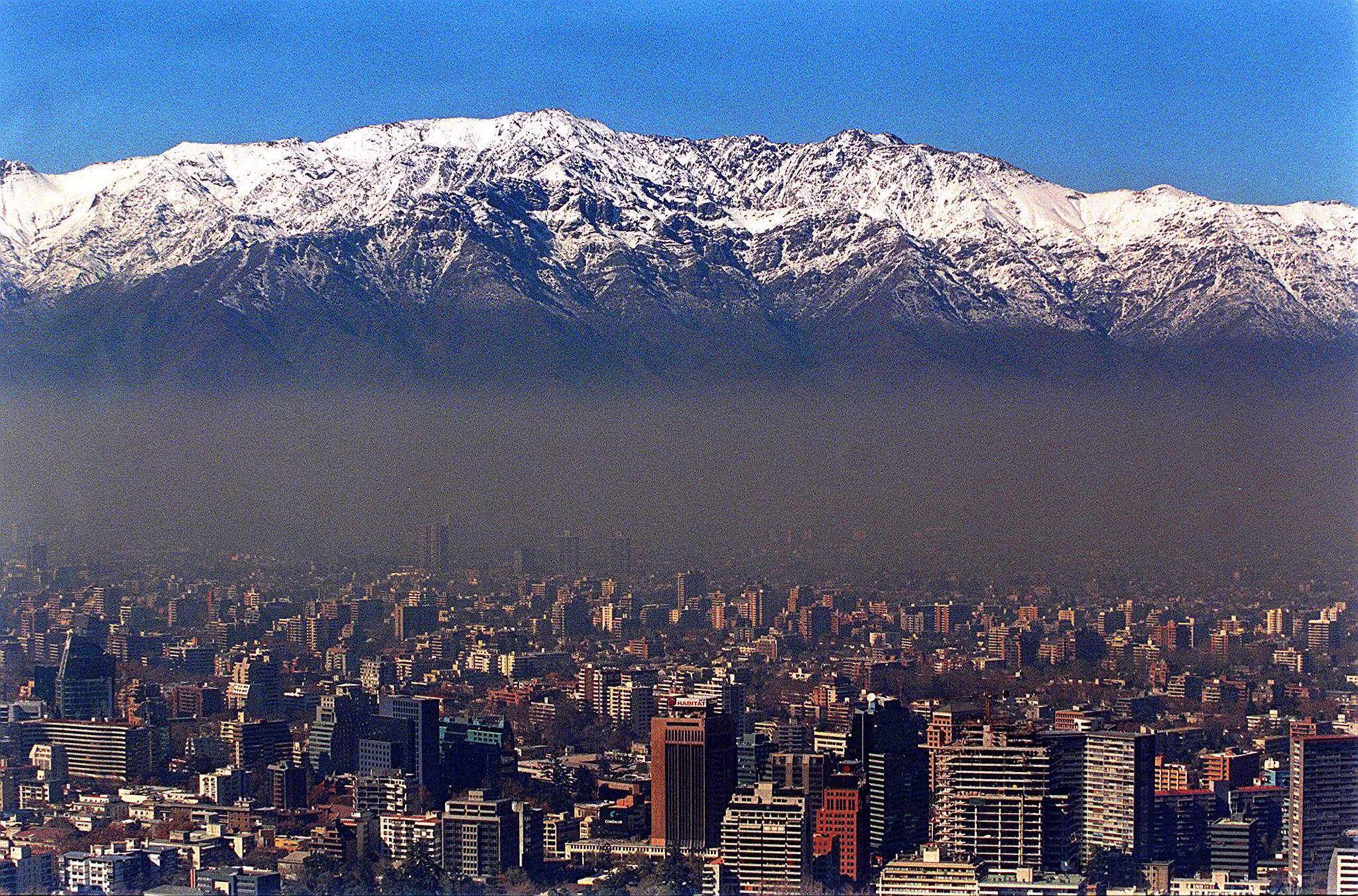
Pollution is a big problem. In Nairobi, the number of cars has gone up – at the rate of thirty thousand new cars circulating each year. But the roads are still those of the 1980s. In the city, more than the cars’ circulation, there is burning up of fuel while trying to move just a few meters. Nevertheless, the car culture has contaminated everyone. Public services are still a dream. So, there are many particular services of transport that pursue profit at any cost but are unsuitable because they look like moving chimneys. Besides, they are unsafe means, provoking constant accidents leaving many dead and maimed survivors.
Will the 2009 WSF, which will take place in Belém in the Amazon, a key region for the world’s ecosystem, contribute to increase ecological conscientiousness among us missionaries so that we will make it our pastoral aim in serving the people? In Christian communities, from the basic to the parishes and dioceses, are the Catholics more sensible than others? Is ecology part of the missionary commitment? Is ecology one of the kingdom values we are committed to? Are we, in a missionary perspective, also dependent on a car: a machine? Is this the message we try to get across? In this context, how can we forget Chico Mendes, a martyr of the Amazon in 1988, a laborer and rubber collector who put together, as it was later written, the cry of the poor with the cry of the earth?
THE KINGDOM VALUES
The second witness I wish to remember is Franco Masserdotti (a Comboni bishop who was killed in a road accident while riding on his bicycle a few years ago) who has been a great friend of mine since 1960 when we first met at the Novitiate of Gozzano (Novara, Italy). He furthered his missionary preparation getting a Degree in Sociology from the University of Trent and I, a degree in Theology from the Gregorian University in Rome. He was a confrere who, more than anyone else, opened my eyes to the Latin American situation and made me familiar with names such as Luciano Mendes de Almeida, Aloísio Lorsheider, Gustavo Gutierrez, Leonardo Boff, Frei Betto. He helped me to go beyond Africa. There is a danger for us missionaries to leave aside the dimension of world challenges and to close ourselves in a small space. A “parochial mentality” – which in English means a limited horizon, a narrow scope or outlook which does not take one beyond the front door – gives us an inadequate perception of where the causes of poverty, social injustice, environmental degradation and, above all, the structures, without which starting the mechanism of a true social transformation won’t be possible. In this matter, Franco Masserdotti was a great master.
Who has not come across the famous phrase of (Brazilian) Bishop Hélder Câmara: “If I give bread to the poor, they call me a saint. If I ask why they are poor, they call me a communist.” At the time, in the United States, a woman had the same kind of vision: she was Dorothy Day, the founder of the Catholic Workers Movement (see pages 36-37). She wrote in her memories: “I have read a lot about the life of the saints and I was impressed by their generosity and dedication. But I still ask myself: Did it occur to them why there are so many impoverished people?” A mystic woman engaged in social transformation, Dorothy found in her spirituality and in her prayers a vision and the necessary strength to live coherently for the poor, at the cost of police persecution – sometimes she even landed in jail – and of the perplexity shown by no few ecclesial circles. The cause of her canonization has just been opened!
This multitude of martyrs, prophets, and builders of the kingdom of God give us the guarantee that the religious, social, and political dimensions and the mission are inseparable. That is why ministerial pluralism involving priests, laity, and active religious people, interdependent and complementary in the apostolic communities, is so urgent to promote and to spread out this vision of an apostolate that integrates the religious and social dimension and brings together consecrated people and the laity.
A MORE ACTIVE PEOPLE
Vatican II begins one of its main documents, Gaudium et Spes, with a vast analysis of the social change, a main characteristic from the end of the Second Millennium and the beginning of the Third: “Today’s spiritual agitation and the changing conditions of life are part of a broader and deeper revolution. (…) History itself speeds along on so rapid a course that an individual person can scarcely keep abreast of it. The destiny of the human community has become all of a piece, where once the various groups of men had a kind of private history of their own. Thus, the human race has passed from a rather static concept of reality to a more dynamic, evolutionary one. As a consequence, there has arisen a new series of problems, a series as numerous as can be, calling for efforts of analysis and synthesis” (GS, 5).
It is true! In the last 60 years, the road has been global and vertiginous. We people with gray hair have witnessed and are subjects and objects of immense transformations. When I first read the biography of Comboni by Fusero in 1957, Africa was still a European colony. However, in that very same year, the first sub-Saharan nation became independent: Ghana of Kwame Nkruma. After that, came the fall of the colonialism during the 1960s and went on until the liberation of Mozambique in 1975; Africa got a new configuration. But history did not end with the independency: there came about no democracy but dictatorial regimes. Political powers were taken by force in the context of a bipolar world: Russia/Communism and United States/Capitalism – a world order, it can be said, that created the ideal humus for dictators either from left or right, particularly in Africa and Latin America. They played between the two superpowers in order to consolidate power in detriment of their own people.
Nevertheless, the Christian communities have not been passive and inert. In Latin America, particularly, they have played a unique and very important role in the difficult path to liberation and to end dictatorships.
Liberation theology has been a fruitful expression of this with no little ramifications in Africa and Asia. Liberation theology gave the vision and rooted the social and political dimensions in the faith and thus, promoted a new way of reading the Bible. The popular movements, in contact with the basic Christian communities, updated the reading. The local Latin American Churches got together in Medellin in 1968, long before the other continents, to translate and to incarnate the Vatican II into the local context. In no other region Vatican II has had such a systematic and popular welcoming as in Latin America. Medellin and Puebla are witnesses to this.
The Synod of the Bishops of 1971 in Rome has seen, in popular movements, manifestations of the signs of the times – social events marked by a powerful and mysterious presence of the Holy Spirit, the first protagonist of mission, opening the door to a new season: “Scrutinizing the ‘signs of the times’ and seeking to detect the meaning of emerging history, while at the same time sharing the aspirations and questionings of all those who want to build a more human world, we have listened to the Word of God that we might be converted to the fulfilling of the divine plan for the salvation of the world. At the same time, we have noted the inmost stirring, moving the world in its depths. (…) There are facts constituting a contribution to the furthering of justice. In associations of people and among peoples themselves, there is arising a new awareness which shakes them out of any fatalistic resignation and which spurs them on to liberate themselves and to be responsible for their own destiny. Movements among people are seen which express hope in a better world and a will to change whatever has become intolerable.”
PROPHETIC PERSONALITIES
Gustavo Gutierrez, Leonardo Boff, Paulo Freire, Chico Whitaker – prophetic personalities rooted in the world of the poor, scientifically competent and charismatically influential. They have accompanied the journey with an appropriate reflection without which the consciousness process would have been impossible. Such consciousness was fundamental to help people assume themselves as full subjects and to go beyond apathy and passivity.
Without that (critical) consciousness, one may fall into a kind of ideology that is far from the evangelical message and praxis. One cannot forget the beginning of the 1970s when Gustavo Gutierrez, the first among the liberationist theologians, wrote his classical Liberation Theology. This writing sanctioned a new way of doing theology based on a new way of being Church: the Basic Christian Communities (in Africa they are called Small Christian Communities). Paulo Freire with his Pedagogy of the Oppressed had great success in Africa – we, from the Institute of Social Ministry in Nairobi, studied it from the beginning to the end. Who did not feel challenged by the famous affirmation of Chapter III: Action without reflection is activism that does not transform; and a reflection without action is a discourse that does not leave a mark? Leonardo Boff, with his book Christ the Liberator, contributed to translate and to reintegrate the classical but abstract theology of Redemption in that no less biblical but more fruitful and pastorally applicable Liberation. Finally, Chico Whitaker, also a Brazilian, a great collaborator of the Brazilian Bishops Conference (CNBB) in the times of the dictatorship; like Freire, had to go into exile for 15 years (from 1966). He made a significant contribution to the launching of the WSF in the beginning of the year 2000.
LIBERATION MISSION
The use of the Bible shows the mentality of who makes use of it and reveals the vision of the world of its reader. For many centuries, the classical biblical quotation for the mission was Matthew 28:16-20: “Go, therefore, and teach all the nations, baptizing them in the name of the Father, of the Son, and of the Holy Spirit. And teach them to observe all that I commanded you.” Since baptism is the official entrance to the Church, mission was seen with a very ecclesiocentric tonality, almost at the service of the numerically growth of the Church. The kingdom of God that inspired the motivations and actions of Jesus had disappeared. In the year 2000, other biblical texts were quoted, without forgetting the former. The first among all the new texts was that of Luke 4:14-22 that reveals to us the missionary consciousness of Jesus manifested in the Synagogue of Nazareth by using the words of Isaiah: “The Spirit of the Lord is upon me, because he has anointed me to preach good news to the poor. He has sent me to proclaim, to release the captives and bring sight to the blind, to set at liberty those who are oppressed, to proclaim the acceptable year of the Lord” (Lk 4:18-19).
Here, mission is very global and brings together the religious and the social dimensions, a personal conversion and a communitarian transformation. This is the mission of the Church elaborated in Gaudium et Spes and later taken at the Synod of Bishops in 1971 from which we present other relevant pieces: “Listening to the cry of those who suffer violence and are oppressed by unjust systems and structures, and hearing the appeal of a world that, by its perversity, contradicts the plan of its Creator, we have shared our awareness of the Church’s vocation to be present in the heart of the world by proclaiming the Good News to the poor, freedom to the oppressed, and joy to the afflicted. The hopes and forces which are moving the world in its very foundations are not foreign to the dynamism of the Gospel, which through the power of the Holy Spirit frees people from personal sin and from its consequences in social life. (…) Action on behalf of justice and participation in the transformation of the world fully appear to us as a constitutive dimension of the preaching of the Gospel, or, in other words, of the Church’s mission for the redemption of the human race and its liberation from every oppressive situation. (…) At the same time as it proclaims the Gospel of the Lord, its Redeemer and Savior, the Church calls on all, especially the poor, the oppressed and the afflicted, to cooperate with God to bring about liberation from every sin and to build a world which will reach the fullness of creation only when it becomes the work of people for people.”
PROTAGONISTS OF TRANSFORMATION
The local Churches are social actors: this is deduced from what has been said above. Here we just wish to add some points in order to show how, in fact, this social responsibility is put into action. One of the many fruits of the Vatican II was the rediscovery of the local Churches as the sacrament of salvation of the peoples, through cultures, the continents and the environment in which they are located. “Local” means a profound relation with the human, social, political, and financial aspects of the continent in which a local church is situated. Sacrament of salvation is commonly said to be all that the word salvation implies; it has to do with the presence and action of a particular community, a local Church. Salvation is for all but the vehicle that makes it visible and orientates it is the community of those who, through baptism, have accepted to be an instrument of salvation to all the others. One’s personal salvation depends on how much one has efficiently carried through his/her own vocation, being a vehicle of life, faith, liberation, communion, and solidarity to all the others.
Pope Paul VI committed himself to give Churches of all continents a theological, spiritual, juridical, and apostolic cohesion of their own; also the visible logistics structures, so that they could operate as a vehicle of salvation to others. This great investment, from a financial point of view, was squarely faced, with solidarity, by the economically better-off churches. Big ecclesial meetings have shown continental collegiality (solidarity): in Latin America, in Medellin and Puebla; in Africa, in Kampala, Blantyre, Nairobi and Accra.
In one of these big meetings, Jomo Kenyata, the founding father of the Kenyan nation, pronounced a famous phrase to the bishops: “You, Churches, must be the conscience of the nations.” Those who know the history in the last fifty years should remember the important role of the Churches in the process of liberation of no few nations: in the Philippines of Marcos; in Poland of the communist regime; in Malawi of Kamuzu Banda; the tribute of blood and ideas given in many countries of Latin America, from Salvador to Chile, from Guatemala to Brazil, with great figures such as Oscar Romero and the Jesuits of the University of Salvador; the Cardinal Raul Silva Henrique; defender of the human rights in Chile of Pinochet such as Hélder Câmara, Ezequiel Ramin; and Chico Mendes of Brazil, just to mention some. Aside from these, some local Churches in Africa, in the 1990s, facilitated transitions of many nations from dictatorial military regimes to a more participative and democratic political system. Not to mention the support given in times of emergency caused by wars and social instabilities and by natural disasters such as floods and droughts.
Also, the Nobel Prize for Peace given in the last fifty years, to prominent Christians such as Albert Luthuli (South Africa), Rigoberta Menchú Tum (Guatemala), Desmond Tutu (South Africa), Lech Walesa (Poland), Adolf Perez Esquivel (Argentina), Mother Teresa of Calcutta (India), Martin Luther King (United States), is a sign of the social commitment of local Christian communities.
A NEW SOCIAL PASTORAL
Reflecting upon the history of the last fifty years, we can say that the golden moment of the social presence of the Christian communities is linked, both in Latin America and in Africa, to moments of social emergency due to dictatorships or social instability or even due to natural calamities; in Europe it is linked to the clash with communist ideology. The local Churches succeeded in being efficient when they had a clear enemy to face, a “devil” to knock down. Its task is much more complex when it comes to putting forth proposals to build a new order. This is because the “devils” have disappeared or have become more difficult to identify. This is the challenge that the Christian communities, with little direction and insecurities, are facing at the moment. The task now is to invent, with courage, discernment and dare, a new configuration of the social pastoral.