
At the closure of the great Missiology Congress that was held at Kinshasa in July 2004, Msgr. Laurent Monsengwo, President of the Episcopal Conference of the DR Congo, stated: “The command of Jesus: ‘Go and teach’ is now our mission, without any restriction. It is the mission of Africa, it is the mission of the world.”
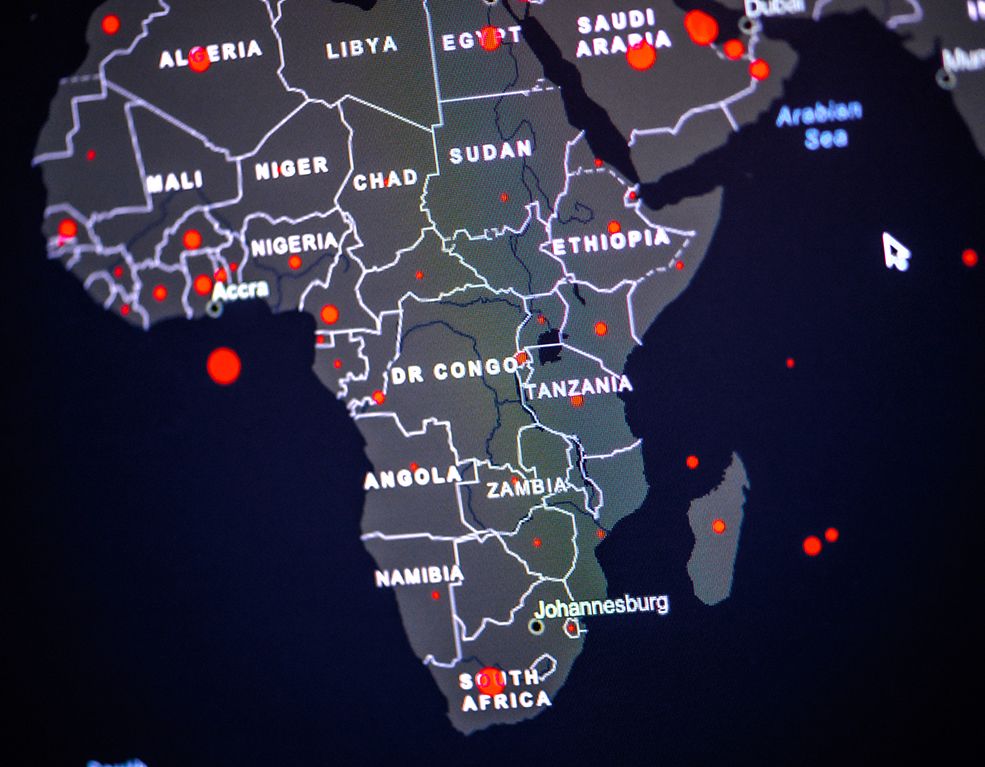
These words, undoubtedly, show a new consciousness on the part of the Churches of the African continent (159 million Catholics, 46 episcopal conferences, 630 bishops). From being Churches of recent foundation − several of them have not yet celebrated one hundred years of existence − they are becoming communities responsible for evangelization, in synergy with those of the other continents. We deal with a reality of extreme importance.
Three years ago, the 50th anniversary of a book published in Paris in 1956: “Some African Priests Question Themselves” was celebrated. In the context of the Bandung Conference (Indonesia 1955) in which 29 Afro-Asian countries had taken part, 13 African and Haitian priests questioned themselves about the future of Christianity in Africa. In the foreword, the Haitian priest, G. Bissainthe, wrote: “For a long time, our problems have been thought out by other people, without us or notwithstanding us.” In the Africa of that time, this was a rather embarrassing statement for the missionaries who were almost all of European origin. Today, however, statements of that kind are finding a right answer: the announcement of the Gospel in Africa belongs more and more to the African Christians.
AT THE SERVICE OF JUSTICE AND PEACE
The text of the Lineamenta that was sent to all the Churches in Africa for the preparation of the next continental Synod (2009) starts exactly with the Gospel words: “You are the salt of the earth…You are the light of the world” (Mt 5: 13.14). It is the same as saying: “Now, it is up to you!”
Naturally, the first question at once imposes itself: “How will this evangelization be? Which will be its contents? The Lineamenta states clearly: “The Church in Africa (must be) at the service of reconciliation, justice and peace.” This is a very concrete program that requires the Church not to be outside the world or neutral about social realities. It points to an announcement of the Gospel able to “help the Africans to find again, in the great trials they are going through, their capacity of reacting, putting together their energies in order to re-construct their wounded continent” as it is explained by Leonard Santedi, theologian and secretary to the National Episcopal Conference of DR Congo.
These words seem to sum up what the Cameroonian theologian, Marc Ela, wrote: “We deal with nothing less than a change of life, a change of the world in order to give sense and value to the struggle for justice and peace, tying it up with the whole revelation of God’s love, the mystery revealed in Christ Jesus, bringing a faith certainty about the liberation already accomplished in the Lord’s passion and resurrection. The Church in Africa is challenged to a duty of vigilance, and invited to be courageous. It must come away from the known paths. It must wake up from the dogmatic sleep to the awareness of the violation of human rights, the blind vexations, mutilations, and about the structures of inequality and domination prevalent among peoples, where the neo-colonial system extends everywhere its immense tentacles, with the complicity of the bureaucrats in power, while the brazen and scandalous prosperity of a tiny nucleus of privileged people condemns a very large number of young and old to misery.”
THE GOSPEL AS REFERENCE
Ela’s words seem to put in second place topics that, up to yesterday, were of great present-day importance like the inculturation of the Gospel in Africa, the theological and cultural pluralism in the Church, the contextualized reading of the Bible, the self-sufficiency in means and personnel of the Christian communities of the continent, etc.
Africa has fully entered the world dimension and its cultures now known as the crisis and challenges of all the cultures of the planet. Above all, they experience the confusion that feeds new conflicts in the name of the defense of wealth and cultural frontiers. The exponential increase in contacts between individuals of the five continents (it is enough to think of the 2 billion cellphones in circulation) favor the growth of a somehow unknown context destined to reduce and compress time and space, favoring the homogenization of cultures. Cultures must be respected but not made a god of.
“At this point,” writes Jesuit Fr. José Minaku Lukoli, “we are forced to ask ourselves a series of questions like: ‘What is universal?’ ‘What is particular?’ ‘What strategy will be necessary in order to put together these two instances?’ Every Church, every Christian community is called to step in and accept the encounter and the confrontation with other cultures and other faiths. While valuing and protecting its own initiatives, it must remain open to listening to the messages that come from elsewhere, to accept or to reject and criticize them in accordance with the basic reference point: the Gospel” (TELEMA, Kinshasa, 1/2007). In a nutshell, cultures must be respected − “In them the Holy Spirit is present’ (Redemptoris Missio, 29) − but they need not become a pretext for domination or conflict, as sometimes we see it happens.”
It is interesting, in this context, to note the remark of an Italian theologian, Msgr. Luigi Sartori: “Cultures don’t last two or three millennia, not even centuries, sometimes not even decades… There isn’t there a single culture, but many cultures. This is today’s drama: we need a gospel, a faith that has the capacity of living in continuous change, continuous renewal and continuous diversification. We have to live inside many cultural worlds, but in a way that we may implement communication between cultures or the capacity to go beyond a particular culture, without neglecting any but, as it were, being the leaven of all the cultures… There will be no culture that lasts sixty years” (The Finger Pointing at the Sky, Gregoriana, 2005).
THE WAY OF FORGIVENESS
“Where shall we sow the Good News of Christ?” Joseph Ndi-Okalla and Msgr. Antoine Ntalou ask in their recent book: “From One African Synod to Another: Church and Society in Africa.” This is a missionary question, both in contents and in methodology, to which the preparatory document of the coming Synod has already offered the beginning of a committed answer: Church in Africa: justice and peace.
The situation of violence and injustice in which many communities live clearly points out that there are Gospel values that must be proclaimed with greater commitment, as it were, than others. Some countries have known unspeakable sufferings. In particular, the RD Congo has seen almost 4 million dead (1998-2003): five times those of the hellish Rwandan genocide (1994). All those deaths were not only unnecessary but were also accompanied by arbitrary and humiliating acts of violence, caused by power-thirsty individuals, warlords.
The Gospel to announce points out one single way, Jesus’ way, the way of forgiveness and the Eucharist. As far as “forgiveness” is concerned, many documents of the African Churches point out to it as an extremely important “Gospel value” to proclaim in the present times. This is what the Congolese Episcopal Conference wrote, on January 5, the eve of the great peace conference for the Eastern part of the country: “True peace is only possible if there is forgiveness and reconciliation. Certainly, it is not easy to forgive because the spilt blood cannot be retrieved any more and violence leaves a heritage of pain that can be relieved only by a deep, loyal and courageous reflection on the part of the belligerents, ready to face the present difficulties with a purified sentiment of forgiveness.”
A RADICAL CHALLENGE
As for the Eucharist, it is the greatest sign of communion towards which we have to go, writes the Congolese biblical scholar, Kabasele Mukenge: “The shared Bread did not succeed in automatically stopping the outburst of violence. The Eucharist is not a prescription, but a program, a challenge, a commitment: born from human violence, bloodshed, it calls us to exit from this original violence through ethics of mutuality, living together and sharing” (The Word Made Itself Flesh and Blood. Reading the Bible in an African Context, Jn 13,30).
The Eucharist is the center of every community both old and new. Unfortunately, quite a number of communities got rid of it. In Kinshasa alone, it has been calculated that there are around 11,000 prayer groups guided by prophets who appeal to the Bible, to Jesus, the Universal Healer, which completely ignore the Eucharist. “The Eucharist launches a radical challenge to separation and fragmentation. It is the reminder that if the Church doesn’t continuously build this unity in plurality, it will sooner or later lose its meaning. If a community cannot welcome other people in its Eucharist, it will preach nothing but itself and there will be no more sign to point out to us where Jesus is, the source of unity, reconciliation and peace among people” (Maurice Cheza… The African Bishops Speak − 1969-1991).