In the West, few have heard about Muttawa. The truth is that this Saudi Arabian religious police force is responsible for the innumerable cases of persecution of Christians. The most recent one, related by the press, took place on June 9, 2006, when the Muttawa arrested four Christian leaders who were at a prayer meeting in a private house at Yeda, in Al-Rowaise district. Two of the leaders were from Ethiopia and the other two, from Eritrea. The four were leading a group of 100 persons who usually met in private to pray. They were taken to the prison for immigrants of Jeddah and, later, deported to their respective countries.
However, in the Saudi territory, cases of violence and abuses against the “unfaithful” — as the non-Muslims are traditionally called — do not end here. On April 21, 2005, in the evening, around 40 men and women were arrested in a barrio of the capital, Riyadh. The following morning the newspapers reported that the “security operation was successful,” as if they were criminals. A report, that attributed the success of the operation to Lieutenant-Colonel Saad bin Rechoud and to the religious police, stated the “arrest of forty persons, all Pakistanis, who were celebrating Christian rites in a church with crosses, images, statues and idols, where a man uttered a prayer and the others repeated after him.” The newspapers specified that there was a “woman among the detainees who registered the confessions of those present, giving them indulgences.” Another newspaper reported that “in the place were found books of Christian propaganda, crosses and a paralyzed woman, whose cure they were imploring before God.”
A religious police source informed that “those persons were trying to pass on to others their beliefs and poisons, through distributions of written materials.” Among the detainees was a Pakistani Muslim who admitted that he was influenced by Christian teachings. Several weeks after, the Saudi authorities had not yet made any comment about the whole incident. The same silence has been adopted by Pakistan, while the authorities did not censure the persecution of their own citizens nor had any solidarity gesture towards the victims.
IMPRISONED AND TORTURED FOR PRAYING
Another example of Muttawa’s zealous behavior: On May 28, 2005, Vijay Kumar, an Indian of 45 years of age, was arrested together with other seven evangelical leaders of the Assembly of God because they were meeting to pray in another part of the city. Among the imprisoned Christians was John Thomas, a 37-year old Indian from Kerala, who was arrested while he was at work, taken to his home and beaten up in front of his five-year old son. After confiscating Bibles and other religious items, the Muttawa took him. The accusation: proselytism actions because he had been gathering, for eight years, in his apartment, some of his countrymen to do something “as subversive and dangerous as” praying. According to his relatives, John was inclusively “tortured in an inhuman way.”
On June 8, six of the eight Christians were released. Freedom was given them after they signed a paper saying that they commit themselves “not to continue with prayer meetings and religious practices in their houses.” Afterwards, they also affirmed that they had been badly treated. Four of them were immediately sent back to India. So serious was the situation that the Indian Ambassador in Riyadh wrote to his government declaring that the detentions of Indian nationals for religious reasons were on the increase. He also warned that Indian nationals coming to Saudi Arabia should not carry Bibles, books, photos or religious icons. The ambassador, moreover, advised that they should neither take part in any prayer group nor do any preaching activities.
BEATEN UP FOR MENTIONING THE BIBLE
Even moderate Muslims are not spared from repression. On November 12, 2005, Mohammad al-Harbi, professor of chemistry, was condemned to 40 months detention and 750 lashes by a Saudi court for having “downgraded Islam.” The professor, accused by colleagues and students a year-and-a-half before, had mentioned the Bible in one of his classes and had spoken well of the Hebrews. The verdict, made public by the Saudi press, declared that the fault of the professor was to have brought to students “an ideological doubt, downgrading religion when he suggested that the Hebrews were right.” According to the accusation, he had also mentioned the Gospel and not allowed the students to leave the class for the ablutions before the prayers. When interviewed by the Arab press, al Harbi, 29, defined the verdict as “cruel.” And he added that the accusation was orchestrated by his fundamentalist colleagues, who did not accept his opposition to terrorism and fundamentalism, and his attempt to help the youth to be tolerant and understanding towards other creeds. At the end, the Education Ministry moved al-Harbi to a place where he had no direct contact with students.
Similar attitudes were taken towards Hamzah al-Muzayni and Muhammad al-Suhaymi. The former, an intellectual, was denounced by a colleague for having said that the Islamic books used at King Saud University were radical. The verdict, which condemned him to 4 months in prison and 275 lashes, was cancelled in March 2005 by the then heir prince and actual king. The latter, a professor, was accused of having encouraged the students to the practice of homosexual activities and adultery. In fact, he had only criticized the traditional Saudi matrimony because those to be married did not even know each other before the wedding. Al-Suhaymi has been in prison since 2004, carrying out a sentence of three years imprisonment. He was also sentenced to 750 lashes.
CRUCIFIXES AND ROSARIES ARE FORBIDDEN
In Saudi Arabia, the monarchy itself is committed to the defense, up-keeping and expansion of Islam. The king, who has absolute power, is accepted as the guardian of the most sacred places of Islam, Mecca and Medina, besides being the spiritual leader of the great part of Muslims spread throughout the whole world. The fact that it is a kind of sanctuary-nation, where Muslims should go to at least once in their lifetime, strengthens the religious discrimination that already exists in many Muslim countries.
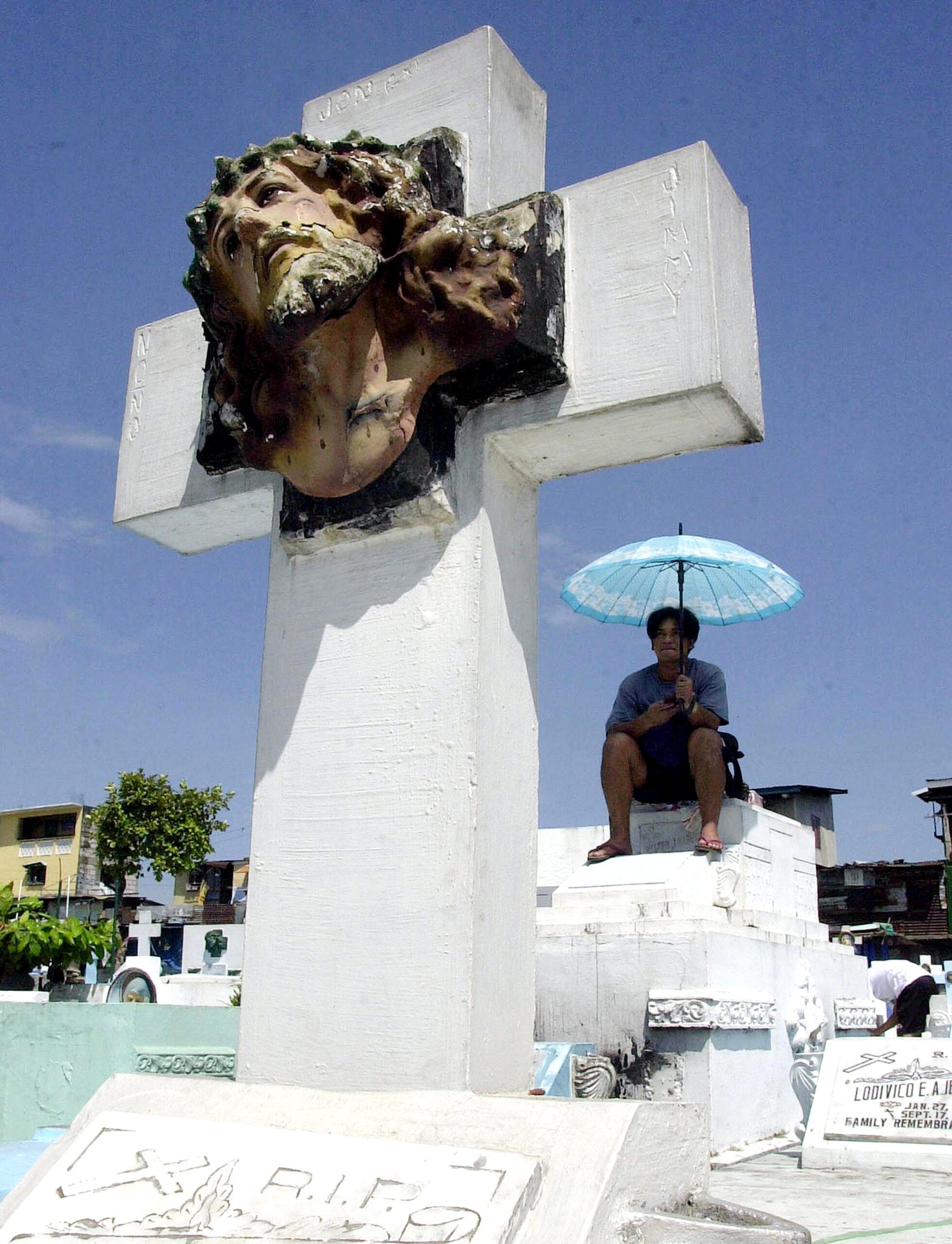
In fact, there is no religious freedom in the country. Small and natural things like having a Bible, a crucifix, a rosary or praying it in public are totally forbidden. To build churches or temples is utterly unthinkable. It was to guarantee the practice of all these restrictions that the Saudi government established the so-called Committee for the Propagation of Virtue and the Prevention of Vice (CPVPV), also known as religious police or Muttawa. This Committee is famous for its lack of scruples, and persecution activities
In recent years, thanks to international pressure, the monarchy has allowed the practice of other religions, but only in private. However, as it can be seen in the cases mentioned above, the Muttawa continues to arrest and torture persons of other beliefs, even when the worship is performed in the privacy of their homes.
EVANGELIZERS CAN EVEN BE KILLED
Public acts of worship continue to be considered a grave offence, and any attempt to evangelize is due to be criminally condemned. Christians who try to evangelize receive punishments according to their nationalities. Those who come from Western countries, for example from the United States, are expelled in a discreet way. But Christians coming from poorer countries, like Ethiopia and Eritrea, are imprisoned and tortured, and can even be killed – generally as a result of false accusations. Those detained are almost always sent back to their own countries, sometimes after a long detention period. In some cases, they are lashed before being expelled.
The Christians who are careful and particularly discreet are generally left in peace. Generally, problems arise when their neighbors report them to the authorities. However, some Christians believe that the authorities pay informers to attend their religious gatherings and then denounce them later.
THE MIGRATIONS ARE A HOPE
The Holy See has recently defined its strategy towards Islam, and hopes that the increase of migratory movements will help to establish better relations, favoring the integration of Muslims in countries of Christian majority and the defense of the rights of Christians in countries of Muslim majority. The final document of the Pontifical Council for the Pastoral Care of Migrants and Itinerant Peoples (PCPCMIP), suggests promotion of ‘integration’ and not ‘assimilation’ of Muslim migrants, trying to foster dialogue and collaboration in common themes, such as ‘help to individuals and peoples in need.’ On the other hand, the PCPCMIP makes it clear that it is fundamental to defend the rights of Christians in Muslim countries, and to promote ‘reciprocity,’ a concept that has been present in the last interventions of the Vatican authorities on this matter.
The number of Christians varies constantly in Saudi Arabia. Generally, the increase depends on the number of migrants from Christian countries or communities who go there on search of work. The number of Saudi Arabian Christians remains stable. Despite the increasing number of new conversions, they do not outdo the demographic increasing rhythm. It is likely that, by 2050, Christians will continue to be a small minority in Saudi Arabia, while the Muslims will have increased by 14 million.