
It doesn’t seem to be the capital of a State lacerated by an internal conflict, this which appears to the eyes of those who land at Khartoum airport. Incoming passengers are calm, passports control and customs proceedings are smooth and officials are pleasant. The presence of the military is not more unusual than in any other African airport. Darfur is very distant, almost in another planet. The only allusion to the conflict is the visibility of some airplanes of the UN, AMIS − African Union Mission in Sudan, and of several international humanitarian organizations among the line of other airplanes on the tarmac.
The traffic on the fast road that leads to the center of the city was intense but not chaotic. On both sides, there were repairs going on. My taxi driver knew a bit of English. He proudly said: “Buildings and factories sprout like mushrooms. Thanks to petroleum, we are developing fast.” I answered, “But there is also war. What about the conflict in Darfur?” He stopped me with a gesture of the hand; he did not even want to hear that name!
I wanted to visit Nyala, the capital of the south of Darfur, but I was denied authorization. The person who accommodated me insisted that I give up the idea. He knew somebody at the UN headquarters and took me there. “Here, they will tell you why you should not go.” And they did without circumlocutions. “Nyala is extremely insecure. In the zone, there is an enormous confusion of troops: regular soldiers, militias, and peace keepers. The Janjaweed kill without mercy. They assault even the displaced people’s camps. Wherever they are, they destroy everything they find.”
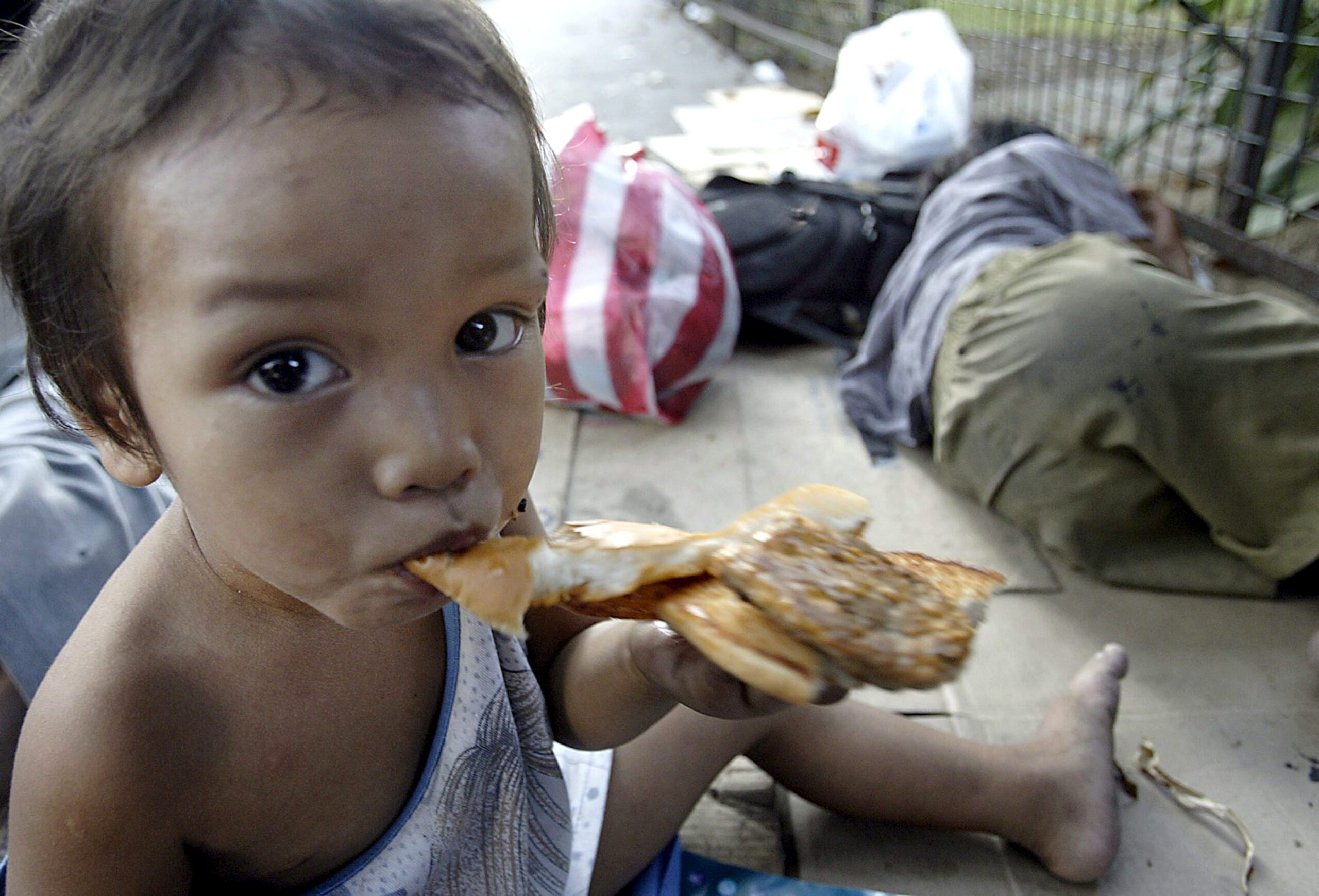
Meanwhile, I visited the refugee camps of South Sudanese located in the peripheries of the three cities that form the capital: Khartoum, Khartoum North and Omdurman. Two-and-a-half million Christians, who fled the war in the South during the last 20 years, are settled there. All spoke about the unbearable conditions they have to endure to live, their desire to return home and its impossibility because the government does not help them. Farida, a young woman from Hizba, told me: “The great majority of the 15,000 street children of the three cities come from these camps.” When I tried to talk about Darfur, she made a gesture similar to that of the taxi driver’s. “Here, too, people die as flies.” The husband said: “We want to get ready for the 2008 political elections and for the referendum on the separation of the South in 2011. In these two consultative events, our destiny is at stake. Darfur? We lament, but we cannot help.” With a sneer, he continued: “For twenty years Khartoum fought against us. And the majority of the soldiers who massacred our people were from Darfur. The time has come for them to “taste” the central government’s policy!”
GOVERNMENT BOMBS
In the middle of March, I decided to take the airplane for Nyala. On the tarmac, less than 100 meters from the arrival area’s passports control office, there were five Soviet MIGs. A little farther on, were some combat helicopters, three armed cars, trucks and several military tents. Here and there, on the ground, were piles of big bombs. While I queued for the passport check, I saw military men placing big white bombs under the wings of the war planes, two of which already “armed,” were on the runway about to take off. What I saw was also seen by all — even the peace keeping soldiers of AMIS, who were there, impassive, beside their airplanes and helicopters, or seated in the armored white cars.
Few minutes after, we were deafened by the rumblings of two MIGs. The friend who came to collect me peered and commented: “The government of Khartoum swears before the world that it is not using warplanes against civil targets or to bomb… Tomorrow we will know whom to cry for.” But there was no need to wait for the following day to know. In the evening, a volunteer of an American humanitarian organization informed us that they had striked the village of Bulbul. “The number of victims is unknown. After the airplanes, the helicopters came: deadly machines that shoot at anything that moves.”
Two days later, I encountered a Land Rover of AMIS. The military men were Nigerians. I inquired if they had information on what happened in Bulbul. They replied: “The engaging rules prevent us from intervening without the authorization of Khartoum. It either arrives late or not at all. So, our role here is confined to waiting for something to happen, asking permission to go and see, and writing an official report.” AMIS troops number to almost 7,000 but it seems they are not there.
At the UNICEF office, they commented: “We hoped the peace agreement subscribed in Abuja (Nigeria), on May 15, 2006, between the government and the rebels’ main faction, led by Minni Minnawi (immediately promoted as President Omar El-Bashir’s ‘special counselor’ and acting president of the Darfur Regional Authority), would bring about an improvement of the situation. They decided on the disarmament of the militias Janjaweed, the dismantling of the rebellious forces and their incorporation into the army. On the contrary, the rebellion fragmented.” They offered us a cool drink. It was very hot and the dust dried the throat. A young French lady told me: “Nobody protects the villages and the refugees who are cramped in the camps. Lately, the combats have become more frequent and ferocious − to the point they risk to halt what is classified as the world’s largest relief operation.”
At least some 97 non-governmental organizations (NGOs) and UN agencies are in Darfur, with more than 14,000 operators. They have been making miracles. “Today, however,” − adds the young lady − “the NGOs are thinking to leave the country because of the repeated attacks against their personnel. In the last four months, 12 volunteers were killed − more, than in the three previous years. Some are abducted and kidnapped.”
A Norwegian volunteer reported: “The situation has aggravated since the peace agreement. About 250,000 new displaced people have arrived at the camps.” And the dead? “Nobody knows exactly. Some say about 450,000. The displaced are 2.5 million, plus 240,000 refugees in Chad and another 4 million who depend on external help.” The NGOs’ work has been producing good results. The malnutrition rate decreased from 22% in the middle of 2004 to 13% or so at the end of December, 2006. Infant mortality went below the levels of the “emergency line” (1 dead per 10,000, a year). A Dutch physician whispered to me: “These conquests risk disappearing due to the increasing insecurity. We can no longer maintain the working rhythm of past times. Violence grows. Many of our structures are assaulted and destroyed. Abandoning a camp means stopping the arrival of food, water and medicines… What is happening is dreadful. In some camps, there is a cholera epidemic causing hundreds of deaths. Malnutrition is also returning to the emergency levels. Sixty percent of the families in the camps have urgent need of food and medicines, but often we are hindered from intervening.”
A55 AND ITS GHOSTS
I also visited the displaced people’s camps of Taiba and El-Drej. Tens of thousands of people are packed in a small piece of land. The huts are so close to one another that, if a fire deflagrates in one, tens will disappear. This was what happened in the second camp: a scream, a cloud of smoke… and then there was panic everywhere. The water arrived in a fire brigade tank, but one hour after the alarm. Too late! The only thing the uniformed men did was to extinguish the last burning firebrands.
A little farther from El-Drej, on the road that leads to the airport, is the “Avamposto 55” (the number is in remembrance of the 55th edition of the most popular Italian song contest, San Remo — Editor’s note). It should be a pediatric hospital, but I found out it was simply a dispensary, or perhaps, a simple pre- and post-natal center. I did not discover this until the following day. In fact, when I asked to visit the building, the guard told me: “I have orders not to allow whites in.” Who gave the orders? “Mr. Filippo.” Filippo lives a little farther in a house called “Villa Italia.” He is neither a physician nor a nurse but only a volunteer. He explained to me the cause of that disposition: “Last December, some journalists of an Italian daily paper came to the hospital introducing themselves as members of an NGO… later on, they smeared/spoiled our reputation in the press.”
Built by the Cooperation for Development of the Ministry of Foreign Affairs, the building was given by the Italian government to the Sudanese Health Ministry which entrusted it to the Italian-Sudanese non-profit charitable foundation, A55. Filippo praised the hospital’s work: “Since it opened, we have made 21,000 consultations.” That is, about 100 a day. (A religious sister who administers a mission dispensary, with the help of a couple of nurses, does four times more consultations!)
The following morning, in the A55, there were just mothers with their children. A local physician checked up the small ones; some nurses weighed and measured them. There was also Filippo. “The structure is open from 9.00 a.m. to 5.00 p.m. For lack of personnel, we are obliged to transfer the most urgent cases to other hospitals. We have two operation theaters, but we cannot make use of them because there are no doctors.” Also, the patients’ wards were empty. Everything was surprisingly clean: the floor, the walls, the sheets of the empty beds… It seemed everything was only for a show.
Less than a kilometer away, there is a Turkish hospital, with 20 doctors and dozens of local nurses. The structure is simple: a pair of small buildings and many tents − enormous and with plenty of sick who waited patiently for their turn to be attended to. “They operate day and night, without interruption. The displaced of Taiba and El-Drej come here also because they do not pay anything,” explained the missionary who was with me.
A SEA OF REFUGEES
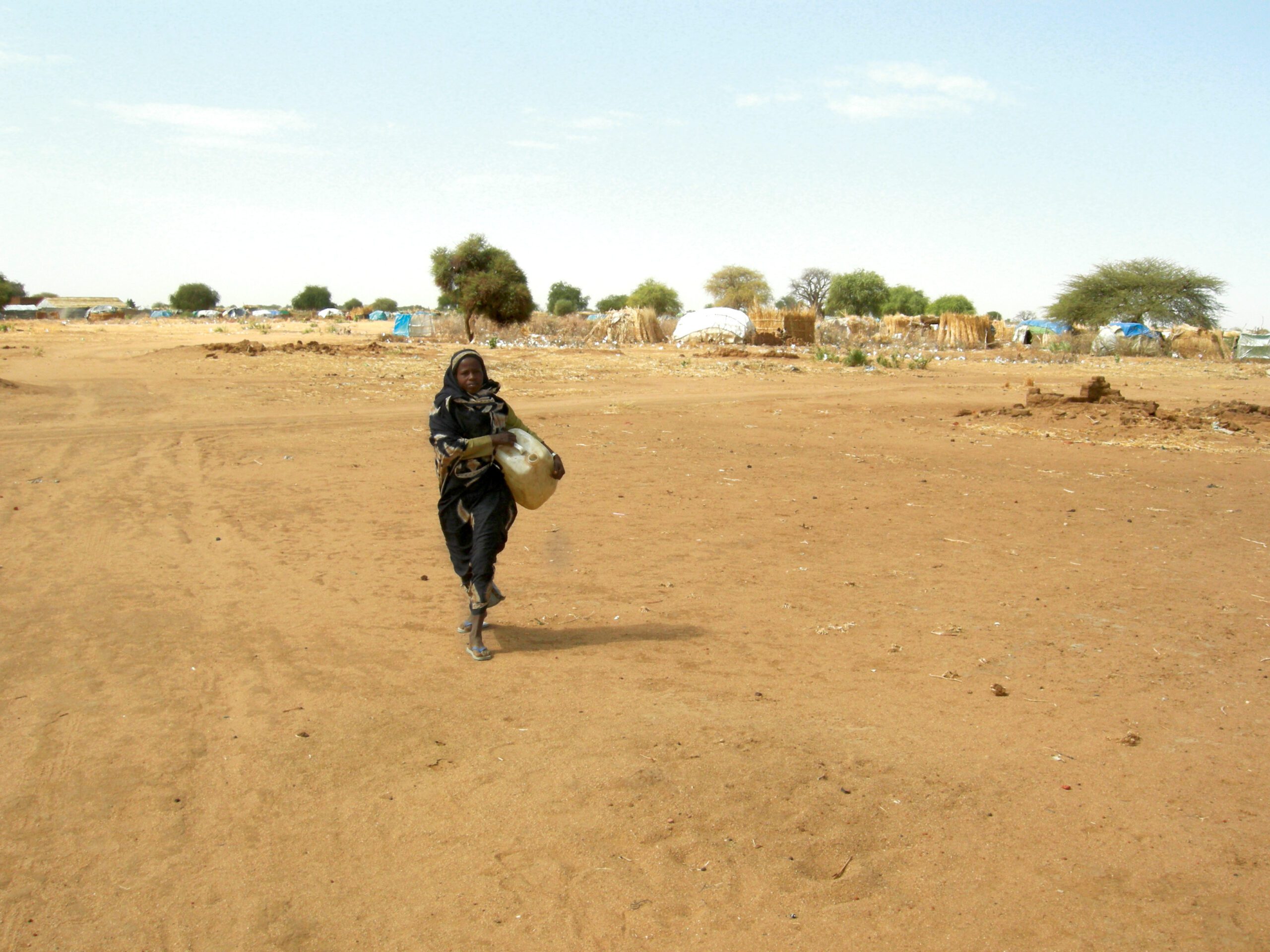
The visit to the camps of Kalma and Bileil, 15/20 km south-east of Nyala, was traumatic. The former has one of the world’s largest refugee concentration: 170,000 people (but some say there are many more; the camp’s “sheikh”, Ali Abderrahman Taher, swears that there are 250,000, and he insists that the NGOs should increase their aid). The latter, with about 30,000 people, formerly distant by some kilometers from the first, has incorporated with the camp of Kalma. From a distance, the two camps are like a dot in the desert. More closely, they are a mosaic of blue plastic tents in the clay-colored sand, mud and straw shacks, and small huts covered by corrugated iron.
The displaced are settled in a strip of land which extends, like a long serpent, between the railway for El-Daen and a dry riverbed that, during the rainy season, becomes full and floods wide areas of both camps.
In the center of Kalma, there is an enormous market − the camps’ economic lung. There, everything is sold, or better still, exchanged: bottles and plastic containers, nails, wood, charcoal, some vegetables, cereals… Many come here even from Nyala. The poor come on bicycle to buy, at a low price, vegetable oil, cereal rations and powdered milk packets supplied by NGOs and the World Food Program. The rich have their carts and trucks loaded with bags, boxes, and bundles of clothes… to sell in the city. “It is our torment,” confessed a member of Action contre la faim, a French entity. “We supply the aid, but we cannot distribute the items. That task is entrusted only to the humanitarian aid committee of the Ministry of Home Affairs − which is lacking in morality. We estimate that only 20% of the help gets to those in need.”
In both camps nothing works. The latrines are not covered and always full; the drinking water cisterns are always dry. From June to September, Kalma and Bileil are two enormous sewers. A Dutch representative of the Doctors Without Borders told me: “There is no hygiene. Garbage is piled up beside the tents. The promiscuity level is frightening. The risk of epidemics is high. These people coming from clean and salubrious villages are not used to this confusion. The cases of suicide are very frequent.”
In the middle of March, I again took the airplane to Khartoum. I was seated beside a Belgian volunteer and a French UNICEF leader. The MIGs, helicopters, armed cars, the tents full of bombs were still there on the runway, as well as the AMIS soldiers.
The French lady has been in Darfur for more than two years. Her account confirmed what I had seen. She said: “Here, “Rwanda 2” is in course and I am not exaggerating. We have already reached half of the victims number of that genocide, and if the international community does not intervene, that toll will be reached and surpassed.” I inquired what she thought of the Human Rights Council gathered in Geneva for its IV session on Darfur. With a smile, she responded: “The precise and detailed report presented by the Commission headed by the Nobel Peace Prize winner, Jodie Williams, should be enough to wake up the whole world. But what happened before will happen again. They will form another committee… If nobody makes Beijing to reason, nothing will change. Khartoum will continue to do what they want in this martyred region, with impunity.”