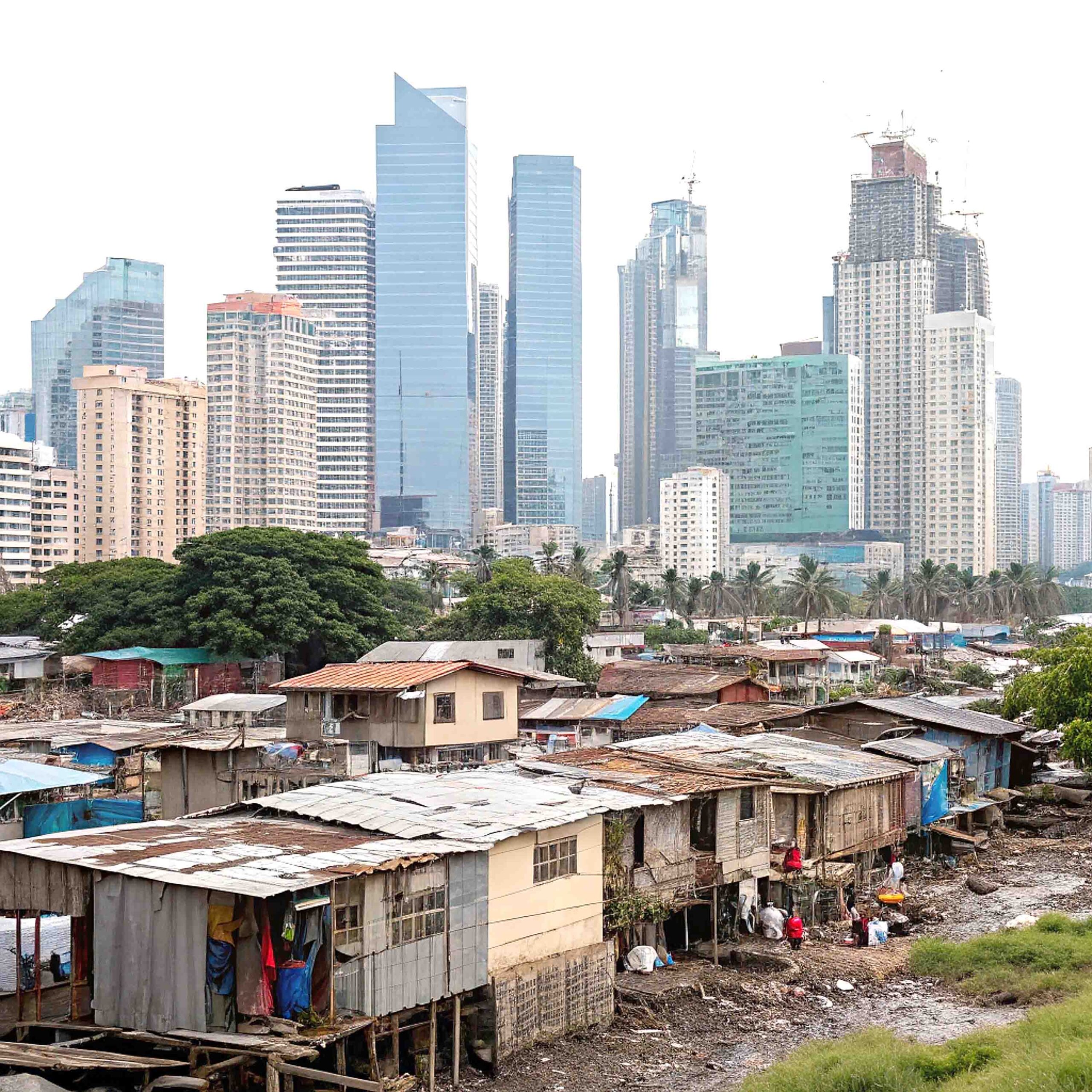


On a humid April afternoon, I stood again on a bridge in Malabon. Below me, floodwater the color of rust crawled across shanties and basketball courts. “They build every year,” Mang Ben, a tricycle driver, said bitterly. “But the water always wins.”
The 2025 Senate Blue Ribbon hearings on the ₱93-billion flood-control program revealed why. Contractors testified about “ghost dikes” and drainage projects declared complete but never built. The newly formed Independent Commission for Infrastructure (ICI), created by Executive Order No. 94, has documented dozens of over-priced or substandard projects, while the Commission on Audit found billions in unliquidated funds.
Floods expose more than engineering failures; they expose moral decay. Every missing culvert is a sign of conscience washed away. When graft steals funds meant to protect the poor, corruption ceases to be a political issue; it becomes a nagging pastoral problem. Yet, amid the outrage, the collective Church voice remains largely reactive. We comfort evacuees, but rarely confront the systems that drown them.
THE PULPIT AND THE PUBLIC SQUARE
At a Marikina relief center, Sister Corazon told me how officials demanded a “cut” from Church donations in exchange for delivery permits. “We refused,” she said, “and the trucks were delayed.” Her story echoes the findings of the ICI preliminary report, which described local “rent-seeking” rings thriving under disaster relief operations.
The Church’s response is noble but uneven. Caritas Philippines and some diocesan action centers mobilize after every storm, and the CBCP’s 2025 Pastoral Statement on Integrity in Public Office condemned graft as “an insult to the poor and to God.” Yet homilies often end where headlines do–at denunciation.
Political scientist Francisco Magno once observed that faith-based institutions in the Philippines still act “reactively rather than reformist,” quick to aid but slow to hold power accountable.
There are hopeful exceptions. Parish-based watchdogs trained by Caritas Philippines now monitor infrastructure spending in Nueva Ecija and other provinces. Their 2024 report showed fewer “ghost projects” where parishes joined audits.
Still, such models remain rare, often unsupported by diocesan budgets or episcopal policy. IMHO, the Church’s vast moral network–with tens of thousands of parishes and schools–could be the most powerful anti-corruption infrastructure in the nation, if only it were mobilized.
FROM CHARITY TO PROPHECY
To move from charity to prophecy to justice, the Church must institutionalize vigilance. First, each diocese could establish a Transparency Desk where parishioners may access project and donation data. Second, partnerships with universities could train lay “citizen engineers” to monitor flood-control works. Third, seminaries and schools must teach civic ethics rooted in Catholic social thought, linking sacramental life with stewardship of public goods.
These are not radical inventions; they are recoveries of our tradition. Evangelii Gaudium reminds us that “the shepherd must smell like his sheep.” In today’s Philippines, that scent includes mud, diesel, and bureaucratic rot.
When Fr. Jun in Bulacan preached against missing drainage funds, his homily drew both applause and police inquiry. “Every broken dike is a broken vow,” he said. Parishioners stood by him, held assemblies, and demanded audits. Months later, construction resumed–this time with community oversight. His story proves that prophetic action, though risky, can restore both infrastructure a h.
There are costs. Priests who speak out face harassment; lay whistle-blowers lose contracts. Yet prophetic silence costs more. As theologian Karl Gaspar writes, “When the Church chooses comfort over confrontation, she forfeits her claim to moral leadership.”
The Church must accompany civic action for social justice–not as partisan but as conscience. The CBCP’s Lenten Message of last year (2025) urged “participation in truth-telling,” inviting dioceses to support citizens attending Senate hearings and to create spaces for testimony. In Pampanga, youth groups held candlelit rallies outside city halls while priests offered prayers for “conversion of public servants.” These gestures signal a shift: from pulpit lament to public witness.
Corruption, like floodwater, seeps into every crack of our moral foundation. No dike can contain it if conscience collapses. The Church must choose whether to remain an emergency shelter or become an ark that confronts the deluge.
When I returned to Malabon, the river had calmed but the mud remained. On the bridge, parish youth now held signs: “Stop the Flood, Stop the Theft.” Mang Ben’s tricycle carried sacks of rice labeled “No Cut, No Kickback.” Across the street, the parish bell rang–not for Mass, but for protest.
The 1971 Synod of Bishops’ statement, Justice in the World, declared that “action on behalf of justice and participation in the transformation of the world fully appear to us as a constitutive dimension of the preaching of the Gospel.”
José Mario Bautista Maximiano is the lead convenor of the Love Our Pope Movement (LOPM) and author of the book Church Reforms 4: Pope Leo XIV, Church Reforms, and Synodality (Claretian, 2025). Church Reforms 1, 2, 3, and 4 are available at Lazada and Shopee. Email: jomaximiano@gmail.com