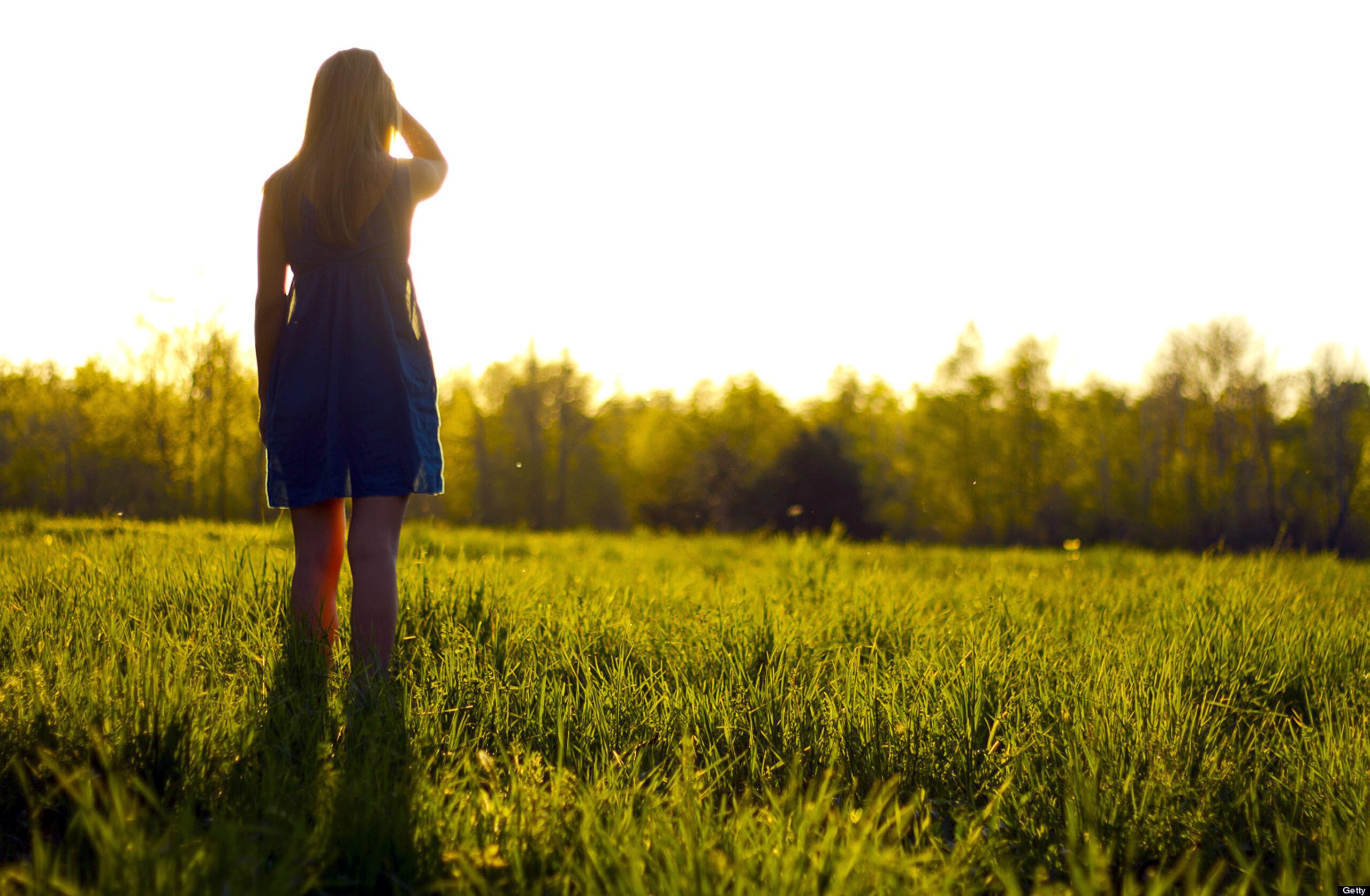
A major Confucian thinker, Chang Tsai, held the Earth and the Universe were his father and mother. He saw himself, then, as a child of the Earth and Universe. Do we feel connected to the Earth and the earth? As children of the Universe, do we have a role and responsibility in saving our planet Earth? Simply put, are we on the Earth but not of the earth?
Until recent years, it didn’t hit me how disconnected I was from the earth. Our planet is named “Earth” and earth refers to the soil on which we stand and draw our sustenance. It dawned on me, very late in life, that while I was on the Earth, I was not of the earth. I grew up in a large metropolitan city in which all my food and drink were picked from store shelves, not plucked from the soil, nor syphoned from streams and animals and vines.
I am a first generation person whose ancestors from time immemorial lived and tilled the land, tended flocks and herds, and drank the same water as the fish they caught. One would think that the earth would ooze from my DNA, though transplanted, but freshly, to an urban sprawl. What is disconcerting is admitting how far I am from the earth; a foreigner, ignorant of the pulse of life on the land. I trod on concrete more than on soil and, in so short a time, became distant from my historical past and ancestors. On the Earth but an alien to the earth.
FROM LAND TO CITY
Is the migration from land to cities causing more to become estranged from the earth? A U.N. report anticipates the future of urban versus rural. “Today, 54% of the world’s population lives in urban areas, a proportion that is expected to increase to 66% by 2050. Projections show that urbanization, combined with the overall growth of the world’s population, could add another 2.5 billion people to urban populations by 2050, with close to 90% of the increase concentrated in Asia and Africa.” Two centuries ago, only 3% of the world’s population lived in urban areas, a figure that is estimated to reach 60% by 2030.
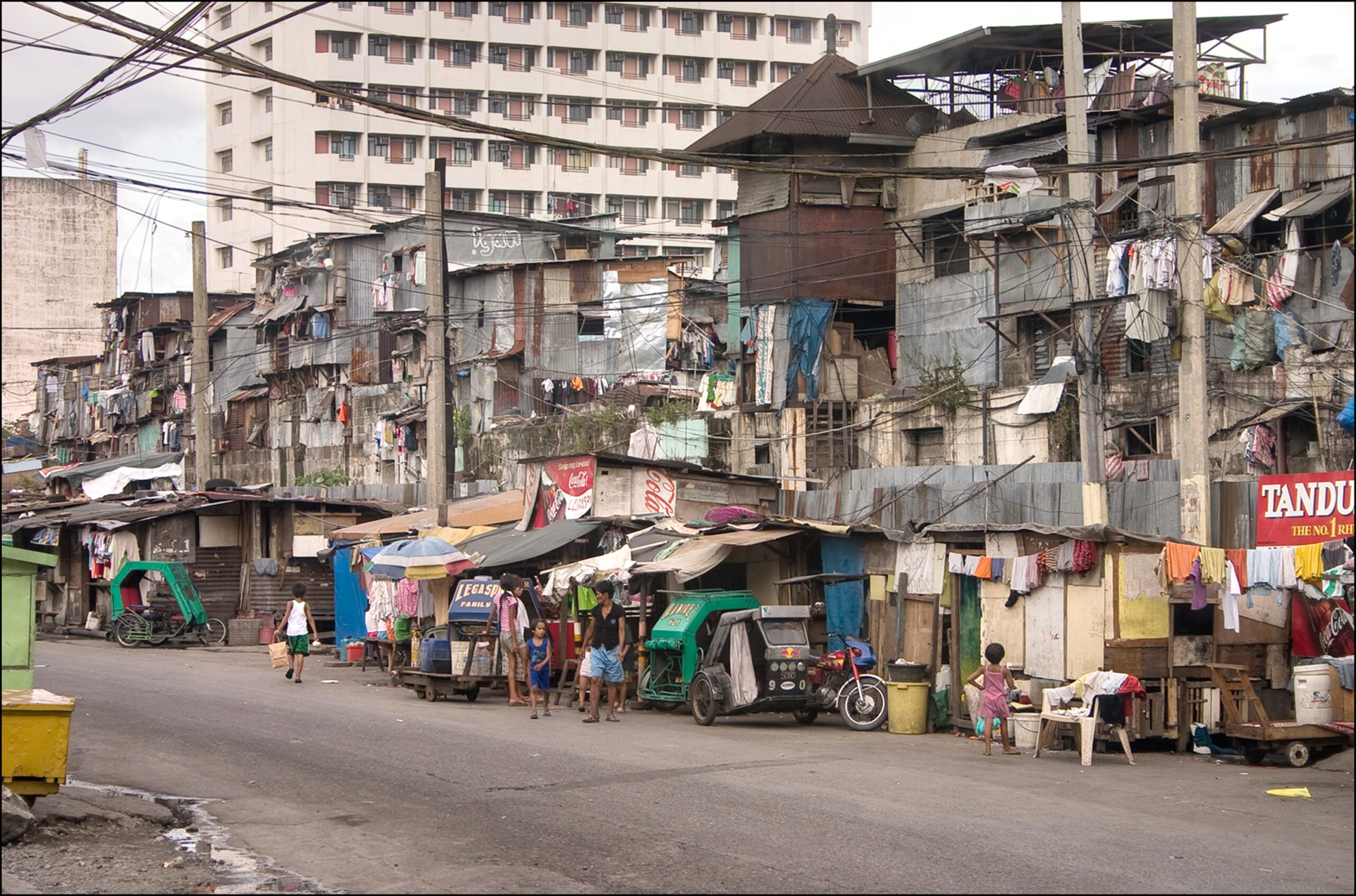
There are pluses and minuses in urban living. Rural flight , though, may result in urban blight as masses of persons are forced to live in substandard housing, and strain available resources whether in jobs or in the amenities necessary to sustain life. The rural poor find urban centers magnetic draws for the possibility of work, hopefully affording a better quality of life. As the marginalized and poor flee from a rural environment that fails to sustain a family, urban dwellers, with the city’s sophisticated technological development that allows a privileged few to opt for a more rustic quality of life, can afford the luxury to work from home.
THE PSYCHOLOGICAL EFFECTS OF URBAN LIVING
Perhaps more important than the physical living in urban areas is the psychological difference. The longer one is removed from a close relationship with the earth makes that reality an abstract concept. Love as a concept and loving a person are not one and the same. As someone noted: “Loving the planet begins with feeling connected to nature. You can’t love what you don’t know.” The earth can become abstract when divorced daily from interaction with it. In Genesis, the city was viewed negatively as the place of sin, as in Sodom and Gomorrah. Cities then were a new phenomenon in an overwhelming agrarian world. Subsequently, the fear of the city would be overcome and viewed more positively. Jerusalem would become “the Holy City” for the Temple was located there, and within the Temple, the holy of holiest, God’s dwelling place. Now the rural area is viewed as more hostile, more threatening, largely because it is an unknown.
How much earth do we experience in urban areas? The earth today is continually being layered over with concrete, or other man-made substances creating a psychological separation. A piece of earth is almost becoming a museum display! Michael Cohen points out our loss, separated from the earth. “On average, a person in contemporary society lives over 99.9% of his or her life devoid of conscious sensory contact with attractions in nature. We spend over 95% of our time indoors. We think, write and build relationships while away from nature.
This disconnected state deludes us to believe that our extreme separation from nature does not influence our intelligence, sanity or, ability to relate responsibly. The state of the world says otherwise. Unlike nature’s connected cultures, our detachment from nature’s workings, psychologically deprives our thinking of elements that hold life in balance. If our disconnection from nature produces problems, it makes sense to solve them by reconnecting with nature.”
BONDING AGAIN WITH THE EARTH
Reconnecting with the earth is taking on a unique urgency today due to the fact that, increasingly, more of us are severed from any close relationship with the earth. Longer than not, in human history, people were naturally rooted like a tree to the earth because of the agrarian nature of humanity. People physically walked the earth barefoot. Shoes were a later creation, and if rural people had shoes, they would only use them when they entered a city. Colder climates and rugged terrain caused the universal evolution of shoes. Walking on stone or similar pavement beneath the feet made it less comfortable than feet literally bonding directly with the earth. The anomaly today is seeing a barefoot person in a city, as in the past, a shoed person in a rural area. In a sense, the ubiquitous shoe is a symbol of our separation from the earth.
There are those today who espouse being in touch with the earth as a means to physical and mental health. Such advocates claim this is nothing new, simply newly discovering what was essential in ancient Chinese and Indian medicine. Touching the earth helps calm and reduces stress, enabling one to sleep better. Touching the earth affords free benefits for well-being. A return to the earth is as simple as touching the earth barefoot and receive its blessings.
OBSTACLES TO CONNECTING
A problem for Christians in relationship with the Earth is the tendency not to take life on the planet seriously. The Christian’s belief in the incarnation, “God so loved the world that He gave His One and Only Son” (Jn 3:16) is offset by 1 John 2:15: “Do not love the world or anything that belongs to the world.” Some Christians early on sought to flee the world, to await the world to come. There is ambivalence here, and some have used the latter text to discount this world, despite the truth that incarnation is essentially a Christian belief.
St. Paul’s comment in 2 Cor 2:5 that we live but in a tent here, our permanent house is in heaven, can lead one to have a casual attitude to life on earth. For Paul, the earth is but a way station for the journey to our lasting home, heaven. If this planet isn’t permanent, our last stop, why bother? It is the difference between being an owner and a renter.
Owners and renters of a house have differing attitudes toward the property. As someone stated: owners give and renters take. An owner invests time, money and self into increasing its maintenance toward a long-term connection to one’s property. A renter tends to minimize any investment or care of property as one considers moving on, and what is the purpose of making it better for the next renter? It is the owner’s investment and responsibility to care.
If Christians view the earth as a way station and heaven the permanent home, then there is perhaps unconsciously the development of an attitude of the renter – why bother? A study indicated that Jewish people tend to invest more in this life because they do not have a very developed sense of a future life. Christians and Muslims have a highly developed imagination regarding heaven.
Many Christians took (and take) the command of Genesis “to fill the earth and subdue it.” This has been interpreted as license to ravish the earth for gain and profit. It was seen as a blessed green light for exploitation of the earth’s resources.
If Christians (and others) hold that this planet, Earth, is not a permanent place, then it is a tremendous challenge to take Earth seriously. Certainly, there have been those who have, like Francis of Assisi, with his Canticle of the Sun, embraced all creation, animate and inanimate. Assisi today is a small town of approximately 38,000. It was probably a lot smaller during Francis’ time. Francis saw himself with kinship to all of nature and the universe: Mother Earth, Sister Moon, Brother Fire, Sister Water, Brother Wind, etc. And the animals were no less a part of his friendship, his congregation.
Persons who daily interact with the earth are more naturally inclined to put limits on the quantity of the fruits of the earth they extract. They implicitly acknowledge the need for a fertile Mother Earth to continue feeding and sustaining future generations.
Commercial corporations are driven first for profit, and view the resources of the earth as an opportunity to maximize profit in the present rather than restrain the present in trust for a future humanity. Fortunately, enlightened commercial ventures know that constantly taking from the earth is bad business ultimately.
WHOSE RESPONSIBILITY?
Governments ultimately will decide the future of climate change. How to get all nations to commit to common goals for the planet’s sustainability is a formidable challenge. There is resistance or people are narrowly focused on their tribe, rather than on the common good. The individual good of a tribe, nation takes precedence. The view of the Earth from space is a powerful image of the oneness of our planet. From above, differences are not discernible. On earth, our vision is narrow, limited, an obstacle for viewing the big picture. Our micro gets in the way of our macro view.
People cannot capitulate to governments the path to the future without pressing them to hear from a larger audience. People, especially in democratic societies, can influence the positions their governments take. Indeed, in a democracy, it is the responsibility of citizens to voice their concerns to their representatives. Unfortunately, many in democratic societies do not express their voice, often because of their lack of knowledge of the issues. If disconnected from the earth, many will capitulate their responsibility to others.
Older persons are less focused on climate change as their days are numbered. But in democratic societies, seniors tend to vote more than other generations. And there are international organizations of seniors that rally behind the issue such as “For Our Grandchildren,” and “Grandparents Climate Campaign.” But the issue should be largely in the minds and hearts of younger generations as the future is in their hands.
People with possession tend to think of leaving their offspring their material surplus. The inheritance any generation should bequeath is for a better Earth. Of what value will material gifts be in the face of a planet that is on a collision course toward extinction?
CLIMATE CHANGE FOR REAL?
There is a consensus among scientists that climate change is having negative effects on the future of the Earth. However, there is a small, vocal and well-funded number who contend climate change is fiction. To acknowledge that there is climate change ultimately is a challenge to change our way of interacting with the earth if the Planet
Earth is not to become extinct. Change is difficult to accept. There is a tendency to seek permanency, a way of insulating ourselves from the inevitability of our own death. Change is an irksome reminder of our personal mortality.
Many who resist climate change have a vested interest, particularly in coal and oil production. Climate change is a challenge to move from dependence on such to newer, cleaner forms of energy. This will mean gain for some but also economic loss to others; hence, there is resistance.
Even if we were to, for the sake of argument, accept that climate change is not happening, does that mean we need not change our way of behaving toward Mother Earth? Though Genesis exhorts, “fill the earth and subdue it,” it is far less important than the teaching of stewardship. Jesus’ parable of the talents is essentially one of being a good steward of what is not ours. We are simply tenants in God’s vineyard and are here to tend it responsibly. The teaching in the Acts of the Apostles is a challenge to every member: “No one said that any of his belongings was his own, but they all shared with one another everything they had…there was no one in need…and all was distributed to each one according to need.” This is an uncomfortable challenge to change those who live in an aggressive consumer-driven society, which generally are urban dwellers. This teaching of the Acts of the Apostles is another way of saying: “Live simply so that others may simply live.”
INDIVIDUAL RESPONSIBILITY
It has only been in recent years that the issue of climate change and the necessity to educate people to save the planet have been given attention. In the 1970s, a woman, who was a teacher, wanted to instruct her students on the issue of ecology. At that time, there were no textbooks on the topic, so she and her students created their own textbook on the subject. Since then, a greater number of books about caring for the Earth have come out.
While we wait for governments to reach a universal agreement on climate change, we need to act individually, nonetheless. With the many resources now available to increase our understanding of how to live ecologically, lack of knowledge can no longer be an excuse. For us,who are more and more disconnected from the earth, the hardest obstacle in view for taking the initiative is denying the challenge for radical change. Let us forego narrow and individualistic interest. Instead, let us aim for the common good of all to have a vibrant future.