The Rich-Poor Divide is Growing

INTRODUCTION

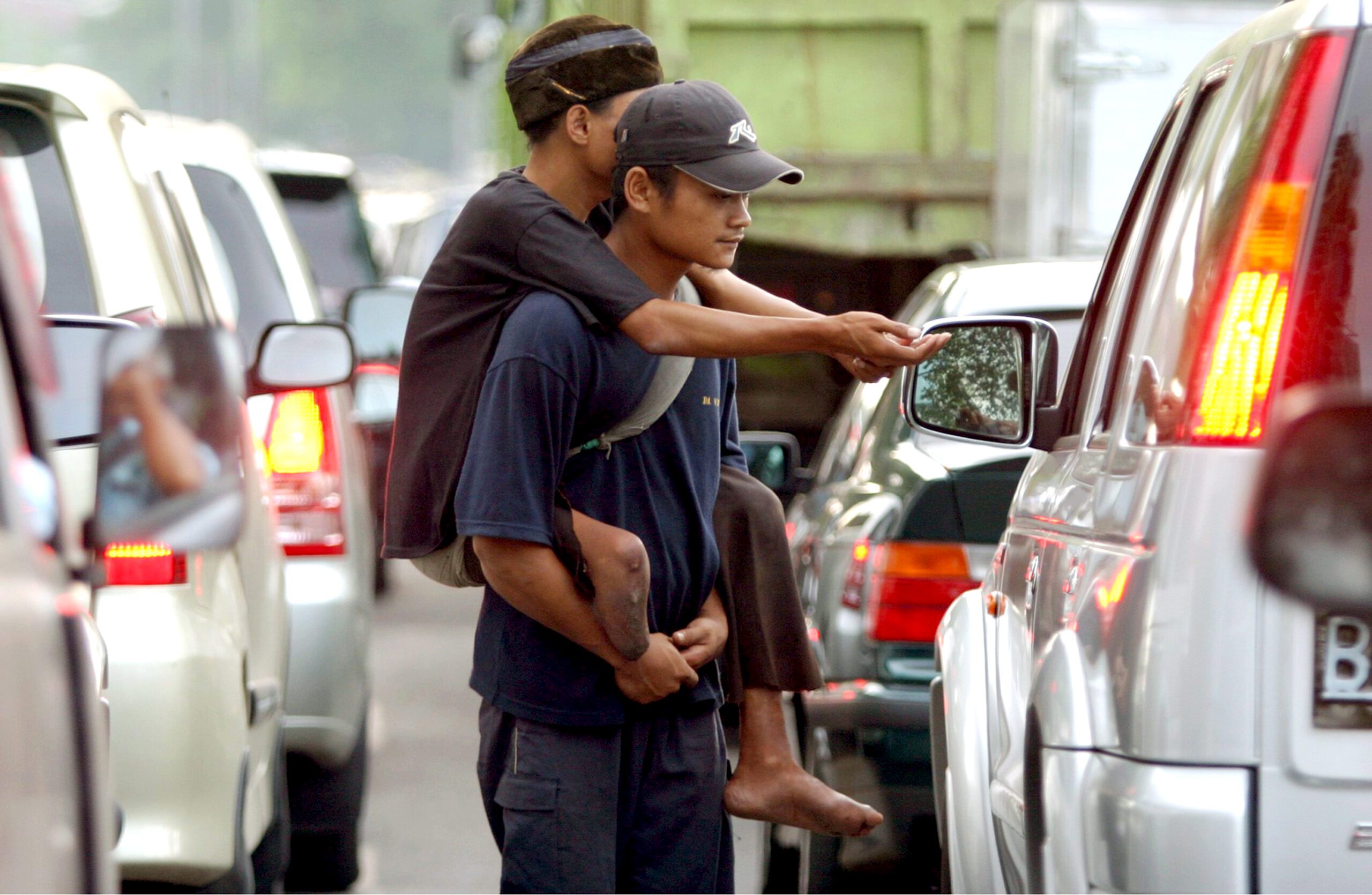
The “American Dream” of upward social mobility appears to have emigrated from its birthplace in the United States to northern Europe, according to a new major report of OECD on the growth of economic equality over the past 20 years. In terms of inequality, the Americans just lag behind Mexicans and Turks.

WRITTEN BY

SHARE THE WORD

PUBLISHED ON

Of the 30 member states of the Organization for Economic Cooperation and Development (OECD), most of which are also members of the European Union, the United States has the largest gap between its wealthiest and poorest households after Mexico and Turkey, according to the report, “Growing Unequal?” which was released at OECD headquarters in Paris.

That gap has grown particularly large in the U.S. since 2000 – that is, under the administration of President George W. Bush – according to the report, which found that the gap between the U.S. middle class and the wealthiest 10% has also increased. The growth in the divide has major implications for social mobility, according to OECD Secretary-General Angel Gurria, who said the report’s data had demonstrated that the notion that inequality encourages the poor to do better is false.

Gurria underlined: “Social mobility is low in countries with high inequality like Italy, the UK (United Kingdom), and the United States. And it is much higher in the Nordic countries, where income is distributed more evenly. This means that, in most high-inequality countries, dishwashers’ sons are more likely to be dishwashers and millionaires’ kids can assume that they too will be rich.” And said that governments could do much to promote mobility, particularly through progressive tax policies, greater social spending, job creation, and increasing investment in education.

A MODEL QUESTIONED WORLDWIDE
The new report, which found that inequality in most OECD countries – not just in the U.S. – has grown markedly over the last two decades, comes at a critical moment given the ongoing global financial crisis. The crisis has sparked unprecedented worldwide criticism of the “free-market” economic model that the U.S. and Washington-based international agencies like the World Bank and the International Monetary Fund have vigorously promoted since the administration of President Ronald Reagan.

That model, sometimes called the “Washington Consensus,” promised that greater reliance on markets and less government intervention would result in stronger economic growth that would also produce higher incomes for the middle class and the poor. The current crisis, however, has called that model into question, not just overseas but in the U.S., where Democrats are urging major changes in economic and fiscal policies designed precisely to begin closing the gap between the rich, on the one hand, and the middle class and the poor, on the other.

Those changes – including increased taxes on the wealthy, greater investments in education, public services and creating jobs, and tackling child poverty, in particular – are precisely those cited by the OECD report as among the most effective in narrowing the rich-poor gap and reducing the poverty rate. “This report does fit a certain Democratic narrative in recognizing that inequalities are a serious problem and that they’re generated in the labor market,” said John Schmitt, a senior analyst at the Centre for Economic and Policy Research (CEPR). “The OECD recognizes that the U.S. performs poorly on social mobility, and I think that surprises a lot of Americans.”

MEXICO IN THE TOP OF INEQUALITY
The report found that the U.S. is not alone in suffering growing wealth inequalities among the world’s richest countries over the past two decades. In three out of four of 24 OECD countries surveyed, inequalities between the richest 10% of the population and the poorest 10% grew. France, where government has long taken a particularly aggressive role in the economy, saw the rich-poor gap decline over that period, while, after a steep rise in inequality under former Prime Minister Margaret Thatcher in the 1980s, the wealth gap and poverty rate have declined faster in Britain than in any other country.

The greatest inequality between rich and poor among OECD countries was found in Mexico, where the wealthiest 10% of households had more than 25 times greater income than the poorest 10%. In Turkey, the ratio was 17 to one, while the U.S. was just below that, at 16 to one. The average for all 30 OECD nations in 2005 was about nine to one, with the smallest gap – less than five to one – found in Sweden and Denmark. After Mexico and Turkey, the U.S. also has the highest poverty rate of the 30 OECD nations, according to the report, which defined poor households as those whose income was less than half of the media income in each of the member-countries. For all OECD countries, the average poverty rate was just under 10% in 2005. In Mexico, the rate was highest at more than 20%. Turkey and the U.S. were tied at 17%. Lowest poverty rates were found in Denmark, Sweden, the Czech Republic, Austria, and Norway.

FACING A GLOBAL RECESSION
In his remarks, Gurria repeatedly underlined the importance of reducing the wealth gap in order both to enhance overall economic performance and reduce social friction, stressing that the implications of current trends were “very serious.” He said: “Growing inequality raises political challenges because it breeds social resentment; it questions the ultimate role of democracy and generates political instability. It also fuels populist, protectionist and anti-globalization sentiments… Ignoring increasing inequality is not an option,” he added.

Among OECD countries, social mobility, as measured by the relative earnings of fathers and sons, was highest in the Nordic countries where the rich-poor gap was narrow, and lowest in Italy, Britain and the U.S. – all countries where the gap was significantly wider. The report noted that, while poverty among the elderly has fallen in OECD countries, poverty among young adults and families with children, particularly single-parent families, has increased over the same period. On average, one child out of every eight living in an OECD country in 2005 was living in poverty. For the U.S., the ratio is closer to one in five.

In a companion article published by the OECD’s Observer, Oxford University economist, Anthony Atkinson, argued that government will have to take a stronger role in reducing the wealth gap and creating jobs, particularly if the world economy goes into recession. “If the government can take on the role of lender of last resort [for troubled financial institutions], then we should think about the government taking on the role of employer of last resort,” he wrote. “Put bluntly, governments have to step up to the plate, as [US President Franklin] Roosevelt did in the Great Depression.” www.ipsnews.net and www.ipsnewsasia.net

Share Your Thoughts

All comments are moderated

From The Same Issue

The articles and content about this issue

From The Same Issue

The articles and content about this issue

Missionary Vocation

True Nobility

From This Topic

The articles and content about this topic

From This Topic

The articles and content about this topic

Explore Other Topics

Browse other coverage

Explore Other Topics

Browse other coverage

WM SPECIAL

Presents, discusses and draws readers to reflect on issues of outmost relevance to the world today.


FRONTIERS

Very often, mission is carried out in frontier situations around the world. Those who embrace these situations have much to share.


UNITY IN DIVERSITY

Writer Ilsa Reyes will be exploring the richness of Pope Francis’s latest encyclical Fratelli Tutti with a view of helping our readers to get a grasp of the this beautiful papal document.


FRONTLINE

Puts to the front committed and inspiring people around the world who embrace humanitarian and religious causes with altruism and passion.


IN FOCUS

Focus on a given theme of interest touching upon social, economic and religious issues.


FAITH@50

As the Philippines prepares to celebrate 500 years of the arrival of Christianity. Fr. James Kroeger leads us in this series into a discovery journey of the landmark events in the history of faith in the Philippine archipelago.


INSIGHT

Aims to nurture and inspire our hearts and minds while pondering upon timely themes.


FILIPINO FOCUS

The large archipelago of the Philippines, in its richness of peoples and cultures, offers varied and challenging situations for mission.


FOLLOW ME

Reflections and vocation stories that shape up the lives of young people.


MISSION IS FUN

As humor and goodness of heart are qualities of Christian and missionary life, the new column “Mission is fun” will be publishing some anecdotes and stories that have happened in a missionary context to lighten up the spirits and trigger a smile in our faces.


LIVING COMMUNION

To help readers of World Mission live this year dedicated to Ecumenism, Interreligious Dialogue and Indigenous Peoples, Tita Puangco, writer and lecturer, shares in this section insights on the spirituality of communion.


WINDS OF THE SPIRIT

A historic view of the Catholic movements that emerged from the grassroots as an inspiration by the Holy Spirit.


BRIDGE BUILDERS

On the Year of Ecumenism, Interreligious Dialogue and Indigenous Peoples, radio host and communicator Ilsa Reyes, in her monthly column, encourages Christians and people of good will to be one with their fellow people of other sects, religions and tribes.


INTERVIEW

Questions to a personality of the Church or secular world on matters of interest that touch upon the lives of people.


WORLD TOUCH

News from the Church, the missionary world and environment that inform and form the consciences.


CARE OF THE EARTH

A feature on environmental issues that are affecting the whole world with the view of raising awareness and prompting action.


EDITORIAL

The editor gives his personal take on a given topic related to the life of the Church, the society or the world.


YOUNG HEART

A monthly column on themes touching the lives of young people in the Year of the Youth in the Philippines by radio host and communicator I lsa Reyes.


SCROLL

A missionary living in the Chinese world shares his life-experiences made up of challenges and joyous encounters with common people.


EXTRAORDINARY PEOPLE

Life stories of people who deserve to be known for who they were, what they did and what they stood for in their journey on earth.


ONE BY ONE

Stories of people whom a missionary met in his life and who were touched by Jesus in mysterious ways.


INCREASE OUR FAITH

Critical reflection from a Christian perspective on current issues.


SPECIAL MOMENTS

Comboni missionary Fr. Lorenzo Carraro makes a journey through history pinpointing landmark events that changed the course of humanity.


PROFILE

A biographical sketch of a public person, known for his/her influence in the society and in the Church, showing an exemplary commitment to the service of others.


WM REPORTS

Gives fresh, truthful, and comprehensive information on issues that are of concern to all.


LIFE'S ESSENTIALS

A column aimed at helping the readers live their Christian mission by focusing on what is essential in life and what it entails.


ASIAN FOCUS

Peoples, events, religion, culture and the society of Asia in focus.


THE SEARCHER'S PATH

The human heart always searches for greatness in God’s eyes, treading the path to the fullness of life - no matter what it takes.


INDIAN FOCUS

The subcontinent of India with its richness and variety of cultures and religions is given center stage.


AFRICAN FOCUS

The African continent in focus where Christianity is growing the fastest in the world.


JOURNEY MOMENTS

Well-known writer and public speaker, Fr. Jerry Orbos, accompanies our journey of life and faith with moments of wit and inspiration based on the biblical and human wisdom.


IGNATIUS STEPS

On the year dedicated to St. Ignatius of Loyala, Fr. Lorenzo Carraro walks us through the main themes of the Ignatian spirituality.


THE SEVEN LAST WORDS OF JESUS

Fr. John Taneburgo helps us to meditate every month on each of the Seven Last Words that Jesus uttered from the cross.


INSIDE THE HOLY BOOK

In this section, Fr. Lorenzo delves into the secrets and depths of the Sacred Scriptures opening for us the treasures of the Sacred Book so that the reader may delight in the knowledge of the Word of God.


CONVERSATIONS

Reflections about the synodal journey on a conversational and informal style to trigger reflection and sharing about the synodal path the Church has embarked upon.


VATICAN II

This 'mini-course' series provides a comprehensive exploration of Vatican II, tracing its origins, key moments, and transformative impact on the Catholic Church.


COMBONIS IN ASIA

This series offers an in-depth look at the Comboni Missionaries in Asia, highlighting their communities, apostolates, and the unique priorities guiding their mission. The articles provide insights into the challenges, triumphs, and the enduring values that define the Comboni presence in Asia.


BEYOND THE SYNOD

Following the Synod on Synodality, this series examines how dioceses, parishes, and lay organizations in the Philippines are interpreting and applying the principles of the synod, the challenges encountered, and the diverse voices shaping the synodal journey toward a renewed Church.


A TASTE OF TRADITION

This series introduces the Fathers of the Church, featuring the most prominent figures from the early centuries of Christianity. Each article explores the lives, teachings, and enduring influence of these foundational thinkers, highlighting their contributions the spiritual heritage of the Church.


A YEAR OF PRAYER

In preparation for the 2025 Jubilee Year under the theme “Pilgrims of Hope,” 2024 has been designated a Year of Prayer. World Mission (courtesy of Aleteia) publishes every month a prayer by a saint to help our readers grow in the spirit of prayer in preparation for the Jubilee Year.


OUR WORLD

In Our World, the author explores the main trends shaping contemporary humanity from a critical and ethical perspective. Each article examines pressing issues such as technological advancement, environmental crises, social justice, and shifting cultural values, inviting readers to reflect on the moral implications and challenges of our rapidly changing world.


CATHOLIC SOCIAL DOCTRINE

This series unpacks the principles of Catholic Social Doctrine, offering a deep dive into the Church's teachings on social justice, human dignity, and the common good.


HOPEFUL LIVING

Hopeful Living’ is the new section for 2026, authored by Fr. James Kroeger, who dedicated most of his missionary life to the Philippines. In this monthly contribution, he will explore various aspects of the virtue of hope. His aim is to help readers align their Christian lives more closely with a hopeful outlook.


PHILIPPINE CROSSROADS

Filipino Catholic scholar Jose Bautista writes each month about how the Philippines is at a crossroads, considering the recent flood control issues and other corruption scandals that have engulfed the nation. He incorporates the Church’s response and its moral perspective regarding these social challenges.


BIBLE QUIZ

Test your knowledge and deepen your understanding with our Bible Quiz! Each quiz offers fun and challenging questions that explore key stories, themes, and figures from both the Old and New Testaments.


Shopping Cart