
The “Weapon” Against Envy

INTRODUCTION

In the fifth century, before envy was listed by the Church as one of the seven deadly sins, the virtue, able to fight its deleterious effects, was coined. This virtue is kindness. And, if one looks attentively at the world’s social and spiritual history, one will find that it is still able to help us in our struggle to live better in a kinder world.

WRITTEN BY

SHARE THE WORD

PUBLISHED ON

Sometime ago, I went to visit Carolina, the devoted woman who took care of Maria Julia, my favorite maiden aunt, during her last years. She said: “Look, you have the Evil Eye! But don’t worry. I’ll do my prayers and you’ll feel fit again.” Respecting her beliefs, I just thanked her. But deep inside, I hardly believed that she could cure my malaise. Not an illness, just a malaise. A tiredness caused by hurting disappointments.

I knew vaguely what the Evil Eye means, because it’s a folk belief typical of my Mediterranean culture. But when Carolina dropped olive oil in a glass of water, watched the result and remarked: “Oh, yes! You are burdened with envies!” I didn’t make the connection. I can have lots of defects but I’m not an envious person. Indeed, I even can hardly conceive what is it to feel envious. Of course, as a Christian, I know that is one of the seven deadly sins. But no more.

Time passed and, recently, I felt lucky to read a beautiful text on kindness, a neglected quality in our modern societies, apparently ruled by self-interest, competition, selfishness, and greed. The text was a kind of illumination, because it demonstrated how important kindness – which, at first glance, one can dismiss as an individual trait, a mix of nice words, gestures and empathy – was as a cement employed to build the best of our civilization. From humanitarian movements that aided to acquire what we now know as the universal human rights, the 19th century philanthropists who took care of the hungry, the sick and the poor or the establishment of the National Health Service and a welfare state in the last century.

A TOOL TO CHANGE THE WORLD
As an idea, kindness is nothing new. It was an important concept to Greek and Roman philosophers; it permeates the Bible, and is valued in every big religious tradition. What enlightened me was the notion that it is not just a personal matter or a mood but a tool to change the world. At a personal level, it is not exactly easy to define; on the contrary, it is hard to define. Just like joy, one has to feel it. Of course, we know when people are being kind to us but, at a social level, it is even harder to delineate the concept in all its amplitude.

Aristotle, a sort of father of Western thought, included kindness among the emotions and defined it as being “helpfulness towards someone in need, not in return for anything, nor for the advantage of the helper himself, but for that of the person helped.” St. Paul, when he states that “love is kind,” adds a new light. Because we cannot imagine love without kindness, and the opposite must also be true: there is no kindness without love for our neighbor. What is really hard to imagine is to think about the modern world, where the neoliberal market economy is a kind of no truce war between and inside nations – social Darwinism would speak of the survival of the fittest – as a global system suddenly flooded by love.

Let me share a personal reflection that I did before reading the enlightening text. Indeed, it has become an important part of my intellectual and spiritual evolution, even if, at first, I didn’t notice it. In my youth, I used to put intelligence and culture ahead of every other quality. Only when I grew older did I begin to give primacy to kindness. Perhaps because I experienced unkind acts from people I thought were intelligent and cultured. Certainly, I did commit also such acts due to my intellectual idolatry. Fortunately, I have had the privilege of meeting several real kind people in my life. This changed my perspective in dealing with others and the world. It was like sensing the light after noticing the deep shadow.

THE DARK POWER OF ENVY
After reading the enlightening text I mentioned, I was captivated by the contours of kindness. For a start, I began searching randomly the Internet. I browsed Wikipedia, and found there something very interesting. Kindness is one of the seven contrary virtues, opposed to envy, one of the seven deadly sins. The concept was coined by an epic poem by Prudentius circa 410, where he described the “weapons” needed in the battle to save the soul. Another research gave me additional information: envy was only included in the list of the deadly sins in the 6th century by Pope Gregory the Great. In a way, I felt justified in my ignorance of envy. Christianity itself took centuries to realize how harmful it is.

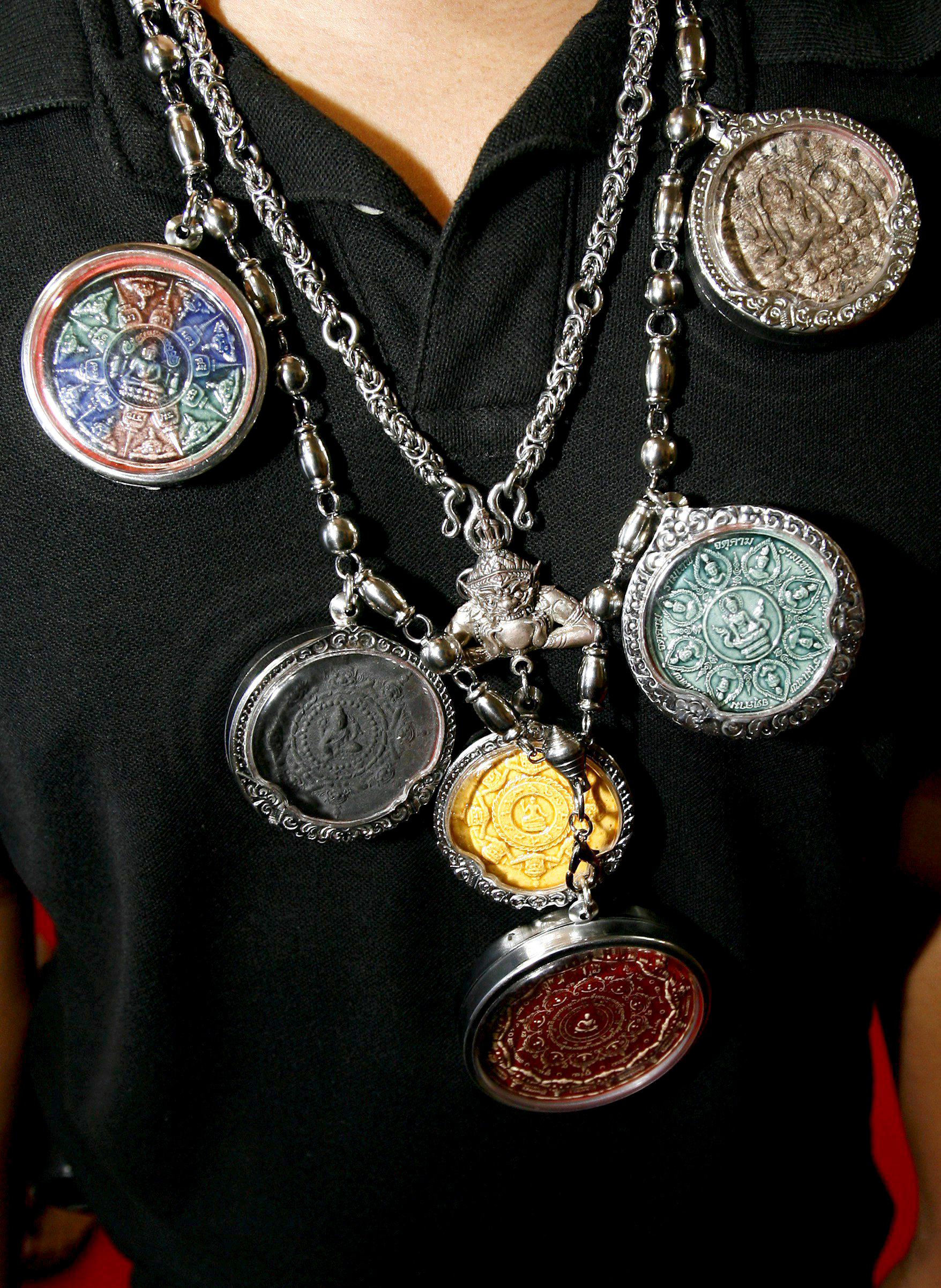
Then I thought about Carolina’s Evil Eye and the harm produced by envies. And remembering the light/shadow approach, I felt inclined to learn a bit more about envy. My eyes fell upon a psychologist’s quotation: “(It) occurs when a person lacks another’s (perceived) superior quality, achievement, or possession and either desires it or wishes that the other lacked it.” The definition is perfect. But anyway, I felt that I needed something more and, remembering that folk knowledge has a very useful down-to-earth wisdom, I returned to the concept of the Evil Eye (mau olhado in Portuguese; malocchio in Italian) and found the following description in a text by Jill Stefko: “It is believed that there are two types of malocchio, malevolent and involuntary. Most of the cases are believed to be the latter. The involuntary type is when a person may admire or be envious of another’s children, livestock or property.”

After that, I went to the site of Encyclopedia Britannica and found that mau olhado/malocchio is as widespread as kindness itself: “Belief in the Evil Eye is ancient and ubiquitous; it occurred in ancient Greece and Rome, in Jewish, Islamic, Buddhist, and Hindu traditions, and in indigenous, peasant, and other folk societies, and it has persisted throughout the world into modern times.” Envy must be indeed very powerful, to be feared by so many and diverse civilizations and peoples along the millennia. Perhaps this was exactly the key I was looking for: only an equally powerful virtue would be able to fight it.

DEMOCRACY WITHOUT PAIN
I returned to Wikipedia for a definition of kindness: “It is the act or the state of being kind and marked by charitable behavior, marked by mild disposition, pleasantness, tenderness and concern for others.” Then I turned to the philosophers to contrast it with envy. For Aristotle, it is “the pain caused by the good fortune of others,” while for Kant, it is “a reluctance to see our own well-being overshadowed by another’s because the standard we use to see how well off we are is not the intrinsic worth of our own well-being but how it compares with that of others.” In either definition, it is obvious that it causes pain. Bertrand Russell recognized that envy is one of the most potent causes of unhappiness and considered it a universal and most unfortunate aspect of human nature, because not only is the envious person rendered unhappy by his envy, but also wishes to inflict misfortune on others.

However, the 20th century agnostic thinker found in envy a social role, as a driving force behind the movement towards democracy, one that must be endured in order to achieve a more just social system. I think he was talking about the force that makes men willing to be equal and emulate those who are more successful than them. A legitimate wish that, in my humble opinion, can be achieved without envy. In this matter, we must turn to religious ethics: in Buddhism, taking joy in the good fortune of another is a highly regarded virtue and considered the antidote to envy. And I think this joy can be much more powerful than the feeling of envy.

When I think about my Christian heritage, I find that it is imbibed by the joy that is deeply tied to charity and love, and that this joy is indeed a vital source of personal and social transformation. As I said before, it is difficult to imagine our global society, which is caught in the middle of one of the most complex and harsh crisis in history, flooded by a joyful love. But I know that, even in the middle of a storm, there are uncountable acts of kindness. And there is where my hope lies. In Chinese ideograms, crisis can mean a catastrophe but also an opportunity; and, as Christians, we have a good chance to heal our ailing world with the strong medicine of individual and collective loving kindness.

Returning to Carolina’s Evil Eye, I must recognize that the rituals she performed at the time didn’t make me feel better. It was inside me that I found the cure. I admit that, in a way, she was right: I was burdened by “envies” that were inflicted on me by some of my closest friends. A long time went by before I was able to overcome my malaise. I had to do it myself: trying to understand other people’s actions or words, finding in me the strength to not feel bitter or resentful, and, finally, responding the unkindness with kindness. After that, I felt a better person and more willing to do my humble part in turning our society into a better one. Believe me, even a kind disposition works – like a charm.


Share Your Thoughts

All comments are moderated

From The Same Issue

The articles and content about this issue

From The Same Issue

The articles and content about this issue

African Insight

Active Love

From This Topic

The articles and content about this topic

From This Topic

The articles and content about this topic

Explore Other Topics

Browse other coverage

Explore Other Topics

Browse other coverage

WM SPECIAL

Presents, discusses and draws readers to reflect on issues of outmost relevance to the world today.


FRONTIERS

Very often, mission is carried out in frontier situations around the world. Those who embrace these situations have much to share.


UNITY IN DIVERSITY

Writer Ilsa Reyes will be exploring the richness of Pope Francis’s latest encyclical Fratelli Tutti with a view of helping our readers to get a grasp of the this beautiful papal document.


FRONTLINE

Puts to the front committed and inspiring people around the world who embrace humanitarian and religious causes with altruism and passion.


IN FOCUS

Focus on a given theme of interest touching upon social, economic and religious issues.


FAITH@50

As the Philippines prepares to celebrate 500 years of the arrival of Christianity. Fr. James Kroeger leads us in this series into a discovery journey of the landmark events in the history of faith in the Philippine archipelago.


INSIGHT

Aims to nurture and inspire our hearts and minds while pondering upon timely themes.


FILIPINO FOCUS

The large archipelago of the Philippines, in its richness of peoples and cultures, offers varied and challenging situations for mission.


FOLLOW ME

Reflections and vocation stories that shape up the lives of young people.


MISSION IS FUN

As humor and goodness of heart are qualities of Christian and missionary life, the new column “Mission is fun” will be publishing some anecdotes and stories that have happened in a missionary context to lighten up the spirits and trigger a smile in our faces.


LIVING COMMUNION

To help readers of World Mission live this year dedicated to Ecumenism, Interreligious Dialogue and Indigenous Peoples, Tita Puangco, writer and lecturer, shares in this section insights on the spirituality of communion.


WINDS OF THE SPIRIT

A historic view of the Catholic movements that emerged from the grassroots as an inspiration by the Holy Spirit.


BRIDGE BUILDERS

On the Year of Ecumenism, Interreligious Dialogue and Indigenous Peoples, radio host and communicator Ilsa Reyes, in her monthly column, encourages Christians and people of good will to be one with their fellow people of other sects, religions and tribes.


INTERVIEW

Questions to a personality of the Church or secular world on matters of interest that touch upon the lives of people.


WORLD TOUCH

News from the Church, the missionary world and environment that inform and form the consciences.


CARE OF THE EARTH

A feature on environmental issues that are affecting the whole world with the view of raising awareness and prompting action.


EDITORIAL

The editor gives his personal take on a given topic related to the life of the Church, the society or the world.


YOUNG HEART

A monthly column on themes touching the lives of young people in the Year of the Youth in the Philippines by radio host and communicator I lsa Reyes.


SCROLL

A missionary living in the Chinese world shares his life-experiences made up of challenges and joyous encounters with common people.


EXTRAORDINARY PEOPLE

Life stories of people who deserve to be known for who they were, what they did and what they stood for in their journey on earth.


ONE BY ONE

Stories of people whom a missionary met in his life and who were touched by Jesus in mysterious ways.


INCREASE OUR FAITH

Critical reflection from a Christian perspective on current issues.


SPECIAL MOMENTS

Comboni missionary Fr. Lorenzo Carraro makes a journey through history pinpointing landmark events that changed the course of humanity.


PROFILE

A biographical sketch of a public person, known for his/her influence in the society and in the Church, showing an exemplary commitment to the service of others.


WM REPORTS

Gives fresh, truthful, and comprehensive information on issues that are of concern to all.


LIFE'S ESSENTIALS

A column aimed at helping the readers live their Christian mission by focusing on what is essential in life and what it entails.


ASIAN FOCUS

Peoples, events, religion, culture and the society of Asia in focus.


THE SEARCHER'S PATH

The human heart always searches for greatness in God’s eyes, treading the path to the fullness of life - no matter what it takes.


INDIAN FOCUS

The subcontinent of India with its richness and variety of cultures and religions is given center stage.


AFRICAN FOCUS

The African continent in focus where Christianity is growing the fastest in the world.


JOURNEY MOMENTS

Well-known writer and public speaker, Fr. Jerry Orbos, accompanies our journey of life and faith with moments of wit and inspiration based on the biblical and human wisdom.


IGNATIUS STEPS

On the year dedicated to St. Ignatius of Loyala, Fr. Lorenzo Carraro walks us through the main themes of the Ignatian spirituality.


THE SEVEN LAST WORDS OF JESUS

Fr. John Taneburgo helps us to meditate every month on each of the Seven Last Words that Jesus uttered from the cross.


INSIDE THE HOLY BOOK

In this section, Fr. Lorenzo delves into the secrets and depths of the Sacred Scriptures opening for us the treasures of the Sacred Book so that the reader may delight in the knowledge of the Word of God.


CONVERSATIONS

Reflections about the synodal journey on a conversational and informal style to trigger reflection and sharing about the synodal path the Church has embarked upon.


VATICAN II

This 'mini-course' series provides a comprehensive exploration of Vatican II, tracing its origins, key moments, and transformative impact on the Catholic Church.


COMBONIS IN ASIA

This series offers an in-depth look at the Comboni Missionaries in Asia, highlighting their communities, apostolates, and the unique priorities guiding their mission. The articles provide insights into the challenges, triumphs, and the enduring values that define the Comboni presence in Asia.


BEYOND THE SYNOD

Following the Synod on Synodality, this series examines how dioceses, parishes, and lay organizations in the Philippines are interpreting and applying the principles of the synod, the challenges encountered, and the diverse voices shaping the synodal journey toward a renewed Church.


A TASTE OF TRADITION

This series introduces the Fathers of the Church, featuring the most prominent figures from the early centuries of Christianity. Each article explores the lives, teachings, and enduring influence of these foundational thinkers, highlighting their contributions the spiritual heritage of the Church.


A YEAR OF PRAYER

In preparation for the 2025 Jubilee Year under the theme “Pilgrims of Hope,” 2024 has been designated a Year of Prayer. World Mission (courtesy of Aleteia) publishes every month a prayer by a saint to help our readers grow in the spirit of prayer in preparation for the Jubilee Year.


OUR WORLD

In Our World, the author explores the main trends shaping contemporary humanity from a critical and ethical perspective. Each article examines pressing issues such as technological advancement, environmental crises, social justice, and shifting cultural values, inviting readers to reflect on the moral implications and challenges of our rapidly changing world.


CATHOLIC SOCIAL DOCTRINE

This series unpacks the principles of Catholic Social Doctrine, offering a deep dive into the Church's teachings on social justice, human dignity, and the common good.


HOPEFUL LIVING

Hopeful Living’ is the new section for 2026, authored by Fr. James Kroeger, who dedicated most of his missionary life to the Philippines. In this monthly contribution, he will explore various aspects of the virtue of hope. His aim is to help readers align their Christian lives more closely with a hopeful outlook.


PHILIPPINE CROSSROADS

Filipino Catholic scholar Jose Bautista writes each month about how the Philippines is at a crossroads, considering the recent flood control issues and other corruption scandals that have engulfed the nation. He incorporates the Church’s response and its moral perspective regarding these social challenges.


BIBLE QUIZ

Test your knowledge and deepen your understanding with our Bible Quiz! Each quiz offers fun and challenging questions that explore key stories, themes, and figures from both the Old and New Testaments.


Shopping Cart