Even though the official liturgical preparation for Christmas begins with the First Sunday of Advent, and December 25 remains at the center of the liturgical and secular celebrations, in Mexico the effects of this feast are felt way before those dates and continue until the beginning of February.
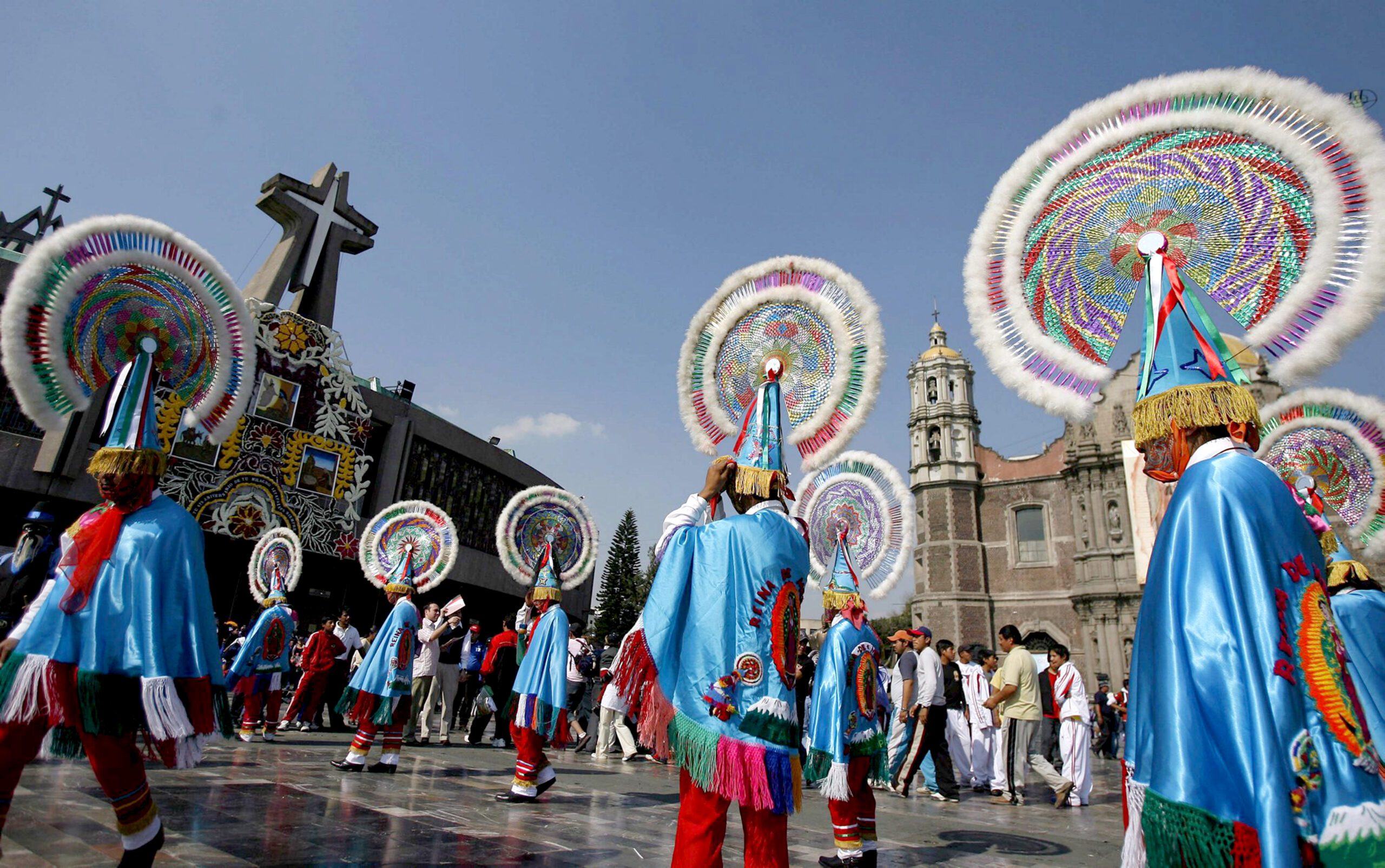
Once the Holy Saints’ feast is concluded, the environment in Mexico begins its transformation: local commercials, streets and houses turn colorful. As December begins, family and personal schedules begin to become hectic with dinners, posadas, pastorelas, gathering of friends to exchange good wishes and gifts; not forgetting the celebration of Our Lady of Guadalupe on December 12, which works as a booster to the joyful celebrations in preparation for Christmas. The Feast of Light begins with poinsettia pots coming out from nowhere, uncountable series of lights flashing in the city, lanterns, colored papers, and many more external decorations – even “snow-covered windows” in a temperature high enough to melt the icing of cakes!
We can feel that the different elements of a big and unique “formula for joy” begin to mix. Let us have a closer look at the main and unique elements of the big Christmas celebrations in Mexico.
† The Posadas – Without any doubt, the nine days preceding Christmas Day constitute a landmark for almost everybody in Mexico. In the posadas, you can meet again friends and relatives who might have disappeared from your sight since the last posada in the previous year! It is a must to attend all the posadas thereat.
In these celebrations, people gather in a different house every day to reenact the quest for lodging done by Mary and Joseph on their journey to Bethlehem for the census. According to the Gospel of Luke, Mary and Joseph did not find a place for them to stay and for this reason Jesus was born in a manger.
This quest for lodging is celebrated in a festive way: two children take the place of Mary and Joseph knocking at different doors (usually two) and being refused by the owners until, at the place where the posada is going to take place (the third house, usually, where Mary and Joseph ask for lodging), the doors open and the celebration begins. In older times, while the holy “peregrinos” (pilgrims) were going from one house to the next, the rosary was prayed. Nowadays, usually only a short prayer is said at the beginning of the posada. Then, people gather to eat and drink the traditional Mexican delicacies for Christmas like the “ponche,” a water-based drink in which seasonal fruits and cinnamon sticks are boiled for hours, sometimes with a “sting” of a strong alcoholic spirit.
† La Piñata – There is no real posada without a piñata. The real celebration of a traditional piñata is the breaking of a ceramic pot containing gifts for all, specially for children. The piñata may seem just a pot filled with fruits and dangling above the heads of children, who, blindfolded and in turns, try to break it, animated by the songs and instructions given by those around… but, actually, it was a powerful means for catechesis during the colonial time.
When the first missionaries arrived in Mexico, they were faced with a very different way of life than the one they were used to. The conquest meant not only taking over territories that had recently been discovered as America but also the imposition of a language, Spanish customs and habits and, among other things, religion. It was not easy for the evangelists to change people’s belief in many gods and the ideology of the many different local populations so they had to invent strategies they could use to teach the mysteries of God to the local people.
One of the most complicated dogmas is sin and the way Satan tempts us. The missionaries had to teach them how to be strong to beat the Devil so that they could reap the benefits of heaven… And with a huge weight of responsibility on their shoulders, the Franciscans found the answer… la piñata!
Most probably, they imported an Italian tradition (originated in China!) and designed a huge ceramic pot covered with colored paper in the shape of a star, each point representing one of the seven deadly sins. The “star” would come down from and then rise up to the sky and it would bother people… touch them… tempt them.
Therefore, one has to hit it hard, overcome the temptation, put one’s all attention to get rid and break the evil. Blindfolded with “sin,” our family and friends and others who surround us have to guide us in order to break from the chain of evil.
But, of course, in the context of Christmas, the teaching of a dogma cannot be something “serious,” especially in a festive celebration. So in the middle of songs, cheering and joy, the breaking of the piñata begins, especially animated with the singing of the bystanders.
Among the traditional verses that are sung while the blindfolded person strives to break the piñata are: “Dale, dale, dale! No pierdas el tino, porque si lo pierdes, pierdes el camino!” (“Strike, strike, do not miss your aim, because if you do not hit it, you will lose your way!”); “No quiero oro, ni quiero plata, yo lo que quiero es romper la piñata.” (“I don’t want gold and I don’t want silver… all I want is to break the piñata.”)
And when someone is well guided, the piñata is broken! Then, from “heaven,” we are showered with gifts… fruits, candies, toys, and immense happiness that fill us with joy. Evil has been destroyed; God is with us. The missionaries have accomplished their duty and we Mexicans enjoy one of our most fun-filled and exciting traditions.
Another interpretation says that the piñata was used to teach indigenous people about the three theological virtues: Faith – the blindfolded child beats the pot; Hope – the one beating the piñata watches the skies, yearning and waiting for the prize; and Charity – once the evil is defeated, we all are showered with blessings from heaven, all the good coming from God.
Even though the original meaning of the tradition is not known to many and the “star” has been transformed into other shapes (of fruits or characters from the cartoons), especially when used outside the Christmas Season, the piñata will always be a thrill and joy for all children.
† La Rama – In the Southern regions of Mexico, there is one tradition in which people, particularly children, celebrate the preparation for Christmas. It is called “La Rama” (The Branch). This tradition puts together songs, dances and joy. Beginning December 16, every night, children gather in small groups and go around the neighborhood holding a branch of a tree, usually without leaves but decorated with a small representation of the Nativity scene, colorful strings of paper, lanterns, oranges and other seasonal fruits, candies and a depiction of other gifts children expect to receive. From dusk and for the whole evening, they sing in front of every house and ask for gifts from the housekeepers. The children sing with these words: “Good evening! The Branch comes here to sing for you… to see what you can give us… oranges and lemons for these kids who are great eaters!” The children ask for their aguinaldo – which means a traditional Christmas gift for them. The lyrics of this song and also the lyrics of the songs in the posadas make allusion to the Child Jesus, Virgin Mary and St. Joseph. Most of the time, they get some candies, toys, even money as their aguinaldo. The joyful kids then give thanks for the generosity of the people inside the house with a nice tune: “The Branch now leaves this house with a thankful heart because it was welcomed.” In case they do not get anything from the homeowners, the children sing a funny tune, something like – “probably the dwellers of this house are dying of hunger!”
According to historians, the different regional versions of “La Rama” originated from indigenous traditions or festivities celebrating the renewal of nature usually around Christmastime. Once again, missionaries christened these rituals and transformed them with the accompaniment of Spanish musical instruments. At a certain time, some elements of Afro-Cuban traditions had also influenced this particular “La Rama” tradition.
† Noche Buena – Of course, all these celebrations reach their climax at Noche Buena, December 24. Many families go to Misa de Noche Buena which used to be exactly at midnight, but, nowadays, it is anticipated so that the family can gather at exactly midnight to exchange warm, tight embraces and gifts. After that, comes dinner with close family members. Even though it is strictly a family celebration and everybody has to be in his own house on that night, any friend who does not have a family is always welcome to be part of a family celebration. Many families still keep a little statue of the Infant Jesus in the manger and, while singing traditional lullaby songs, pass the Baby Jesus to all present to hold Him for a while. Finally, a member of the family (usually a little boy or girl) places the Baby Jesus in the manger in the Nativity scene prepared some weeks ahead.
In these latitudes, Christmas Eve is the peak of the Christmas celebration. After midnight, parties go on for hours till dawn. After some sleep, people usually go to visit some more relatives, usually the grandparents, with whom the young families were not able to spend Noche Buena.
† Innocents’ Day – During the Octave of Christmas, there is one particular day of celebration before New Year’s Eve, and that is Innocents’ Day. In Spain and Ibero-America, December 28 is a day for pranks, equivalent to April Fool’s Day in many countries. Pranks are known as inocentadas and their victims are called inocentes, or alternatively, the pranksters are the “inocentes.” On this particular day, people play jokes or ask for things from relatives and friends only to be kept for good. After all, they were borrowed on Innocents’ Day! Usually money is given back the following day. This is related to the observance of the slaughtering of innocent children in Bethlehem ordered by King Herod two years after the birth of Jesus Christ.
† New Year’s Eve – Not only in Mexico but practically all over the world, December 31 marks the last day of the year and, in every place, there are particular celebrations. On New Year’s Eve, there is a Misa de Gallo (Rooster’s Mass), that takes place at midnight or in the late evening hours. On this last day of the year, most Mexican families go to church to give thanks for all the blessings received during the year.
In some regions of Mexico, there is a tradition called “El Viejo” (The Old Man) in which a figure made of old rags, papier-maché or cardboard representing an old man (the year about to finish) is brought from house to house, followed by a child, asking for some money or gifts while dancing and singing: “Please give an alm for this poor old man who leaves children for the new year.” This figure usually holds a cigar in his mouth and is filled with fireworks so that, at midnight, the cigar is lit and the figure explodes, concluding in this way the Old Year and leading everybody to a big celebration.
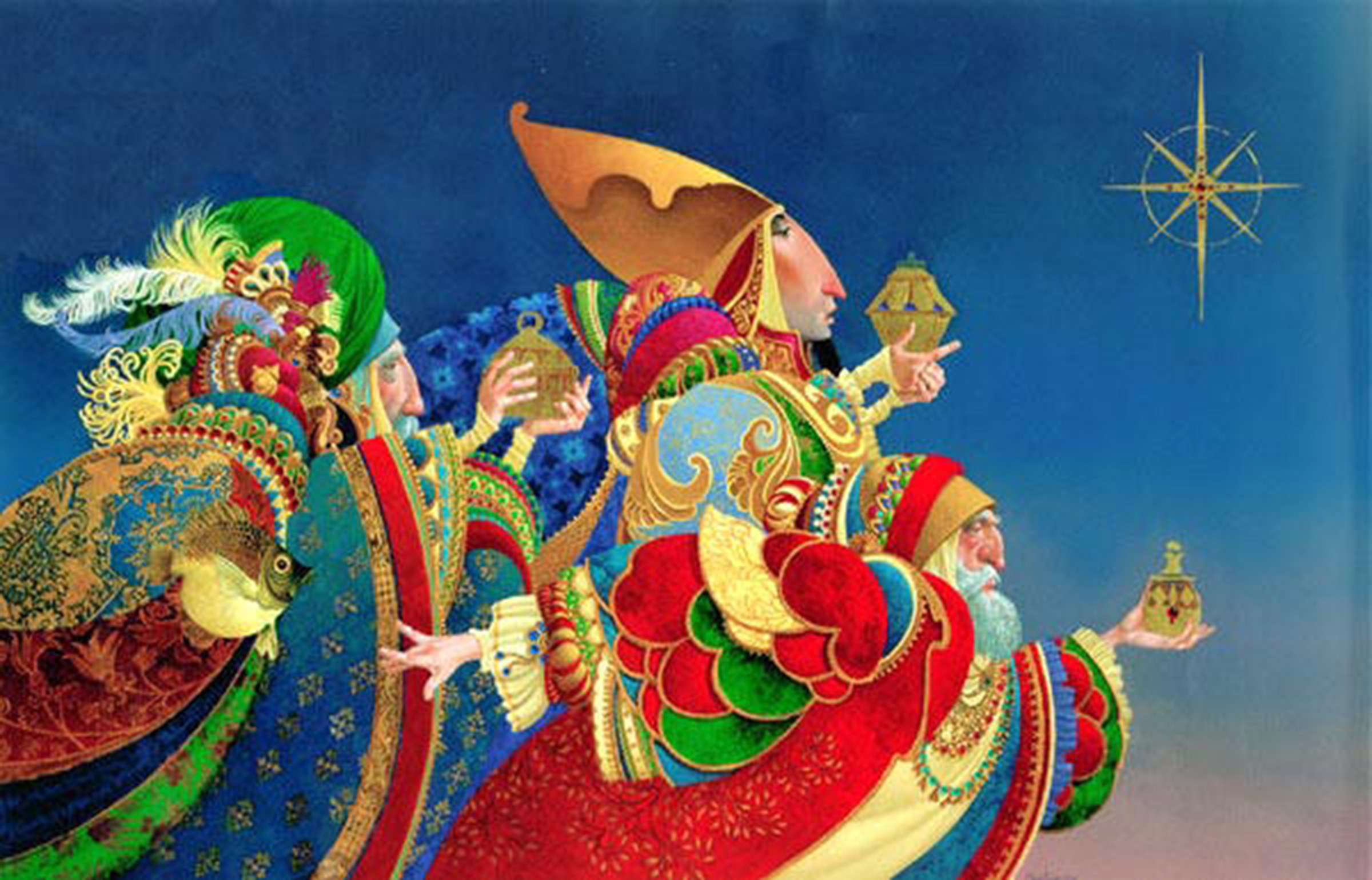
† Feast of The Three Kings – This is the traditional day on which children receive their presents on January 6, “el Día de Reyes,” the day of the Kings, or the Wise Men Day. It was the Magi who brought the presents to the Baby Jesus, thus, “they” bring the toys to the boys and girls who have been good. The children place their shoes by the window along with a letter in which they list their wishes and promise to behave well during the year. Therefore, the “Magi” place the presents in the shoe or next to it. This tradition is respected in most Mexican homes, but it is not uncommon that the gifts are given on Christmas Day since these gifts are supposed to be brought by the Child Jesus and, in more Americanized houses, by Santa Claus.
In most countries, January 6 practically marks the conclusion of the Christmas celebrations and, in fact, in many places, it is also the time to put Christmas decorations back in their boxes; children go back to school as vacation time concludes. For many, it is also a day to begin dieting because of the excessive calories gained at Christmastime… Not in Mexico where there is a particular tradition that allows an extension of Christmas celebrations for some more weeks!
During this period, people in working places, children at schools and in the families, or members of any kind of group keep the tradition of having a slice of the “Rosca de Reyes.” This is a big egg bread, like an oval wreath, with dried fruit decorations, sprinkled with sugar on top… It may seem an ordinary bread but, inside it, there are several ceramic or plastic little dolls representing the Baby Jesus. As people arrive at a place, where hot chocolate is also served, they get a slice of this bread, hoping not to get “the Baby” in their slice! The persons who get the slice of bread with the Baby become the godparent of the Baby and have to offer a dinner in His honor in the celebration of the Presentation of the Child Jesus at the Temple or “Candelaria” on February 2.
† Candelaria – On February 2, the Nativity scene is put away with a party given by the persons who got the Baby Jesus in their piece of bread during the Rosca de Reyes celebration. They will be responsible for making a christening gown for Baby Jesus. Generally, all people who go to a house for the slicing of the Rosca de Reyes on January 6 get “tamales” (a kind of steamed bread made from corn dough filled with meat in a sauce or raisins wrapped in corn husks) at dinner on February 2. On this day, all Baby Jesus “dolls” are brought to the church “to attend the Mass” and to be blessed.
This is the last day of the Christmas festivities. Three months of celebrations, of special meals and drinks, a time for people to come together as a family, a time for reconciliation; and a time to renew warm relationships with one another.
† Recipes for Christmas – In our time, we have infinite possibilities to have a lot of fun, to travel or just gather with our friends to celebrate Christmas. It is up to us to place in our environment the elements that will make these weeks or months an authentic celebration of faith. It is up to us to leave to the coming generations the ingredients to keep our faith alive and, at the same time, to be happy. God wants us to have life, a life to the full. For this reason, He became flesh. May we all learn from Him to integrate in our ordinary life the elements of our faith. Particularly in these weeks of joy, may we become bearers of peace, instruments of reconciliation and agents of happiness in our environment. May the colors, flavors and music of Christmas make a perfect blend in our lives – for God who dwells among us. Feliz Navidad! Merry Christmas!