
In the years between the two World Wars, China became a laboratory of different tensions. On the one hand, the Nationalist Movement of Chang-Kai-Shek was trying to unify the immense country. On the other, the Communists of Mao-tze-dong had their own hidden agenda and plan. By 1928, Chiang Kai-shek had waged the Northern campaign and set up the National Government in Nanjing. Meanwhile, the Communists were also gaining strength. They now had over 40,000 party members. The two forces found a common enemy, the Japanese who had invaded China and, for a while, they worked and fought hand in hand.
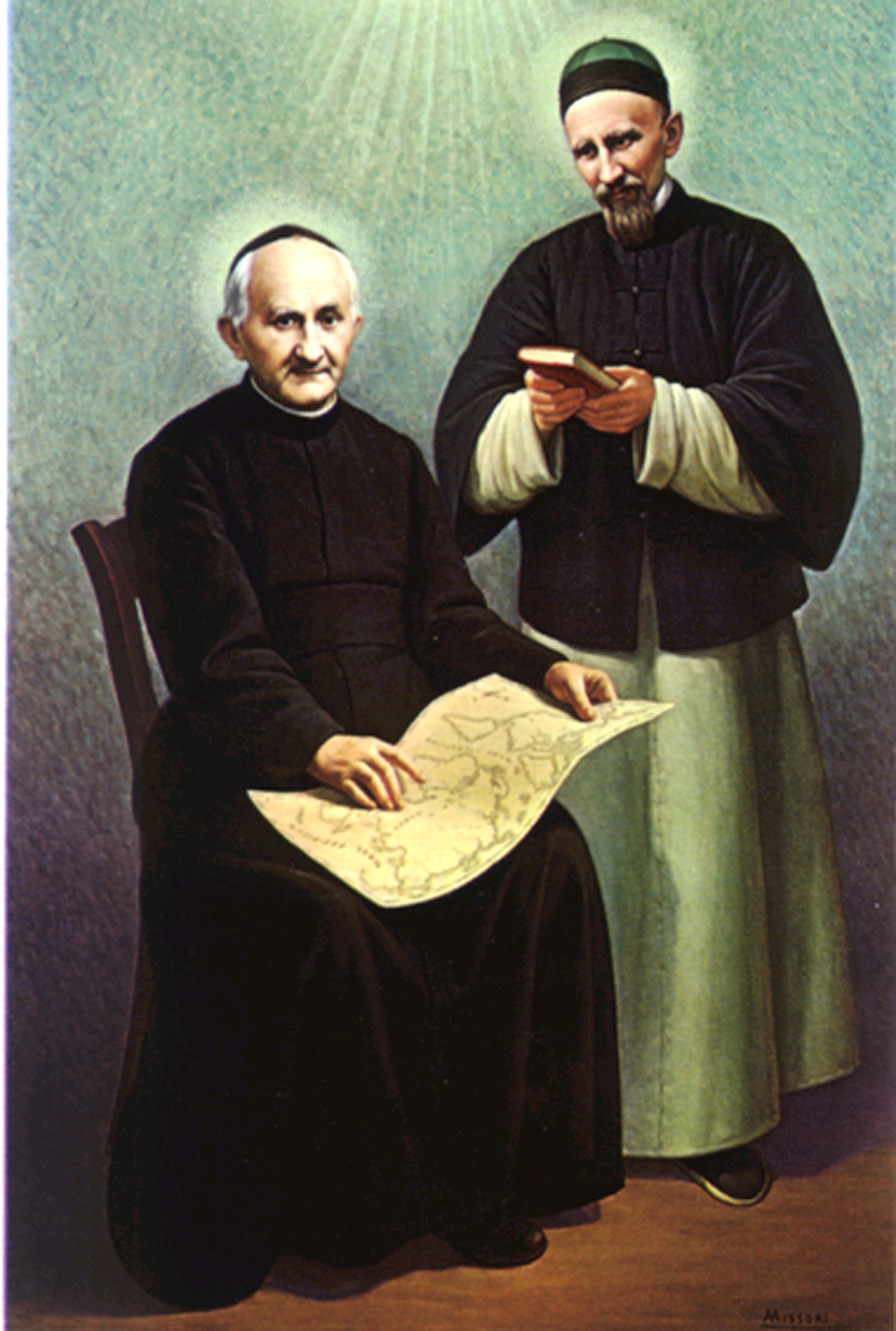
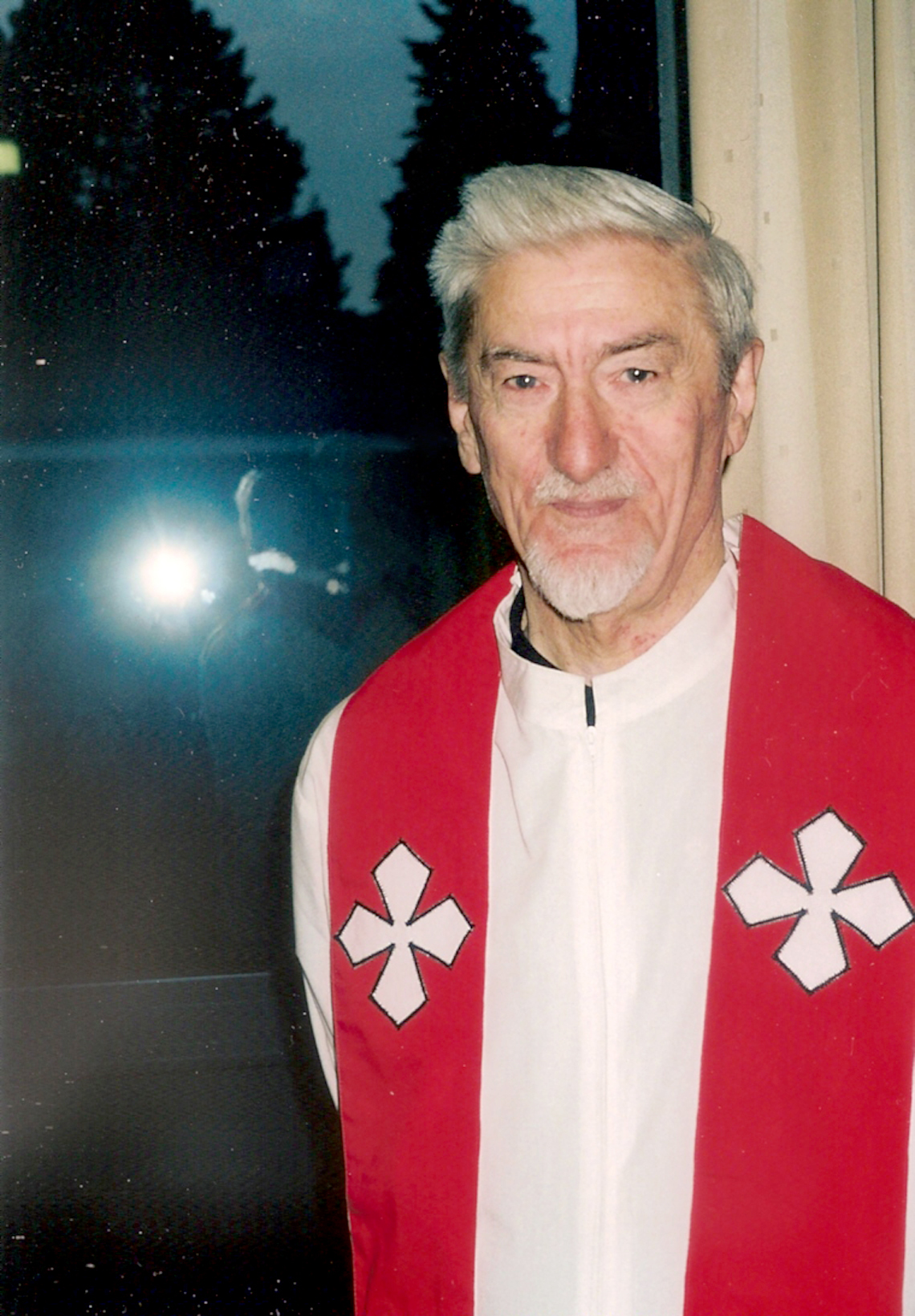
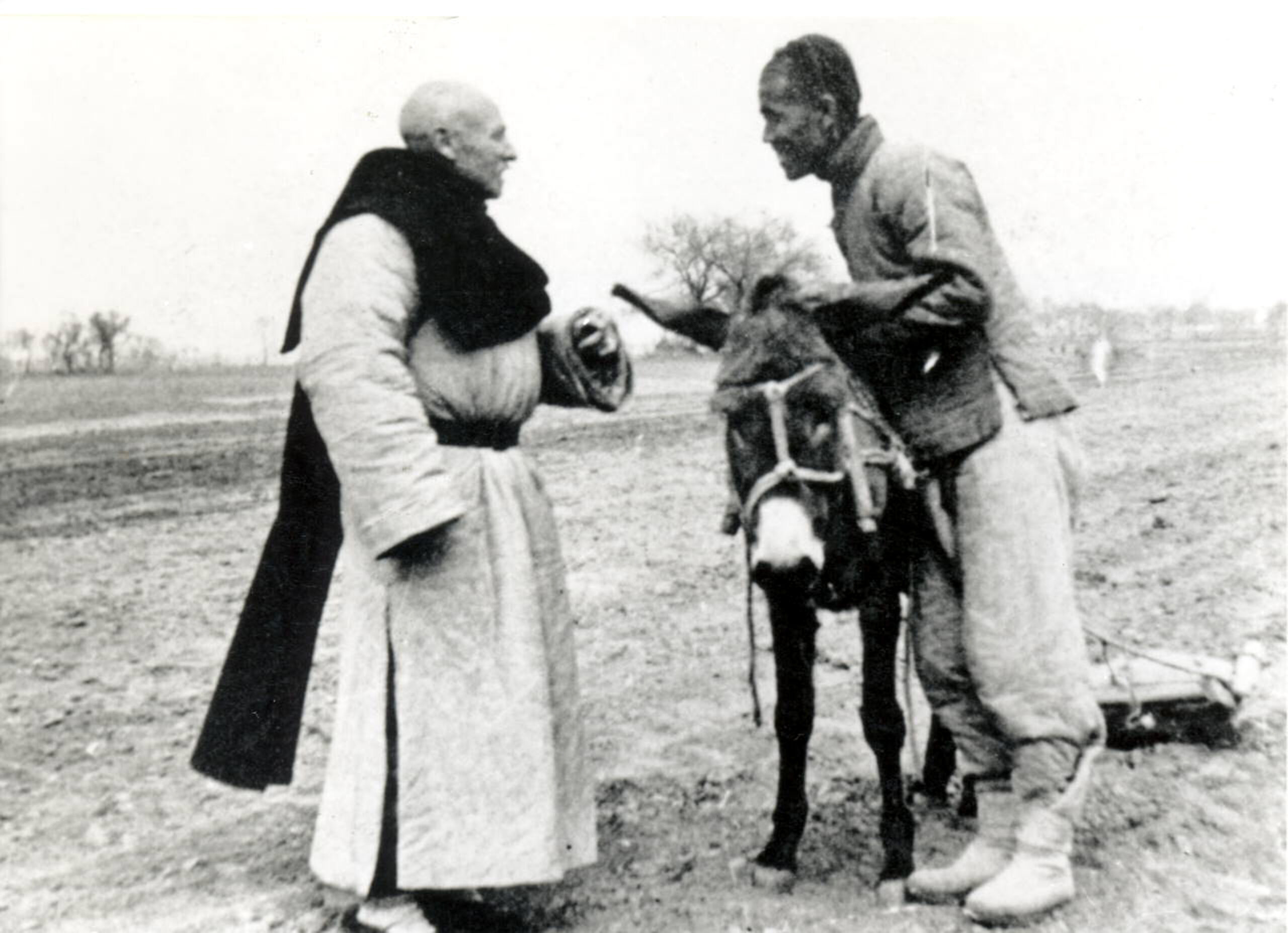
The Japanese invaded Manchuria in 1931 and bombed the Great Wall in 1937. In this scenario, there emerged the example of a Belgian Catholic missionary, Fr. Vincent Lebbe. He had committed his life to China to the point of becoming a Chinese citizen, something unique among the foreign missionaries. He was given the Chinese name of Lei-Ming-Yuang (the thunder which rumbles from afar). During the invasion of Manchuria by the Japanese, Fr. Lebbe launched himself in a campaign meant to awaken the patriotic spirit of the people. He redacted the letter of the sixteen Catholic bishops of China addressed to the Commission of Inquiry of the Society of Nations. All the same, the Sino-Japanese war was officially declared in 1937.
COMMITMENT TO NON-VIOLENCE
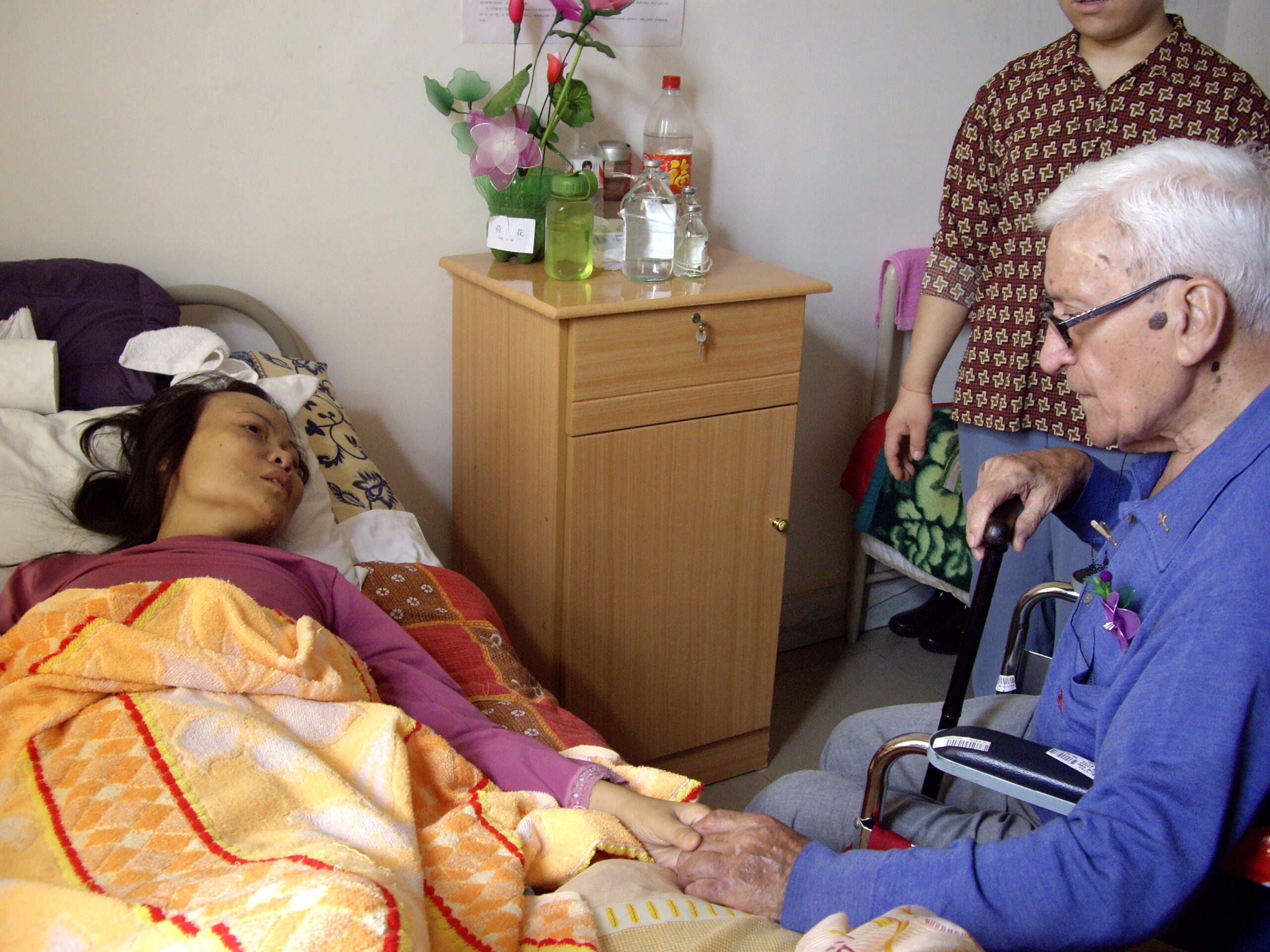
During the war, Father Lebbe organized teams of stretcher-bearers, made up mostly of his Little Brothers, whom he dispatched into the mountains of Shaanxi to care for the wounded. His commitment to non-violence was absolute since his arrival in China, in the aftermath of the Boxers’ War. On that occasion, impressed by the witness of the martyrs, he had made the absolute decision “never to defend his own life.” His motto, during the Sino-Japanese War, was: “To live and to die with the wounded.” Under his responsibility, there was a moment when he had to evacuate more than 20,000 wounded people. His moral stature and commitment were such that he really appeared as a national hero.
For his humanitarian work, Chiang Kai-Shek raised him to the rank of an officer. The Communists took note of this and, in early 1940, Lebbe and his six Brother-workers were arrested by the Eighth Communist Army. Lebbe was reproached for his links with the Guomindang and subjected to a program of re-education; all to no avail. He was released in April but he was very ill. He died in Chongqing, in the home of a Chinese friend, on the feast of St. John the Baptist, June 24, 1940. He was sixty-three years old.
STRONG WILL IN A WEAK BODY
“I am going to go to China and be a martyr,” the 11-year-old boy exclaimed. “I will join the Vincentians and, like Blessed Jean Gabriel Perboyre, I will become a martyr.” In many ways, Lei Ming-yuan did achieve the desire of his youth. The future missionary to China was born on August 19, 1877 in Ghent, Belgium. He was a serious youth who was inspired by the stories of missionary martyrs. When he was 18, he joined the Vincentian Seminary in Paris, his heart set on going to the Far East and devoting his life to the Chinese.
Vincent’s hopes of going to China, however, were dashed when, during the course of his studies in Paris, he became ill. Whatever his sickness may have been, it precluded his being sent to the missions. Instead his superiors decided to send him to Rome to study theology.
The Boxer Rebellion of 1900 devastated the Catholic Church in China. It was estimated that at least 18,000 Catholics, including 5 bishops, 40 priests and a large number of women religious were massacred in the process. Shortly after these happenings, Bishop Pierre Favier, the bishop of the Apostolic Vicariate of Peking, came to Rome to report to the Vatican on the tragic incidents. The bishop’s talk to the Vincentian theology students once again fired young Vincent with the desire to go to China. He begged the bishop to let him accompany him back to the Far East. On February 10, 1901, full of zeal and enthusiasm, Vincent left for China. The turn his life was about to take was immediately evident. He studied the Chinese language assiduously; he adopted Chinese dress and immersed himself into the culture, a phenomenon fairly rare in those days.
The passionate and sensitive nature of the new missionary became evident in the sense of separation and loss he felt in leaving his family. It was, however, a bonus when expressed in his love for music and painting which made him exceptionally proficient in mastering the Chinese classics. Vincent was ordained to the priesthood in 1901 and very soon he was submerged in pastoral commitments. His creativity showed itself in original pastoral initiatives like the putting up of conference halls in different places to spread the knowledge of Christianity, the commitment to lay associations like the Legion of Mary and even the first Christian daily paper, I-che-pao (The Public Good), that very soon acquired the extraordinary circulation of 50,000 copies because it appeared objective and impartial.
CHINA TO THE CHINESE
A faithful son of St. Vincent de Paul, Vincent Lebbe was remarkable for his kindness to the poor and needy. He soon won the hearts of the Chinese who recognized his love for them and their culture. He was relentless in urging Western missionaries to love the Chinese and in denouncing what he interpreted as their patronizing behavior towards them. He was thoroughly convinced that, in order to prosper, the Church in China had to become truly Chinese. He was merciless in reminding the Westerners that as long as the foreigners remained in control, the Church in China would never prosper. To become Chinese, the Church had to be in the hands of Chinese leadership. He insisted that the Church’s policy should be “China to the Chinese and the Chinese to Christ.”
One of Father Lebbe’s supporters was his friend, Anthony Cotta, a fellow Vincentian and veteran missionary from Madagascar and China. Father Cotta’s love of the Chinese and his desire to see the Chinese clergy promoted to their rightful place in the Chinese Church equaled that of Fr. Lebbe. Like Lebbe, he was also instrumental in bringing the matter to Rome’s attention. But, for that change, time was not yet mature. In the meantime, both missionaries paid for their commitment to the cause of the Chinese. Fr. Cotta was kicked out of China by his confreres and as for Fr. Lebbe, he was sent back to Europe because of the pressure of his own environment.
IMMERSED IN BHAKTI
With much of his life’s mission accomplished, he set upon another venture in favor of the Chinese. He organized the welcome of Chinese students in Belgium and France, in this way contrasting the influence of the Communists. Within the group of Chinese students, he could detect some independent thinkers, not influenced by communism and open to the Catholic Church. With these, Lebbe formed a friendship association of “free” students. Several students were eventually baptized. For them, he founded the Catholic Association for Chinese Youth in Paris and even published a Chinese weekly newspaper.
This is how one of his Chinese students, who later became a Benedictine monk, remembers him: “During the Christmas vacation, Father Lebbe came to Louvain to see the 15 or 20 Chinese students studying there. He was short in stature, and his cassock was old, faded and full of patches, not unlike the robe of a Chinese stage “beggar.” But when he opened his mouth, he immediately revealed his extraordinary moral stature. I challenged him saying that a number of doctrinal points were holding me back from becoming a Christian, like, for example, the death of Jesus on the cross. The very thought of a Buddha or a God who is liable to suffering or death is repugnant to us Buddhists. By definition, a Buddha is a being that cannot suffer or die, for he is outside and above the Wheel of Life and Death.
We argued back and forth until midnight. To dispel my doubts, Father Lebbe invoked the Buddhist notion of Bhakti, which my father used to explain to me in the sense of total devotion to the Buddha-Savior Amitabha and total compassion towards all sentient beings. “Because the Son of God was all-immersed in Bhakti,” Father Lebbe declared, “He gave Himself up on the cross in order to lead mankind to His Father − not only the mankind of two thousand years ago but all mankind until the end of time.” What finally convinced me was Father Lebbe’s own personal religious conviction rather than the soundness of his theological reasoning. Father Lebbe himself was all immersed in Bhakti, so totally dedicated was he to Jesus Christ, and so totally devoted to the welfare of his Chinese students. That night I did not sleep at all. At 6 o’clock in the morning, I asked Father Lebbe to baptize me.”
THE VICTORY OF A LIFETIME
At last, things were coming to a head in Rome. Pope Benedict XV’s Apostolic Letter, Maximum illud of November 30, 1919, aimed at putting the leadership of the Church into native hands. It called for a better spiritual and intellectual formation of the native clergy thus stopping missionaries from providing “a raw and unfinished preparation of the native clergy in view of keeping them in subordinate positions.” The letter dealt a blow to that common practice and helped end the “colonization” of the local Churches in mission territories.
The year 1922 signaled the end of the French Protectorate over the China missions. But the greatest signal that the Church in China was fully recognized as an equal among the local Churches was the episcopal ordination of six Chinese bishops on October 28, 1926 in St. Peter’s Basilica in Rome. This was the first ordination of Chinese priests to the episcopacy since Gregory Luo Wenzao was ordained the first Chinese bishop by Bernadine della Chiesa, vicar apostolic of Beijing, in 1685.
There was great cause for jubilation as the pope welcomed his new brothers to the episcopacy. Fr. Vincent Lebbe was present in Rome for the occasion. That day was also exactly the Silver Jubilee of his priestly ordination. The day of a lifetime! Three of the new Chinese bishops he himself had suggested to the pope. One of them invited Fr. Vincent to come to his new diocese. And so it happened that, in 1927, the “thunder in the distance” went back to China to fight for his adopted country until his death.