
If the temperature is below zero, “ice remains frozen, but if it rises even a little bit, it is enough to turn the ice to water,” Marco Rondón, a Colombian expert on natural resource management at the Canadian government’s International Development Research Centre (IDRC) explained. When the ice surface shrinks, the meltwater produced each year affects the way of life of people living close to the glaciers, Rondón said at the 14th World Water Congress held in Porto de Galinhas in northern Brazil. The accelerated rate of glacier melting was highlighted by one of the panels at the Congress, which was organized by the government of the state of Pernambuco and the International Water Resources Association (IWRA), a not-for-profit network that promotes debate on water administration and management.
In the Andean region, close to 10 million people depend directly on water from glaciers. In addition, many cities depend on the food produced in areas irrigated by glacier meltwater, such as Lima, the capital of Peru, a country with some 500 glaciers. According to Rondón, about 30% of the Andean ice surface could melt in the next few decades. “The availability of water is changing. For a short period of time, there will be more water. In Bolivia, for example, people are not necessarily unhappy about the warmer temperatures because they are able to grow more crops in the warmer climate. But it is not sustainable,” he said. According to the expert, the “benefits” enjoyed by some communities will not last more than three decades, after which there will be serious water shortages.
Paula Pacheco, a researcher for Agua Sustentable, a Bolivian NGO, works with rural communities to guarantee access to water resources and develops pilot projects for adaptation to an imminent change: the melting of the Illimani glacier, 66 km from La Paz. At an altitude of 6,350 meters above sea level and covering an area of 50 square km, this major Bolivian glacier has lost 21% of its area in just over four decades. “The peak of Illimani is like a symbol of the Andean world vision, and the glacier regulates water supply for many communities in the vicinity of La Paz. We need a more comprehensive understanding of what is affecting the melting of the glacier,” Pacheco said.
But, in Asia, the scenario of the melting glaciers, that is already happening, is a much bigger problem. The Hindu Kush-Himalayan region contains 60,000 square km of glaciers and is the source of 10 major Asian river systems. These rivers supply 1.3 billion people with water. All the scenarios predicted for climate change indicate there will be major changes in vegetation and wetlands, and that species will become extinct. The process of glacier melting is very complex and there are still many gaps in knowledge, commented Ajaya Dixit, the executive director of the Institute for Social and Environmental Transition-Nepal.
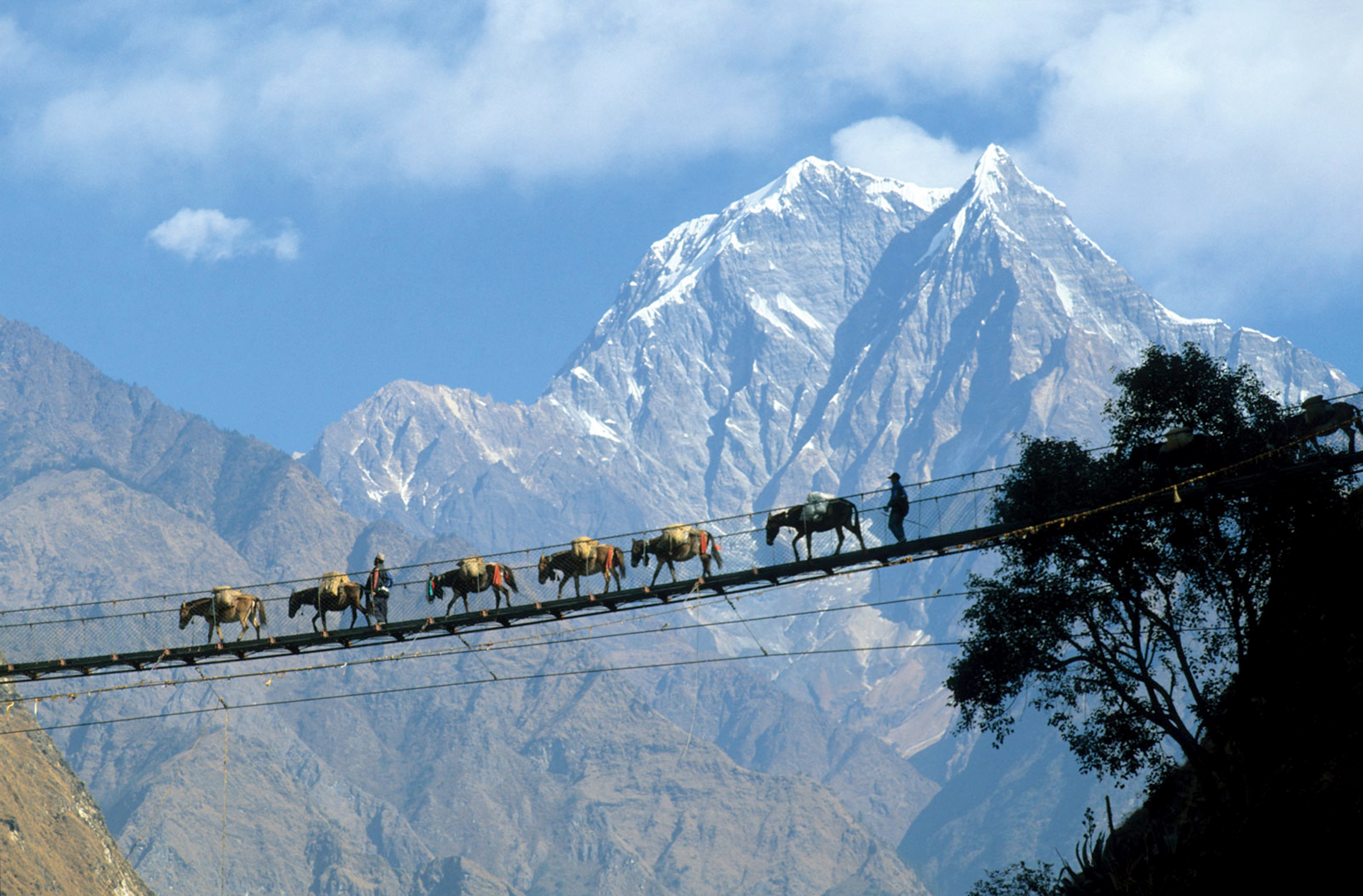
Only now are scientists beginning to comprehend the magnitude of the problem. “The Himalayas (glaciers) are not going to vanish in the near future, but they will shrink, and we don’t know how much. We know very little, but change will occur and it will change the dynamics. It is very hard to predict what will happen in 10 years’ time,” he said. Nepal, a country of 30 million people, has many glaciers at altitudes of between 5,000 and 6,000 meters. The country’s rivers are fed from snow and glaciers.
An estimated 35% of Nepal’s population depends on snow. The population living downstream uses the rivers that are fed by melting snow for irrigation, water power, and water supply.
Therefore, the actual population depending on water from snow is greater than the number of people who live in mountainous areas.
“We should be worried because in the worst-case scenario, things will be very, very bad. In Nepal, we produce very few greenhouse gases, but even if we produced none at all, the greenhouse gases from developed and developing countries are still going to cause a lot of effects and have an impact on snow and glaciers in the Himalayas,” Dixit said. “Preserving the Himalayas is a responsibility of the international community because they are a human heritage. We should learn from the strategies of other countries, such as in the Andes, that face both similar and different problems, and share ideas.” www.ipsnews.net / Fabíola Ortiz