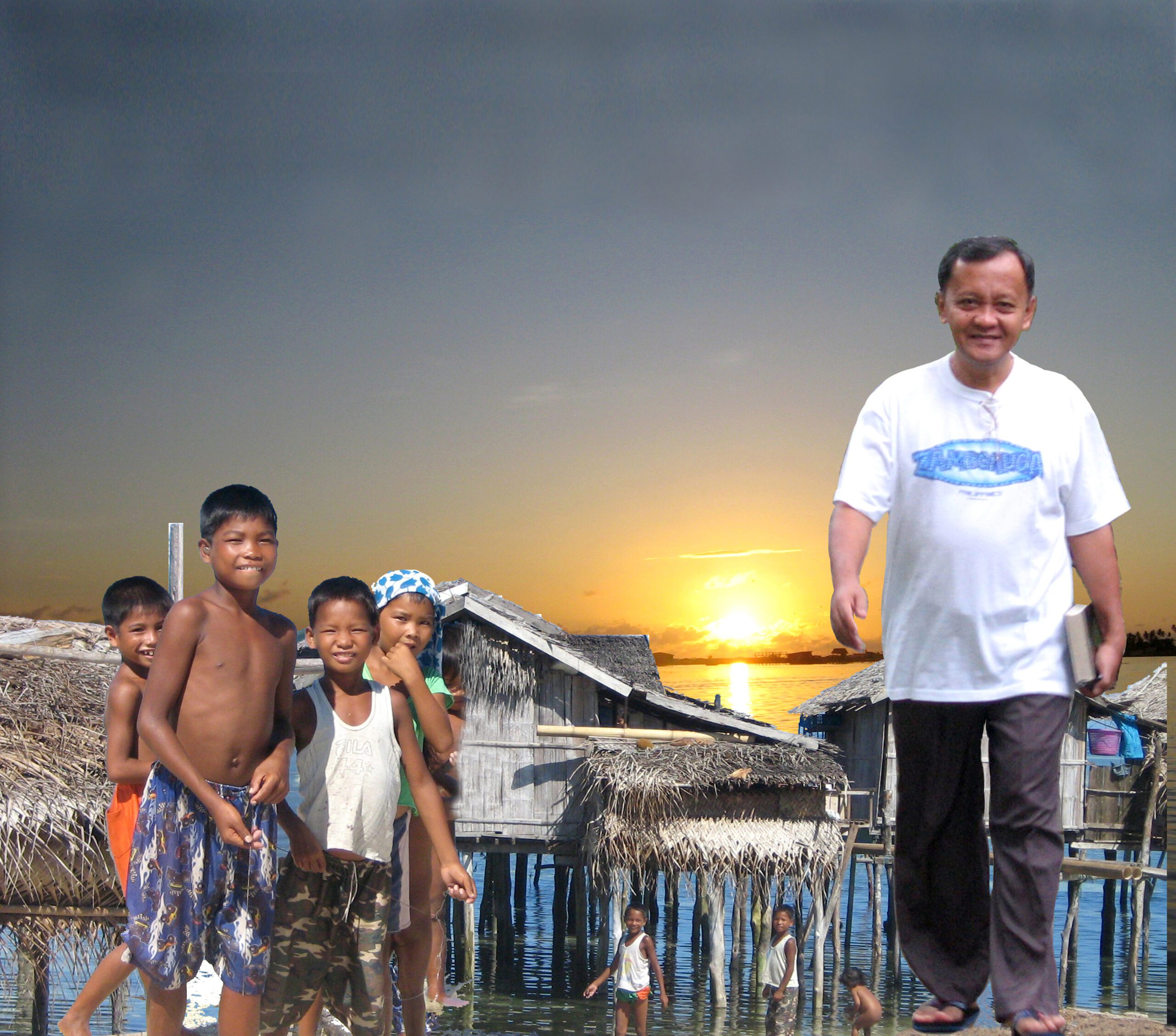
Can you let us know a bit about yourself and the missionary desire that brought you all the way to Pangoa?
Back in the Philippines, I was a catechist in the parish run by the Salesians of Don Bosco, a very dynamic and animated community. Our parish priest instilled in us a strong spirit of Christian service. In the year 1990, all the catechists of the parish were invited to attend the Life in the Spirit Seminar of the Charismatic Renewal. In that said seminar, I received a very clear call and resolved to serve the Lord not only on Saturdays and Sundays or only on my free time but to serve Him all the days of my life. I was 19 years old then and very shy. So, when I inquired with the Salesians of Don Bosco, they asked me to wait and finish a college degree. This I did but, after four years, I met Fr. Miguel Llamazares, a Spanish Comboni Missionary studying Tagalog in the parish. Through him and the World Mission magazine, I was introduced to the exciting world of the missions. I was convinced that God was calling me to take part in the evangelizing endeavor of the Church.
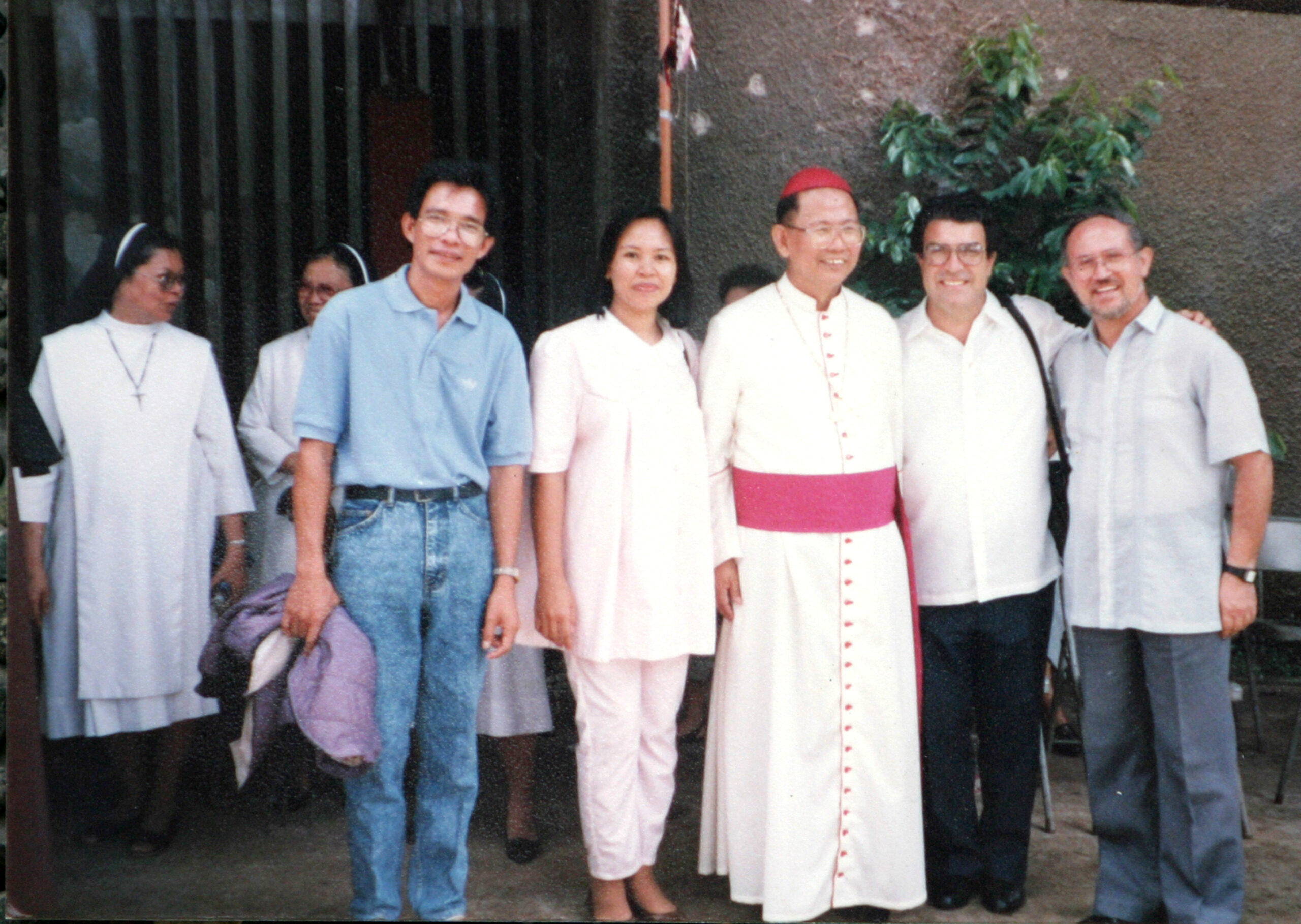
I was 24 years old when I joined the Postulancy in Quezon City. I brought all the support of my parents and my eight brothers and sisters with me, along with the spirit of service and youthfulness I learned from my Salesian mentors, and the seed of vocation that God planted in my heart. I truly enjoyed all the formation stages that the Comboni Missionaries offered to me: the Postulancy and Novitiate in the Philippines and the Scholasticate in South Africa. Those were times of exciting experiences preparing me to be a missionary of St. Daniel Comboni. I was ordained on the 6th of January 2008 in the community where I grew up, the parish of Mary Help of Christians, Mayapa, Calamba City. After the ordination, I was assigned as a vocation promoter in the Philippines. For over two years, I shared with the young people the joy of missionary life and challenged them to be part of it.
Fr. Randy, Pangoa is your first mission after some years of service in the Philippines. How were your beginnings here?
In 2011, I received an appointment assigning me to Perú. To be in the forefront of evangelization is the dream and life of a missionary. Once again, I started this new beginning with enthusiasm and trust in the Lord. I was given a time of preparation to study Spanish and the Peruvian history and culture. There are very few Filipinos in Perú, therefore, it’s a rarity for the locals to see a Filipino. For them, Asians are either Chinese or Japanese. The Peruvians are happy to know that we have the same colonial history – that Filipinos have also fiestas; that, once, we also had Sta. Rosa de Lima as the patroness of the Philippines; that kinilaw, the southern Philippines raw fish dish, is similar to their ceviche. But most of all, they are pleased to see a person coming from a very distant place “just to preach the Gospel.” After the period of preparation, I joined the Comboni community of Pangoa and, after a year, was assigned as parish priest of San Martín.
Can you describe Pangoa and its peoples?
Perú has three very distinct zones that run from the south to the north of the country: the costa which faces the Pacific Ocean and is a semi desert, the sierra, all the regions of the Andes Mountains, and the selva, the tropical side of Peru, bordering the Amazonian forest. The district of San Martin de Pangoa is located in the Selva Central of Peru and it consists of 8 municipalities and 207 annexes. The Pangoinos are constituted by the colonos – people coming from different parts of Perú (mostly from the sierra) who settled in Pangoa to farm and by the indigenous people called Nomastigenga and Ashanika. The main source of livelihood of the Pangoinos is farming (café, cacao, oranges, pineapple and other tropical fruits). The land is fertile, being irrigated by great rivers and surrounded by mountains and valleys.
This is a first evangelization effort. What are your main challenges, and your strategies, as well?
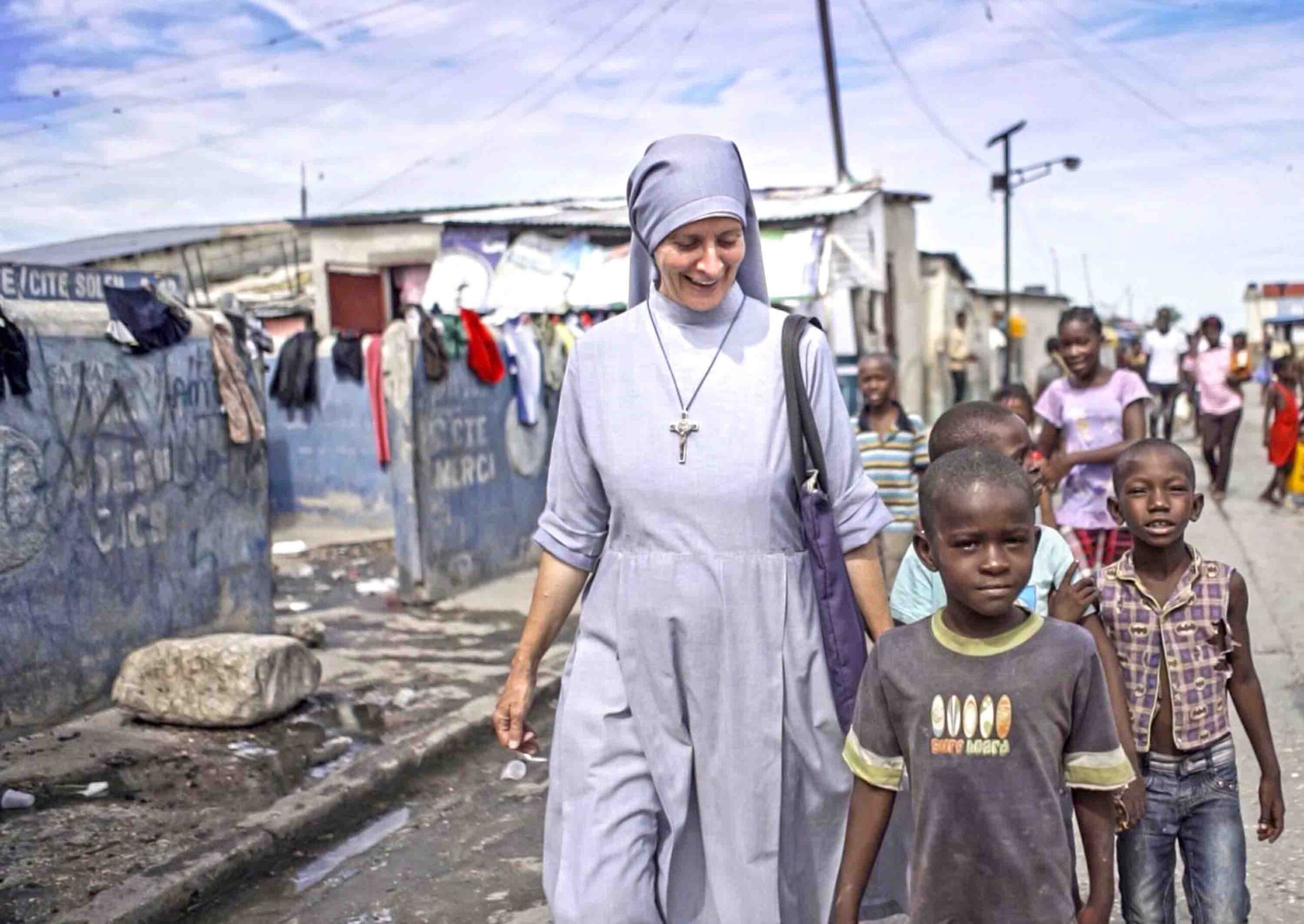
The parish of San Martin de Porres serves the whole political territory of the District of Pangoa. There are three priests serving the parish – a Mexican, a Congolese and a Filipino. The main task of the Comboni community, that arrived in this part of Peru only in 2009, is first evangelization. The first announcement of the Gospel – kerygma – that Christ has died for our sins so that we may have life eternal. This served well the indigenous communities that have an animistic world vision and the colonos who were baptized but were never educated in the faith. Aside from the regular pastoral activities of the parish, we have a periodic visit of the municipalities and annexes of Pangoa. In these visits, we announce the Gospel, form local leaders and celebrate the liturgy and sacraments. The formation of local pastoral agents (catechists, pastoral and liturgical leaders) is very important to the establishment and continuity of the Christian community.
The Nomatsigengas are very open to our evangelizing activities. They respond well to our invitation. In some of these native communities, we have a young but flourishing Christian community. Most of the Ashaninka communities are closed to outsiders because of the trauma suffered during the time of terrorism. They have receded to the shore of the river and have established a very limited relationship with others. The communities of colonos are somehow complicated. Most of the adults were baptized when they arrived in Pangoa but brought with them traditions of their own. They usually invite us to the town fiesta or anniversary, ask us to administer baptism, first communion and to preside over weddings. But, they are reluctant to have catechism and any kind of formation. They are non-committal with regard to establishing a Christian community. They equate Catholicism only with a pompous celebration of a fiesta.
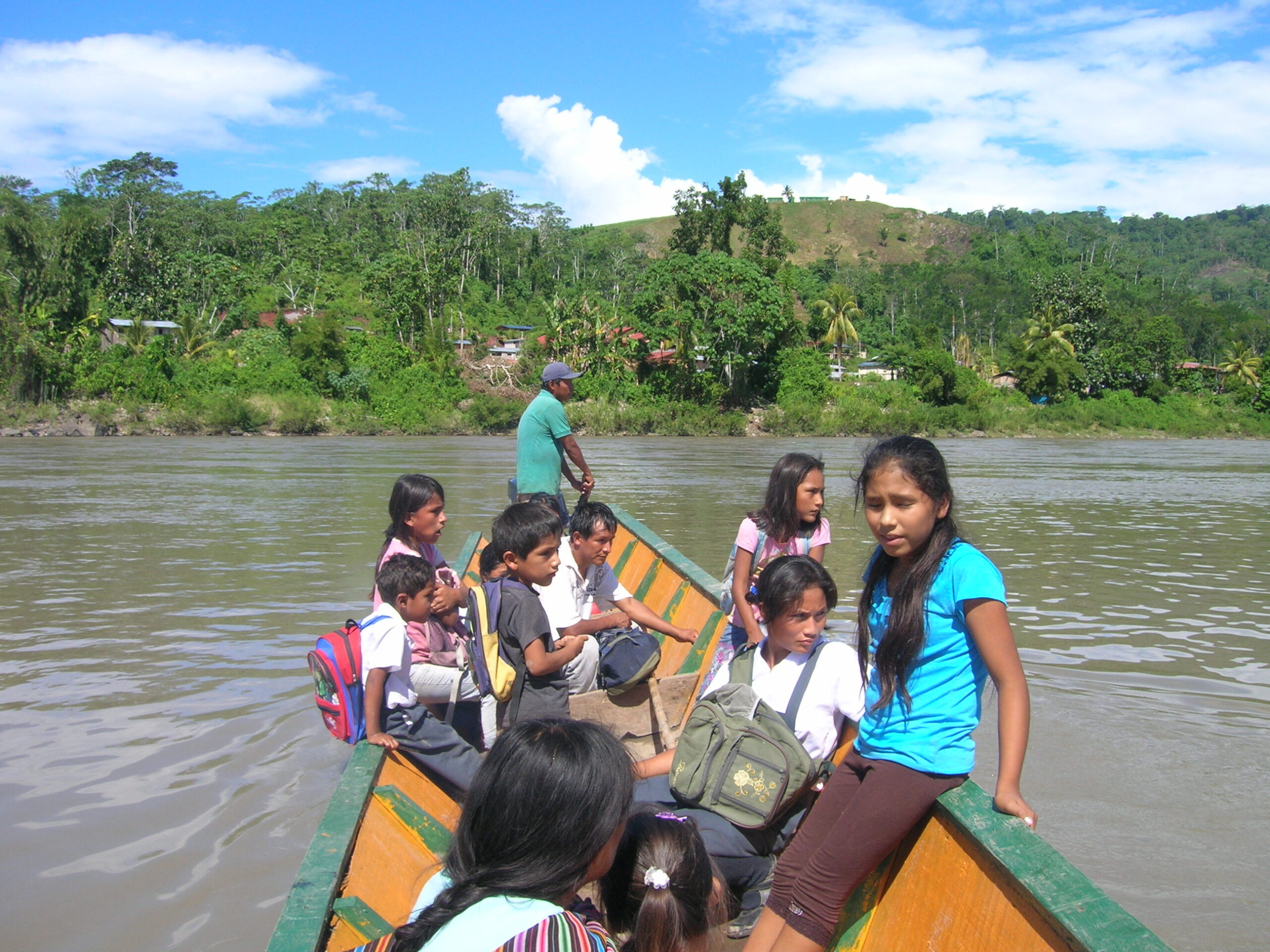
Another factor that challenges us is the vast territory of the parish. There are two available means to visit the communities: a 6-8 hour travel by car through unpaved roads or from 8 hours to 2 days travel by boat. Moreover, we cannot visit all the 305 municipalities and annexes. In addition, the distance and the cost of travel affect significantly the continuity of our presence in the already established mission.
Young people are certainly more open to change, to embrace new ideals or new religion, aren’t they?
I love the presence of the young people in the parish. With them, the parish becomes full of life, energy and color. They are very innovative and talented. Every year, we have two groups of candidates for the Sacrament of Confirmation. After receiving confirmation, we invite them to join America Misionera – a youth Christian formation program that tries to infuse into the young generation the Christian missionary spirit. The response to these initiatives is very positive. The young people have a thirst for spirituality. Properly motivated, they pray and serve.
Youth migration is also a big challenge for your mission. Can you explain?
Being an agricultural area, most of our young people leave Pangoa and migrate to cities like Lima or Huancayo for university studies or job opportunities. This means discontinuity of their Christian formation at the parish. Every year, we have to start with an almost completely new group. Moreover, we cannot count on them as permanent pastoral agents.
However, we do not lose our enthusiasm in organizing and forming them, knowing our efforts will bear fruit in them wherever they are. It is our consolation when we hear that a young person continues to be involved and participate in their new community.
Narco-terrorism is a reality in these lands. How does it affect your missionary work? Aren’t you afraid?
Despite the ‘demise’ of the Sindero Luminoso in 2000, the Peruvian government has not been able to completely eradicate the organization. The Sindero Luminoso provides protection to the drug traffickers against the military and police forces. Members of the organization also act as hired assassins. There were reports that the organization also produces its own coca crops and operates cocaine labs. In return, the drug traffickers finance the activities of the organization, like the acquisition of firearms.
There have been several confrontations between the government forces and the narcos in this area. The police and military keep tight security controls. When I visit the communities, I always carry with me an identity card issued by the government. No one is allowed to travel without an ID, even the Peruvians. Foreigners are often treated with distrust by the two parties. The police or military may suspect a foreigner as a trafficker while the local community or the traffickers may suspect him as a spy of the police. Once, our scholastics had their missionary experience in one of the far-flung barrios known to cultivate coca plants. After a week of stay, they had to look for another place because people didn’t accept them, fearing they were spies.
Despite its negative effects, coca plantations provide a living for the people. What is the stand you take on this issue?
The local communities cooperate with the drugtraffickers in planting coca, producing and trafficking of drugs because of poverty and coca is easy money. Farmers cultivate the plants, their sons and daughters are hired as mochileros (backpackers – a euphemism for drug couriers). Although there are many alternative crops like café, cacao and tropical fruits, coca remains a big and easy income-generating crop, no pest and plagues, no tedious maintenance like the other crops. Farmers get very little help from the Peruvian government. Two years ago, all the coffee plantations in the area were devastated by a plague called La Roya. It took a week-long road blockage by the coffee farmers before the government listened. Some of them have reverted to coca business.
If the government really wants to end narco-terrorism in the country, it should fight it not only using police and military powers. The government should improve the situation of the farmers and educate the young people to be out of poverty.
How would you summarize the three years you have lived with these people?
“This is mission.” I often told myself, so as not to surrender in discouragement because of the challenges I mentioned above. I draw new strength by remembering that my consecration is for the mission and I look around and see that I am not alone in this enterprise. God has sent several co-workers so that, together, we may labor to build God’s Kingdom in Pangoa. First, I have my two missionary confreres with the same vision and mission as mine. Second, we have the Sisters of the Missionaries of the Sacred Heart. Lastly, we have some lay people – the members of the pastoral councils, members of the Legion of Mary, religion teachers, some catechists and the young people – who share with us the zeal for evangelization. Together, we journey to the new phase of evangelization in response to Pope Francis invitation to us all. I have been living here for three years and I continue with renewed enthusiasm and a joyful hope that God will sustain me wherever He sends me.