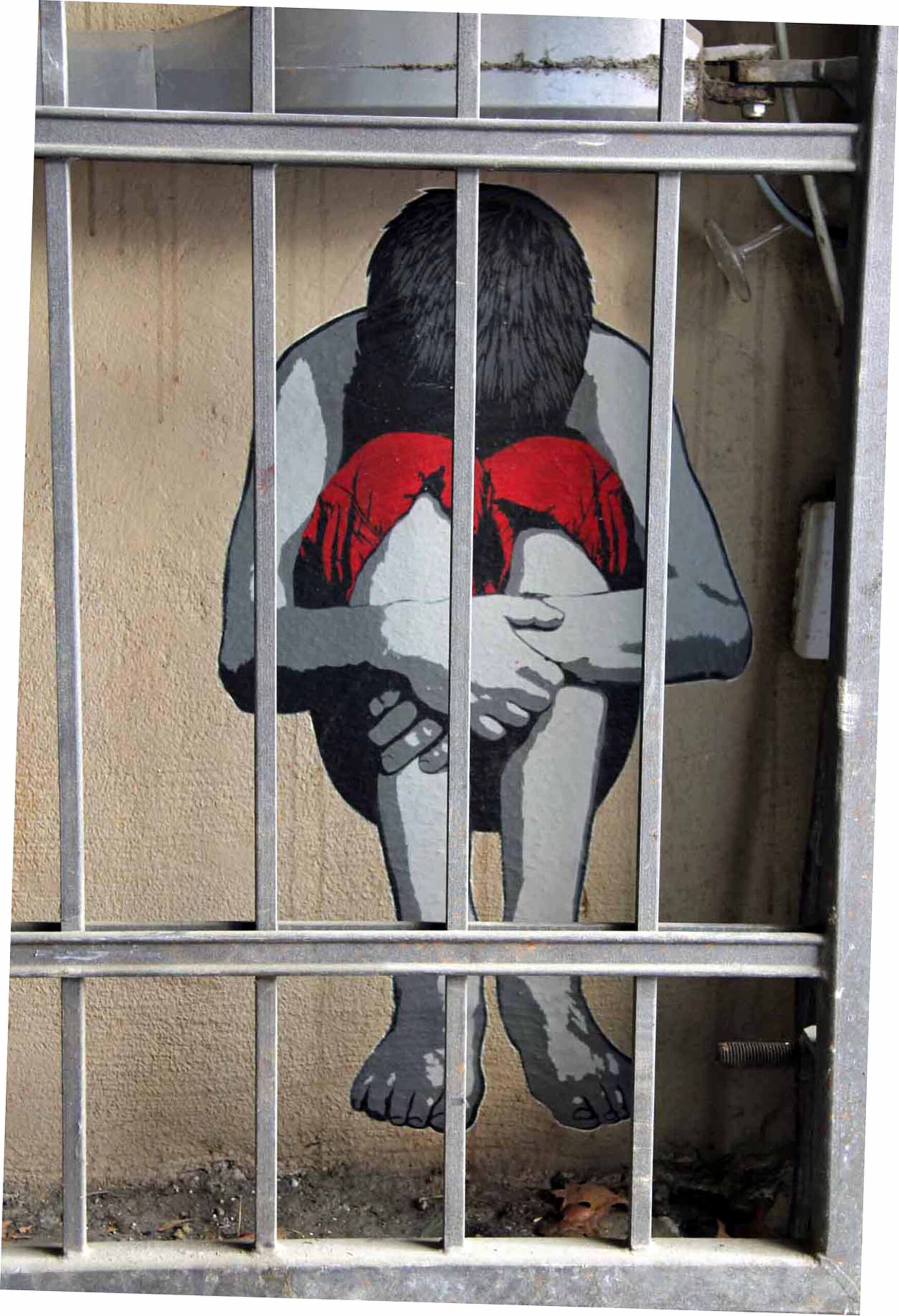
A few weeks ago, I visited yet again several child detention centers and police holding cells around Metro Manila with the Preda Foundation social workers. We found two small girls, 13 and 14 years of age behind bars looking out tearfully. Next to their cell were adult male prisoners reaching through the steel bars beside them. They were terrified. The cell of the children had no beds, curtains, toilet, just a bucket in the corner and no privacy. It was terrible. One had been charged with stealing food, the other for kidnapping a child. An adult told her to bring a baby to another place. She was arrested. Immediately, we began legal action to have them released to the Preda Girl’s Home.
In another child detention center, on the other side of Metro Manila, we found three small girls, from 6 to 12 years of age, locked in a room with male teenage boys. The place was bare: no beds, chairs, showers, just a single toilet in the corner. It was a depressingly empty detention room. Preda began negotiations with the center head to have the girls taken out of that detention holding room. It was no easy task. They were oblivious of the danger of sexual molestation to the small children. The city mayor received US$58,500,00 from the national government’s Department of Social Welfare and Development (DSWD) to build a home for the children but as yet, only another room in the same building is being renovated.
In other jails, we found many more young minors behind bars without proper recreation, education, exercise, food, sanitation and legal assistance. This is the secret shame of the Philippines, hidden away from the media and the public; hundreds, if not thousands, of children suffer humiliation and deprivation of sub-human jail conditions every year. More must be done to change the system that locks up children without care and education and respect for their human and child rights. It is similar in many developing countries.
A NEW START IN LIFE
The Philippine government, NGOs, churches, and international aid agencies and charities are giving too little funds and advocacy to challenge and stop the gross violation of children’s rights in the jails around the Philippines where thousands of children behind bars suffer in dehumanizing conditions not fit for animals. It is much the same in other developing countries and much more has to be done by UNICEF and the World Health Organization to pressure governments to change and transform the whole system of recovery and stop jailing children.
I can write from experience on this because of the success of the Preda social workers getting the children out of jails and transferring their custody to the parents and relatives or to the Preda Home for Boys in Castillejos Zambales and to the Preda Home for Girls. As many as 138 teenage youth were transferred to Preda, coming from jails in Metro Manila, in 2012 alone. Several small girls were rescued and helped to recover and find a new home safe from the abusers.
The boys or girls are released by court order and transferred to the Preda centers. This takes much time and expense. The more preferable way to release the child is, before charges are filed against them, by the recommendation of the municipal social worker using the diversion provision in the law. They are released from the fetid life-threatening conditions of prisons and given a new start in life. The Preda Homes for boys and girls are in a place of natural beauty, open countryside, where they can recover in dignity, where they are respected and cared for. Their faith in themselves and their self-worth, as well as their trust in adults, is restored.
MEDIA’S FAULT
The reason why there are so many children treated like criminals, and jailed with them, is because the public and the authorities have a very wrong attitude and perception of children in conflict with the law (CICL). The public have been misled by sensationalized tabloid media into thinking that street children are all thieves, robbers and even murderers or members of adult crime syndicates and deserve punishment and life behind bars.
That is a very false impression and based on lack of awareness and knowledge. Even the political representatives in Philippine Congress have little understanding of the true situation. Following tabloid sensational reporting, the Lower House of Congress voted, in 2012, to reduce the age for criminality involving children, from a protective 15 years old to 12. That means more kids behind bars not less. However, the NGO community has lobbied strongly and successfully with the Philippine Senate to block the approval in the Upper House.
They don’t know that these are children, many of whom have been mistreated, sexually abused, abandoned and rejected by society and live on the streets and struggle to survive. They may steal food for survival so they easily come into conflict with the law. These young kids are the focus of the Preda project. They have to be distinguished and separated from the more hardened older boys or young women who have joined gangs that have committed serious crimes and must face the court.
NO GOVERNMENT SUPPORT
Conditions in the prison cells for minors are harsh. They are sometimes jailed illegally and for small misdemeanors. They are vulnerable and in danger of grave abuse. They are denied the many rights and needs of children. That’s why I started the ‘Preda jail release and recovery project’ that provides a dignified, child-friendly and supportive alternative to jail. The Preda social workers take all means to release girls and boys from behind bars.
The need for protective and empowering therapeutic community homes for children in conflict with the law (CICLs) is as necessary as before and perhaps more so. The importance of care for CICL has received higher profile by the visit of Pope Francis to the juvenile prison in Rome and when he washed the feet of the youth, male and female, Christian and Muslim. It is a message about the dignity of the youth in jails. But in the Philippines, they are unjustly and illegally detained in many cases. They are held without bail for many months, longer than if they were ever tried and convicted by a court. But, in fact, they are supposed to be sent to a therapeutic home but, they are not, as there are none other than the likes of Preda charitable project supported by donations and get no government support.
The Preda project does more. It is a light on a roof-top, a voice for the voiceless victims of injustice and oppressive authoritarian system and wrongful and illegal arrest and detention of minors, without adequate evidence in many cases. At times, detention is a method of extorting money from poor families or for the police to get promotions by increasing their arrest quota.
The Preda Homes for both boys and abused and victimized girls, rescued from jails and forced labor in brothels, are beacons of hope and a strong challenge to the state authorities and to church agencies to end the abuse of children in prisons or brothels and for the state to provide proper and adequate services for the youth and children. This is one of the main goals of this project. In the meantime, we have to end human rights abuse in the children’s jails as we advocate for social and political action.
Many have been released from prison by the Preda project. One hundred and thirty eight (138) in 2012 alone have been taken out of harsh, inhuman conditions and brought to Preda. Ninety new residents were admitted in 2012; and another 48 were carried over from 2011 for a total of 138 boys served in one year. Their lives and testimony are compelling evidence of the cruelty and inhumanity of the terrible conditions of prisons where children are held. Their lives, now reformed and healed, are testimony that compassion, understanding and providing diversion, instead of punishment and prosecution, is a life transforming process.
Kindness, understanding, patience and therapy with value formation and spiritual dignity provided in the project changed their lives for the better. The social workers, counselors and therapists at the Homes give affirmation and encouragement and help the children and youth see themselves as having value and rights and dignity as children of God and not doomed without hope to a life as criminals or prostitutes.
FEEDING ANGER AND CRIME
Hopefully, the public and authorities will see the truth that punishment, harsh penalties and cruel discipline drive young offenders back to crime and plant anger, hatred and revenge in their hearts. Change is coming in some municipalities like Malolos and Valenzuela where homes with education, sports and clean surroundings are being set up.
Besides municipal jails, where minors are held under cruel conditions, police stations are places of abuse and illegal detention of minors. Preda rescued 22 boys from the harsh holding cells of police stations. Frequently, by reviewing the documents, no sufficient evidence was provided against them to justify their arrest or the filing of charges. Many are, in reality, innocent, none have been convicted.
Many youths have been detained in jails for months without proper trials. Others are jailed with no criminal cases filed in the courts which is a violation of their right to due process. They are too poor to pay bail or have a lawyer. Extortion by corrupt police is sometimes the motive for arresting, charging and jailing street youth in cells. Parents or relatives have to pay to get their freedom unless Preda social workers find them.
The good news is that diversion is being implemented in some municipalities as a result of the education on the law given by Preda social workers. Twenty (20) new boys were not detained at all, they were held in the office of the social workers and then directly referred to Preda in accordance with the law allowing diversion.
THE MOST IMPORTANT FREEDOM
Last month, a ten-year-old boy from a countryside village of an indigenous group in Porac, Pampanga, played with a loaded homemade shotgun owned by his uncle. He fired it hitting his two cousins. They both died. The relatives of the dead children grabbed him and tied his hand and feet to take him to the mountain to kill him there. The municipal social worker was alerted and intervened and immediately got the police to bring the child to Preda for protection. That was diversion at its best.
Here, they are free without guards, gates, fences or locked-up rooms or isolation cells like other children’s detention centers have. They are free to escape but 75% choose to stay and start a new life. They have found the most important freedom of all: to choose their own life and future.
This is the most significant message to the public and the authorities. They are not criminals and are not escaping back to the world of wrong doing despite being mostly illiterate. Having experienced difficulties; they are convinced to study and learn the basics. They now eagerly look for a chance to attend classes. Most boys who enrolled in formal school or in distance learning program were elevated to the next level; which means, with proper support and motivation, these children can cope with formal schooling. It’s important to note that none has been convicted of any crime; many have been illegally held in jails without trial and conviction.
Preda’s advocacy and information campaign, through media and persuasion, is changing attitudes. By sharing values and information on the rights of children with municipal and court social workers, the latter come to know the law more fully and they now divert young children to Preda without passing through the police and prosecutor. Twenty such youth were admitted to the Preda Home for Boys in conflict with the law during the period being reported upon.
This project goes beyond the 138 lives saved. Its message is that the system must give to young people, in conflict with the law, a chance to change their lives and their future families for the better and break the cycle of poverty and wasted lives.