
It should be noted that the early disciples of Jesus were not favored by the political authorities. They were subject to persecution and would meet in underground catacombs in Rome. Till the conversion of the Roman Emperor Constantine in 312 (?), Christians were subject to persecution and martyrdom. But after Christianity became the religion of the Empire, Christians became a favored group. They could worship publicly in the ancient Roman basilicas which became Christian churches.
With the conversion of the emperor and the imperial family to Christianity, the roles of the religions changed. The Roman emperors went further and wanted to ensure the unity of the Empire by having doctrinal uniformity within its borders. Thus, Constantine convened and presided over the first Council of Christianity at Nicea in 325.
The creed decided on by the Council became the Nicene Creed and is still recited throughout the world at the Eucharist. Since then, there has been an alliance between the Church and the dominant secular powers in Europe.
THE RELIGION OF POWER
After Christianity became the religion of the Roman Empire, it became institutionalized as a formal religion with a hierarchy corresponding to the Roman state. In stages, it became a powerful and rich organization. Its doctrine evolved more in the direction of presenting Jesus as the unique Savior of humanity by His death, thus making amends to God the Father for the supposed original sin of the first parents of humanity, Adam and Eve. This doctrine evolved as an interpretation of the mythical story of the creation of planet Earth and of humanity by God. They are said to communicate this original sin to all their progeny. Humanity could not save themselves from this sin except by a divine intervention on their behalf.
This construct of classical theology prevailed as orthodox Catholic doctrine during 15 centuries or so till our times and Vatican Council II (1962-1965). The result was that the life of Jesus was presented as redemption from original sin. Is this not a distortion of the life of Jesus and the reasons why He was killed by the Jewish high priests and the Roman powers of the time? Jesus’ stand for love of God and all humanity and justice towards all is bypassed. God the Father is shown as wanting the death of His only Son for redemption of all humankind from eternal hell fire, unless they are saved by Baptism.
FORCE OR CONVENIENCE
Christian holiness was interpreted as the discipleship of Jesus in such a lifestyle of imitation of Jesus. It is such classical theology that led to the Catholic teaching that there is no salvation outside the Church. This doctrine legitimized the use of violence for converting persons to the Church. Christianity is associated with foreign domination as colonizers wielded dominance through conversion with the ‘Bible, in one hand, and the sword, in the other.’ Christianity was a political tool in countries such as Sri Lanka and India; religion went hand in hand with culture and the ‘nobodies’ of those colonial states became ‘somebodies’ by converting and thereby was, more often than not, bestowed with ‘acceptance’ by the colonial masters. However, after colonization ended, we saw many Asians converting back again to their respective indigenous religions such as Buddhism, once again because of political acceptance.
Christianity, attractive for some time, was not for all times and hence Asians, as a majority, are not Christians. Asian children are born as members of a specific religion and conversion to Christianity is rare, outside of the political coercion trend that generally existed in the time of colonial rule, although post colonial experiences in Asia saw conversions connected with aspects of poverty relief or allegations of identifying those, in particular, economic groups to convert. Therefore, we can say that Christianity is seen as a foreign religion, because in the majority of the countries, there are Asian religions that have a long-standing acceptance for several generations as a generally peaceful national religion.
BIRTHPLACE OF THE MAIN RELIGIONS
Asia is the world’s largest and most populous continent, with millions of different peoples following a wide variety of different religions. Asia was the birthplace of most of the world’s mainstream religions including Buddhism, Christianity, Confucianism, Hinduism, Islam, Jainism, Judaism, Sikhism, Taoism, Zoroastrianism as well as many other beliefs. In some cases, following one belief doesn’t mean that you cannot follow others.
Ω Hinduism is the predominant religious tradition of the Indian subcontinent. Hinduism includes a wide spectrum of laws and prescriptions of “daily morality” based on the notion of karma and dharma. It grants a great degree of freedom of belief and worship. Also, the concept of heresy is absent. Hinduism is formed of diverse traditions and has no single founder. Hinduism is often called the “oldest living major religion” in the world. The moral dimension of Hindu dharma is embodied in yamas (restraints) and niyamas (observances): The yamas are: non-violence; not stealing; desiring discipline; abjuring lust and greed; curbing arrogance and anger; not lying; avoiding injustice; shunning wrongdoing and evil company; the niyamas are: be pure in mind, body and speech; love humankind (karuna, maitriya), seek contentment; cultivate devotion; develop forbearance; give charitably; study the scriptures; perform penance and sacrifice.
Ω Buddhism is another key belief and a possible way of trying to identify that the core values of the world religions can be found in the five main precepts of the Buddha. The first is respect for all kinds of life, non-violence, and the cultivation of compassion. The second is generosity, loving kindness at a personal level and in structures of society. The third teaches sexual responsibility to protect and promote the safety and integrity of individuals, couples, families and society; sexual relations are to be based on love and a long-term commitment. The fourth is respect for truth, because it promotes deep listening and loving speech. Finally, the fifth precept promotes the healthy diet for body and mind and discourages intoxicating drinks and excess in food and drink.
Ω Islam is the other notable Asian religion that is monotheistic. It is articulated by the Qur’an, a text considered by its adherents to be the verbatim word of God (Arabic: Allah), and by the teachings and normative example of Muhammad, considered by them to be the last prophet of God. Muslims believe that God is one and incomparable. Muslims also believe that Islam is the complete and universal version of a primordial faith that was revealed at many times and places before, including through Abraham, Moses and Jesus, whom they consider prophets; but they maintain that previous messages and revelations have been partially changed or corrupted over time; and consider the Qur’an to be both the unaltered and the final revelation of God. With about 1.41-1.7 billion Muslims, comprising about 21-23% of the world’s population, Islam is the second largest religion and one of the fastest growing in the world. The five pillars of moral conduct are: Shahadah, to profess that there is only one God, Allah; salat, to pray five times every day; zakah, to give to the poor and needy; Sawm, to observe the period of fasting, Ramadan; hajj, to do a pilgrimage to Mecca. With the ageing, fall in population and de-Christianization in the West, parts of the Southern hemisphere and Oceania, at current rates of change, Islam may overtake Christianity as the world’s dominant religion later in the 21st century.
Ω Confucianism: Even if some do not consider it a religion, it is a very influential thought. Humanity is at its core. A simple way to appreciate Confucianism is to consider it as being based on varying levels of honesty, and on an examination of the world by using the logic of humanity. In practice, the elements of Confucianism accumulated over time. There is the classical Wuchang, consisting of five elements: Ren (humanity), Yi (righteousness), Li (ritual), Zhi (knowledge), Xin (integrity), and there is also the classical Sizi (with four elements: Zhong (loyalty), Xiao (filial piety), Jie (continence) and Yi (righteousness). There are still many other elements, such as Cheng (honesty), Shu (kindness and forgiveness), Lian (honesty and cleanness), Chi (shame and sense of right and wrong), Yong (bravery), Wen (kind and gentle), Liang (good, kindhearted), Gong (respectful, reverent), Jian (frugal), Rang (modesty, self-effacing). Among all elements, Ren (humanity) and Yi (righteousness) are fundamental.
Ω Taoism, also called Daoism, is a series of political and religious concepts and practices. It was founded by Lao Tse in the 4th century BC, refers to a variety of related philosophical and religious traditions that have influenced Eastern Asia for more than two millennia, and have had a notable influence on the Western world particularly since the 19th century. Taoist propriety and ethics emphasize the three jewels of the Tao: compassion, moderation and humility. While Taoist thought generally focus on nature, the relationship between humanity and the cosmos, health and longevity, wu wei (action through inaction) is thought to produce harmony with the universe. Reverence for ancestor spirits and immortals is also common in popular Taoism. In general, Taoist propriety and ethics place an emphasis on the unity of the universe, the unity of the material world and the spiritual world, the unity of the past, present and future; and the three jewels of the Tao: love, moderation, humility. Taoist theology focuses on doctrines of wu wei (“non-action”), spontaneity, relativism and emptiness.
THE UPS AND DOWNS OF CHRISTIANITY
In comparison to these other religions, Christianity tended to be a religion that claimed exclusively to be the one path to salvation, while Jews claimed to be the chosen people of God. Later on, the European peoples claimed to be the chosen people of God in the New Testament.
We can now look at the many positive advantages and values that Christianity brought to Asia.
Christianity brought to the world the witness of the extraordinary personality of Jesus Christ and of all the saints who have borne witness to the love of God for humanity. Thousands of saints have sanctified human life throughout the world over the centuries. Throughout the year, the Church recalls the holy lives of the saintly followers of Jesus. Christianity spread education, including European languages, science and technology, and the experience of democracy, local government and human rights. The education of girls and women was greatly fostered by the thousands of teachers and women religious, changed human society in favor of gender justice, and safeguarded the lives of millions of people, including children, who would have had, otherwise, a shortened existence.
Without neglecting so many saintly and mystical lives that were fostered, we have to note that the Church built up a structure that tended to dominate the lives of believers in Jesus Christ. Christianity came to Asia as a European religion claiming superiority over other religions and peoples and backed by armed forces of the foreign colonialists, who came to the continent together with foreign clergy from the colonial countries. They destroyed the temples of the native religions and their libraries, used a foreign language for their liturgy, discouraged inter-marriages of partners of different religions, and wanted all children of mixed marriages to be brought up as Catholics and educated in Catholic schools.
In the first centuries of Christianity, theologians were open to the thinking of Asian religions. Thus, one of the most brilliant of them, Origen of Alexandria taught the pre-existence of souls, universal salvation and a limited hell, doctrines for which he was posthumously condemned as a heretic. Despite his late condemnation, he had an influence during the Middle Ages. In modern times, existentialist theologian Nicolai Berdyeaf also held the view that, after death, there would be a process of purification of the soul. Asian religions do not seem to have a hell, at least not for eternity. Philippines and East Timor, the only two Catholic countries in Asia, did not have significant numbers of followers of an Asian religion when the Europeans reached the region some centuries ago.
SOME DRAWBACKS IN THEOLOGY
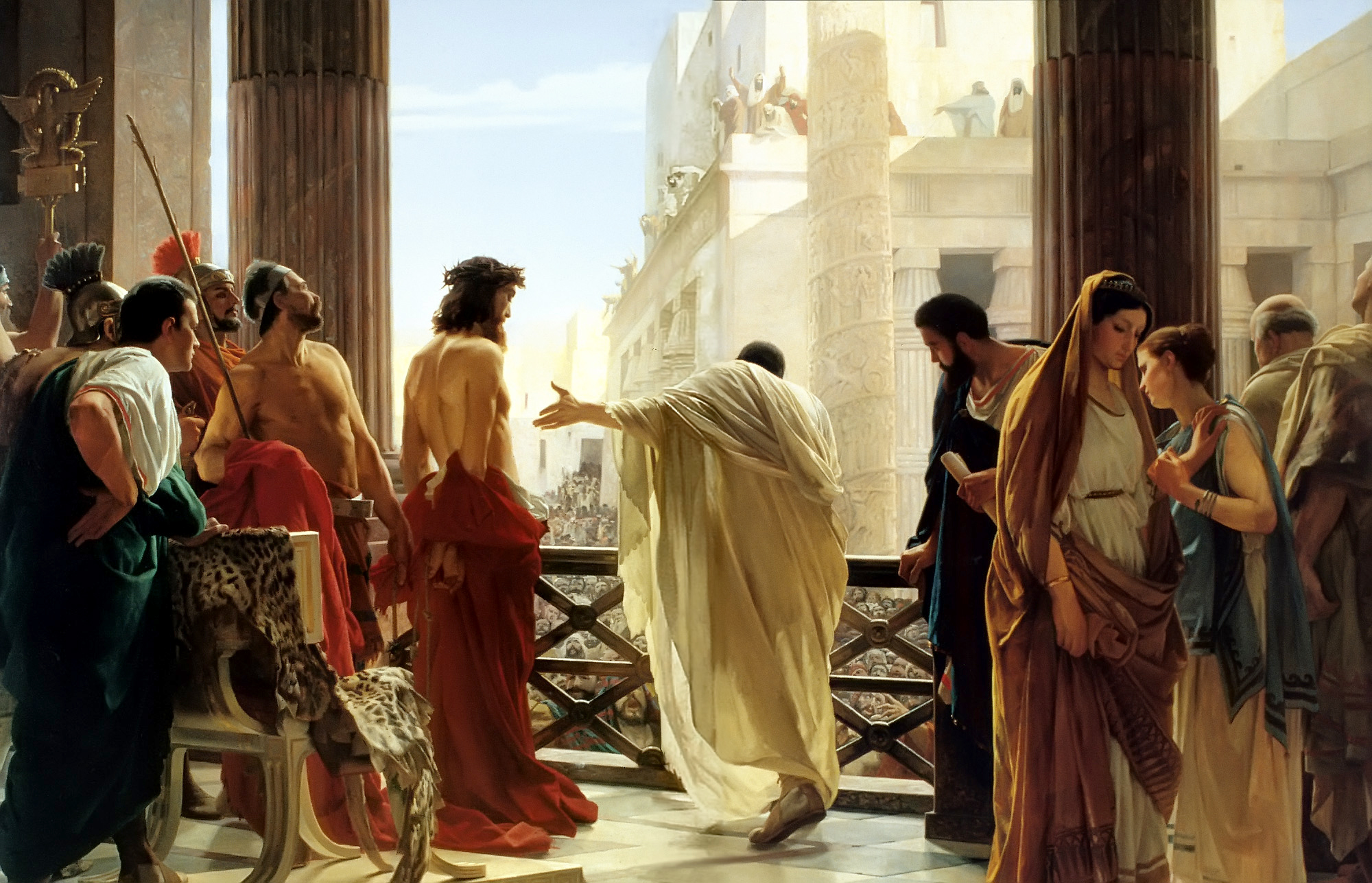
Traditional Catholic theology did not study critically the presuppositions and assumptions on which the ongoing theology is based. It did not analyze critically the impact that secular powers, including Roman Emperors, have had in defining Catholic doctrine and dogmas over the centuries. The Catholic Church consequently taught, as dogmas, perspectives concerning God that cannot be known by human reason. God the Father was supposed to have sent His only Son, Jesus Christ, to make amends for assumed human sinfulness. In the process, the real cause of death of Jesus, sentenced to death by the Jewish high priests and the Roman authorities because of His radical teaching and taking up the cause of the poor and marginalized, was generally forgotten. Christian spirituality has thus lost much of its radical challenge.
The question now arises: What is the mission of the Catholic Church? Is it primarily evangelization? Is it the presentation of Jesus Christ as unique Savior? This is a stage in which much of Catholic theology and spirituality are diluted or distorted; and the life work of Jesus is given an interpretation of charity, not of justice. How different the impact of the Eucharist would be if “sins of the world” would include the grave inequalities that distort the world’s order. If each Eucharistic celebration would deal with the injustices in the countries and among the nations, Christianity would be a radical message from Jesus Christ. On the contrary, the present day Eucharistic celebrations confirm inequalities among persons and companies produced by transnational corporations. Millions go for Mass every Sunday with hardly any direct reflection on wars, as in Iraq and Afghanistan. Christians should reflect also on the ethical implications of the world’s system. These issues need to be studied by international commissions of competent scholars.
THE TRUE MEANING OF THE CROSS
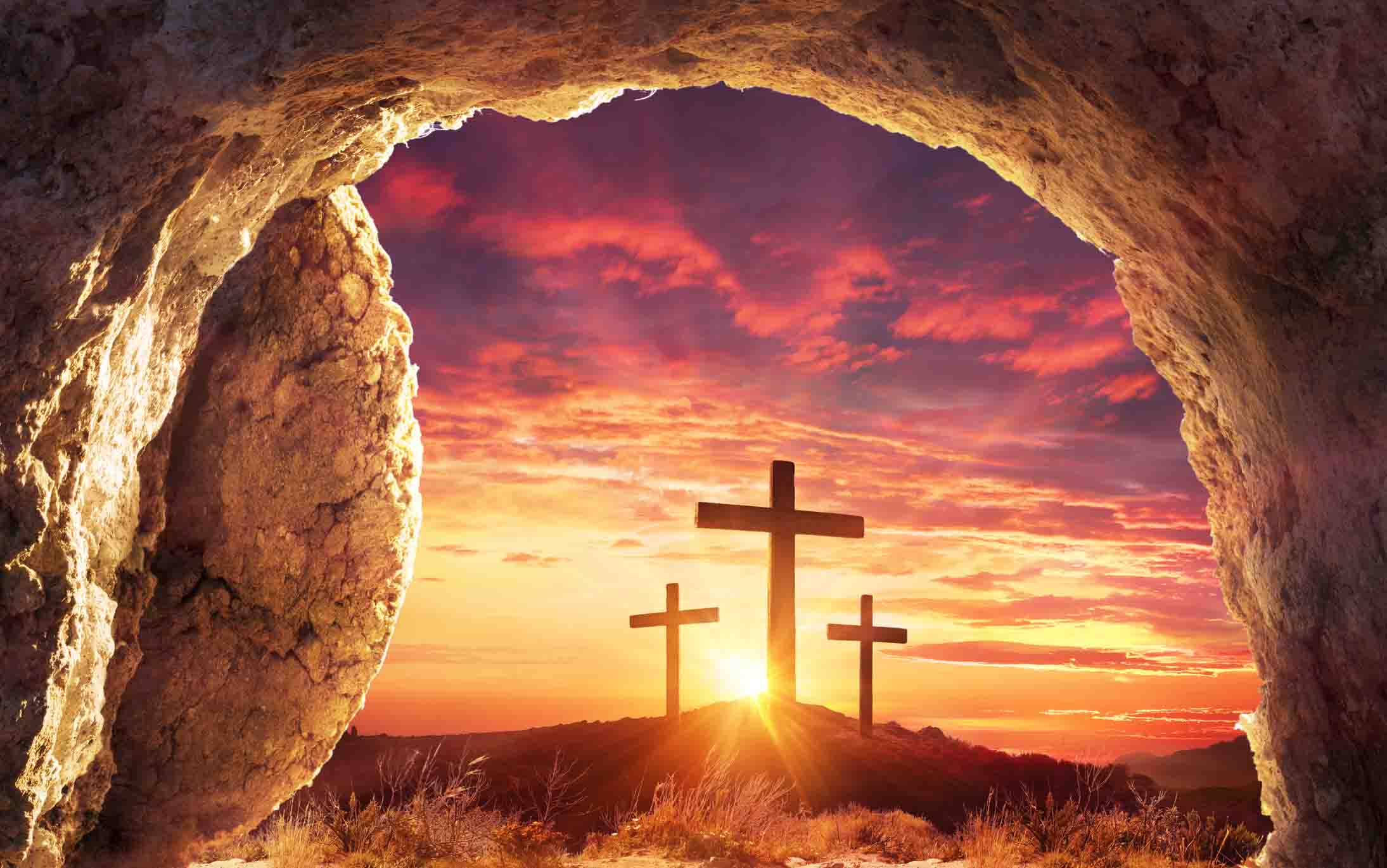
Christianity seems to be a foreign religion because it did not fully appreciate the meaning of the Cross of Jesus, who was killed for advocating the cause of the poor, the hungry and those who favored justice in society.
Throughout much of its history, the Church tolerated the inequalities and injustices in most societies where Christians have been in power. The world needs radical changes for the hungry to have food, but the policies of the Churches do not promote land reform and feeding the hungry, unlike in the early Church, when there was no one in need.
By 2050, the world’s population may double in numbers. We should pray and act to ensure that there will be the distribution of land without people to the people without land. This could be a goal for all the religions together that would be pleasing to God and humanity. Then Christianity would no longer be a foreign religion anywhere, but at home everywhere.