

It is not me, but the Gospel that insists on poverty (see, in particular, the passages from Luke, quoted below). If the Church strips itself of all goods, it loses nothing and gains everything. It sides with God and the oppressed instead of being against God and with the oppressors. In this way, it resembles Jesus, who gives us His self-portrait in the Beatitudes. Also, in this way, as the apostles (Luke 9:1ff; 10:1ff) and the first community (Acts 2:42-48; 4:32-35), it becomes what it already is: salt of the earth and light of the world (Matthew 5:12.14). The Church is relevant if it keeps its identity: it is light if it is also salt, because of Christ’s taste. In his first miracle, Peter makes the man enter through the “beautiful” door of the temple, because he has neither silver nor gold (Acts 3:6). It is like Jesus who made Himself poor in order to enrich us with His poverty (2 Corinthians 8:9).
“Blessed are you, poor and woe to you, rich” (Luke 6:20-26). Poverty is good: it gives me my truth as a human being who receives all and gives all. For, if life is a gift, the quality of life is to know how to give. In fact, I am not what I own but what I give away: if I own nothing, I give myself away and so I am myself. Moreover, what I own puts me against all the others; what I give away puts me with the rest of humanity. Poverty doesn’t mean destitution but richness of relationships (Cf. Majid Rahnema, “When Poverty Becomes Wretchedness,” Einaudi, 2005).
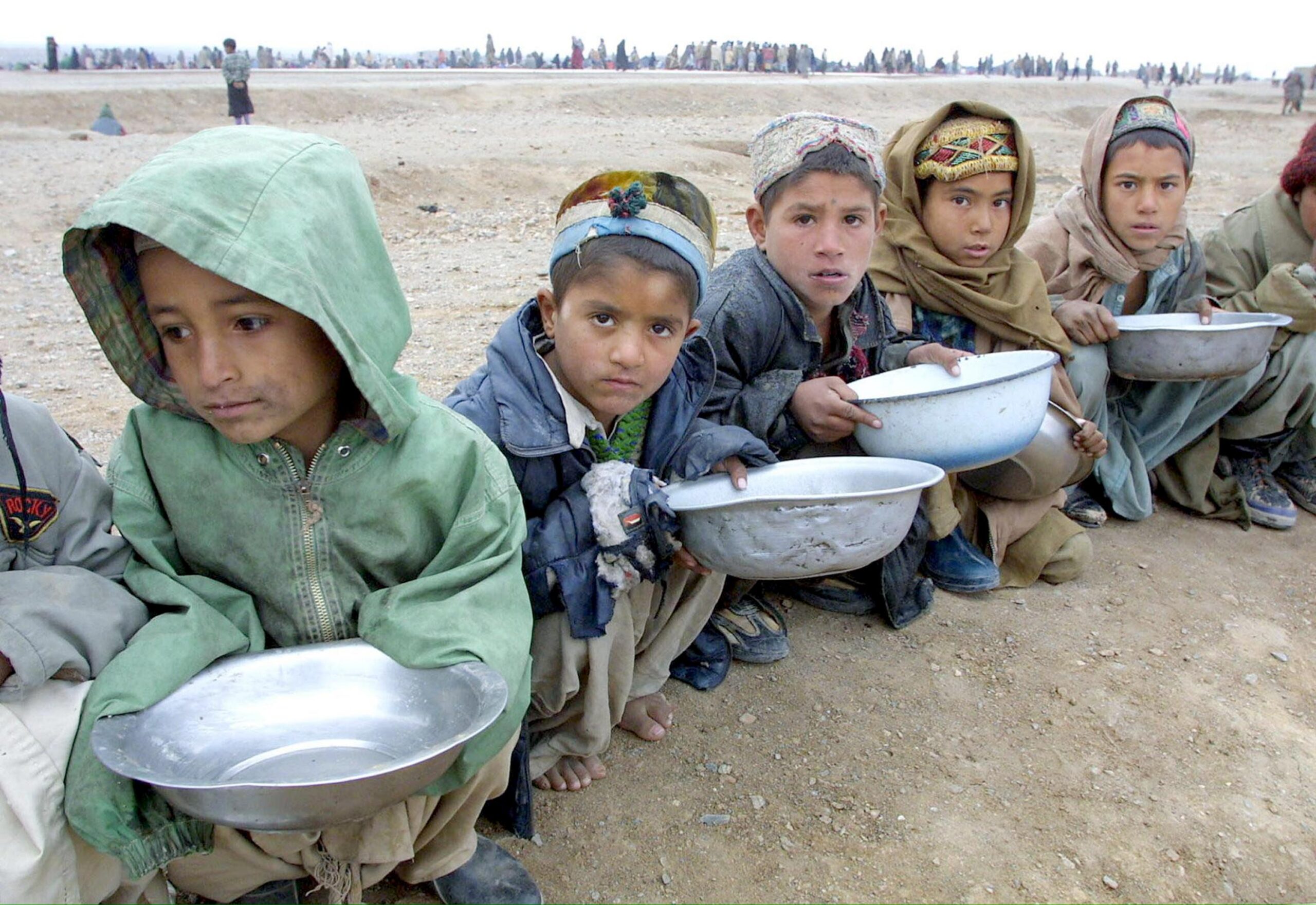
But people in prosperity don’t understand: they are like animals that perish (Psalm 49:13.21). They ignore that to pile up goods is a curse for all (James 5:1-8): it plunders the earth above and below, it reduces the poor to destitution and deprives the rich of relationships, making them envied by all but loved by none. It is the Prophets’ recurrent topic, from Amos onward. Greed for goods is idolatry (Ephesians 1:5) and the love of money is the root of all evils (1 Timothy 6:10): misery is not the result of ‘economic underdevelopment,’ but of bad economic laws that are functional not for the common good but for maximum profit. This is the god Moloch, to whom our common humanity is sacrificed, destroying economy itself as production of material and relational goods. Moreover, it is now clear: those who are responsible for the wretchedness are not able to do away with it.
Primitive societies have no knowledge of destitution: what is there is for everybody. Material goods, instead of being end, are means in order to create solidarity, conviviality and friendly relationships. This is a social capital that warrants for life and life’s quality, contrary to the piling up of wealth. The former colonies lost their chance of overcoming destitution when they espoused our production system: the richer and more progressive they are, the more they spread misery. The disasters of the excessive economic drive are visible in the present world crisis. The crisis is not a sickness of the economic system, but the unavoidable consequence of a logic: a system geared exclusively to profit is an evil in itself. In order to heal it, we must put a new starting point to economic production, following alternative and non-violent routes: goods are not for possessing and piling up – what you own is never enough! – but means in creating relationships and life.
The original evil, i.e. the origin of every evil, consists in wanting to make an object of possession what is a gift. What I own is the idol that owns me, a demon who cuts me off from the relationship with other people. Whatever I live out as gift, instead, puts me in communion with the Father who gives and the brethren whom I am sharing with. This is clear at last and not a pious illusion: there is no other economy that can save people and their humanity. Otherwise, injustices, wars and utter stupidity will make the earth uninhabitable. © Popoli – www.popoli.info