Mary is the mother of God and of the Word, that is, the Word who became flesh through her and put His abode among humans. For this, nobody better than her is adequate in pointing out the way that leads to the Father and to His Word through human words. In this sense, Mary is the model of interreligious dialogue, because she carries with herself the fundamental and unrenounceable aspects of human communication. The Blessed Virgin Mary represents the meeting point in the interreligious dialogue both because of the place she occupies in Christianity, Judaism and Islam, and because of the analogies (similarities) of her figure and the outstanding personalities of other religions. Jesus joins in His person humanity and divinity. Mary is Jesus’ mother according to the flesh, not according to the spirit. The Son of God, generated by the Father before times began, did not emerge from an undefined nothing: He was born of Mary. This confers a clear Marian note to the Gospel announcement, as Pope John Paul II repeatedly stated in the course of his whole pontificate: the mission of the Church is to announce Jesus Christ, born of Mary. More generally, the Blessed Virgin Mary is, in the context of salvation history, the fundamental model of availability to God. She is the first among those called “God’s friends.” In her, the answer to God, who is always in search for humanity, is fulfilled.
ALGERIA: MUSLIMS PRAY TO MARY
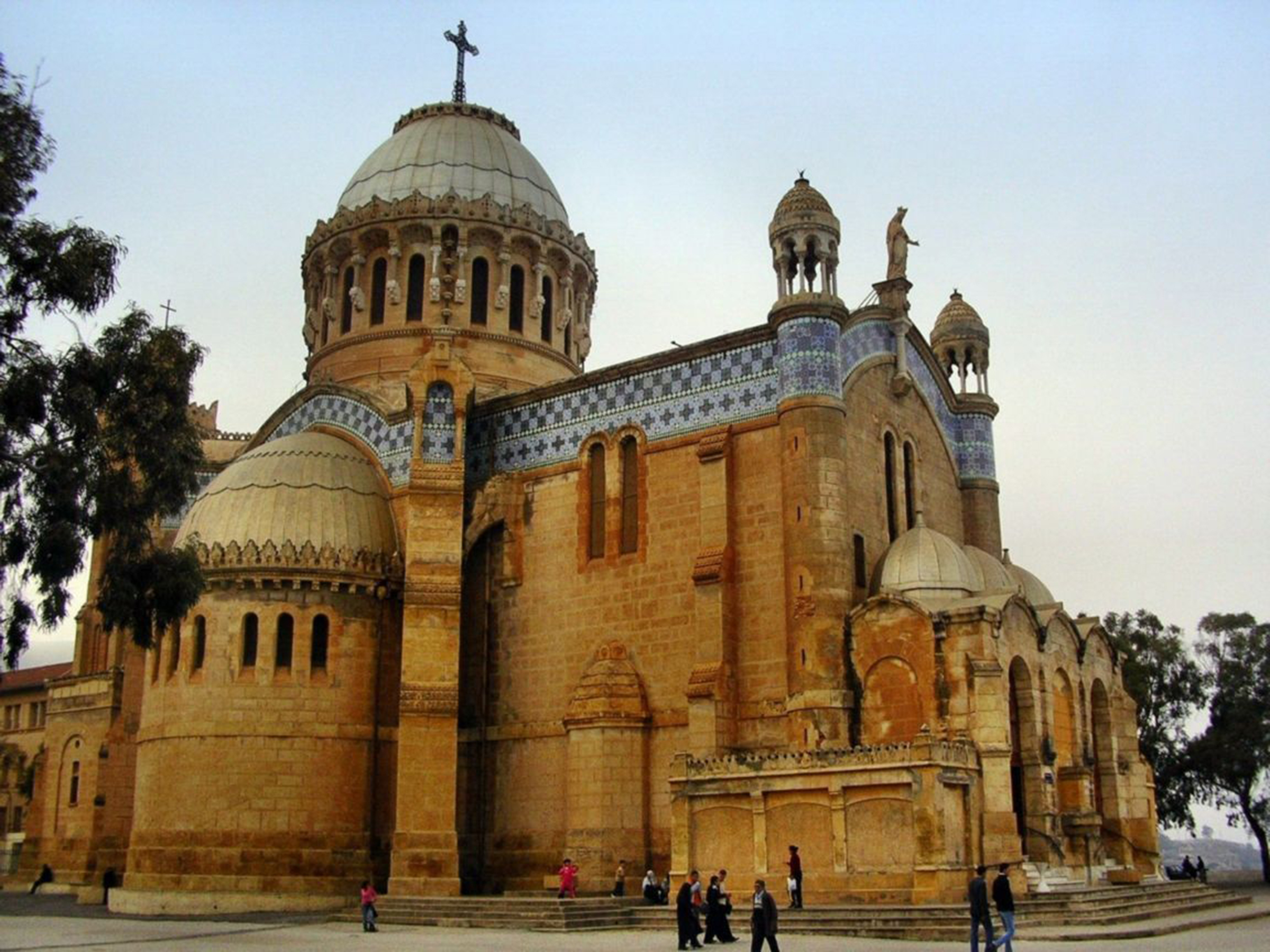
In Algeria, the Marian cult is very much felt also by the Muslims and not even the Islamic fundamentalism that put the country on fire in the Nineties managed to uproot it. Up to the present time, the pilgrimages of the Islamic faithful to the Marian shrines are constant, particularly to Our Lady of Africa at Algiers. Every day, hundreds of people visit the basilica and only 2% of them are thought to be Christians. Muslims address prayers to Mary asking graces of different nature (usually to be healed from diseases and to have a child). It is also a tradition for the young couples to go to the shrine carrying gifts (offerings of money, flowers and cakes) in order to ask Mary’s protection. “Many Algerian Muslims – explains François Veyne, editor of Lourdes Magazine – pray to the Virgin, whom they call “Maryam,” who is the only woman mentioned in the Kur’an. I know that, at theological level, the dialogue is difficult but, in everyday life, it is possible. And the people of Algeria have lived it for some time already.”
MARY AND BUDDHA: A POSSIBLE ANALOGY
It is well known that Buddha, differently from Jesus Christ, doesn’t propose himself as “The Way,” nor as “The Truth,” and even “The Life.” Buddha went through a personal experience and is inviting all the others to go through the same experience, but not to follow him as a model. Besides not being God, he doesn’t put any point of reference in God. Christianity also can propose somebody who can be taken as an example as someone who has followed a way and proposes to all the rest to do likewise: here, we mean, Mary of Nazareth, exemplary model for every Christian in whom we can see the completion of a possible human journey of those who, like Mary, put every trust and expectation in God. Mary and Buddha are to be understood, in their respective spiritual journeys: as guides to faith, keepers of the word, open doors to salvation by their transparent purity.
ERITREA: AN INTER-FAITH FEAST
Every year, at Dearit, a small locality two kilometers away from Keren (Eritrea), people celebrate the Feast of Our Lady of Dearit. Christian and Moslems pray together in front of a tiny statue of Mary placed inside the trunk of a big baobab. The little statue was placed there in 1869 by a group of French nuns who had opened a mission a little time before. During World War II, the baobab and the statue were at the center of a happening that was defined by many as “miraculous”: in order to protect themselves from the English bombing, some Italians took refuge inside the trunk. A bomb, however, managed to pierce the tree bark (the hole it made is still visible), but the device did not go off and the soldiers were safe. The Italians attributed the failed explosion to the intercession of the Mother of God. From that moment, the baobab became the target of pilgrimages and the Feast of Our Lady of Dearit became one of the main Eritrean religious celebrations, kept even by the emigrants outside Eritrea.
LATIN AMERICA: THE DEVOTION OF THE INDIOS
A divinity worshipped by the Inca of the Andes highlands, like the Aymara and the Quechua, Pachamama is Mother Earth, the goddess of agriculture and fertility. According to many anthropologists and missionaries who have studied the religiosity of the heirs of these ancient populations (in great part exterminated, following the European colonization), it is possible to find some similarities between the devotion towards this divinity and the veneration of the Virgin Mary, namely, in the representations and ritual gestures.
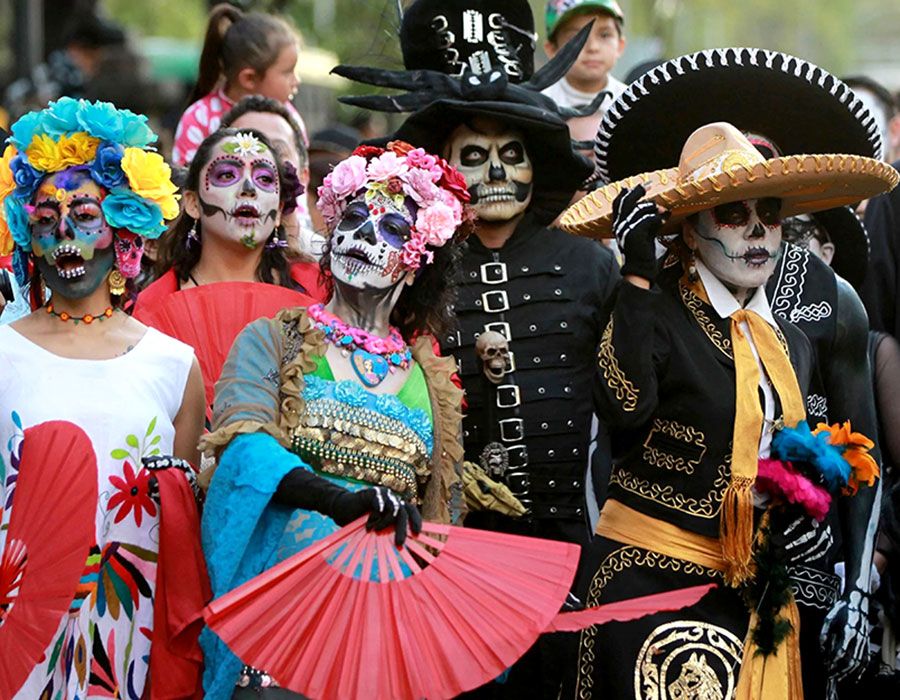
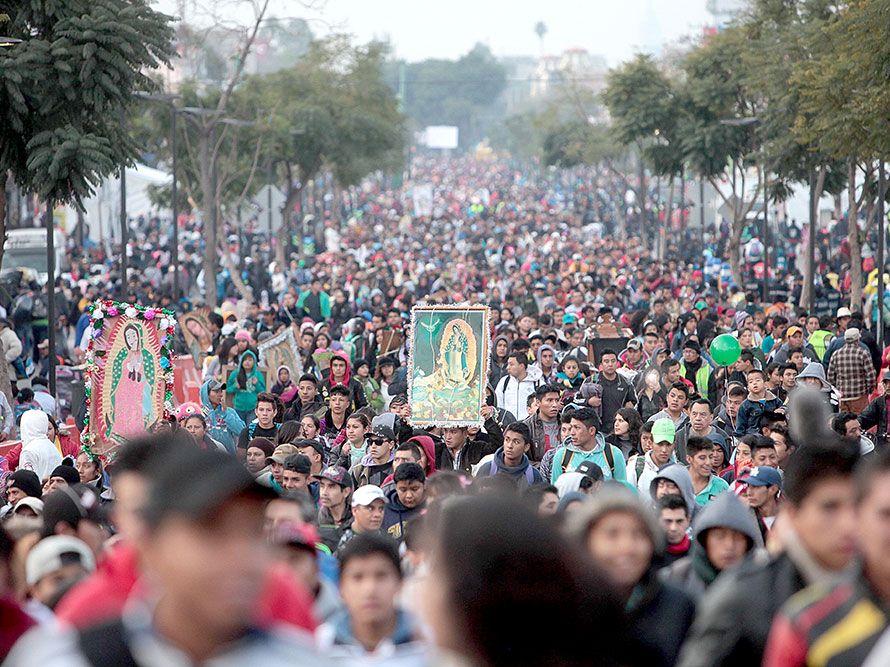
We can find similar hints in Mexico, as well. Many doubts, for instance, still surround the foundation of the Shrine of Our Lady of Guadalupe, near Mexico City: the Tepeyac Hill on which it is built, before the Spanish conquest, was probably the place of the temple to goddess Tonatzin, the “venerated mother” of the Aztecs. Are they examples of dangerous syncretism or successful inculturation? It is difficult to generalize. What is certain is that the missionaries who came to the new world more determined to avoid violent and coercive methods, aimed at transforming traditional divinities into figures that were connected with the Catholic faith.
THE PHILIPPINES: RECOGNIZED APPARITIONS?
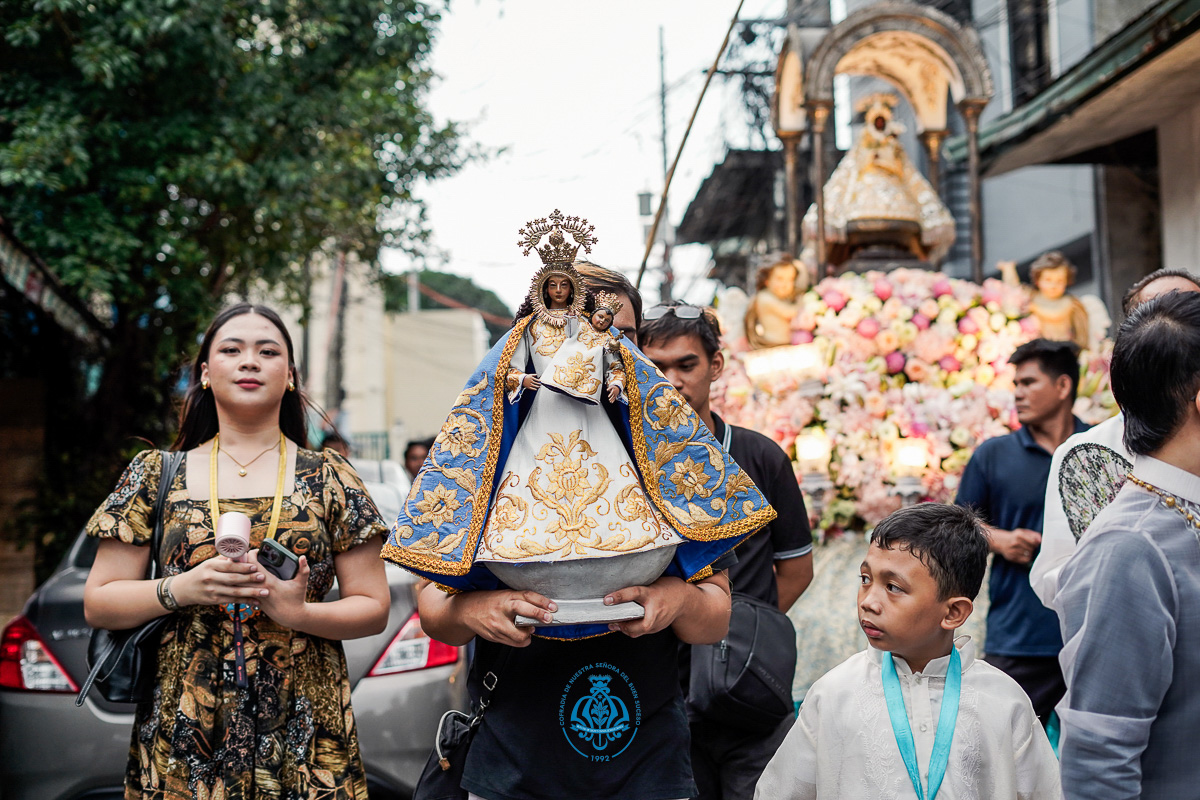
The Church could recognize, for the first time, apparitions of the Virgin Mary that took place in the Philippines. Mary allegedly appeared 19 times in 1948 to Teresita Castillo, a novice belonging to a Carmelite convent of Lipa. In the beginning, the Church authorities denied that the events were of supernatural nature and forbade public veneration of the statue of the Virgin Mediatrix (Mediator) of All Graces, placed in the monastery, that the Filipino Catholics kept visiting in ever greater number. In November 2009, the Archbishop of Lipa, Ramon Argüelles, promulgated a decree by which he erased every prohibition and instituted a theological commission in order to study the documents connected with the apparitions, on the basis of alleged proofs, with the objective of reversing the past judgment.
SRI LANKA: A MARIAN SHRINE IS RE-OPENED
At the beginning of last year, more than three million people of Sri Lanka were able to reach the shrine of Madhu, the most important Marian place in the country, visited also by the Buddhist and Hindu faithful. The site, situated in Mannar diocese, was a target of the warring factions during the civil war which lasted 26 years and where many pilgrims lost their lives. After ten years, the statue of the Blessed Virgin Mary, kept and sheltered for four centuries, has been re-instated and its surrounding areas, freed from land mines.
SENEGAL: MOTHER OF THE JUST
“Mary, you are the guide of all the just women. In the eyes of God, you are the chosen one among the women of spirituality. The Lord has bestowed on you the grace of being the mother of one of the greatest prophets.” Uttering these words was not a devout Christian, but Amadou Bamba Mbacké (1853-1927), Senegalese, founder of the Muslim Brotherhood of Murid. His deep Islamic faith never prevented him from preaching tolerance towards the Christians and professing a great respect (if not a true devotion) towards the Virgin, Christ’s Mother. To her, he dedicated some poems that he wrote while on exile (by that time, Senegal was a French colony). He wrote in one of his poems: “O Mother of the just, you are far from idolatry and because of this, I pray to you.
You have received God’s grace and nobody can deny it.” www.popoli.info